

HCPCS code E0198: Water pressure pad billing guide
HCPCS code E0198 is a water pad for a standard mattress HCPCS code E0198 is the ...

Last Updated: Oct 13, 2026
H0049 is the HCPCS Level II code for alcohol and/or drug screening.
The official descriptor for HCPCS code H0049 is: Alcohol and/or drug screening. It is a HCPCS Level II code maintained by the Centers for Medicare and Medicaid Services (CMS). The alphanumeric H-series is reserved for Medicaid mental health and substance use services.
The descriptor carries no time increment, so H0049 is billed as one unit per screening visit. The table below captures the key code details at a glance.
Let Pabau's smart automation suggest the right codes, reduce claim denials, and keep your practice compliant—effortlessly.
Automate repetitive tasks and focus on what matters most—your patients.
Reduce coding errors and ensure compliance with the latest regulations.
Clean claims, fewer denials, and faster reimbursements.
Powerful insights and reporting to help your practice thrive.
HIPAA compliant SOC 2 certified GDPR-compliant Trusted by 4,000+ clinics worldwide

HCPCS code H0049 covers alcohol and/or drug screening under the SBIRT framework, billed as one unit per screening visit.
H0049 is a Medicaid-primary HCPCS Level II code, so Medicare generally requires CPT 99408 or 99409 instead.
Pairing H0049 with an insufficiently specific ICD-10 diagnosis code is a leading audit trigger.
Pabau’s claims management software validates claim details before submission and tracks every claim’s status, so fewer H0049 claims come back rejected.
SBIRT stands for Screening, Brief Intervention, and Referral to Treatment. It is a public-health model for spotting risky substance use before it becomes severe. H0049 covers the screening step of that model. That means administering a validated tool such as the AUDIT questionnaire, DAST-10, or CAGE, then recording the result.
The screening encounter generates the clinical data that determines next steps. A negative screen typically requires no further SBIRT billing. A positive screen triggers brief intervention services, billed separately under H0050. When the patient needs a fuller diagnostic workup instead, that assessment is billed under H0001.
These two codes work as a pair but describe distinct services. Billing H0049 when the provider delivered a brief intervention is an unbundling error that frequently triggers Medicaid audits.
One of the most common billing errors in SBIRT practices is using the wrong code system for the payer. HCPCS code H0049 is not universally accepted by Medicare fee-for-service, and submitting it to Medicare Part B typically results in a denial.
Medicare generally requires CPT 99408 for substance abuse structured screening and brief intervention lasting 15 to 30 minutes. CPT 99409 covers 30 minutes or more. Medicare also pays separately for annual alcohol misuse screening under G0442.
Always verify your payer’s current accepted code set before submitting. Some state Medicaid programs accept H0049 alongside CPT codes. Others mandate one system exclusively. Confirm with the AAPC HCPCS code lookup or your state Medicaid billing manual.
Provider eligibility for HCPCS code H0049 varies by state Medicaid program. Broadly, the following provider types may be eligible. Verify against your own state’s billing manual before claiming reimbursement.
Psychiatry and psychology practices billing through psychiatry EMR software should confirm their Medicaid enrollment status before adding SBIRT services. Primary care teams using direct primary care software need to map their provider NPI types to H0049 eligibility criteria.
Supervision requirements are a common audit finding. If a licensed counselor delivers the screening under physician oversight, the supervising physician’s NPI and credential information must appear correctly on the claim.
H0049 reimbursement varies significantly across state Medicaid programs. There is no single national Medicaid rate, because every state sets its own fee schedule. The table below shows how coverage generally breaks down by payer type. Rates change annually, so check your state’s current schedule before you quote a figure internally.
To look up current payment rates, use the CMS Physician Fee Schedule search tool or your state Medicaid’s published fee schedule.
Pull your state’s Medicaid fee schedule straight from the state Medicaid agency website at the start of each fiscal year. Third-party rate tables often lag official updates by months, so practices submit claims at outdated rates and create reconciliation work for themselves.
Missing or incomplete documentation is the second-most common reason H0049 claims fail post-submission. The encounter note must establish medical necessity and record the screening tool used. It also has to capture the result and the clinical decision that followed. Practices using digital intake forms can standardize that capture at the point of care. Missing a provider identifier or a diagnosis code sends a reimbursement claim straight back, so a reimbursement receipt lists both.
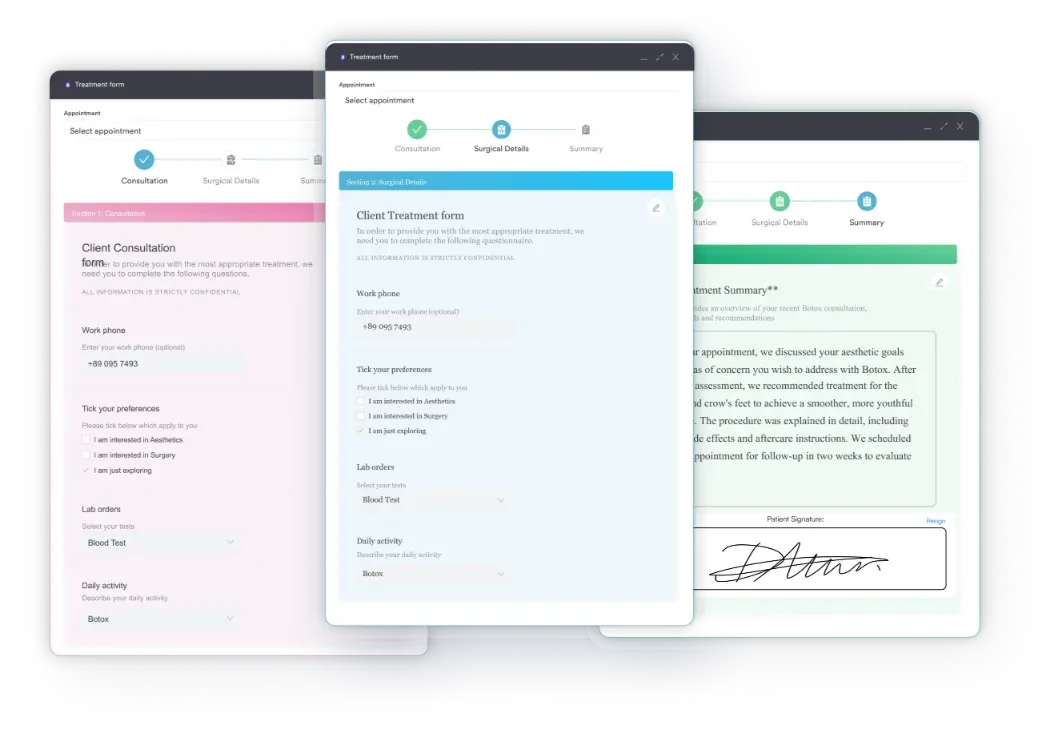
Practices that rely on paper encounter notes often discover missing documentation months later, when an audit request arrives. A HIPAA-compliant documentation workflow that stores SBIRT data in structured fields makes that response faster and more defensible.
Every H0049 claim requires a supporting ICD-10 diagnosis code, and an overly broad code is a frequent audit trigger. The table below lists the most commonly paired codes with their official ICD-10-CM descriptors.
Choose the code that matches what the note documents, not the one that is quickest to reach for. Alcohol dependence has its own code in F10.20, and coding it as abuse understates what the chart shows.
The National Correct Coding Initiative (NCCI) maintains bundling edits that affect when H0049 can be billed alongside other codes. Current NCCI policy documents restrictions for certain provider types, including OB/GYN providers, where H0049 may be bundled with evaluation and management services.
NCCI edit pairs change with each quarterly update, so check the current edits rather than a list you saved last year. The mistakes below drive the highest volume of denials in practices that bill SBIRT services.
Run a quarterly audit of your H0049 denials and group them by reason code. CO-4 points to a CPT versus HCPCS selection issue. CO-97 signals an NCCI bundling conflict. CO-50 points to ICD-10 specificity problems. Each cluster has a different fix, so treat them separately.
Most H0049 errors start with disconnected systems. The screening happens on paper, the note lands in one system, and the claim is keyed into another. Practice management software like Pabau keeps the screening, the note, and the claim on the same patient record.
Pabau’s claims management software pulls the patient, insurer, and treatment details straight from that record into a pre-filled claim. Validation checks run before you send, so a claim missing a membership or authorization number cannot go out. Every claim then sits in one dashboard with a live status.
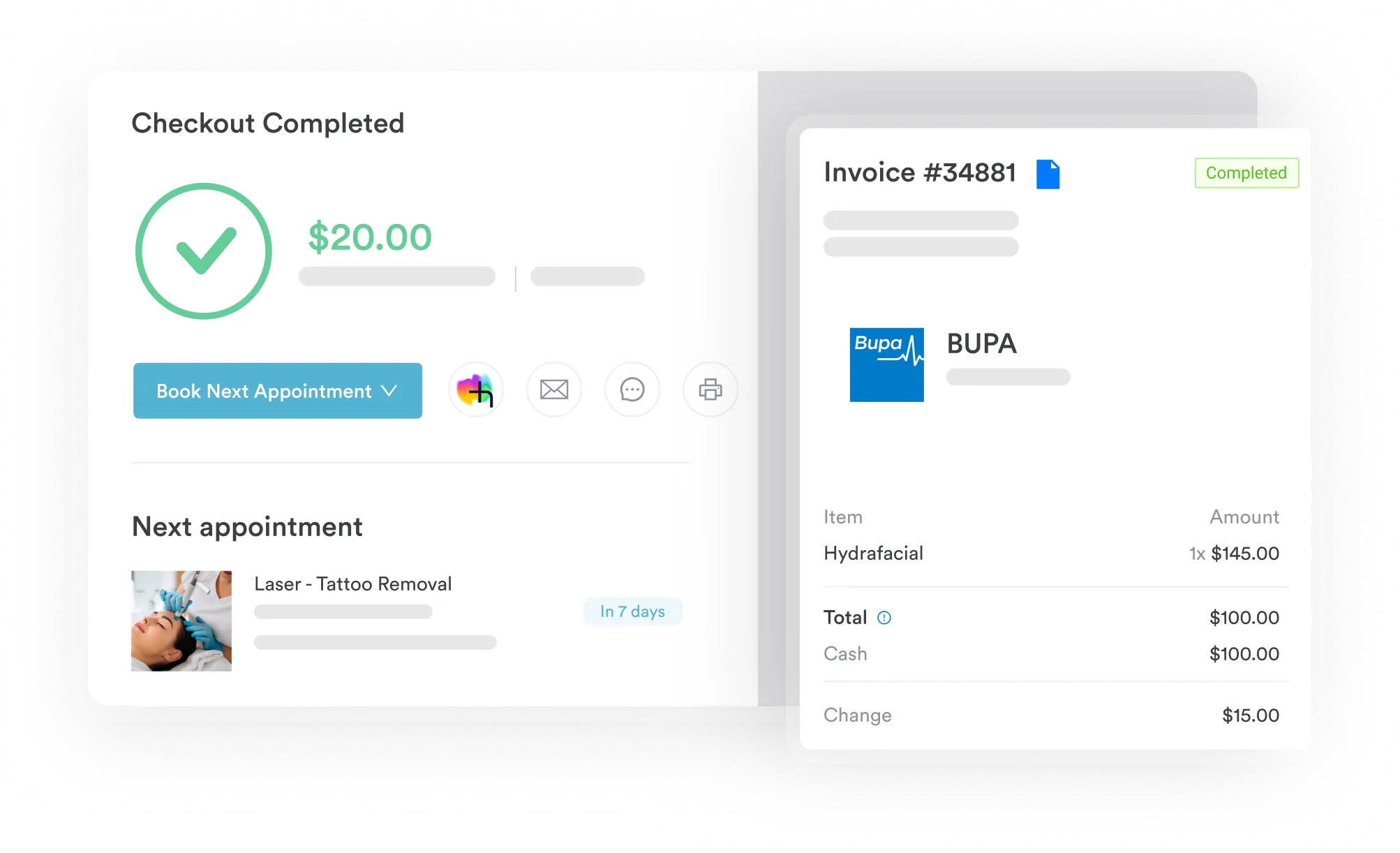
That way the charge is not lost between the visit and the next claim run.
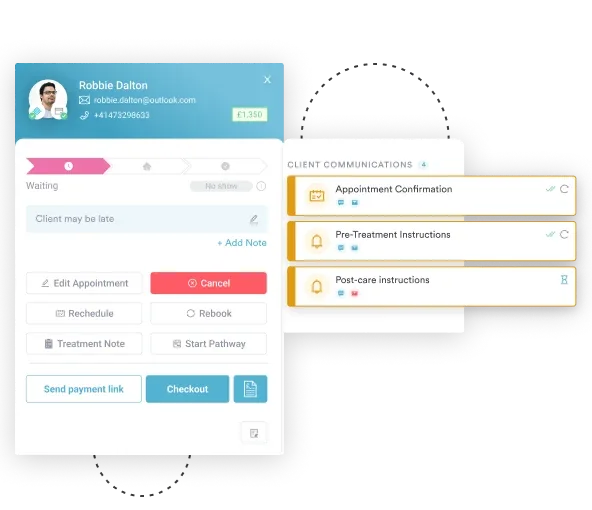
For behavioral health teams. Connecting scheduling, documentation, coding, and claims in one system is where H0049 denial rates start to fall.

Pabau pre-fills every claim from the patient record and runs validation checks before you send. Track each H0049 claim’s status in one dashboard, from submitted to paid.

H0049 pays reliably when three things line up. The payer has to accept HCPCS, the diagnosis has to match the note, and the note has to name the tool and the score. Get those right and H0049 becomes one of the more predictable claims in behavioral health.
Most of that work sits in the workflow rather than the code book. If screening data lives in free text and claims are keyed by hand, code knowledge alone will not move your denial rate.
So decide which validated tool your team uses, and decide where its score lands in the record. Book a demo to see how Pabau keeps H0049 screening, documentation, and claims in one workflow.

Coding a bipolar II diagnosis correctly? Bipolar II disorder guide covers how to avoid denials by using F31.81 instead of F31.9 or Bipolar I codes.
Missing episode details on a bipolar diagnosis? Unspecified bipolar disorder code explains when F31.9 applies if episode type and severity are not yet documented.
Coding a first depressive episode? Major depression coding guide explains when F32 codes apply to a first documented depressive episode.
Coding recurrent depression with psychosis? Severe recurrent depression code covers F33.3 for recurrent major depressive episodes that include hallucinations or delusions.
Billing the assessment that follows a screen? H0002 covers behavioral health screening for admission to a treatment program.
HCPCS code H0049 is a Level II HCPCS code used to bill alcohol and/or drug screening under state Medicaid programs. It sits inside the SBIRT framework, which stands for Screening, Brief Intervention, and Referral to Treatment. One unit covers the structured administration of a validated tool such as AUDIT, DAST-10, or CAGE.
H0049 covers the screening step of SBIRT, billed as one unit per screening visit. H0050 covers brief intervention, billed per 15 minutes. A provider administering a validated screening tool bills H0049. If a positive screen leads to motivational counseling or a referral, the intervention is billed under H0050. Billing H0049 when a full brief intervention was delivered is a common unbundling error.
Medicare Part B generally does not reimburse H0049 directly. For Medicare patients, use CPT 99408 for 15 to 30 minutes of screening and brief intervention. CPT 99409 covers 30 minutes or more. Submitting H0049 to Medicare fee-for-service typically results in a denial. Always confirm against current CMS guidance, as coverage policies can change.
Document the name of the validated screening tool and the score or categorical result. Record the clinical decision that followed the screen, plus the rendering provider’s credential and the encounter date. A supporting ICD-10 diagnosis code must also appear on the claim. Some state Medicaid programs additionally require the time spent and the referral decision for positive screens.
Generally no. H0049 and CPT 99408 describe overlapping services for different payer systems. H0049 is used for Medicaid billing. CPT 99408 is used for Medicare and most commercial payers. Billing both codes to the same payer for the same encounter is likely to result in a denial or an audit flag. Select the code that matches the patient’s insurance coverage.
The most commonly paired codes are Z13.89 for a screening encounter and Z03.89 for observation with no disorder found. Where the note supports a diagnosis, use F10.10 for alcohol abuse or F10.20 for alcohol dependence. F11.10 covers opioid abuse and F19.10 covers other psychoactive substance abuse. Choose the code that reflects the clinical finding documented in the note, not the most general code available.



