

HCPCS code E0198: Water pressure pad billing guide
HCPCS code E0198 is a water pad for a standard mattress HCPCS code E0198 is the ...

Last Updated: Oct 13, 2026
A4250 is the HCPCS Level II code for urine test or reagent strips or tablets (100 tablets or strips).
Bill HCPCS code A4250 to Medicare, and the claim comes back denied, every time. The code is for urine test or reagent strips, and Medicare treats them as non-covered. They are not underpaid or capped, they are excluded from the DMEPOS benefit entirely.
The mix-up is easy to make. A4250 sits in the same code family as blood glucose test strips, and Medicare does cover those. So billers assume one rulebook applies to both supplies. It does not, and that single distinction decides whether the claim gets paid. Payment for A4250 comes from state Medicaid programs and commercial payers instead, each with its own rules.
Let Pabau's smart automation suggest the right codes, reduce claim denials, and keep your practice compliant—effortlessly.
Automate repetitive tasks and focus on what matters most—your patients.
Reduce coding errors and ensure compliance with the latest regulations.
Clean claims, fewer denials, and faster reimbursements.
Powerful insights and reporting to help your practice thrive.
HIPAA compliant SOC 2 certified GDPR-compliant Trusted by 4,000+ clinics worldwide

HCPCS code A4250 describes urine test or reagent strips or tablets, 100 tablets or strips per box, classified under HCPCS Level II Medical and Surgical Supplies
Medicare classifies A4250 as non-covered (coverage code M, pricing indicator 00). CMS Policy Article A52464 says urine reagent strips are excluded because they don’t pair with a home blood glucose monitor, and no active LCD establishes coverage
Real-world reimbursement comes from state Medicaid programs, which vary by state, and from commercial payers under their own plan policies, not from Medicare
Practice management software like Pabau helps billing teams track claim status and keep documentation organized for DMEPOS supplies like A4250
HCPCS code A4250 is the Level II supply code for urine test or reagent strips or tablets, 100 tablets or strips per box. It sits within the Medical and Surgical Supplies category of the HCPCS coding system. The Centers for Medicare and Medicaid Services (CMS) updates this coding system every year.
One unit always equals one box of 100 strips or tablets. The code covers manual urine testing supplies only. It doesn’t cover blood glucose test strips or automated lab analysis of a urine sample.
Self-testing generates two separate billing objects: the consumable and the clinician’s read of the data. A4250 pays for the consumable only. Interpretation of continuous glucose monitor data sits on the service side, reported under 95251.
Two fields in the national HCPCS data file settle the coverage question before you even open a claim form. A4250 carries a coverage code of M, meaning non-covered by Medicare. It also carries a pricing indicator of 00, meaning Part B doesn’t price the service separately because it isn’t covered at all. Neither field leaves room for a jurisdiction-specific exception.
CMS spells out the reasoning directly. The Policy Article A52464 states that urine reagent strips or tablets are non-covered.
The reason: they aren’t used with a home blood glucose monitor. Medicare’s DME benefit for diabetic testing supplies is built around blood glucose monitoring, not urine testing. So A4250 falls outside that benefit category entirely.
There is no active Local Coverage Determination (LCD) that establishes Medicare coverage for A4250. Without an LCD or a national coverage policy that says otherwise, every DME Medicare Administrative Contractor (DME MAC) denies A4250 automatically.
That holds regardless of the beneficiary’s diagnosis, the physician’s order, or how complete the supplier’s documentation is.
Since Medicare won’t pay, the reimbursement question shifts to two other channels: state Medicaid programs and commercial or private payers. Both set their own rules, and neither one has to match Medicare’s non-covered stance.
Verify benefits with the specific payer before dispensing rather than assuming Medicare’s non-coverage rule applies everywhere, or that one state’s Medicaid policy applies in another.
Payer policies for patient-worn devices turn on the recording itself, not on a shipment record. Home sleep apnea testing reported as 95800 has to capture sleep time, oxygen saturation, heart rate and respiratory analysis. The downloaded study becomes the documentation a reviewer asks for.
Medical spas and specialty practices that dispense urinalysis supplies through medical spa software run into this mismatch often. They apply Medicare’s rules to a Medicaid or commercial claim, and the reimbursement logic simply doesn’t carry over. Family practices running GP clinic software face the same problem when billing diabetic or UTI monitoring supplies.
The best medical practice management systems tie supply usage to invoices, so dressing changes stop being free.
Because no Medicare LCD governs A4250, there is no federal covered-diagnosis list to check against. Medical necessity is instead defined by whichever state Medicaid program or commercial payer receives the claim.
The diagnoses below appear most often in state Medicaid and commercial coverage policies for urine testing supplies. Still, the definitive list always sits inside that specific payer’s policy.
Confirm each code against the specific payer’s active coverage policy before billing. A diagnosis that looks clinically reasonable can still fall outside a particular state Medicaid program’s or health plan’s covered list. There is no CMS LCD to fall back on for A4250 the way there would be for a Medicare-covered supply.
Medicare publishes no allowed amount for A4250. The code’s pricing indicator of 00 means CMS never built a Part B fee schedule line for it. So there is nothing to look up on the Physician Fee Schedule tool for this code specifically.
State Medicaid programs set their own fee schedule rates for A4250 in the states where they cover it at all. Rates differ state to state and are published in each state’s own Medicaid fee schedule, not in a national CMS file. Commercial payers negotiate rates directly in the supplier’s or practice’s contract.
Patient cost-sharing, copay, coinsurance, or deductible, follows the Medicaid or commercial plan’s own benefit design. Medicare’s standard 20% Part B coinsurance never applies here, because Medicare doesn’t cover the code in the first place.
Nothing about A4250 divides into professional and technical components, because dispensing a box carries no interpretive work. Pulmonary function testing does divide that way. Plethysmography under 94726 takes modifier 26 or TC depending on who owns the equipment and who reads the tracing.
Do not quote a Medicare reimbursement figure for A4250 to a patient or a supplier partner. There is not one. If a billing team needs a number, it has to come from the specific state Medicaid fee schedule or the commercial payer’s contracted rate, never a national Medicare file.
One unit of A4250 always equals one box of 100 strips or tablets. Never bill fractional units or count individual strips.
Quantity limits come from whichever payer covers the claim. A state Medicaid program or commercial plan may cap the number of boxes allowed per month or per quarter. There is no Medicare LCD quantity table to reference here, since Medicare doesn’t cover the code at all.
Unit definitions vary sharply between supply codes and service codes. For allergen immunotherapy, 95165 counts one unit per 1 cc dose removed from a multiple-dose vial. The vial preparation record, not the shipping manifest, drives that count.
Time-based testing follows a different counting rule again. Unattended home sleep apnea recording under 95806 tracks airflow, respiratory effort, heart rate and oxygen saturation. One session bills as one unit, not one unit per recorded hour.
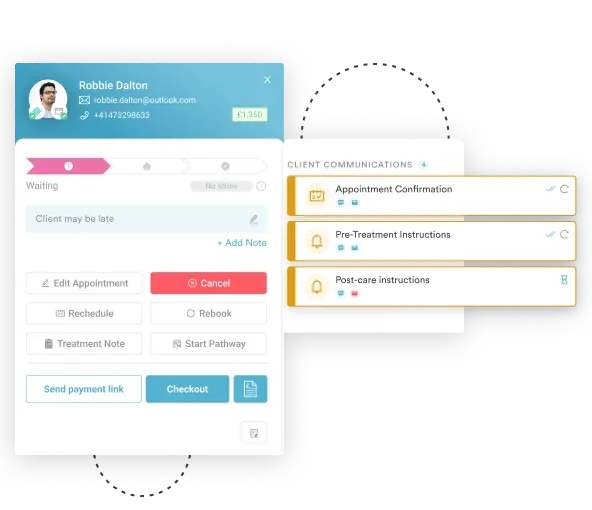
Documentation for A4250 lives in the claim and the medical record now, not in a separate certification form. CMS eliminated Certificates of Medical Necessity (CMNs) and DME Information Forms (DIFs) for every DMEPOS code, A4250 included, for claims with a date of service on or after January 1, 2023 (CMS transmittal SE22002). No MAC, state Medicaid program, or commercial payer can require a CMN for this code today. When a claim on this code comes back unpaid, the denial reason codes on the remittance name the cause. Self-pay patients submitting to their own insurer need the code and the charge on one patient receipt template.
That doesn’t mean documentation gets lighter. It means the same information the CMN used to capture now has to live inside the written order and the clinical record, where an auditor can still find it.
Maintaining complete documentation is much easier with structured digital intake and order forms that capture each required element at the point of order and link it to the patient record.
Practice management software like Pabau keeps that documentation organized and easy to find, so billing teams aren’t hunting for paperwork when a payer requests it. Other codes lean on similar certification requirements.
A4250 sits within a cluster of DMEPOS supply and lab procedure codes used for diabetic and urinalysis testing. Coders regularly cross-reference these codes when billing multiple supply types for the same patient.
Understanding where A4250 fits in this cluster, and which of these codes Medicare covers, prevents incorrect code selection and duplicate billing. The same coding discipline applies to catch-all supply codes like A9900, which cover DME items that don’t fit anywhere else.
When a patient receives both blood glucose test strips (A4253) and urine reagent strips (A4250), do not assume the same coverage rule applies to both codes.
Medicare covers A4253 under its own LCD. A4250 is non-covered regardless of which other supplies accompany it on the claim. Enteral nutrition supplies run into a similar non-covered trap under B4081. Use the AAPC HCPCS reference to verify current code descriptions before billing.
Most A4250 denials are entirely predictable once the code’s non-covered status is understood. Each error below maps to a specific corrective action.
Denials also follow from code-type errors that a standalone supply line cannot produce. A4250 never needs a parent code on the claim. Diffusing capacity testing does: 94729 is an add-on and denies when the base pulmonary function code is absent.
Structured medical compliance workflows that check payer, diagnosis, and order status before submission catch most of these errors before the claim leaves the supplier. Good medical documentation practices at the point of ordering remove the root cause of most post-audit recoupments.

Practice management software like Pabau helps billing teams track claim status, keep documentation organized, and catch billing errors before submission. See how it works for your billing team.

Most code reference sites stop at the descriptor. For A4250, the harder part is routing the claim to Medicaid or a commercial payer, and keeping it away from Medicare entirely.
Practice management software like Pabau helps billing teams track claim status and keep documentation organized for supply codes like A4250, so problems surface before a denial does. Keeping the written order, delivery confirmation, and other supporting paperwork in one place makes it easier for billing teams to respond quickly when a payer asks for proof.
The practical impact for billing teams handling A4250 and similar supply codes:
For practices exploring how integrated billing platforms reduce denials across a full HCPCS supply portfolio. Deeper EHR integration for billing further reduces manual data entry by syncing the prescriber’s order directly into the claim workflow.
Review the specific state Medicaid program’s and each commercial payer’s policy for A4250 at least once a year. Coverage rules at the state and plan level change independently of Medicare’s national HCPCS file, so a policy update six months ago may already be generating denials you haven’t traced to their root cause yet.
HCPCS code A4250 is a coverage problem more than a coding problem. Medicare excludes it outright under coverage code M. CMS Policy Article A52464 spells out why: urine reagent strips aren’t used with a home blood glucose monitor, so they sit outside the DMEPOS benefit entirely.
Real reimbursement comes from state Medicaid programs and commercial payers, each running its own diagnosis, quantity, and rate rules. Documentation is simpler than it used to be, too. CMNs and DIFs are gone for every DMEPOS code dated 2023 or later, replaced by a written order and the medical record.
Practice management software like Pabau helps billing teams track claim status and keep documentation organized for supply codes like A4250. To see how Pabau supports DMEPOS billing for practices and suppliers, book a demo with the team.

Billing behavioral counseling for obesity? Obesity behavioral counseling billing covers G0447, the 15-minute obesity counseling code paired with G0473 under Medicare’s IBT benefit.
Billing a replacement battery alongside a supply claim? See how A4602 is billed for external infusion pump batteries.
Coding a lower extremity orthosis this month? The L2999 billing guide covers documentation and coverage rules.
Managing a nasogastric feeding supply claim? Check the B4081 guide for tubing with stylet billing.
Looking for a catch-all DME billing code? The A9900 guide explains miscellaneous supply billing.
HCPCS code A4250 is a Level II HCPCS supply code that describes urine test or reagent strips or tablets, 100 tablets or strips per box. It is classified under Medical and Surgical Supplies (A-series). Medicare carries it with a coverage code of M, meaning non-covered.
No. A4250 carries a Medicare coverage code of M (non-covered) and a pricing indicator of 00 (not separately priced by Part B). CMS Policy Article A52464 states urine reagent strips are non-covered because they are not used with a home blood glucose monitor, and there is no active Medicare LCD that establishes coverage.
It depends on the state. Some state Medicaid programs cover A4250 for diabetic patients who do not use a home blood glucose monitor, or for ongoing UTI or kidney disease monitoring. Other states, including Wisconsin, list A4250 as non-covered as well. Check the beneficiary’s specific state Medicaid provider manual before dispensing.
Coverage follows each commercial plan’s own medical policy rather than Medicare’s rules. Some plans reimburse A4250 as a distinct supply line. Others bundle it into the office visit or the urinalysis procedure code and will not pay it separately. Verify benefits with the specific payer before dispensing.
No. CMS eliminated Certificates of Medical Necessity (CMNs) and DME Information Forms (DIFs) for all DMEPOS claims with dates of service on or after January 1, 2023, per CMS transmittal SE22002. A written order from the treating physician or qualified prescriber, plus supporting documentation in the medical record, now covers that requirement.
CPT 81000 is non-automated urinalysis by dip stick or tablet reagent, with microscopy. Its counterpart, CPT 81002, uses the same non-automated method without microscopy. That is the code most often billed alongside A4250 in office settings. The automated version, CPT 81003, is read by an instrument, also without microscopy.



