

HCPCS code E0198: Water pressure pad billing guide
HCPCS code E0198 is a water pad for a standard mattress HCPCS code E0198 is the ...

Last Updated: Oct 13, 2026
A4602 is the HCPCS Level II code for replacement battery for external infusion pump owned by patient, lithium, 1.5 volt, each.
Billing staff submit the code correctly in every other way, but because the patient leases rather than owns their external infusion pump, the claim bounces. Practice management software like Pabau.
Let Pabau's smart automation suggest the right codes, reduce claim denials, and keep your practice compliant—effortlessly.
Automate repetitive tasks and focus on what matters most—your patients.
Reduce coding errors and ensure compliance with the latest regulations.
Clean claims, fewer denials, and faster reimbursements.
Powerful insights and reporting to help your practice thrive.
HIPAA compliant SOC 2 certified GDPR-compliant Trusted by 4,000+ clinics worldwide

HCPCS Code A4602 describes a replacement lithium 1.5-volt battery for a patient-owned external infusion pump – a HCPCS Level II DME supply code.
Patient ownership is a hard billing requirement: A4602 cannot be used when the pump is rented or facility-supplied. The descriptor explicitly states ‘owned by patient.’
CMS Policy Article A52507 governs coverage for external infusion pump supplies including A4602. Documentation must establish medical necessity, a valid physician order, and proof of patient ownership.
Pabau’s claims management software helps DME billing teams maintain HCPCS supply code libraries and track documentation requirements to reduce A4602 claim denials.
HCPCS Code A4602 has one official long description: Replacement battery for external infusion pump, owned by patient, lithium, 1.5 volt. Every word in that descriptor carries billing weight.
“Replacement” means the battery is a consumable supply, not a new pump accessory being billed for the first time. “External infusion pump” identifies the device category. “Owned by patient” is the eligibility qualifier that most denials hinge on. “Lithium, 1.5 volt” specifies the exact battery chemistry and voltage; other battery types and voltages require different codes.
A4602 sits within the broader HCPCS Level II code set maintained annually by the Centers for Medicare & Medicaid Services (CMS). Like all Level II codes, it follows a single letter prefix (A) plus four digits, and it identifies supplies not adequately described by CPT codes.
It belongs to the A4600-A4649 range, CMS’s general Medical and Surgical Supplies block rather than an infusion-pump-specific series, though several codes within that range, including A4602, do cover infusion pump batteries and accessories. For practices handling IV therapy and infusion services, building a clean HCPCS supply code reference is the first step toward consistent reimbursement.
Three conditions must all be true before A4602 belongs on a claim. Miss any one of them and the code is incorrect regardless of what the battery costs or how it was delivered.
The patient-ownership requirement is worth emphasizing. CMS policy is explicit: the supply code is tied to patient ownership of the durable medical equipment. A billing team that does not verify pump ownership status before coding will see predictable denials.
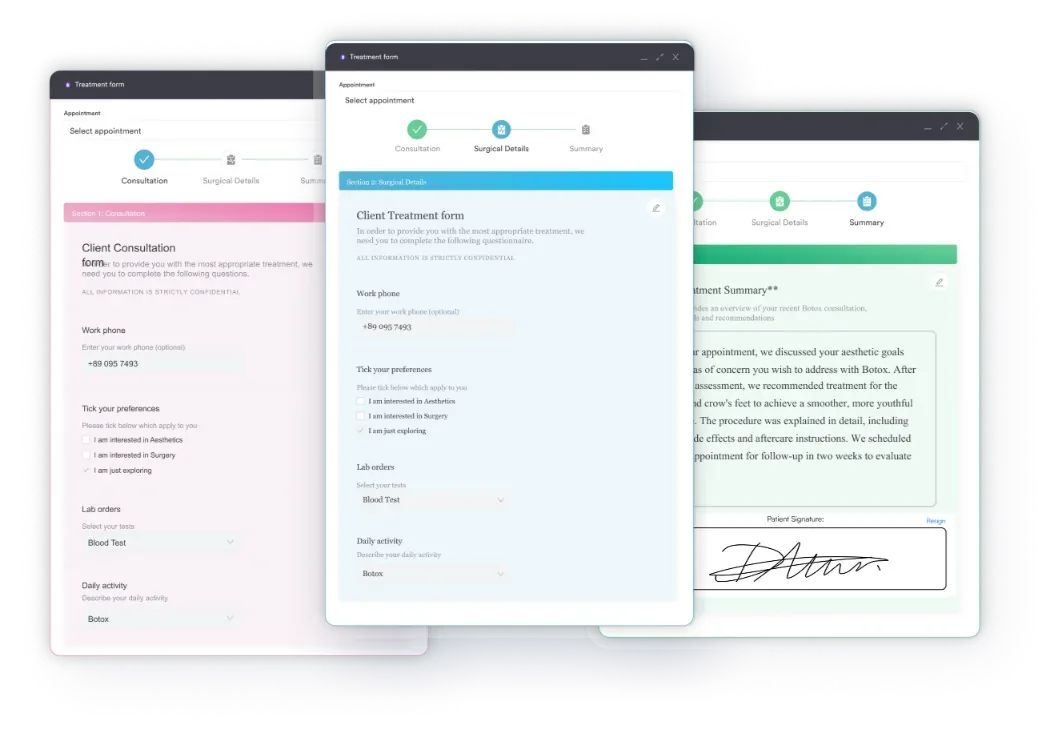
Documenting ownership at intake or prior authorization is the most effective prevention strategy. Practices using digital intake forms can capture equipment ownership status as a structured field, making it available at the point of coding rather than after a denial arrives.
Medicare covers A4602 as a DME supply, subject to meeting medical necessity criteria and the requirements of CMS Policy Article A52507. Coverage is conditional, not automatic. A claim for A4602 that lacks a supporting diagnosis or valid physician order will not clear adjudication regardless of how the code itself is submitted.
Coverage runs through the DME Medicare Administrative Contractors (DME MACs), which handle all Medicare Part B DME claims. Each DME MAC jurisdiction may have slightly different local coverage determinations (LCDs) that affect how medical necessity is established. Before billing, verify which DME MAC jurisdiction applies to the patient’s geographic location.
As a DME supply code, A4602 is priced on the DMEPOS fee schedule rather than the physician fee schedule, and DMEPOS rates update quarterly (January, April, July, and October) rather than annually. Pricing also varies by DME MAC jurisdiction.
Published fee schedule data from commercial coding tools shows pricing in the low single-digit dollar range for this supply code, though specific reimbursement amounts can change each quarter. Always verify current figures using the CMS DMEPOS Fee Schedule Files or the applicable DME MAC fee schedule publication before quoting reimbursement rates to payers or patients.
The Pricing, Data Analysis and Coding (PDAC) Contractor provides advisory guidance on correct coding for DME supplies including infusion pump batteries. The “Lithium Batteries – Correct Coding” advisory, published via CGS Medicare, is directly relevant to A4602 billing and is a reliable secondary verification source when coding documentation is ambiguous.
Good practice management software for medical practices turns supplies used in a visit into billed line items automatically.
CMS Policy Article A52507 sets the documentation standard for external infusion pump supplies. For A4602 specifically, supporting documentation must establish three things: the medical necessity for infusion therapy, the existence and appropriateness of the external infusion pump, and proof that the patient owns the pump.
Missing any of these elements creates a documentation shortfall that auditors and post-payment reviewers will flag. Practices that streamline their clinical documentation workflows tend to catch these shortfalls before claims go out rather than after denials arrive.
Documentation should be assembled before claim submission, not reconstructed after a records request. An integrated EHR and billing workflow where clinical notes, orders, and supply records are stored in a single system significantly reduces the risk of missing documentation during audits.
Before submitting A4602, run a three-point check: verify the patient owns the pump (not rents it), confirm the battery is lithium 1.5v (not a different chemistry or voltage), and confirm the physician order is dated within the payer’s lookback window. These three items account for the majority of preventable A4602 denials.
Billing A4602 follows standard DME supply billing rules under Medicare Part B. DME supply claims, including A4602, go to the DME MAC on the CMS-1500 form (the 837P electronic format), regardless of supplier type, using the appropriate HCPCS Level II code with the corresponding ICD-10-CM diagnosis code.
Each unit of A4602 represents one battery. If the patient requires multiple batteries per fill cycle, bill the appropriate number of units. Do not stack units across dates unless the supply was dispensed on separate dates of service.
The date of service on the claim should reflect the date the battery was dispensed to the patient, not the order date or the invoice date. Mismatches between dispensing records and claim dates of service are a common audit trigger for DME supply codes.
The same discipline applies across other DME supply codes.
Standard DME billing modifiers may apply depending on the claim scenario. The most common modifiers used with supply codes in the A4600 range include:
Modifier requirements can vary by DME MAC jurisdiction and are subject to change with policy updates. Verify current modifier requirements against the applicable DME MAC’s coverage article before submitting.
This applies just as much to less common DME supply codes like A9900, where relying on prior-year billing templates instead of current coding references is a frequent source of modifier mismatches that delay payment.
CMS Policy Article A52507 is the governing document for external infusion pump coverage under Medicare, including supplies such as A4602. The article is maintained by CMS and specifies which HCPCS codes are covered, the conditions under which coverage applies, and what documentation the supplier must maintain.
Key elements of A52507 that directly affect A4602 billing:
For practices with complex infusion billing workflows, maintaining a live link to the current CMS policy article, rather than a printed summary, is a simple but effective quality control step. The compliance infrastructure supporting a practice’s software environment should include mechanisms to flag when governing policy articles are updated.
A4602 sits within the A4600-A4649 range, CMS’s broader Medical and Surgical Supplies code block, not an infusion-pump-only series. A handful of codes within that range cover infusion pump batteries and accessories, and choosing the correct one depends on the specific supply item, the pump configuration, and, for batteries, the exact chemistry and voltage dispensed.
The AAPC HCPCS code lookup and the PGM Billing HCPCS lookup tool are useful for verifying descriptions and effective dates across the range.
The most common coding confusion is between A4602 (lithium) and K0603 (alkaline). Both describe a replacement 1.5-volt battery for a patient-owned external infusion pump, but they aren’t simply chemistry variants of the same code. A4602 is a HCPCS Level II A-code, while K0603 is a HCPCS Level II K-code, a separate temporary DME code type.
Submitting A4602 when the battery dispensed is alkaline, or K0603 when it’s lithium, creates a code-to-product mismatch that auditors can identify from supplier dispensing records. Note that A4603 is not a valid infusion-pump battery code; the correct alkaline equivalent to A4602 is K0603.
A lithium battery whose voltage doesn’t match A4602, K0604, or K0605 falls back to the miscellaneous code A9999 rather than any of the three. The same product-to-descriptor discipline applies broadly across DME supply codes.
Infusion pump supply billing generates a specific pattern of denials: missing ownership documentation, modifier omissions, and battery-type mismatches. Each of these is preventable with the right workflow structure rather than individual coder vigilance.
Pabau’s claims management software gives DME billing teams a structured environment for maintaining HCPCS supply code libraries, attaching documentation to claims before submission, and tracking denial patterns by code. For practices running infusion therapy programs, this means A4602 claims can be built with the qualifying criteria checklist embedded in the workflow rather than applied retroactively after a denial.
Pabau also integrates with digital forms for capturing structured patient data at intake, including equipment ownership status, which feeds directly into the billing record.
Practices managing IV therapy and infusion services face a higher volume of supply code billing than general practices. A practice management platform that connects clinical documentation to billing code assignment reduces the manual handoffs where coding errors most commonly occur.

Pabau’s claims management tools help infusion therapy practices build compliant A4602 billing workflows, track documentation requirements, and reduce supply code denials before they reach the payer.

HCPCS Code A4602 denials are almost always preventable. The patient ownership qualifier, the battery chemistry specification, and the documentation requirements under CMS Policy Article A52507 are all knowable in advance. Billing teams that build these checkpoints into their pre-submission workflow, rather than relying on post-denial correction, will see materially fewer claim rejections for this supply code.
Pabau’s claims management software helps infusion therapy practices structure exactly that kind of pre-submission workflow. To see how it fits your billing environment, book a demo with the Pabau team.

Billing for nasogastric supplies? HCPCS Code B4081 covers the coding rules for nasogastric tubing with stylet.
Coding an implantable neurostimulator? HCPCS Code L8680 breaks down the billing guide for implantable neurostimulator electrodes.
Need the reference for urine reagent strips? HCPCS Code A4250 covers the billing guide for this supply code.
HCPCS Code A4602 is a HCPCS Level II DME supply code used to bill for a replacement lithium 1.5-volt battery for an external infusion pump that is owned by the patient. It applies only when the patient owns the pump outright, the battery is lithium chemistry at 1.5 volts, and the pump is external rather than implanted.
Medicare Part B covers A4602 as a DME supply when the claim meets medical necessity criteria and the requirements of CMS Policy Article A52507. Coverage is conditional, not automatic, and requires a valid physician order, a supporting ICD-10-CM diagnosis code, and documentation confirming the patient owns the external infusion pump.
Yes. The long descriptor explicitly states “owned by patient.” If the patient rents or leases the external infusion pump, A4602 does not apply. This patient-ownership qualifier is a hard eligibility condition, not a billing guideline. Using A4602 for a rented pump is a coding error that will result in a denial on audit.
Medicare reimbursement for A4602 is set by the DMEPOS fee schedule, which updates quarterly, and varies by jurisdiction. The amount is generally in the low single-digit dollar range for this type of supply code, but specific figures can change each quarter. Verify current rates using the CMS DMEPOS Fee Schedule Files or the applicable DME MAC fee schedule before submitting claims or quoting reimbursement.
A4602 covers a lithium 1.5-volt replacement battery for a patient-owned external infusion pump. K0603 covers the alkaline 1.5-volt equivalent for the same pump under the same ownership conditions. A4602 is a HCPCS Level II A-code, while K0603 is a HCPCS Level II K-code – a different temporary DME code type, not simply an alternate chemistry within the A-code series. Note that A4603 is not a valid infusion-pump battery code. Submitting the wrong code when the battery type does not match the descriptor creates a code-to-product mismatch that auditors can identify from dispensing records.
Required documentation includes a physician order for infusion therapy, a diagnosis code supporting medical necessity, proof of patient pump ownership (such as a purchase receipt or supplier attestation), a medical necessity narrative consistent with CMS LCD criteria, and supplier dispensing records showing the battery type and date of service. CMS Policy Article A52507 is the governing reference for documentation requirements.



