

HCPCS code E0198: Water pressure pad billing guide
HCPCS code E0198 is a water pad for a standard mattress HCPCS code E0198 is the ...

Last Updated: Oct 13, 2026
L2999 is the HCPCS Level II code for lower extremity orthoses, not otherwise specified.
Miscellaneous HCPCS codes trip up orthotic billers more than almost any other category. Because HCPCS code L2999 has no fixed fee schedule rate and demands a narrative description on every claim, it attracts heightened payer scrutiny, prior authorization requirements, and denial rates that specific codes simply don't face.
Let Pabau's smart automation suggest the right codes, reduce claim denials, and keep your practice compliant—effortlessly.
Automate repetitive tasks and focus on what matters most—your patients.
Reduce coding errors and ensure compliance with the latest regulations.
Clean claims, fewer denials, and faster reimbursements.
Powerful insights and reporting to help your practice thrive.
HIPAA compliant SOC 2 certified GDPR-compliant Trusted by 4,000+ clinics worldwide

HCPCS code L2999 covers lower extremity orthoses with no other specific HCPCS code available – it is a miscellaneous NOS code in the L2750-L2999 Level II range.
Always check more specific L-codes first. L2999 is valid only when no other code accurately describes the orthotic device provided.
L2999 is on CMS’s DMEPOS Master List, but it is not on the Required Prior Authorization List, so Medicare does not currently mandate PA for it — though individual MACs, Medicaid, or commercial payers may still require it.
Practice management software like Pabau keeps the physician order, medical necessity narrative, and device documentation organized in one record, ready whenever a DME MAC requests it for an L2999 claim.
Official description: Lower extremity orthosis, not otherwise specified (NOS).
HCPCS code L2999 is a HCPCS Level II miscellaneous code maintained by CMS. It sits within the L2750-L2999 range for “other lower extremity additions” and serves as a catch-all when no more specific L-code accurately describes the orthotic device supplied.
Like all NOS codes, it places the documentation burden firmly on the provider to justify why a specific code does not apply.
Because L2999 is a miscellaneous code, AAPC’s HCPCS code reference and MAC guidance consistently emphasize that it is an option of last resort. Billers at physical therapy and occupational therapy practices often reach for it too early, before working through the specific L-code range.
L2999 is appropriate in one narrow situation: the orthotic device provided is a lower extremity orthosis and no existing HCPCS code accurately describes it. The moment a specific L-code fits, even partially, you should use that code instead.
Correct use: A custom-fabricated lower limb orthosis incorporating a unique combination of articulated joints and dynamic components not captured by L1900 through L2990 series codes. Documentation must explain specifically why each applicable code was considered and rejected.
Incorrect use: Billing L2999 because the specific code requires more documentation, or to avoid bilateral modifier rules. Payers flag this pattern in post-payment audits, and it can trigger recoupment and exclusion reviews.
For physiotherapy practice compliance, understanding this boundary matters because CMS conducts targeted audits of miscellaneous DMEPOS codes. Providers with high L2999 utilization rates relative to their specific-code usage attract additional scrutiny.
Medicare covers lower extremity orthoses under the DMEPOS benefit when medical necessity is established and the treating physician provides a written order. Because L2999 is a miscellaneous code, coverage is not automatic. Each claim is reviewed individually against the applicable Local Coverage Determination (LCD) for lower limb orthotics in your MAC jurisdiction.
Unlike specific L-codes with published fee schedule amounts, HCPCS code L2999 does not have a fixed Medicare allowable rate. It is priced by individual consideration, often called “by report” pricing: the DME MAC reviewing the claim sets a specific allowed amount based on the documentation submitted, rather than a published fee.
Contact your DME MAC directly to confirm how it will price a specific L2999 claim. This individual-consideration methodology is outlined in the Medicare Claims Processing Manual, Pub. 100-04, Chapter 23.
Verify current reimbursement guidance directly with your MAC before submitting L2999 claims. Rates and coverage criteria can change with quarterly HCPCS updates and LCD revisions. Maintaining accurate patient record documentation standards throughout the billing process is essential for claims that require individual review.
HCPCS code L2999 appears on CMS’s DMEPOS Master List, a watch list CMS uses to flag codes at higher risk of fraud or improper payment. It is not currently on CMS’s Required Prior Authorization List, which names specific codes such as L0651, L1844, L1846, L1852, and L1932. Being on the Master List alone does not mandate prior authorization.
Medicare does not currently require PA for L2999. Individual MACs, state Medicaid programs, or commercial payers may still require it, or may subject miscellaneous (NOC) claims to heightened manual or pre-payment review. Verify current status against both the Master List and the Required Prior Authorization List before assuming PA applies.
If your MAC, Medicaid program, or commercial payer does require PA for L2999, confirm the process directly, since requirements vary by payer. General steps that apply where PA is required:
Where PA is required, skipping it is one of the top denial triggers for L2999 claims. Review your practice billing compliance protocols to confirm PA workflows are built into your pre-claim checklist rather than treated as an afterthought.
Before submitting any L2999 claim, call your MAC’s provider line to confirm whether PA applies. L2999 sits on CMS’s DMEPOS Master List but not the Required Prior Authorization List, so requirements vary by MAC, Medicaid program, and commercial payer. Submitting without PA when it is required results in automatic denial with no reconsideration pathway in most jurisdictions.
L2999 claims require more documentation than specific orthotic codes because payers need to verify both medical necessity and the absence of a more specific applicable code. CGS Medicare and Noridian both publish guidance confirming the minimum documentation set for miscellaneous orthotic claims.
Modifiers tell the payer more about the specific circumstances of an L2999 claim, and using the wrong one (or leaving one off) is a recurring cause of denials and delays.
Using digital medical forms that capture all required elements at the point of assessment reduces missing documentation before claims reach the billing team. Building required fields into your intake and assessment workflows means the narrative components are gathered during the clinical encounter rather than reconstructed after the fact.
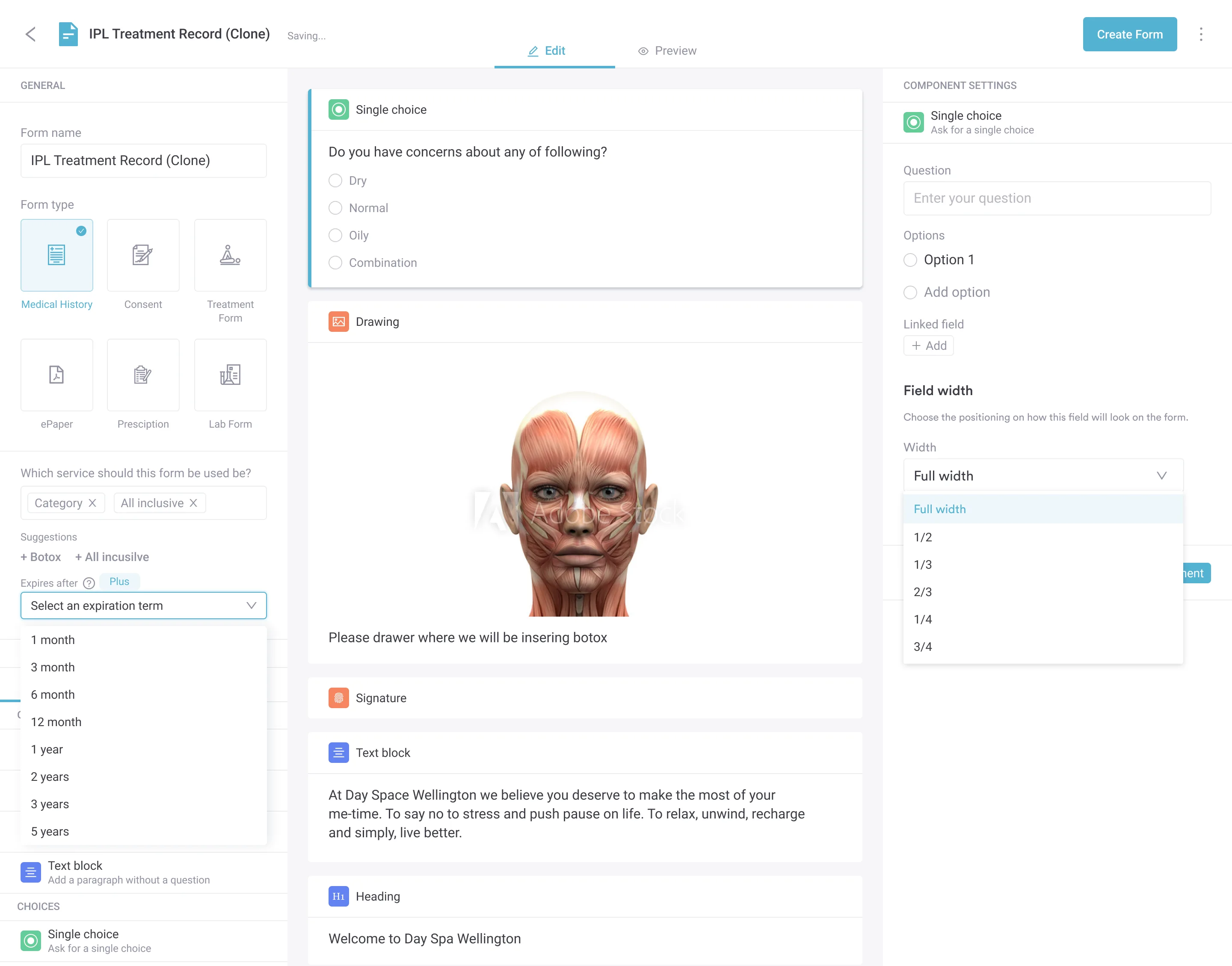
For a compliance checklist for billing workflows, ensure the L2999 documentation file includes: written order, medical necessity statement, detailed device narrative, manufacturer and product details with an invoice or MSRP for pricing, proof of delivery, and PA approval where applicable. Missing any single element is sufficient grounds for denial on first review.

Pabau’s digital forms and treatment-note tools help orthotics providers keep the physician order, medical necessity narrative, and device documentation organized and audit-ready before an L2999 claim goes out the door.

The custom-fitted vs. off-the-shelf distinction is one of the most common sources of L2999 billing errors. Misclassifying a device type can trigger audits, post-payment recoupment, and exclusion reviews. CMS and MAC guidance both define these categories precisely.
Noridian MAC guidance specifically warns that billing a custom-fitted orthotic as L2999 when no custom fitting was completed (and no off-the-shelf equivalent code exists) is incorrect. The practice management features that track device type at the point of supply help billing teams apply the correct code without relying on manual lookup each time.
The codes below cover the most common lower extremity orthosis types. Check these before submitting HCPCS code L2999. If any of these describes the device provided, use the specific code instead.
You can search the full L-code range using the NLM Clinical Table Search API for programmatic HCPCS Level II lookups. If none of the specific codes above applies after a systematic review, L2999 is the correct fallback.
L2999 claims are denied at higher rates than specific orthotic codes because every claim requires individual payer review. The most frequent denial patterns, along with prevention strategies:
The administrative burden on clinical staff is compounded when claim denials require rework. Building the documentation requirements into pre-claim workflows reduces denial rates and frees clinical time for patient care rather than appeals.
Track your L2999 claim acceptance rate separately from your specific L-code claims. If your miscellaneous code denial rate exceeds 20%, audit your narrative descriptions and PA workflows first. These two elements account for the majority of preventable denials on L2999 submissions.
CMS releases quarterly HCPCS updates that can add new specific codes to the L-series, which may reduce reliance on L2999 when a new code covers a device type previously billed as miscellaneous.
The American Podiatric Medical Association (APMA) noted DME HCPCS changes effective April 1, 2025 affecting codes in the lower extremity orthosis range. Specific impact on L2999 applicability requires verification against the CMS quarterly update files for the relevant period.
CGS Medicare’s coding verification guidance is the authoritative source for PDAC-verified product codes in the DMEPOS category. Check the quarterly update files whenever a new device type enters your supply inventory, as a new specific code may now apply where L2999 was previously used.
L2999’s documentation requirements are more intensive than standard orthotic codes, and that’s where billing errors compound.
Specific ways integrated practice management software reduces L2999 denial risk:
The digital medical forms used during patient assessment can capture the device description, functional limitation rationale, and delivery confirmation in structured fields that feed directly into the documentation process, reducing the reconstruction work that typically drives L2999 rework hours.
HCPCS code L2999 is a legitimate billing option for lower extremity orthoses with no specific code, but its miscellaneous status means every claim is individually priced and reviewed.
The codes you check before using L2999, the narrative you attach, and the prior authorization you secure when it’s required determine whether the claim pays on first submission or enters the denial cycle.
Practice management software like Pabau keeps the physician order, narrative. To see how Pabau keeps orthotic documentation organized, book a demo.

Billing a related fracture orthosis diagnosis? ICD-10 code M84.9 covers disorders of bone continuity, including delayed union and nonunion, that often support the medical necessity narrative for fracture orthoses.
Billing Medicare home health services alongside DMEPOS? HCPCS code G0180 covers the physician certification requirements for home health episodes.
Billing a bile acid blood test? CCSD code 0443B billing guide covers the chenodeoxycholic acid blood test, a biochemistry test rather than a procedure.
L2999 is a miscellaneous code for billing lower extremity orthoses when no more specific HCPCS Level II code accurately describes the device. It is a last-resort option, used only after confirming that no specific L-code applies to the orthosis.
Use L2999 only after reviewing the full applicable L-code range (L1900 through L2990 and the prefabricated boot codes) and confirming no existing code describes the device. Document the review, and if any specific code partially fits, use it instead.
Required documentation includes a written physician order with diagnosis, a detailed narrative description of the device (materials, components, fabrication method), a medical necessity statement, signed proof of delivery, and prior authorization where required. Missing any single element can trigger denial.
Medicare may cover L2999 under the DMEPOS benefit when medical necessity and Local Coverage Determination criteria are met. Coverage isn’t automatic; each claim is reviewed individually, and as a miscellaneous code it’s priced per claim rather than by a fixed fee schedule.
L2999 is on CMS’s DMEPOS Master List but not currently on the Required Prior Authorization List, so Medicare does not mandate PA for it today. Individual MACs, Medicaid programs, or commercial payers may still require PA, or apply heightened review to miscellaneous claims. Verify current status with your payer before fabricating or dispensing the device, since retroactive authorization is generally not accepted.
The most frequent denials stem from a missing or insufficient narrative description, lack of prior authorization, inadequate medical necessity documentation, a more specific code identified by the payer, or missing proof of delivery. Tracking denials by code reveals which workflow step drives rework.



