

HCPCS code E0198: Water pressure pad billing guide
HCPCS code E0198 is a water pad for a standard mattress HCPCS code E0198 is the ...

Last Updated: Oct 13, 2026
A9900 is the HCPCS Level II code for miscellaneous dme supply, accessory, and/or service component of another hcpcs code.
Confusing it with HCPCS code A9999, the true miscellaneous catch-all, is the most common reason Medicare denies A9900 claims under CARC 97.
Let Pabau's smart automation suggest the right codes, reduce claim denials, and keep your practice compliant—effortlessly.
Automate repetitive tasks and focus on what matters most—your patients.
Reduce coding errors and ensure compliance with the latest regulations.
Clean claims, fewer denials, and faster reimbursements.
Powerful insights and reporting to help your practice thrive.
HIPAA compliant SOC 2 certified GDPR-compliant Trusted by 4,000+ clinics worldwide

HCPCS Code A9900 bills a DME supply, accessory, or service component that is already part of another coded item, not a stand-alone item on its own.
Medicare typically denies A9900 under ANSI/CARC reason code 97, treating the component as included in the payment for the primary DME item.
Use A9900 only for a component tied to an already-coded item; reach for A9999 instead when the supply itself has no HCPCS code at all.
Practice management software like Pabau helps medical aesthetics and wellness practices submit, track, and reconcile insurance claims, though DME suppliers billing Medicare Part B still need dedicated DME billing software.
Most A9900 denials come down to the same misunderstanding: billing it as a stand-alone item rather than what CMS built it to be, a supply, accessory, or service component tied to a DME item that already carries its own HCPCS code. That distinction is preventable once you know what the code is for.
HCPCS Code A9900 is a HCPCS Level II code maintained by the Centers for Medicare & Medicaid Services (CMS). Its official descriptor is: Miscellaneous DME supply, accessory, and/or service component of another HCPCS code. It sits within the A-series (A0000-A9999), which covers transportation services, medical and surgical supplies, and durable medical equipment.
A9900 is not the generic “not otherwise specified” catch-all some coders assume it is. That role belongs to HCPCS Code A9999 (Miscellaneous DME supply or accessory, not otherwise specified), used when a stand-alone supply has no dedicated code at all.
A9900 covers something narrower: a supply, accessory, or service component that supports a DME item already billed under its own HCPCS code, such as CPAP tubing, oxygen system connectors, or a fitting service tied to equipment that already has a code.
CMS releases HCPCS Level II updates on a rolling basis. Coders should always verify the current code set before billing. The PGM Billing lookup tool provides a free way to confirm A9900 remains active and unchanged in the current year’s release.
A9900 applies to a supply, accessory, or service component that supports a DME item already billed under its own HCPCS code, not the primary item itself. This covers a range of scenarios in practice. Common examples include:
For A9900 to apply, the primary DME item it supports must still meet CMS’s definition of durable medical equipment:
A9900 is not appropriate for consumable, disposable, or single-use items that belong in other code categories. It is also not appropriate when the component itself has a specific HCPCS code, or when no code exists at all for a stand-alone supply, since that is when A9999 applies instead.
Good medical documentation workflows reduce the temptation to reach for the wrong miscellaneous code.
The single most common error with A9900 is confusing it with A9999, or using it for items that already have a specific HCPCS code. Payers audit miscellaneous and component codes more closely than specific codes, and using A9900 incorrectly almost always results in denial under ANSI/CARC reason code 97 or a request for additional documentation.
Replacement battery cables for a patient-owned ventilator follow the same pattern, since A4612 describes that component directly. Medicare treats those cables as non-covered, but the specific code still applies instead of A9900.
Before billing HCPCS Code A9900, confirm two things: that the item is genuinely a component of an already-coded DME item, and that no more specific component code exists. Search the current HCPCS Level II code set using the AAPC HCPCS code lookup. Document the search in your records, as some payers request evidence of it.
Medicare Part B does not have a nationally published fee schedule rate for A9900, and in practice most A9900 claims are denied rather than paid as a separate line item. Medicare Administrative Contractors (MACs) typically deny A9900 under ANSI/CARC reason code 97: payment for the component is considered already included in the allowance for the primary DME item it supports.
CMS does not maintain a National Coverage Determination (NCD) specific to HCPCS Code A9900. Coverage of the underlying, primary DME item is governed by the relevant Local Coverage Determination (LCD).
Suppliers should check the applicable MAC’s LCD for the primary item to understand whether its components, accessories, or service elements are bundled into that payment. The CMS fee schedule lookup can help verify any published payment rates that may apply to the primary code.
State Medicaid programs set their own DME coverage policies independently from Medicare. Whether a state Medicaid program separately reimburses a component billed under HCPCS Code A9900 depends entirely on that state’s fee schedule and coverage rules. Some states treat these components as bundled into the primary item regardless of MAC guidance.
Commercial payers are similarly variable. Many follow Medicare LCD guidance as a baseline but apply their own coverage restrictions. Some commercial payers require pre-authorization for any miscellaneous or component code. Billers working with patient care management across multiple payers should document payer-specific A9900 policies in their internal billing references, as requirements can shift with contract renegotiations. Patients paying up front and claiming later need a superbill, which itemizes the service, the code and the charge.
Before submitting an A9900 claim to any payer, call the provider services line and ask two questions: (1) Does your plan reimburse HCPCS Code A9900 separately for this component, or is it bundled into the primary item? (2) Is prior authorization required? Document the call with date, representative name, and reference number. That record is your best defense if the claim is later denied under CARC 97.
Component and miscellaneous codes attract higher scrutiny than specific HCPCS codes. Documentation for A9900 claims must do two things: establish that the component is medically necessary, and link it clearly to the primary, already-coded DME item it supports. Missing either increases denial risk significantly.
Core documentation requirements include:
Organized HIPAA-compliant record-keeping is not optional for A9900 claims. Payers may request documentation up to several years after the claim date during audits. Suppliers using digital intake forms can capture and store structured documentation at the point of care, making retrieval faster when payer requests arrive.
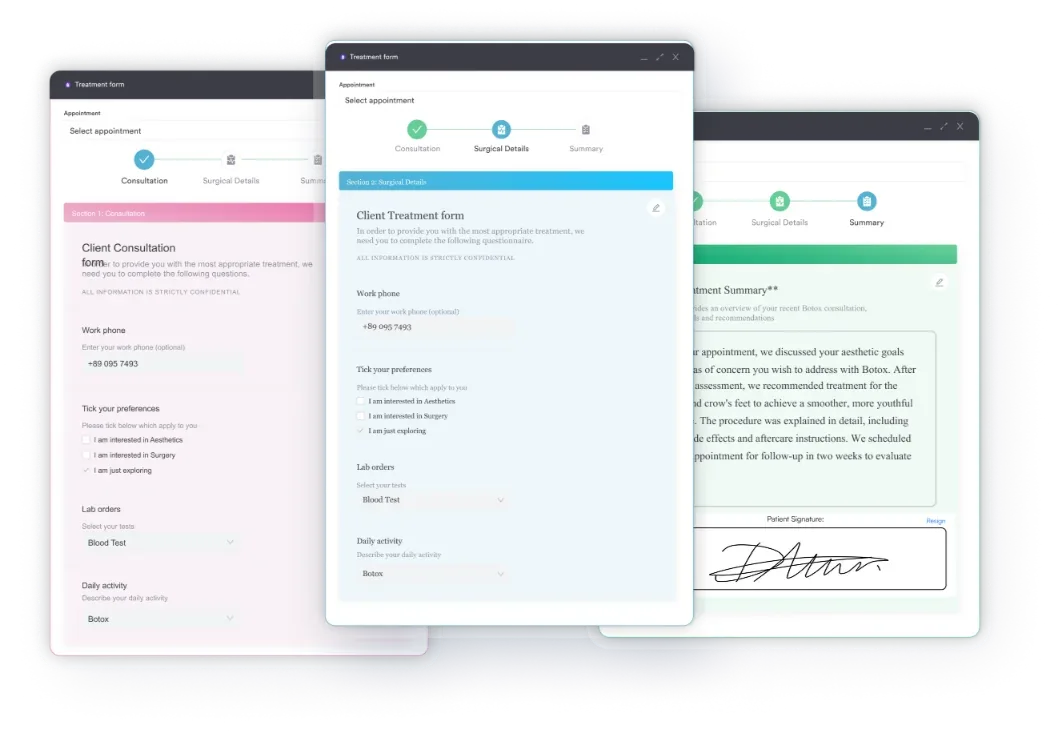

Practice management software like Pabau helps medical aesthetics and wellness practices submit, track, and reconcile insurance claims, and capture structured documentation with digital intake forms, instead of juggling spreadsheets.

Submitting an A9900 claim follows the same CMS-1500 form process as other HCPCS Level II DME claims, with additional steps to link the component to its primary, already-coded item. A structured approach reduces the likelihood of missing a required field.
Good EHR integration between clinical documentation and billing workflows helps ensure the physician’s order, diagnosis codes, and supply description are consistent across the claim before submission. Inconsistencies between the clinical record and the claim form are a common audit trigger for component and miscellaneous codes.
A9900 claims are denied more frequently than claims using specific HCPCS codes, most often under CARC 97 because payers treat the component as already included in the primary item’s payment. Most other denials fall into a small number of predictable categories.
Tracking denial patterns by payer, particularly how often claims are denied under CARC 97 versus other reasons, helps practices refine their A9900 workflow over time. Practices using robust medical practice management tools can run reports on denial rates by payer, which surfaces which insurers require extra documentation steps before initial submission.
Using medical dictation tools to capture physician narrative at the point of care closes most of the missing documentation that drives A9900 denials.
Modifiers are frequently required when billing HCPCS Code A9900 under Medicare. The applicable modifier depends on the MAC’s LCD policies and the specific coverage situation. Common modifiers that may apply:
Modifier applicability depends on payer-specific guidelines. Verify the correct modifier against the relevant MAC’s LCD and the payer’s billing manual before submission. Practices that streamline their practice billing processes typically build modifier checklists for each payer into their standard DME intake workflow.
A9900 sits within a broader ecosystem of HCPCS codes for DME supplies, accessories, and components. Vision supplies use their own component code, V2797, which is billed alongside the primary HCPCS vision code. Before defaulting to A9900, check these commonly referenced codes in the A-series and E-series, including A9999 for stand-alone supplies with no code of their own.
Practices managing a broad DME supply inventory benefit from structured coding reference systems. Linking supply items to their preferred HCPCS codes in a central reference reduces reliance on manual lookups and minimizes accidental use of A9900 when a specific code, or A9999, applies instead.
Confirm whether the item you’re billing is a component of an already-coded DME item (A9900) or a genuinely uncoded stand-alone supply (A9999). The two are not interchangeable, and some MACs deny claims that use the wrong one even when documentation is complete. Contact your MAC’s provider services team or review their published LCD index to confirm.
For the intake and documentation side of that process, digital forms software like Pabau’s can help practices capture structured physician orders and medical necessity statements at the point of care, though DME suppliers billing Medicare Part B still need dedicated DME billing software for the coding and claims side itself.
If your practice handles broader insurance billing beyond DME, practice management software like Pabau brings claims and billing into one system. Book a demo to see it in action.

Billing lower extremity orthoses? The billing guide for L2999 covers the same specific-code-first documentation principle DME suppliers need for A9900.
Handling home health certifications? The G0180 billing guide walks through Medicare’s certification requirements for home health DME and services.
Coding ostomy supplies? See the billing guide for A4427 for another example of a specific supply code that pre-empts a miscellaneous one.
HCPCS Code A9900 is a Level II Healthcare Common Procedure Coding System code with the official CMS descriptor: “Miscellaneous DME supply, accessory, and/or service component of another HCPCS code.” It bills a supply, accessory, or service component tied to a DME item that is already billed under its own HCPCS code, not a stand-alone catch-all for items with no code at all. It sits within the A-series, which covers transportation, medical/surgical supplies, and DME.
Medicare Part B does not have a nationally published fee schedule rate for HCPCS Code A9900, and Medicare Administrative Contractors typically deny A9900 claims under ANSI/CARC reason code 97, treating the component as already included in the payment for the primary DME item. Separate reimbursement is the exception rather than the rule, and depends on the applicable Local Coverage Determination for the primary item.
Use A9900 only when billing a supply, accessory, or service component that is part of a DME item already billed under its own HCPCS code, and only after confirming no more specific component code exists. If the component has its own code, use that instead. If the item is a genuinely stand-alone supply with no code of its own and no link to another coded item, HCPCS Code A9999 applies instead of A9900.
Required documentation typically includes a written physician order identifying the item and the relevant diagnosis, a medical necessity statement, a clear link to the primary DME item’s HCPCS code, proof of delivery, and a detailed item description with manufacturer and model information. Many payers also require a written explanation of why no more specific component code applies. Prior authorization documentation must also be included if the payer requires it.
Medicaid coverage for A9900 varies by state. Each state Medicaid program sets its own DME coverage policies independently, and many treat components billed under A9900 as bundled into the primary item’s payment rather than separately reimbursable. Always verify with the relevant state Medicaid program before billing A9900 for a Medicaid beneficiary.
HCPCS Level I codes are the AMA’s CPT codes, which cover physician services and procedures. HCPCS Level II codes are alphanumeric codes maintained by CMS and cover items CPT does not, including durable medical equipment, supplies, ambulance services, and prosthetics. A9900 is a HCPCS Level II code used for a component of an already-coded DME item, distinct from A9999, which covers genuinely uncoded stand-alone supplies. Level II codes are required for Medicare and Medicaid DME billing.



