



CCSD code G5100: Bypass of duodenum billing guide
CCSD code G5100 bills a bypass that leaves the duodenum in place CCSD code G5100...

Last Updated: Oct 16, 2026

CPT Code 97530 covers dynamic, goal-directed therapeutic activities to improve functional performance, billed in 15-minute units with direct one-on-one patient contact required.
Physical therapists and occupational therapists are the primary eligible billing providers. Scope of practice and supervision rules vary by state.
Documentation must link each activity to a functional goal and confirm direct contact, time spent, and medical necessity. Missing any of these is the top audit trigger.
Pabau’s claims management software flags CCI edit conflicts and enforces documentation templates to help reduce CPT Code 97530 claim denials.
CPT Code 97530 is a timed procedure code covering therapeutic activities. These are dynamic, goal-directed tasks that a physical therapist or occupational therapist performs directly with a patient to improve functional performance.
It is billed in 15-minute units and requires direct one-on-one patient contact for the entire timed period. CMS’s Physician Fee Schedule data ranks it among the highest-volume timed codes reviewed in Medicare audits.
This guide covers the official descriptor, provider eligibility, qualifying activities, documentation requirements, reimbursement rates, code comparisons, and the billing errors that trigger denials or audits. For background on how rehabilitation billing fits into the wider revenue cycle, see this medical billing workflow overview.
CPT Code 97530, as defined by the American Medical Association (AMA), describes therapeutic activities that are dynamic, goal-directed, and designed to improve functional performance. The official AMA descriptor reads: “Therapeutic activities, direct (one-on-one) patient contact by the provider (use of dynamic activities to improve functional performance), each 15 minutes.”
Three elements are baked into that descriptor and cannot be separated:
The code falls under the Physical Medicine and Rehabilitation section of the CPT code set. It is a timed code, meaning each billable unit represents 15 minutes of direct patient contact.
Medicare’s 8-minute rule, set by CMS, governs how units are counted for most payers. A provider must deliver a minimum of 8 minutes of a timed service to bill one unit.
The total timed minutes across all timed codes billed on the same date determine how many units may be claimed. The AMA’s own rule, sometimes called the Rule of Eights, evaluates each code independently instead of pooling minutes across codes billed the same day.
Physical therapists (PTs) and occupational therapists (OTs) are the primary providers eligible to bill CPT Code 97530. Provider eligibility under Medicare and most commercial payers also extends to PT and OT assistants, provided they meet the applicable supervision requirements. The American Physical Therapy Association (APTA) and the American Occupational Therapy Association (AOTA) both outline scope of practice standards.
State licensure laws govern what each provider type can bill independently. Always verify with your state practice act before billing under a specific credential. Arizona’s physical therapy clinic requirements illustrate how much these rules can vary by state.
You can explore occupational therapy software and physical therapy EMR features designed to support these billing workflows across provider types. For a broader look at occupational therapy CPT coding, OT Potential maintains a useful clinical reference.
The word “therapeutic” in CPT Code 97530 has a specific clinical meaning. Qualifying activities are dynamic and functional. They engage the patient in real or simulated tasks tied to activities of daily living (ADLs) or functional performance. Static exercises or passive modalities do not qualify.
Qualifying examples:
Non-qualifying activities (use a different code instead):
The distinction matters because auditors look at the activity description in your documentation and compare it against the code billed. An isolated leg press is therapeutic exercise under 97110, not a therapeutic activity under 97530, regardless of the broader treatment goal.
Inadequate documentation is the most common reason CPT Code 97530 claims are denied or recouped on audit. Every element below must appear in the clinical note for each billed unit. Think of this list as what an OIG auditor checks first, not as optional record-keeping.
Reviewing physiotherapy compliance requirements gives additional context on the documentation standards that apply across rehabilitation settings. Note that medical billing compliance frameworks from CMS also apply and are updated regularly.
Document the activity in functional terms, not clinical shorthand. Write what the patient actually did, how many repetitions or how far, and what functional goal it addressed. Vague entries like ‘therapeutic activities per plan’ are the single most common documentation deficiency flagged in Medicare therapy audits.
CPT Code 97530 reimbursement under Medicare is set annually through the Physician Fee Schedule (MPFS). Rates vary by geographic locality and are adjusted using the Geographic Practice Cost Index (GPCI). The table below reflects 2025 national Medicare rates as a reference point. Always verify current-year rates using the CMS Physician Fee Schedule lookup tool, which publishes final rates each January.
Rates cited above are approximate national benchmarks and may differ in your locality. Submit claims through a clearinghouse connected to your billing system to get real-time eligibility and ERA data. Practices using electronic claims via Claim.MD can access real-time eligibility checks and electronic remittance advice.
This helps reconcile the payment received against the expected rate for each 97530 unit. Read more about how electronic remittance advice works in the billing cycle.
The 97530 vs 97110 distinction is where most physical therapy billing confusion lives. Both are timed, direct one-on-one codes. The difference is purpose. CPT Code 97530 targets functional performance tied to ADLs.
CPT 97110 (therapeutic exercise) targets strength, endurance, flexibility, or range of motion as isolated physiological parameters. An activity can look similar on the surface and land in the wrong code if the documentation doesn’t reflect functional intent.
Whether CPT Code 97530 and 97110 can be billed together on the same date depends on payer-specific CCI edit status. Check the current National Correct Coding Initiative (NCCI) policy manual and your payer’s local coverage determination before billing both on the same date. When they are billed together, distinct time blocks documented for each service are essential.
CPT Code 97530 is frequently confused with CPT 97535 (self-care/home management training). The practical distinction is guidance versus independence: 97530 is delivered in clinic, with the therapist actively guiding the patient through functional tasks.
CPT 97535 is teaching the patient to perform those tasks independently at home. You can see other CPT codes for allied health providers across rehabilitation disciplines in the procedure codes section.
Pairing CPT Code 97530 with the right ICD-10-CM diagnosis code is what establishes medical necessity to the payer. The diagnosis must match the patient’s condition and logically support why therapeutic activities targeting functional performance are required.
The following codes appear most commonly in PT and OT billing alongside 97530, but clinical appropriateness always depends on the individual patient presentation. For a full ICD-10-CM code lookup, use the AAPC CPT and diagnosis code database.
Always select the most specific ICD-10-CM code available. Avoid unspecified codes when a laterality or specificity option exists – payers increasingly use claim-level specificity as a screening criterion for medical necessity reviews.

Pabau’s claims management software flags CCI edit conflicts, enforces documentation templates, and connects to clearinghouses. Your rehabilitation team spends less time chasing denials and more time treating patients.

Most CPT Code 97530 claim denials follow predictable patterns. The errors below account for the majority of denials and recoupments in Medicare therapy audits, according to OIG and MAC (Medicare Administrative Contractor) audit findings.
Systematic approaches to reducing claim denials in rehabilitation settings involve both documentation training and workflow automation. Practice teams that implement pre-submission claim scrubbing report fewer recoupment requests on audit. The billing software checks for known denial triggers before the claim leaves the practice. More on setting up a physiotherapy clinic with billing systems that support this workflow.
CPT Code 97530 appears regularly on OIG Work Plans and MAC probe audits. Its high billing volume and the subjectivity in judging whether an activity is “functional” versus “exercise” both drive that scrutiny. Practices that underinvest in training billing staff and clinicians together on this distinction carry the greatest audit risk.
CCI edits govern which code pairs can be billed together on the same date. The NCCI Policy Manual, maintained by CMS, is updated quarterly. For the 97530 and 97110 pair specifically, whether they can be billed together depends on the current edit status and modifier use.
This relationship has changed in prior years, so practices should verify the current version before assuming they can or cannot be co-billed. The National Correct Coding Initiative policy manual is the authoritative source.
Practical audit-proofing steps:
Manual tracking of timed units, documentation completeness, and CCI edit conflicts across a busy PT or OT schedule is where billing errors accumulate. Practice management software built for rehabilitation settings handles these checks systematically, before a claim is submitted rather than after a denial is received.
Pabau’s claims management software automates the claim submission workflow for timed codes like CPT Code 97530. Structured templates capture the required documentation elements at the point of care. Built-in claim scrubbing flags potential CCI edit conflicts and missing fields before the claim is sent.
For practices using physical therapy EMR or occupational therapy software, this means fewer returned claims and a shorter billing cycle. Additional detail on physiotherapy clinic management software and what to look for in billing automation is available in the Pabau resource library.
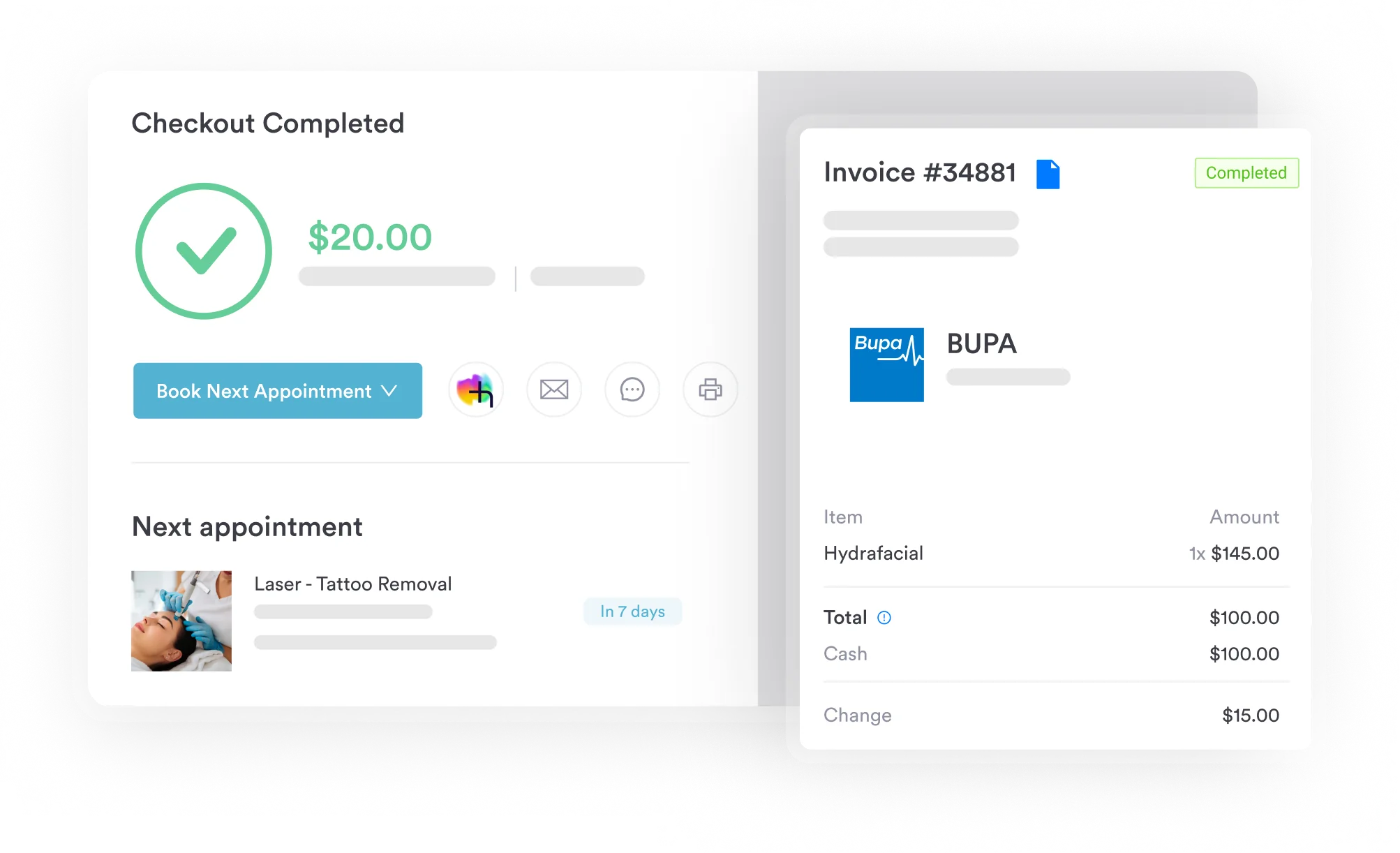
Pabau connects directly to electronic claims via Claim.MD, Pabau’s US clearinghouse partner. This enables real-time eligibility verification and electronic remittance advice (ERA) for CPT Code 97530 and related rehabilitation codes across thousands of US payers.
The result closes the loop between documentation, submission, and payment reconciliation without manual intervention at each step. More background on how the Claim.MD clearinghouse works is available in the Pabau blog.
CPT Code 97530 is one of the highest-volume rehabilitation codes in US outpatient billing, and one of the most frequently audited. The code itself is straightforward: dynamic, functional activities billed in 15-minute units with direct one-on-one contact.
Claims fail when documentation doesn’t link the specific activity to a specific functional goal. They also fail when therapeutic activities get billed as therapeutic exercise and land in the wrong code.
Three habits separate practices with consistent reimbursement from those fighting recurring denials. They are structured templates, clear billing team training on the 97530 vs 97110 distinction, and pre-submission claim scrubbing. Pabau’s claims management and clearinghouse integration handles the last two automatically. To see how it works in a rehabilitation billing workflow, book a demo.

Need to understand how physical therapy billing fits into broader clinic compliance? Physiotherapy clinic compliance requirements covers the documentation and regulatory standards that apply across rehabilitation settings.
Exploring the right software for a PT or OT practice? Physiotherapy clinic management software breaks down the key features to look for when evaluating systems for timed-code billing and documentation.
Want to understand the full claim lifecycle from submission to payment? Revenue cycle management in healthcare explains how each billing stage connects and where denial risk accumulates.
CPT Code 97530 is used to bill for therapeutic activities. These are dynamic, goal-directed tasks designed to improve functional performance in activities of daily living (ADLs). The code covers direct one-on-one patient contact by a qualified provider, billed in 15-minute increments. Qualifying activities include transfer training, functional mobility drills, and simulated occupational tasks.
CPT 97530 targets functional performance and ADL restoration through simulated real-world tasks. CPT 97110 (therapeutic exercise) targets strength, endurance, flexibility, or range of motion as isolated physiological parameters. A stair-climbing drill tied to a return-to-home goal is 97530; quad sets or resistance band work is 97110. The documentation must reflect this distinction clearly.
Required documentation includes the specific activity performed in functional terms, the time in/out or total minutes, and confirmation of direct one-on-one contact. It also requires linkage to a functional goal in the plan of care and the patient’s response. A medical necessity justification and a supporting ICD-10-CM diagnosis code round out the note. Vague entries such as “therapeutic activities per plan” are the top audit deficiency.
Physical therapists (PTs) and occupational therapists (OTs) are the primary eligible providers. PT assistants (PTAs) and OT assistants (OTAs) may also bill under supervision, subject to a 15% Medicare payment reduction effective 2022. Eligibility for speech-language pathologists varies by payer. State licensure law governs independent billing rights – always verify with your state practice act.
Medicare reimbursement for CPT Code 97530 varies by geographic locality and setting. National benchmarks for 2025 range from approximately $20-$25 per unit in facility settings to $29-$34 per unit in non-facility settings. Rates are updated annually through the Physician Fee Schedule; always verify current-year rates using the CMS MPFS lookup tool rather than relying on prior-year figures.
Possibly, but with caution. CCI edit status for the 97530 and 97110 pair changes with NCCI Policy Manual updates, which are issued quarterly. When billing both codes on the same date is permissible, distinct time documentation for each service is essential. Check the current NCCI manual and your payer’s local coverage determination before assuming both can be co-billed.
The most frequent errors are vague activity descriptions and incorrect unit calculation using the 8-minute rule. Other errors include unbundling with 97110 without distinct time documentation, and billing 97530 for passive or exercise-only work that belongs under 97110 or 97140. Exceeding MUE limits without supporting documentation is also common.



