CPT Code 62284: Injection procedure for myelography
CPT Code 62284: official descriptor and procedure overview The American Medical ...

Last Updated: Oct 19, 2026
82785 is the CPT code for immunoglobulin; IgE.
Let Pabau's smart automation suggest the right codes, reduce claim denials, and keep your practice compliant—effortlessly.
Automate repetitive tasks and focus on what matters most—your patients.
Reduce coding errors and ensure compliance with the latest regulations.
Clean claims, fewer denials, and faster reimbursements.
Powerful insights and reporting to help your practice thrive.
HIPAA compliant SOC 2 certified GDPR-compliant Trusted by 4,000+ clinics worldwide

CPT code 82785 reports total serum IgE (all immunoglobulin E in blood), not individual allergen-specific IgE panels (those use CPT 86003 per allergen).
Medicare coverage for 82785 is governed by LCD L36241; covered diagnoses include allergic rhinitis (J30.x), atopic dermatitis (L20), asthma (J45.x), and suspected parasitic infections.
The most common denial cause is mismatched ICD-10 linkage; each 82785 claim needs a diagnosis code that establishes medical necessity per the applicable MAC’s LCD.
Pabau’s claims management software submits 82785 claims electronically via Claim.MD, with built-in CPT and ICD-10 catalogues and real-time eligibility checks to catch errors before submission.
CPT code 82785 is classified under the Chemistry Procedures section of the CPT code set, maintained by the American Medical Association (AMA). Its official descriptor is: Immunoglobulin; IgE.
The code captures the total concentration of IgE antibodies in serum, measured by quantitative assay. It covers any method used to produce that quantitative result, including immunoturbidimetry, chemiluminescent immunoassay (CLIA), and enzyme-linked immunosorbent assay (ELISA) for total IgE.
Total serum IgE quantification is ordered when clinicians need to assess the overall burden of IgE-mediated immune activity rather than identify a specific allergen trigger. The result establishes atopic status, screens for parasitic infection, and supports diagnosis of rare IgE-driven malignancies.
Covered clinical indications that establish medical necessity for CPT code 82785 include:
Total IgE alone does not identify which allergen drives the patient’s symptoms. That distinction matters for coding: once the ordering clinician wants allergen-specific results, the correct code shifts from 82785 to 86003.
CPT 86003 covers allergen-specific IgE antibody testing by ELISA, billed per allergen tested, while 82785 covers only the total (aggregate) IgE concentration in serum. These two tests serve different diagnostic purposes and are billed separately; confusing them is the most common 82785 coding error and the fastest route to an unbundling denial.
A practical rule: if the lab report lists a single number in IU/mL with no allergen name, that is 82785. If the report lists individual allergens each with a class rating or kU/L result, those are 86003 units.
Allergy workups frequently combine serum IgE testing with skin-based provocation tests. Understanding how CPT code 82785 interacts with the skin test codes prevents same-day billing errors and unbundling denials.
The key documentation requirement when billing 82785 alongside any skin test code is a clear statement in the chart explaining why both the serum total IgE and the skin provocation testing were medically necessary on that encounter. Payers increasingly scrutinise same-day allergy test combinations for redundancy.
Each 82785 claim must carry at least one ICD-10-CM diagnosis code that establishes medical necessity. Check current code validity against the CDC/NCHS ICD-10-CM web tool, as codes are updated annually on October 1.
Claims pairing 82785 with a non-covered diagnosis, or with a condition that doesn’t logically require total IgE measurement (a urinary tract infection, for example), draw payer scrutiny and frequently deny on medical necessity grounds. Document the specific symptom or clinical finding that prompted the test order in the chart note before the claim goes out.
Medicare coverage for CPT code 82785 is governed by Local Coverage Determination LCD L36241 (Allergy Testing), administered by Medicare Administrative Contractors (MACs). Maintaining medical billing compliance for this code means understanding both the national LCD framework and any MAC-specific extensions that apply to your jurisdiction.
Blue Cross Blue Shield of North Carolina policy AHS-G2031 addresses concurrent billing of serum IgE tests alongside skin provocation tests. Most other commercial plans follow the general LCD L36241 framework but add payer-specific restrictions.
Prior authorization (PA) requirements for CPT code 82785 vary by payer and plan. Medicare generally does not require PA for 82785, but an ABN may apply for non-covered indications. Running insurance eligibility verification before the encounter is the fastest way to identify which commercial plans or Medicaid programs require PA for this code in your jurisdiction. When PA is required, have ready: the ordering provider’s clinical rationale, relevant ICD-10 codes, any prior test results, and the patient’s symptom history. PA requirements are subject to change annually; verify directly with the payer before assuming coverage.
Check your MAC’s most current version of LCD L36241, not a cached copy. MACs revise coverage articles periodically, and billing against a superseded version is a compliance risk that auditors catch during retrospective reviews.
Medicare pays for 82785 under two distinct fee schedules depending on who bills the claim. Verifying which schedule applies before billing is the single most important step in avoiding an underpayment or a claim rejection for incorrect place of service. Use the CMS Physician Fee Schedule lookup tool for the most current rates by locality.
Geographic locality multipliers (GPCIs) mean that the allowed amount for CPT code 82785 in Manhattan will differ from the rate in rural Mississippi. Always cite the specific fee schedule year when discussing rates, and note that CLFS rates are updated annually by CMS. Practices submitting 82785 claims electronically via Claim.MD clearinghouse integration benefit from real-time payer routing and built-in CPT catalogues that flag the correct billing entity before the claim leaves the practice.
Modifier use on CPT code 82785 is narrow because it is a standalone quantitative laboratory test with no professional/technical split and no bilateral component. The modifiers that may legitimately apply are:
Most 82785 denials fall into a handful of predictable patterns. Understanding common denial codes in medical billing helps you act before a claim is adjudicated. Here are the five most frequent denial scenarios and the corrective action for each.
Systematic denial management in healthcare for allergy codes means tracking denial reason codes by payer, identifying which of the five patterns is driving most rejections in your practice, and addressing the root cause in the documentation or coding workflow rather than simply re-billing the same claim.

Pabau connects to Claim.MD to validate CPT and ICD-10 codes before submission, run real-time eligibility checks, and track denial reason codes by payer – so 82785 claims go out right the first time.

A 82785 claim that survives an audit has one thing in common with every other surviving claim: the chart tells the same story the claim tells. Auditors reviewing 82785 look for these specific elements, and missing any one of them is grounds for recoupment.
Practices using claims management software that links clinical documentation directly to claim generation reduce the risk of submitting a claim whose diagnosis codes have drifted from what the chart actually says. Building a clean claim for 82785 starts with a documentation workflow where the coder and the clinician share the same record in real time.
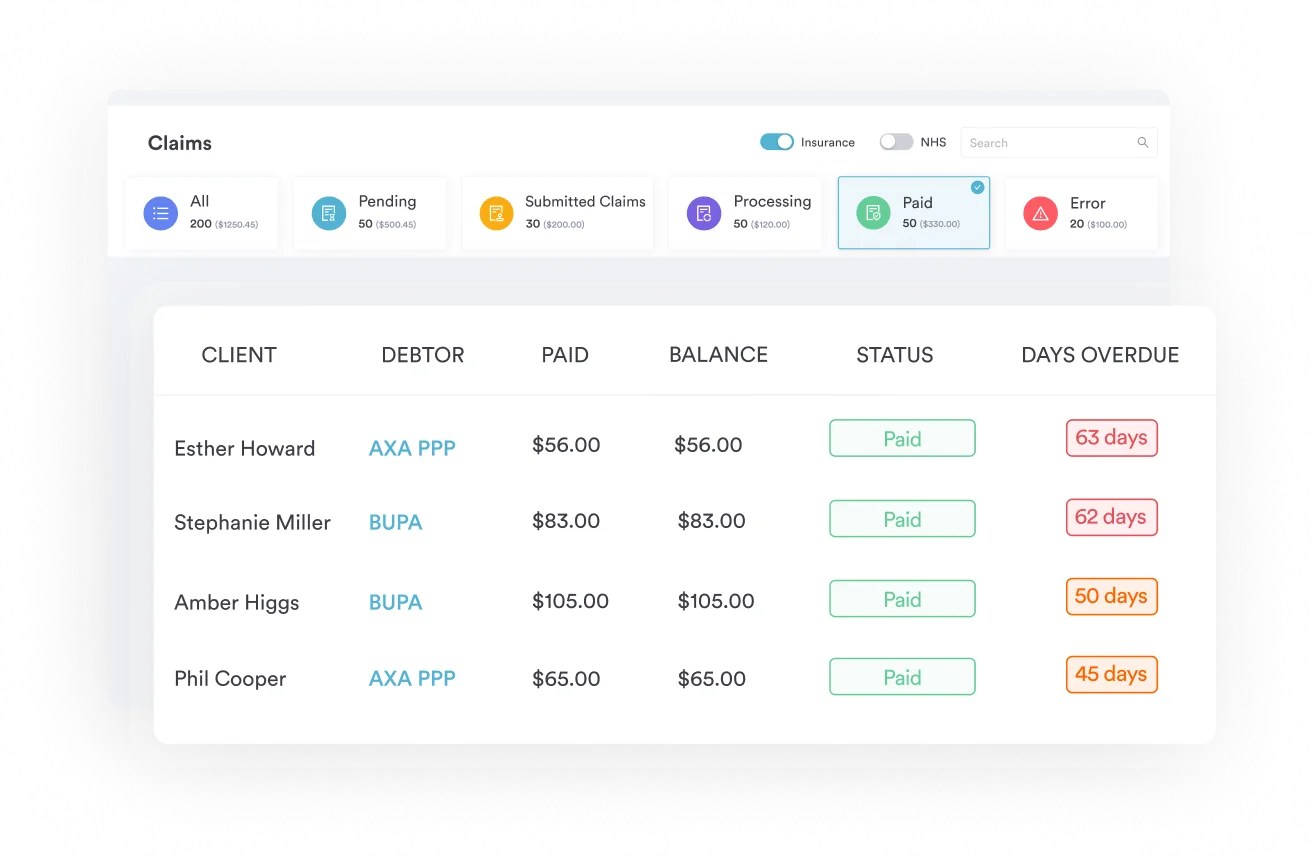
CPT code 82785 is a straightforward code for a specific lab test, but the billing environment around it is not: a mismatched ICD-10 code, a missing documentation element, or a confusion with CPT 86003 turns a clean claim into a denial. Knowing the exact LCD requirements, keeping ICD-10-CM codes current, and understanding the fee schedule rules for reference lab versus in-office billing are the three levers that reduce denial rates for this code.
Pabau connects to the Claim.MD clearinghouse to validate CPT and ICD-10 combinations before submission and track denial reason codes by payer.
To see how the workflow fits an allergy or immunology practice, explore medical billing fundamentals or book a demo with the Pabau team.

Need to track denial codes across multiple payers? Electronic remittance advice explains how ERAs carry CARC denial reason codes from payer to practice, so you can map which payers are rejecting your allergy test claims and why.
Submitting claims to Medicare or commercial payers for the first time? Medical claims clearinghouse covers how a clearinghouse validates and routes claims, including for laboratory codes like 82785.
Want to understand what a clean claim looks like for a lab code? Superbill guide walks through how a superbill for a lab encounter maps to CPT codes, diagnosis codes, and modifiers on the final CMS-1500 form.
CPT code 82785 covers a quantitative total serum immunoglobulin E (IgE) assay, reporting the aggregate concentration of all IgE antibodies in a blood sample by any laboratory method. It does not cover allergen-specific IgE testing; those individual allergen results are billed under CPT 86003, one unit per allergen.
Medicare rates for CPT code 82785 vary by geographic locality and by whether the test is billed under the Medicare Physician Fee Schedule (MPFS) for in-office testing or the Clinical Laboratory Fee Schedule (CLFS) for reference lab billing. Rates are updated annually; check the current year’s rate using the CMS Physician Fee Schedule lookup tool at cms.gov before citing a dollar figure.
High-confidence covered diagnoses include J30.1 (allergic rhinitis due to pollen), L20.9 (atopic dermatitis, unspecified), J45.20 and J45.40 (asthma variants), and B83.9 (helminthiasis, unspecified). The specific covered diagnosis list is defined by Medicare LCD L36241 and may vary by MAC jurisdiction; verify the applicable version before billing.
CPT 82785 reports one result: the total IgE concentration in serum. CPT 86003 reports allergen-specific IgE, billed per allergen tested, and identifies which specific environmental or food antigens the patient is sensitised to. Both can be billed on the same encounter when both are clinically indicated and distinct, but confirm current NCCI edits and document the separate clinical rationale for each.
Medicare generally does not require prior authorization for CPT 82785, though an Advance Beneficiary Notice (ABN) may be required when the indication falls outside LCD L36241 coverage. Commercial plans and Medicaid programs vary; some require PA, others do not. Verify PA requirements with the specific payer before the encounter, as requirements change annually.
The most frequent denials are: incorrect ICD-10 linkage (diagnosis not on the LCD covered list), missing medical necessity documentation in the chart, frequency limits exceeded without documented re-indication, improper unbundling with CPT 86003, and reference lab billing errors where both the physician and the lab bill for the same technical component.