

HCPCS Code E0272: Foam rubber mattress billing guide
HCPCS Code E0272: official descriptor and code overview HCPCS Code E0272 is the ...

Last Updated: Nov 6, 2026
27514 is the CPT code for open treatment of femoral shaft fracture, with or without external fixation, with insertion of intramedullary implant, with or without cerclage.
Claims for this code get denied more often than most orthopedic codes because coders confuse it with CPT 27513 (supracondylar fracture) and because payers increasingly scrutinise prior authorisation documentation for open fixation procedures.
Let Pabau's smart automation suggest the right codes, reduce claim denials, and keep your practice compliant—effortlessly.
Automate repetitive tasks and focus on what matters most—your patients.
Reduce coding errors and ensure compliance with the latest regulations.
Clean claims, fewer denials, and faster reimbursements.
Powerful insights and reporting to help your practice thrive.
HIPAA compliant SOC 2 certified GDPR-compliant Trusted by 4,000+ clinics worldwide

CPT code 27514 describes open treatment of a distal femoral shaft fracture with internal fixation, distinct from supracondylar and proximal femur codes.
The correct ICD-10-CM pairing comes from the S72 code range; laterality (left vs. right) must be specified on every claim.
CPT 27514 carries a 90-day global surgery period under Medicare, bundling most postoperative follow-up visits.
Pabau’s claims management tools help orthopedic practices track prior authorisation requirements and submit clean 27514 claims through the Claim.MD clearinghouse.
CPT code 27514 describes “open treatment of femoral shaft fracture, with or without external fixation, with insertion of intramedullary implant, with or without cerclage.” Published by the American Medical Association, the code belongs to the musculoskeletal surgery section of the CPT codebook, specifically the femoral shaft subsection.
The key anatomical distinction: 27514 covers the femoral shaft, the long mid-portion of the thigh bone. It does not cover the distal condylar region (CPT 27513) or the proximal femur and hip (CPT 27244, 27245). Getting the anatomy right before selecting the code is the single most important step in preventing a denial.
Understanding the scope of 27514 prevents both undercoding and upcoding. The code bundles the intramedullary nailing procedure in its entirety, including the same-session application of external fixation and cerclage wiring.
The femoral fracture code family (CPT 27500 through 27580) trips up experienced coders because the descriptors differ only by anatomical site and treatment method. The comparison below isolates the key differentiators.
The 27514 vs. 27513 distinction: 27514 covers the femoral shaft. CPT 27513 covers the supracondylar region, the distal flare of the femur just above the condyles. When the fracture line crosses both zones, document the primary fracture site and select the code that matches where the principal fixation was performed.
Check the operative note for the phrase ‘intramedullary nail’ or ‘IM rod’ before selecting 27514. If the note describes plate-and-screw fixation without an IM implant on the femoral shaft, CPT 27506 is the correct code, not 27514. This single distinction accounts for a significant share of upcoding audits in orthopedic practices.
Every CPT 27514 claim needs a primary ICD-10-CM diagnosis from the S72 femur fracture range. Laterality is mandatory: Payers reject claims that use an unspecified-side code when the operative report clearly documents a left or right femur.
Use the 7th character “A” for initial encounter (the surgical date). If the patient has a complication encounter or non-union follow-up, switch to “D” (subsequent encounter) or “G” (subsequent encounter for fracture with delayed healing). Claims submitted with the wrong 7th character are rejected as a simple keying error but are frequently misclassified as a medical necessity denial.
Modifier selection for 27514 depends on the operative scenario. Using no modifier when one is required, or appending the wrong modifier, is one of the top denial triggers for this code.
Medicare reimbursement for CPT 27514 is calculated from the Medicare Physician Fee Schedule (MPFS) using relative value units (RVUs). Rates change annually and vary by geographic locality. The figures below reflect national averages; practices should verify current rates using the CMS Physician Fee Schedule Lookup Tool for their specific locality.
RVU values are multiplied by the annual Medicare conversion factor (CF) to derive the payment rate, then adjusted by the Geographic Practice Cost Index (GPCI) for your locality. Because 27514 is almost always performed in a hospital or ASC, the facility-rate RVUs apply. Use the FastRVU lookup tool to calculate the exact dollar amount for your locality and confirm the current-year values before billing.
Commercial payers typically reimburse at a percentage above or below Medicare rates, specified in the provider contract. Most commercial contracts for major orthopedic procedures pay 110-140% of Medicare, but this varies considerably by payer and market. Verify your contracted rate before quoting estimated patient responsibility.
CPT 27514 carries a 90-day global surgery period under the Medicare global surgery package, meaning most postoperative care provided within 90 days of the procedure date is bundled into the 27514 payment and cannot be billed separately.
Understanding medical billing fundamentals around global periods helps practices avoid inadvertent bundling errors that lead to overpayment recovery demands. The 90-day clock starts on the day of the procedure, and CMS requires that the postoperative period assignment for 27514 be verified against the current-year MPFS indicator before billing any same-period services.
Prior authorisation requirements for CPT 27514 vary significantly by payer and plan. No universal rule applies. Medicare fee-for-service does not require prior auth for 27514, but Medicare Advantage plans, Medicaid managed care plans, and commercial insurers frequently do.
Maintaining strong medical billing compliance processes means building prior auth tracking into the scheduling workflow rather than chasing it on the morning of surgery. Document the auth number on every claim line. A missing or expired auth number is the fastest path to a denial on 27514.

Pabau connects with the Claim.MD clearinghouse to streamline CPT code submission, track prior authorisation status, and flag claim errors before they reach the payer. See how it works for orthopedic and surgical practices.

Denials for CPT code 27514 cluster around four root causes: Wrong code selection, ICD-10 mismatch, missing prior auth, and documentation gaps. Each is preventable with the right pre-claim workflow.
Effective denial management workflows for 27514 include a pre-submission checklist that flags the most common denial triggers for orthopedic surgical claims before they leave the practice. Refer to the full list of denial codes in medical billing to match payer remittance advice remark codes to the specific error type when a 27514 claim comes back.
Run every 27514 claim through a code-pair edit check before submission. NCCI edits for femoral fracture codes are updated quarterly, and a companion code that cleared last quarter may be bundled this quarter. The AAPC Codify tool and PGM Billing search both surface current edit pairs at no cost.
The operative report is the billing document for 27514. Payers that audit this code look for specific elements that confirm open treatment with intramedullary fixation was performed on the femoral shaft. A vague or incomplete note is the most common root cause of medical necessity denials after the fact.
Submitting complete claims through electronic claims via Claim.MD, Pabau’s integrated US clearinghouse, adds a real-time validation layer that catches claim format errors and payer-specific edit failures before the claim reaches the carrier.
The clearinghouse connects to 4,000+ US payers and processes CMS-1500 and 837P claims, returning ERA/835 remittances so practices can reconcile payments against expected 27514 reimbursement without a manual matching process. For practices managing volume orthopedic billing, Pabau’s claims management software tracks each claim through the full revenue cycle from submission to payment posting.
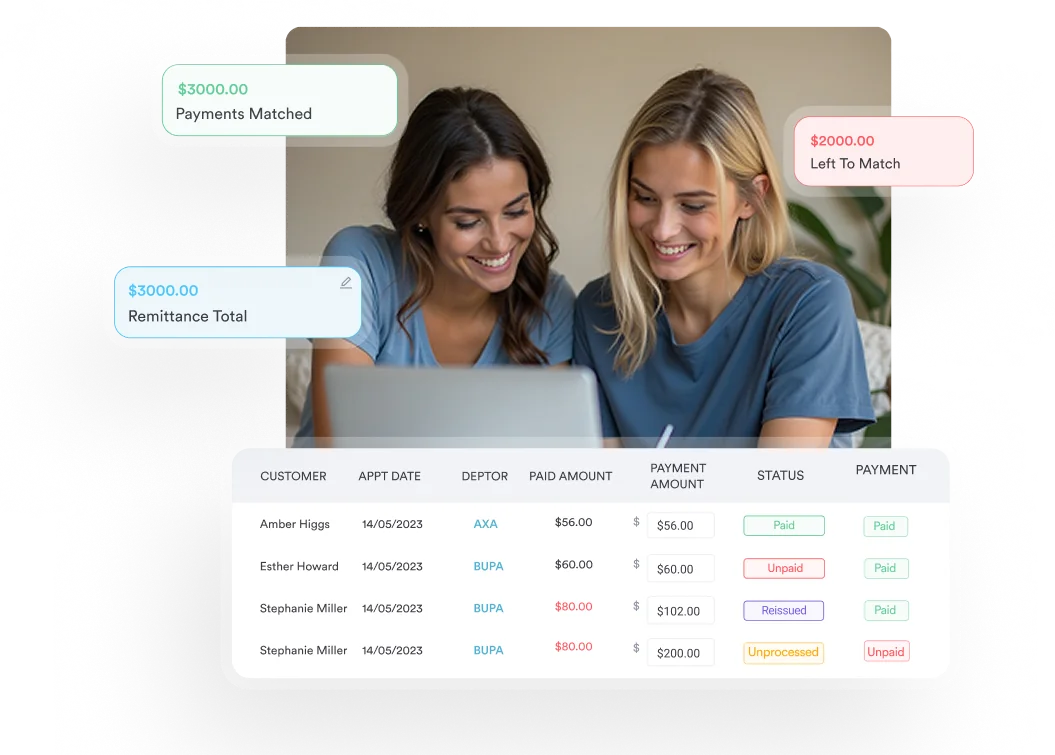
Maintaining consistent clean claim requirements at the point of submission reduces the average denial rate on major surgical codes like 27514. The AAPC Codify and PGM Billing CPT search are useful free references for confirming code descriptors and checking for code pairs before filing.
Getting CPT code 27514 right comes down to three things: Correct code selection (IM nail on femoral shaft, not plate fixation and not a supracondylar fracture), complete operative documentation that explicitly names the technique and laterality, and a pre-submission workflow that catches ICD-10 and prior auth issues before they create a denial. These are solvable problems with the right process.
Pabau’s integrated clearinghouse connection and claims management software give orthopedic billing teams real-time claim validation and revenue cycle visibility, so denials on high-value surgical codes like 27514 are caught at submission rather than discovered weeks later on a remittance.
To see how Pabau handles surgical billing workflows end-to-end, book a demo.

Need a broader overview of how claims move through the revenue cycle? What is revenue cycle management explains the end-to-end claims process from coding through payment posting.
Confused about which clearinghouse handles your orthopedic claims? Medical claims clearinghouse guide covers how clearinghouses validate and route claims to payers.
Want to understand what makes a claim clean before submission? Understanding the 837 file breaks down the EDI transaction format used for all electronic claim submissions.
CPT code 27514 is a surgical procedure code for open treatment of a femoral shaft fracture with insertion of an intramedullary implant, with or without cerclage and with or without external fixation. It is used when the surgeon surgically exposes the fracture site and stabilises it with an IM nail rather than performing a closed reduction. The code belongs to the musculoskeletal surgery section of the AMA CPT codebook.
CPT 27514 covers open treatment of a femoral shaft fracture with an intramedullary implant; CPT 27513 covers open treatment of a supracondylar or transcondylar distal femur fracture, the flared region just above the knee condyles. The anatomical site is the key differentiator: Shaft fractures use 27514, distal condylar fractures use 27513. When a fracture spans both zones, select the code that matches where the principal fixation was placed and document the decision in the operative note.
The global period for CPT 27514 is 90 days under the Medicare global surgery package. Routine postoperative visits, wound care, and imaging follow-up during those 90 days are bundled into the procedure payment. Services unrelated to the fracture care can be billed separately using modifier 24. Confirm the global period assignment against the current Medicare Physician Fee Schedule before billing any same-period services, as global period indicators are updated annually.
Medicare payment for CPT 27514 is calculated using the total RVU value multiplied by the annual conversion factor and adjusted for geographic locality. The work RVU is approximately 16.00 and total facility RVUs are approximately 26.10, though these figures change with each year’s MPFS final rule. For current-year payment amounts specific to your locality, use the CMS Physician Fee Schedule Lookup Tool at cms.gov.
Prior authorisation requirements for CPT 27514 depend on the payer. Medicare fee-for-service does not require prior auth. Medicare Advantage plans, most commercial insurers, and many Medicaid managed care plans do require it for inpatient orthopedic surgery. Emergency trauma cases typically go through retroactive review rather than prospective authorisation. Always verify the specific payer’s requirement before the procedure and document the authorisation number on every claim line.




