



CCSD code G5100: Bypass of duodenum billing guide
CCSD code G5100 bills a bypass that leaves the duodenum in place CCSD code G5100...

Last Updated: Oct 16, 2026

CPT Code 15821 reports blepharoplasty of the lower eyelid with removal of an extensive herniated fat pad, within the CPT Integumentary System section.
Medicare covers CPT 15821 only when documented functional impairment exists, such as a visual field defect caused by excess lower eyelid skin. Cosmetic procedures are excluded.
ICD-10-CM code H02.83x (dermatochalasis) is the primary diagnosis paired with CPT 15821. Using a cosmetic-only diagnosis will trigger an automatic denial.
Pabau’s claims management software helps oculoplastic and plastic surgery practices attach correct ICD-10 pairings and reduce claim rejections for eyelid surgery billing.
CPT Code 15821, as defined by the AMA’s CPT code set, describes blepharoplasty of the lower eyelid with removal of an extensive herniated fat pad. This reference covers the official descriptor, medical necessity criteria, Medicare reimbursement, RVU breakdown, and applicable modifiers.
It also covers ICD-10 pairings, documentation requirements, and the most common billing errors that trigger denials. The fat pad distinction is where most upcoding errors occur.
The line between cosmetic and medically necessary is razor-thin for this code, and payer documentation requirements are exacting. A single missing visual field test result can flip a covered functional surgery into an uncovered cosmetic denial.
Official descriptor: Blepharoplasty, lower eyelid; with extensive herniated fat pad.
CPT Code 15821 sits in the Integumentary System section of CPT (codes 10000-19999), under the “Repair Procedures on the Eyelids” subsection. It describes surgical excision of excess skin from the lower eyelid along with repositioning or removal of the underlying herniated orbital fat pad. That single qualifier distinguishes it from CPT 15820, which covers the identical anatomical site but does not include fat pad removal. Claim scrubbing catches the mismatches that would otherwise come back as a denial two weeks later. Eligibility, referral status and time thresholds all sit inside the Medicare Benefits Schedule descriptor rather than the code itself.
The procedure is performed for dermatochalasis of the lower lid, where redundant or lax skin impairs function or causes chronic irritation. In plastic surgery billing workflows, lower eyelid cases almost always require a documented functional impairment to clear payer review. Without it, the claim reverts to a cosmetic exclusion regardless of the surgeon’s intent.
The table below summarises the key data points coders and billing staff need before submitting a claim for CPT Code 15821.
According to CMS Article A56503, Medicare covers lower eyelid blepharoplasty only when there is documented functional impairment. Cosmetic blepharoplasty is explicitly excluded. This distinction is the most consequential issue in dermatology practice management and oculoplastic surgery billing alike.
Functional indications that typically support medical necessity for CPT 15821 include:
Visual field testing is the cornerstone of functional documentation. Medicare Administrative Contractors (MACs) such as Novitas Solutions typically require perimetry performed both with and without mechanical eyelid elevation to quantify the visual improvement. The specific threshold for field defects can vary by MAC and their applicable Local Coverage Determination (LCD), so verify with your contractor before billing.
Commercial payers often mirror Medicare’s functional criteria, but prior authorization requirements and visual field thresholds vary by plan. Never assume commercial coverage based on Medicare approval alone.
Request a copy of the applicable Local Coverage Determination from your MAC before submitting your first CPT 15821 claim. LCD criteria for visual field defect thresholds are updated periodically, and the specific percentages differ between Novitas, CGS, and Palmetto GBA jurisdictions.
Every CPT 15821 claim requires a supporting ICD-10-CM diagnosis code that demonstrates medical necessity. Pairing this code with a cosmetic-only diagnosis will result in automatic denial. Practices using billing software with built-in ICD-10 crosswalk tools can reduce this error significantly.
Always select the most specific code available. H02.832 (right lower eyelid) or H02.835 (left lower eyelid) are the appropriate choices for unilateral procedures. For bilateral CPT 15821 claims, report both H02.832 and H02.835 and apply modifier -50. Verify your ICD-10 pairings against current LCD documentation rather than relying solely on crosswalk tools, as covered diagnosis lists can be revised annually.
Medicare payment for CPT Code 15821 is calculated using the Medicare Physician Fee Schedule (MPFS). Rates vary by geographic locality and are updated annually by CMS. Always verify current rates using the CMS MPFS lookup tool before quoting patients or projecting reimbursement.
An RVU lookup tool applies the standard Resource-Based Relative Value Scale (RBRVS) structure to calculate CPT 15821 RVU components. RVU components determine the physician payment rate when multiplied by the annual Conversion Factor (CF) set by CMS.
Medicare RVU values and the Conversion Factor change each January. Use the CMS MPFS Search Tool or a current-year RVU calculator to look up the precise payment for your locality. Published third-party figures may lag behind the current year’s CMS final rule.
Correct modifier assignment is critical for CPT Code 15821. Bilateral procedures, multiple procedures performed at the same session, and laterality distinctions each require specific modifier combinations. Incorrect modifier usage is one of the top denial reasons for eyelid surgery billing codes.
Bilateral modifier rules differ between payers. Some commercial plans require two line items (one with -RT, one with -LT) rather than a single line with -50. Always check your payer’s modifier grid before submitting. For Medicare, modifier -50 on a single line is the standard approach.
Inadequate documentation is the primary driver of functional blepharoplasty denials. The medical record must build an unambiguous case that the procedure was clinically indicated, not cosmetically motivated. Practices opening a cosmetic practice that also performs functional eyelid procedures need a distinct documentation pathway for each category.
Required documentation elements for CPT 15821 claims typically include:
Maintaining HIPAA-compliant documentation practices for surgical records is non-negotiable. Operative reports, visual field test results, and pre-operative photographs must be stored securely and retrievable on demand for payer audits.
A structured medical forms workflow captures these elements at each patient encounter. This reduces the administrative burden on billing staff when appeals or additional documentation requests arrive. Digital intake and consent forms ensure the right data is collected consistently before every surgical case.

Prior authorization requirements for CPT 15821 vary significantly by payer and plan. Medicare does not universally require prior auth for this code, but specific Medicare Advantage plans and commercial insurers frequently do. The documentation submitted for prior authorization is substantially the same as what is needed to support the claim: physician notes, photographs, and visual field results.
The blepharoplasty code family (CPT 15820-15823) is a frequent source of upcoding errors and audit flags. The differentiating factors are anatomical site (upper vs. lower eyelid) and whether fat pads are removed.
Upper eyelid procedures follow a parallel documentation logic in CPT 15823. The same functional-versus-cosmetic distinction extends to other excision codes.
Key selection rule: Code selection is determined by the operative report, not by the intended cosmetic outcome. If the operative report documents skin excision from the lower eyelid without mention of fat pad manipulation, 15820 is correct. If fat pads were identified, opened, and excised or repositioned, 15821 applies. Reporting 15821 when only skin was excised is a compliance violation.
Denials for lower eyelid blepharoplasty follow predictable patterns. Oculoplastic surgery practices that audit their CPT 15821 denials consistently find the same root causes:
Eyelid surgery billing sits at the intersection of surgical coding, functional documentation, and payer-specific coverage rules. A claim for CPT Code 15821 can fail at any one of six distinct checkpoints before it pays.
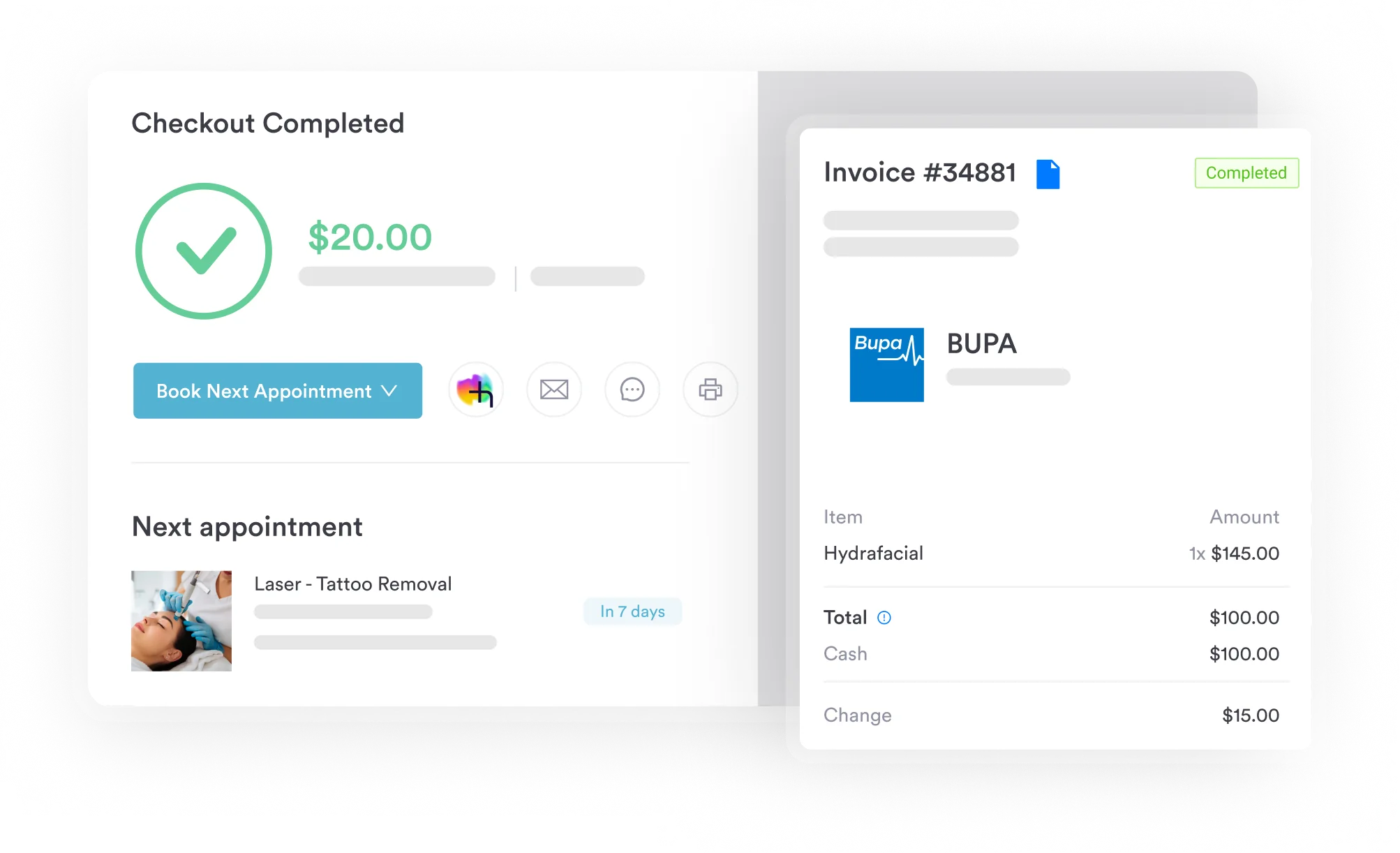
Pabau supports plastic surgery EMR and oculoplastic practices with structured clinical documentation and pre-built ICD-10 pairing lookups. Automated workflows also flag incomplete records before claims are submitted. Specific workflow touchpoints include:
Explore how practice management software can streamline the full billing cycle for surgical specialties. Practices using secure patient documentation tools also benefit from audit-ready record storage. This makes responding to payer documentation requests faster and less disruptive to clinical operations.
Run a quarterly audit of CPT 15821 denials and categorize them by reason code. If more than 20% cite missing documentation, the fix is a pre-surgery documentation checklist, not a post-denial appeals process. Prevention is faster and less expensive than retrospective correction.

Pabau’s claims management workflows help oculoplastic and plastic surgery practices attach the right modifiers and link correct ICD-10 pairings. This catches missing documentation before claims go out the door.

CPT Code 15821 is deceptively specific. The fat pad qualifier and the functional vs. cosmetic distinction create two overlapping failure points that account for the majority of lower eyelid blepharoplasty denials. Getting both right requires operative documentation that matches the code billed and a functional diagnosis that satisfies payer LCD criteria.
Pabau’s claims management tools give oculoplastic and plastic surgery practices the structure to catch these errors before claims go out, not after they bounce back. Book a demo to see how Pabau handles surgical billing workflows end to end.

Coding a retinal disorder without a specific diagnosis? ICD-10 code for unspecified retinal disorder It places H35.9 within category H35, covering other retinal disorders under H30-H36.
Coding glaucoma caused by another systemic disease? ICD-10 code for glaucoma manifestation It covers the Code First rule that sequences the underlying systemic condition ahead of H42.
Coding a vitreous body disorder without detail? ICD-10 code for vitreous body disorder It applies only when documentation doesn’t support a more specific H43 subcode.
CPT Code 15821 is a surgical procedure code used to report blepharoplasty of the lower eyelid with removal of an extensive herniated fat pad. It is billed when a surgeon excises excess or redundant skin from the lower eyelid and removes the herniated orbital fat pad to correct dermatochalasis. This typically applies when the condition causes documented functional visual impairment rather than a purely cosmetic concern.
CPT 15820 describes blepharoplasty of the lower eyelid without fat pad removal. CPT 15821 covers the same anatomical site but adds removal of an extensive herniated fat pad. Code selection must match the operative report. If fat pads were not excised or repositioned during the procedure, 15820 is the correct code. Using 15821 when only skin was removed constitutes upcoding.
Medicare covers CPT 15821 only when the procedure is medically necessary due to documented functional impairment. One qualifying example is a visual field defect caused by excess lower eyelid skin. Cosmetic blepharoplasty is explicitly excluded from Medicare coverage per CMS Article A56503. Claims must carry a functional ICD-10 diagnosis, typically H02.832 or H02.835 for dermatochalasis, and supporting visual field test results.
CPT 15821 commonly uses four modifiers. Modifier -50 reports a bilateral procedure with both lower eyelids operated in the same session. Modifier -RT or -LT reports a unilateral case on the right or left eyelid. Modifier -51 applies to multiple procedures in the same session, while -59 marks a distinct procedural service billed with another eyelid code. Bilateral modifier rules differ by payer, so verify whether to use -50 on a single line or separate -RT/-LT lines before submitting.
A CPT 15821 claim requires physician notes documenting functional visual impairment and clinical photographs showing excess lower eyelid skin. It also requires visual field testing results from Humphrey or Goldmann perimetry, performed with and without eyelid elevation. Finally, a complete operative report must confirm skin excision with removal of the herniated fat pad and specify laterality. Prior authorization documentation and a functional ICD-10 diagnosis must also accompany claims submitted to payers that require them.
The RVUs for CPT 15821 consist of a work RVU (wRVU), practice expense RVU (PE RVU), and malpractice RVU (MP RVU). The total RVU is adjusted by Geographic Practice Cost Indices (GPCI) and multiplied by the annual CMS Conversion Factor to determine the Medicare payment rate. Both the RVU values and the Conversion Factor are updated annually. Use the current-year CMS Physician Fee Schedule lookup tool or a live RVU calculator to verify exact figures for your locality.



