

HCPCS Code E0272: Foam rubber mattress billing guide
HCPCS Code E0272: official descriptor and code overview HCPCS Code E0272 is the ...

Last Updated: Nov 6, 2026
M3600 is the CCSD code for enlargement of bladder (including cystoscopy). It is the schedule's general code for an operation that increases bladder capacity, and the schedule carries no published scope note for it.
Cystoscopy in the same session is included in the code. Enlargement that uses a segment of bowel has its own code: M3602 for enterocystoplasty, or M3603 when robotic assisted. M3600 sits in Chapter 12 of the CCSD Schedule, section 12.3 Bladder, and Bupa grades it CMO 1.
Let Pabau's smart automation suggest the right codes, reduce claim denials, and keep your practice compliant—effortlessly.
Automate repetitive tasks and focus on what matters most—your patients.
Reduce coding errors and ensure compliance with the latest regulations.
Clean claims, fewer denials, and faster reimbursements.
Powerful insights and reporting to help your practice thrive.
HIPAA compliant SOC 2 certified GDPR-compliant Trusted by 4,000+ clinics worldwide

CCSD code M3600 is the general code for enlarging the bladder, with cystoscopy in the same session included. A separate cystoscopy line on the claim is an unbundling error.
Enlargement using a bowel segment has its own code: M3602 for enterocystoplasty, or M3603 when robotic assisted. Coding an ileocystoplasty as M3600 undercodes the case.
UK private medical insurers such as Bupa, AXA Health, Aviva and Vitality typically require pre-authorisation for M3600. The authorisation number must appear on the invoice.
Pabau, the practice management software we build, creates CCSD invoices, submits them to UK insurers through Healthcode and tracks each claim against the patient record.
CCSD code M3600 is the UK private healthcare procedure code for enlargement of the bladder. It belongs to the CCSD Schedule, maintained by the Clinical Coding & Schedule Development (CCSD) Group. The official descriptor reads: Enlargement of bladder (including cystoscopy).
UK private medical insurers, including Bupa, AXA Health, Aviva, Vitality and WPA, use CCSD codes to authorise and pay for procedures. M3600 sits in Chapter 12, Urinary system and male reproductive organs, under section 12.3 Bladder. Bupa grades it CMO 1 for complexity.
CCSD codes are deliberately less granular than NHS procedure codes. The CCSD Group aims for one code per common clinical intervention, so M3600 carries the whole operative episode. For the wider insurer code set, see Pabau’s Bupa CCSD codes guide.
The costliest mistake on this code is using it when a different one applies. M3600 is CCSD’s general code for enlarging the bladder, with cystoscopy included. The schedule carries no published scope note for it.
When the bladder is enlarged with a bowel segment, the operation is an enterocystoplasty, such as an ileocystoplasty or clam cystoplasty. Bill the dedicated code M3602 instead, or M3603 if it was robotic assisted. Insurers pay both at a higher level.
Bupa grades M3602 three complexity bands above M3600, so coding an ileocystoplasty as M3600 leaves money unclaimed. Bupa’s February 2026 fee schedule lists £921 for M3600 and £1,811 for M3602, and AXA Health lists £800 and £1,600.
The reverse overstates the operation and invites an insurer query. Check both codes on the insurer’s code search before the pre-authorisation request goes in.
The choice comes down to two questions about the operation, asked in the order shown below.
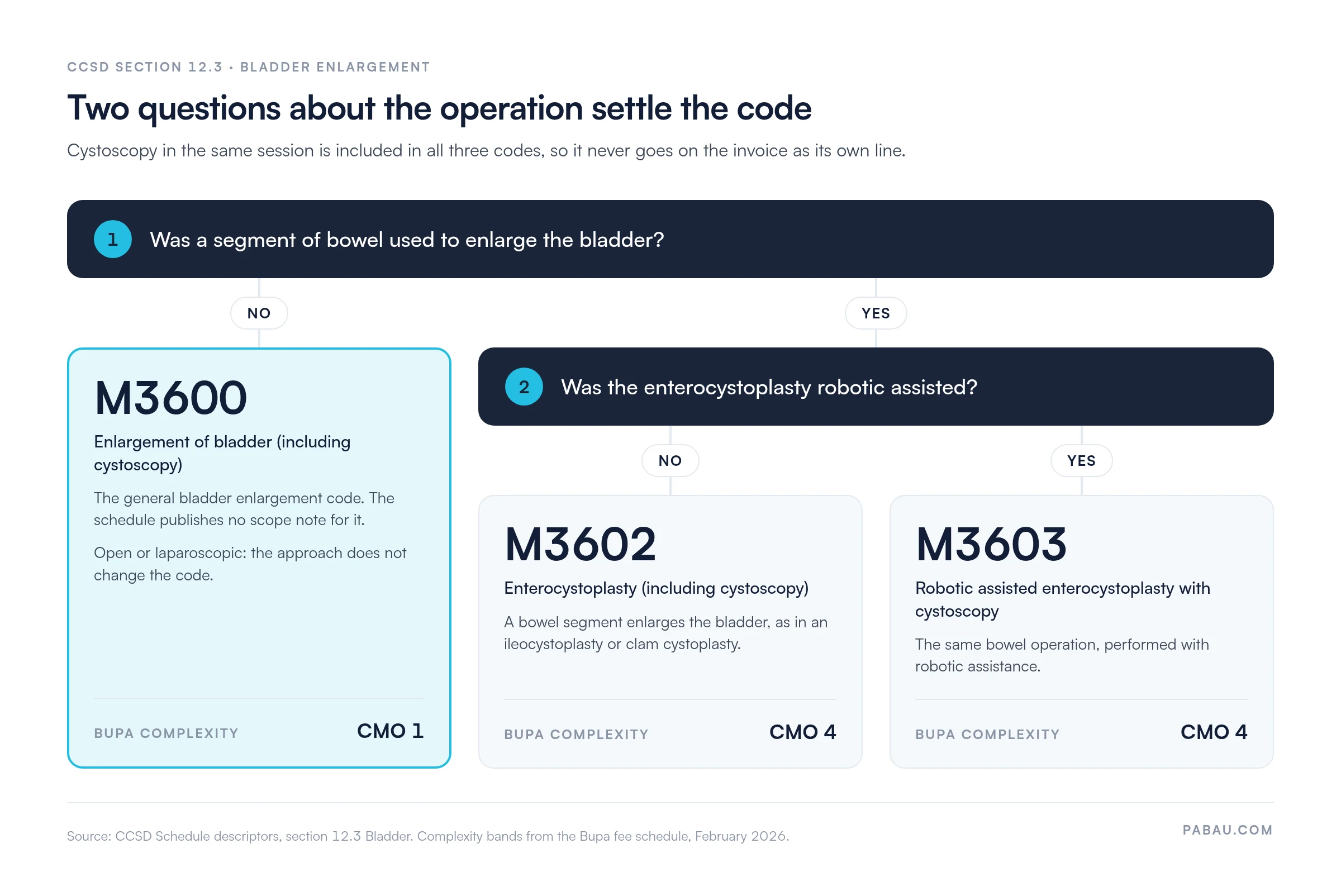
Bladder enlargement increases storage capacity or lowers filling pressure when conservative and drug treatment have failed. The aim is to protect the kidneys from high bladder pressure and to improve continence. Where the bladder is bypassed instead and urine drains to a urostomy stoma, the ileal conduit is billed under CCSD code M1910.
The CCSD Schedule publishes no list of the techniques M3600 covers. The one split it does draw is bowel: an enterocystoplasty has its own codes, M3602 and M3603.
The NHS classification, OPCS-4, draws a similar line. Its M36 Enlargement of bladder category lists caecocystoplasty, ileocystoplasty and colocystoplasty. Detrusor myotomy sits elsewhere, as M41.6 under other open operations on the bladder.
Where an enlargement used no bowel segment, confirm the code with the insurer at pre-authorisation rather than assuming M3600 applies.
Cystoscopy is performed in the same operative episode to check the urothelium and ureteric orifices and to exclude stones or tumour. Because the descriptor includes cystoscopy, it is never invoiced as a separate line on the same date. Other bladder codes bundle cystoscopy the same way, including M4230 for endoscopic destruction of a bladder lesion. A diagnostic flexible cystoscopy done on its own, with no bladder enlargement, is billed as M4510 instead.
Open and laparoscopic approaches both use M3600, since the approach does not change the code. The schedule lists no robotic-assisted version of M3600; its robotic enlargement code, M3603, is for enterocystoplasty only.
M3600 is indicated for a small-capacity or high-pressure bladder that has not responded to conservative treatment. The operative note must state the confirmed indication, as a vague one is a common reason insurers query the claim.
UK private insurers use the WHO version of ICD-10, not the US ICD-10-CM. The pairings below are WHO codes, checked against the WHO ICD-10 browser.
In WHO ICD-10, overactive and contracted bladder both sit under N32.8. The US code N32.81 does not exist in the WHO version. N39.3 is stress incontinence, which bladder enlargement does not treat, so it does not belong on this claim.
The diagnosis on the invoice must match the one in the pre-operative assessment and operative note. Insurers may ask for urodynamic results to confirm it, particularly for neurogenic and low-compliance indications. The urodynamic study itself is coded M4780 and invoiced on its own date.
The descriptor defines the scope of M3600, so each step it names is included. The CCSD Group also lists unacceptable combinations for codes commonly billed together. Other procedures may be separately billable when performed and documented.
Each insurer has its own contractual rules on using two procedure codes, so contact the insurer before adding a second code. Insurers audit claims after payment and can ask for money back on codes combined incorrectly.
Several CCSD bladder codes sit near M3600 in section 12.3. Choosing the wrong one, or adding a lesser code alongside M3600, is a common cause of rejection.
Descriptors are taken from the current CCSD Schedule. The CCSD Group updates the schedule through regular bulletins, so check each code on the insurer’s code search before invoicing. Pabau’s other CCSD codes reference pages are collected in one index.
Insurers scrutinise M3600 claims because bladder enlargement is major reconstructive surgery. The operative note should cover each of these points.
Keep the operative note against the patient record so it can be found quickly if the insurer asks for clinical information. Structured patient records that link notes to the invoice shorten the response to an audit query.
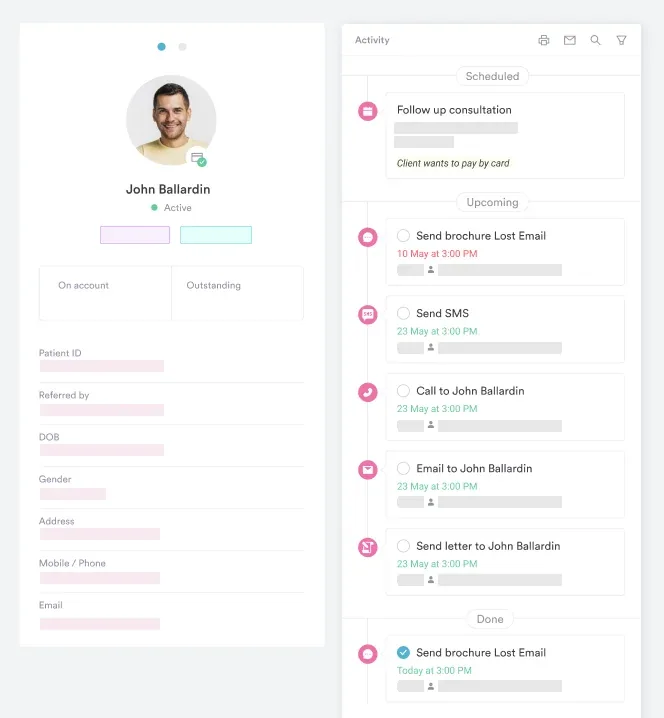
Send the urodynamic study report with the pre-authorisation request rather than waiting for the insurer to ask. Insurers commonly request urodynamic data for major bladder reconstruction, and sending it up front saves a round of correspondence.
Most major UK private medical insurers require pre-authorisation before planned major surgery such as bladder enlargement. Going ahead without an authorisation number is a common cause of non-payment, however well the procedure is documented. Policies change often, so confirm requirements before booking theatre.
A typical pre-authorisation request for M3600 includes:
If the patient’s policy has an excess or a surgical sub-limit, confirm the figures during pre-authorisation. An exhausted benefit then shows up before surgery, not as a surprise at invoicing.
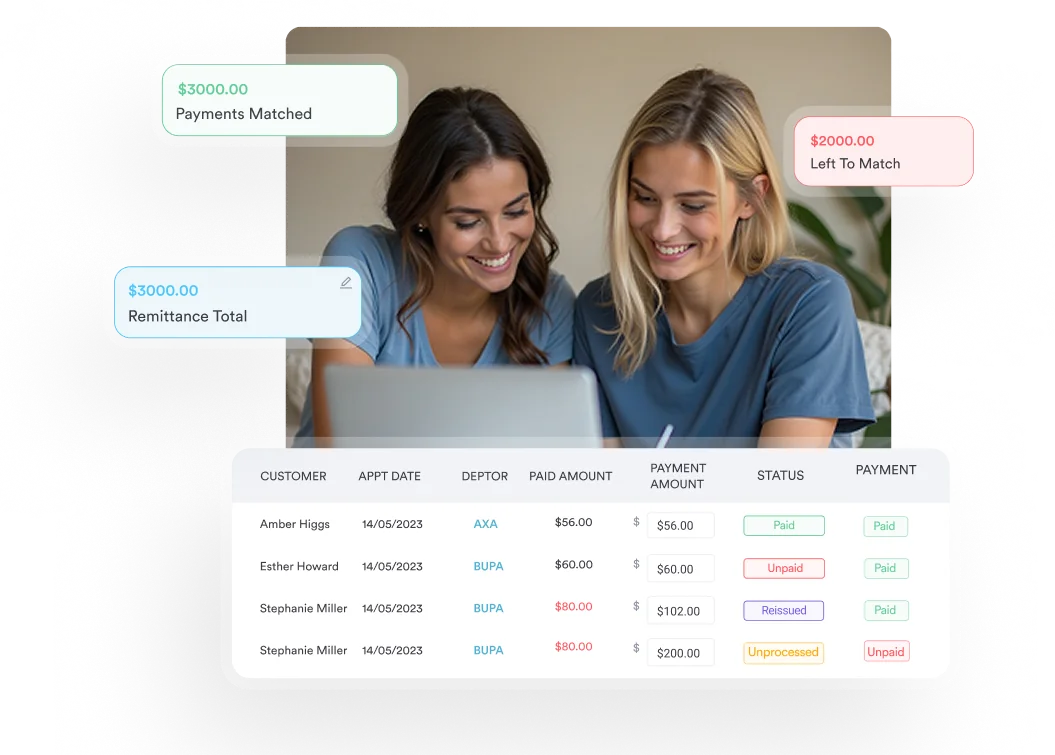
Healthcode is the UK clearing house through which practices send electronic invoices to most major private medical insurers. Claims management software linked to Healthcode cuts keying errors and shows claim status in one place.
These rejection patterns recur on M3600 claims across UK private insurers. Each has a specific fix.
Review every M3600 claim once a quarter. Record the reason for each rejection or query and compare it with the table above. When the same reason comes back, fix the documentation step that produced it, not only the claim.
CCSD codes carry no modifiers, so the code choice and the invoice details have to describe the episode. These are the situations that most often raise a question on an M3600 claim.
Without an integrated system, billing staff build each CCSD invoice by hand. They then chase authorisation numbers by email and log in to separate insurer portals to check payment.
Pabau keeps the clinical record and the invoice together. Pabau creates CCSD invoices for each episode, submits them to UK insurers through Healthcode and brings claim status back into the same system.
Digital clinical forms let the surgeon record the M3600 details at the point of care: indication, technique, cystoscopy findings and approach. The detail that separates M3600 from M3602 is then in the note before anyone raises the invoice.
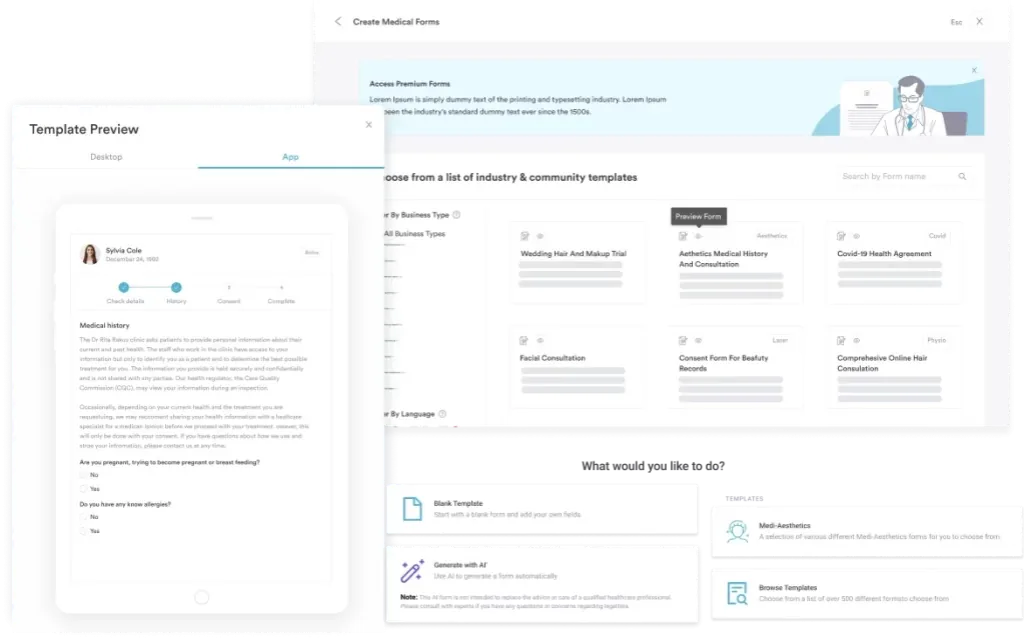

Pabau creates CCSD invoices, submits them to UK insurers through Healthcode and tracks each claim against the patient record. See how it handles complex urology billing.

Coding M3600 correctly comes down to one question before invoicing: did the surgeon use a segment of bowel? If so, the claim belongs under M3602 or M3603. If not, M3600, the general enlargement code, covers the operation and the cystoscopy on a single line.
Put that question in the operative note template and the pre-authorisation request, and the insurer gets the same answer twice. Pair it with a WHO ICD-10 code that matches the indication, and most queries never start.
Book a demo to see how Pabau handles CCSD invoicing and Healthcode claim tracking for UK urology practices.

Repairing rather than enlarging the bladder? CCSD Code M3640 explains the code for repair of bladder exstrophy.
CCSD code M3600 covers enlargement of the bladder, with cystoscopy in the same session included in the code. It comes from the CCSD Schedule used by UK private insurers such as Bupa, AXA Health and Aviva. Enlargement using a bowel segment is coded M3602 instead.
Yes. The official descriptor reads “Enlargement of bladder (including cystoscopy)”, so cystoscopy is part of the code. Adding a separate cystoscopy line to the same claim is an unbundling error, and the insurer will reject it.
M3600 is CCSD’s general code for enlarging the bladder, and the schedule publishes no scope note for it. M3602 is enterocystoplasty, where a segment of bowel enlarges the bladder, and M3603 is its robotic-assisted version. Bupa grades M3600 at CMO 1 and M3602 at CMO 4.
The operative note should state the confirmed indication, the enlargement technique and whether bowel was used. It should also record the cystoscopy findings, the surgical approach and the final WHO ICD-10 code. Insurers often ask for urodynamic results as well.
Most major UK private medical insurers, including Bupa, AXA Health, Aviva and Vitality, require pre-authorisation for planned major surgery such as M3600. The request usually includes a referral letter, urodynamic results and the planned CCSD and ICD-10 codes. Confirm requirements with the insurer before booking.
Yes. Open and laparoscopic bladder enlargement both use M3600, since the approach does not change the code. Record the approach in the operative note. A robotic-assisted enterocystoplasty is a different operation and is coded M3603.
UK private insurers use the WHO version of ICD-10. Common pairings are N31.0 to N31.9 for neurogenic bladder, N32.8 for a contracted or overactive bladder, N30.1 for interstitial cystitis and N30.4 for irradiation cystitis. The US code N32.81 does not exist in WHO ICD-10.
The Clinical Coding & Schedule Development (CCSD) Group maintains the CCSD Schedule for the UK private and independent healthcare sector. Insurers, hospitals and consultants use it as a common language for procedures. The group publishes changes through regular bulletins.




