M1000 is the CCSD code for therapeutic endoscopic operations on kidney (including cystoscopy and retrograde catheterisation). It covers endoscopic treatment of the kidney other than stone work. Examples are ablating a renal pelvis tumour, endopyelotomy for a narrowed ureteropelvic junction and deroofing renal cysts.
Stone procedures take their own codes. Endoscopic fragmentation of kidney calculi is M0910, and ureteroscopic extraction of a ureteric calculus is M2730. A diagnostic endoscopy with biopsy, a PCNL or a standalone stent insertion is coded separately too.
Related Information
Chapter
12 Urinary system and male reproductive organs
Category
Kidney / Renal Pelvic
Complexity
Major
Billable
No
Code also known as
endopyelotomy, endoscopic pyeloplasty, endoscopic deroofing of renal cysts, endoscopic ablation of renal pelvis tumour
Save time. Improve accuracy. Get paid faster.
Automate coding with Pabau
Let Pabau's smart automation suggest the right codes, reduce claim denials, and keep your practice compliant—effortlessly.
M1000Therapeutic endoscopic kidney operationsHigh match
Confidence score
98%
Why this code?
Matches patient diagnosis
Supported by clinical notes
Commonly used for this condition
Why practices choose Pabau
Save hours every week
Automate repetitive tasks and focus on what matters most—your patients.
Improve accuracy
Reduce coding errors and ensure compliance with the latest regulations.
Get paid faster
Clean claims, fewer denials, and faster reimbursements.
Grow with confidence
Powerful insights and reporting to help your practice thrive.
HIPAA compliant•SOC 2 certified•GDPR-compliant•Trusted by 4,000+ clinics worldwide
Key takeaways
CCSD code M1000 covers therapeutic endoscopic kidney operations other than stone work, such as renal pelvis tumour ablation, endopyelotomy and cyst deroofing.
Stone procedures carry their own codes: M0910 for endoscopic fragmentation of kidney calculi and M2730 for ureteroscopic extraction of a ureteric calculus.
The operative note must confirm both the endoscopic approach and the therapeutic action performed to support the claim.
Missing pre-authorisation is the leading denial trigger for M1000 claims across Bupa, AXA Health, Aviva and Vitality.
Diagnostic endoscopy with biopsy (M1110), diagnostic cystoscopy, standalone stent insertion and PCNL (M0940) each take a different code.
Pabau’s claims management software lets urology practices attach pre-auth references and send M1000 claims through Healthcode to UK private insurers.
What is CCSD code M1000?
CCSD Code M1000 is the Clinical Coding and Schedule Development procedure code for therapeutic endoscopic operations on the kidney, including cystoscopy and retrograde catheterisation. It sits in Chapter 12 of the CCSD schedule, which covers the urinary system and male reproductive organs.
UK private health insurers use that schedule as the standard framework for procedure-based reimbursement. The code applies only to private and insured patients, because NHS activity uses OPCS-4 procedure codes instead.
M1000 corresponds to OPCS-4.9 category M10, “Other therapeutic endoscopic operations on kidney”. The word “other” sets it apart from M09, which covers therapeutic endoscopic operations on kidney stones. CCSD draws the same line, so stone work never belongs under M1000.
The second deciding word is “therapeutic”. An endoscopy to inspect the kidney or take a biopsy is diagnostic and takes a different code. M1000 needs a treatment step, such as ablating a renal pelvis tumour, incising a narrowed ureteropelvic junction (UPJ) or deroofing a renal cyst.
The CCSD Technical Guide sets out the business rules for how codes are applied, bundled and reported. Practices billing M1000 should keep a current copy of the schedule and the guide, as both are updated annually.
Pabau, the practice software we build, keeps an index of CCSD codes that covers the neighbouring kidney and bladder procedures.
What the code covers: Procedures included under M1000
M1000 covers endoscopic operations that treat the kidney itself, other than stone removal. The OPCS-4.9 subcodes under M10 name five of them.
Endoscopic extirpation of a lesion of the kidney (OPCS M10.1): Resection or ablation of a lesion, such as a urothelial tumour of the renal pelvis.
Endoscopic pyeloplasty, or endopyelotomy (OPCS M10.2): Incision of a stenotic UPJ from inside the collecting system to relieve obstruction.
Endoscopic deroofing of renal cysts (OPCS M10.3): Removal of the outer wall of symptomatic kidney cysts through an endoscope.
Endoscopic cryoablation of a lesion of the kidney (OPCS M10.4): Freezing a renal lesion under endoscopic control. Laparoscopic cryoablation has its own code, M0312.
Endoscopic balloon rupture of a UPJ stenosis (OPCS M10.5): A balloon catheter splits the narrowed junction from within.
Cystoscopy and retrograde catheterisation are part of every one of these operations, which is why the descriptor names them. They are access steps, so they are not billed on their own.
What M1000 does not cover: Exclusions and adjacent codes
Several closely related procedures are not M1000. Using M1000 for a procedure it does not cover triggers a denial or an audit flag. Using an adjacent code when M1000 is correct does the same.
Kidney stone fragmentation: Endoscopic fragmentation of calculi of the kidney is M0910, which includes cystoscopy and stent insertion or removal. Extracorporeal shock wave lithotripsy is M1400.
Ureteric stone extraction: Ureteroscopic extraction of a calculus of the ureter is M2730. OPCS codes the same work under M27, outside the kidney categories.
Percutaneous nephrolithotomy (PCNL): PCNL is M0940, or M0941 when two specialties are involved. Robotic-assisted nephrolithotomy is M0942.
Diagnostic endoscopy of the kidney: An inspection with or without biopsy is M1110, and a diagnostic ureterorenoscopy is M1120. A biopsy alone never supports M1000.
Purely diagnostic cystoscopy: A bladder inspection with no upper-tract work is M4510 (flexible) or M4514 (rigid).
Laparoscopic or open renal procedures: These fall outside the endoscopic category. An open biopsy of the kidney is M0814, and a laparoscopic pyeloplasty is M1080.
Procedures on the bladder or prostate: These have their own CCSD codes elsewhere in Chapter 12. An endoscopic prostate biopsy, for example, is billed under M6580.
Standalone ureteric stent work: Endoscopic insertion or removal of a ureteric prosthesis as the sole procedure is M2920. Removal with reinsertion is M2680.
Retrograde pyelography as a diagnostic-only study: A standalone study is M3010. When the imaging is a step within an M1000 operation, it is bundled.
The CCSD Technical Guide also bars mixing open and endoscopic codes for the same organ. Its own example is M0610, open removal of calculus from kidney, billed with M1000.
How the procedure is performed: Clinical context for coders
Understanding the operative sequence helps coders read the note correctly and confirm that M1000, rather than an adjacent code, applies. Insurers check the code against the clinical detail in the operative note, so each step below should be traceable there.
Patient positioned and anaesthetised. Most M1000 operations take place under general anaesthesia in theatre.
Cystoscope inserted transurethrally. The surgeon inspects the bladder and identifies the ureteric orifice on the relevant side. This step is named in the M1000 descriptor and must appear in the operative note.
Retrograde catheter passed. A ureteric catheter goes up to the renal pelvis, often with contrast to outline the collecting system. This is the retrograde catheterisation the descriptor includes.
Endoscope brought to the target. The surgeon reaches the renal pelvis or the lesion with an endoscope. The note should state the instrument and the side.
Therapeutic action performed. The surgeon resects or ablates a lesion, incises the UPJ, deroofs cysts, freezes a lesion or ruptures a UPJ stenosis with a balloon.
Drainage placed if indicated. A stent or nephrostomy tube may be left to protect the repair. Record it, because M1000’s descriptor does not name a stent.
Instruments removed. The endoscope and wires come out, and no open or laparoscopic incision is made.
If the note shows that the surgeon fragmented or removed a stone, the episode is not M1000. Code it as M0910 for the kidney or M2730 for the ureter.
Common clinical indications for M1000
The ICD-10 diagnosis on an M1000 claim should describe a kidney condition treated endoscopically, other than a stone. The table lists the usual indications, with the stone codes shown last as a warning.
ICD-10 code
Clinical indication
Notes for coders
C65
Malignant neoplasm of renal pelvis
Endoscopic resection or ablation of an upper-tract urothelial tumour (OPCS M10.1)
D41.1
Neoplasm of uncertain behaviour of renal pelvis
Lesion treated endoscopically pending histology; a biopsy alone is M1110
C64
Malignant neoplasm of kidney, except renal pelvis
Endoscopic cryoablation (OPCS M10.4); laparoscopic cryoablation is M0312
N13.0
Hydronephrosis with ureteropelvic junction (UPJ) obstruction
Endopyelotomy or balloon rupture of the UPJ (OPCS M10.2, M10.5)
N28.1
Cyst of kidney, acquired
Endoscopic deroofing of a symptomatic cyst (OPCS M10.3)
Q61.2
Polycystic kidney, autosomal dominant
Endoscopic deroofing of multiple cysts (OPCS M10.3)
N20.0, N20.1, N20.2
Calculus of kidney, of ureter, or both
Not M1000. Use M0910 for kidney calculi and M2730 for a ureteric calculus
Always verify ICD-10 codes against the current UK edition. The diagnosis code should match the clinical picture documented in the patient’s record, not selected retrospectively to match the procedure.
Codes commonly confused with M1000
The codes most often confused with M1000 treat the same organ but differ in purpose, approach or intent. Stone codes cause the most errors, so they come first.
Code
Descriptor summary
Key differentiator
Use when
M1000
Therapeutic endoscopic operations on kidney (include cystoscopy and retrograde catheterisation)
Endoscopic fragmentation of calculi of kidney (including cystoscopy and insertion/removal of stent)
A kidney stone is the target
Endoscopic laser or other fragmentation of renal calculi
M2730
Ureteroscopic extraction of calculus of ureter (including cystoscopy and insertion/removal of stent)
A ureteric stone is the target
Ureteroscopic removal of a ureteric calculus
M0940
Percutaneous nephrolithotomy (including cystoscopy and retrograde catheterisation)
Stone removed through a percutaneous tract
Large or complex renal stones; M0941 with two specialties
M1110
Diagnostic endoscopic examination of kidney (including biopsy)
Diagnostic only, even with a biopsy
Inspection or biopsy of a renal lesion with no treatment
M4510
Diagnostic endoscopic examination of bladder (flexible cystoscopy) +/- any biopsy
No upper-tract access or treatment
Bladder inspection or surveillance; rigid cystoscopy is M4514
M2920
Endoscopic insertion/removal of prosthesis into ureter (including bilateral and cystoscopy, +/- pyelography)
Stenting is the whole procedure
Stent placed or removed as the sole procedure
M3010
Endoscopic retrograde pyelography (including bilateral and cystoscopy)
Imaging only
Standalone diagnostic study; bundled within M1000
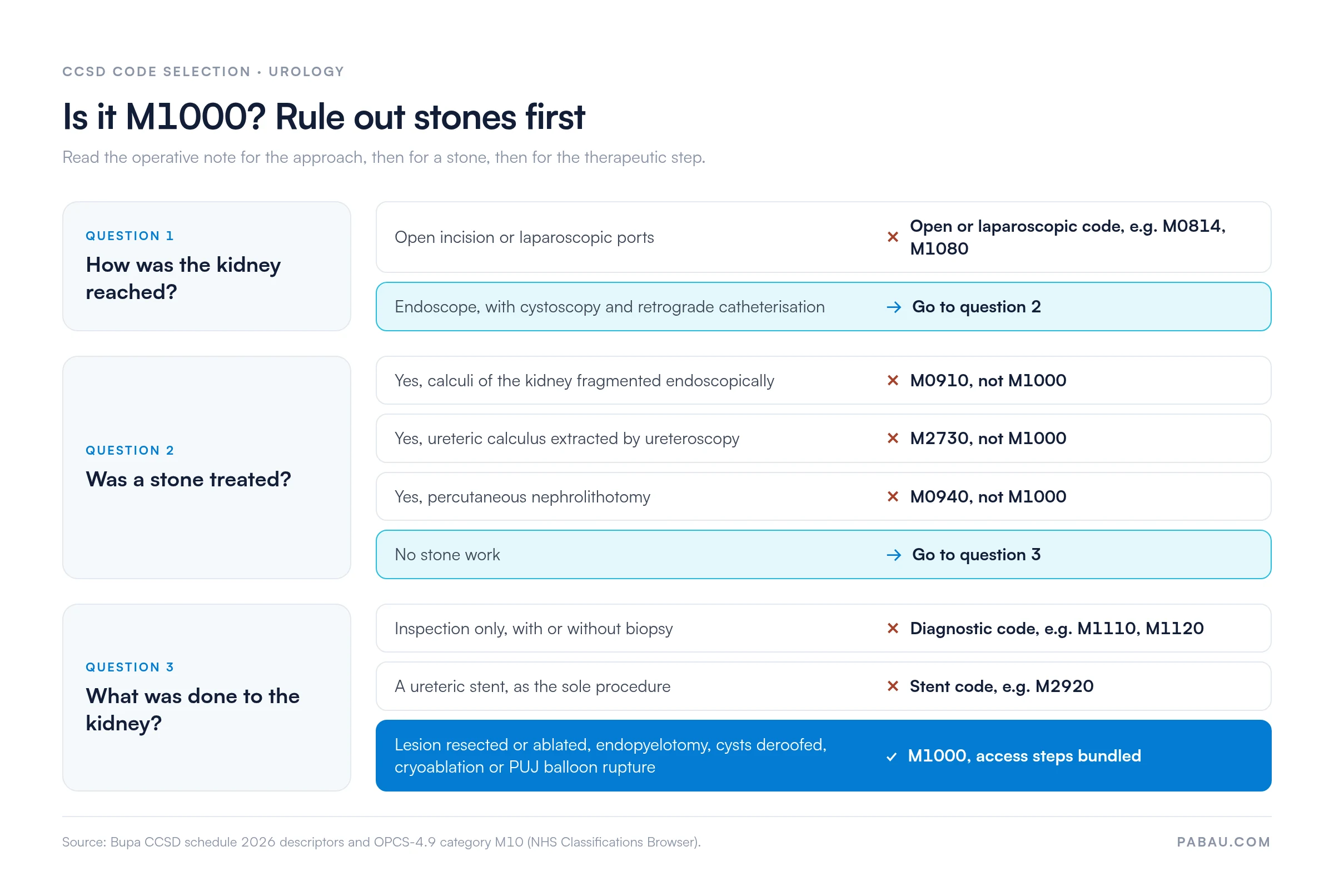
When reviewing the operative note, work through the three questions in the diagram below. Was the approach endoscopic? Was a stone treated? Was the kidney treated rather than only inspected? M1000 fits only when the answers are yes, no and yes.
A stone procedure leaves the M1000 route at question 2, because CCSD codes it as M0910, M2730 or M0940. Built from the Bupa 2026 CCSD descriptors and OPCS-4.9 category M10.
Documentation requirements for a valid M1000 claim
Insurers assess M1000 claims primarily against the operative note. A generic or incomplete note is the root cause of most downcoding and denial decisions. Record all of the following in the patient record and operative documentation.
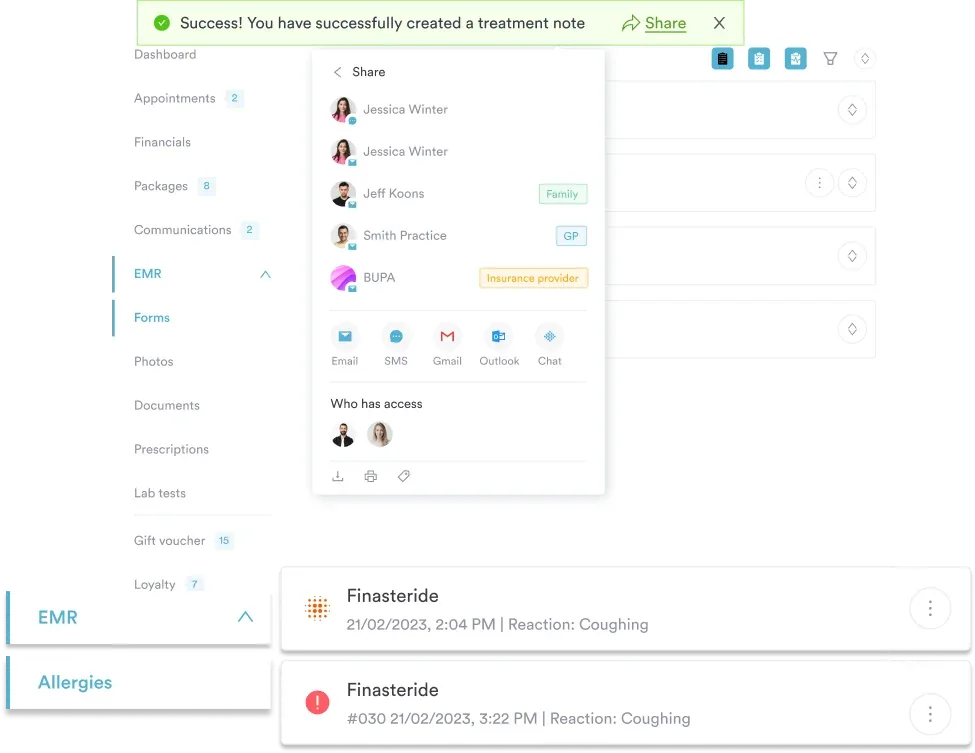
Pabau’s patient records hold the operative note, laterality and pre-auth reference in one file, so coders can check each M1000 element before invoicing.
Confirmation of endoscopic approach: State that the operation was endoscopic and name the instrument used. An open or laparoscopic approach takes a different code.
Cystoscopy documented: Record that cystoscopy was performed, the bladder inspected, and the ureteric orifice identified. This is named in the descriptor and must be verifiable in the note.
Retrograde catheterisation documented: Confirm that a retrograde ureteric catheter or guidewire was passed. Describe the approach (under fluoroscopy or direct vision) and whether both or a single ureter was accessed.
Laterality recorded: State whether the left, right, or bilateral ureter and kidney were operated on. Omitting laterality is a common denial trigger.
Therapeutic action described: Name the intervention, such as tumour resection or ablation, endopyelotomy, cyst deroofing, cryoablation or balloon rupture. “Endoscopy performed” is not enough.
No stone treated: If a calculus was fragmented or removed, the episode belongs under M0910 or M2730 instead.
Outcome of the therapeutic action: Note whether the lesion was cleared, the UPJ opened or the cyst decompressed.
Anaesthesia type recorded: State whether general or regional anaesthesia was used.
Complications, if any: Document any intraoperative complications, even if managed without consequence.
Post-procedure drainage: If a stent or nephrostomy tube was placed, note it. The insurer decides whether it is billable alongside M1000 (see below).
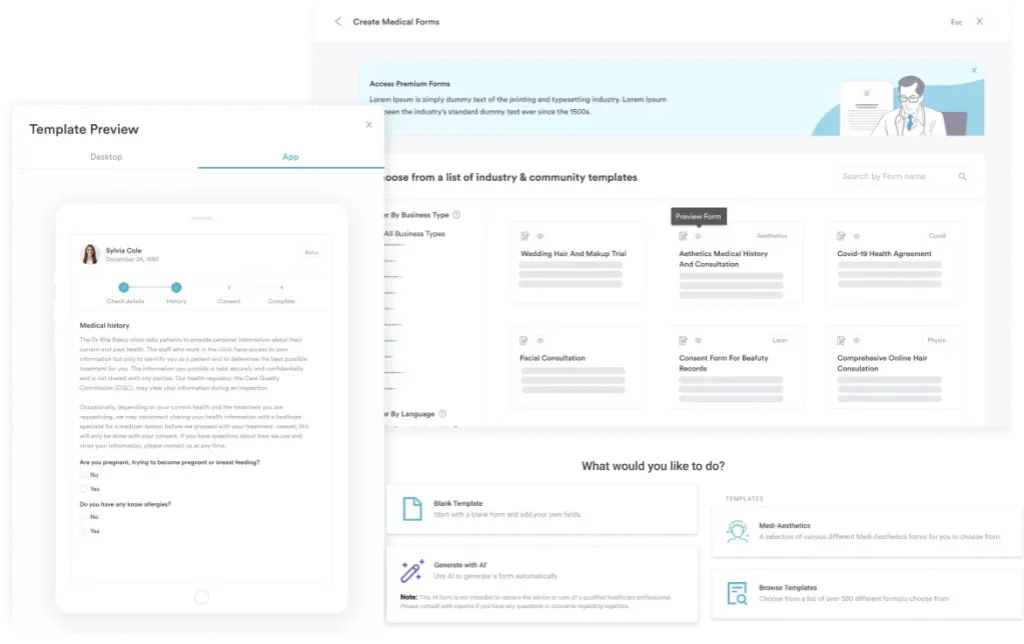
Digital clinical forms built around these checkpoints make a missed item less likely. A templated operative note that prompts for each element is more reliable than a dictated narrative.
Pabau’s digital forms turn this checklist into required fields, so the cystoscopy, retrograde catheterisation and therapeutic step all reach the operative note.
Pre-authorisation requirements from UK private insurers
Most UK private health insurers require pre-authorisation before therapeutic endoscopic kidney procedures are performed. Proceeding without a valid pre-auth reference is the single most common reason M1000 claims are rejected. Verify the insurer’s current policy before booking the patient for theatre.
Our guide to Bupa CCSD codes walks through Bupa’s submission and authorisation requirements in detail. For other insurers, the table below is a general guide. Policy thresholds change annually, so confirm them with each insurer directly.
Obtain the pre-authorisation reference number before the patient is admitted. Record it in the patient’s billing file and attach it to the invoice when submitting. An expired or missing pre-auth reference converts an otherwise clean claim into an automatic denial.
Why M1000 claims get denied and how to prevent it
Denials for CCSD code M1000 cluster around a small set of preventable causes, and checking each one before submission stops most of them. For the claims that still come back, our guide to denial management in healthcare covers tracking and appeals.
Denial reason
Root cause
Prevention
Missing or expired pre-authorisation
Pre-auth not obtained before procedure, or reference expired before theatre date
Confirm pre-auth is current on the day of admission; record the reference number in the billing file
Diagnostic vs therapeutic miscoding
M1000 submitted for a diagnostic cystoscopy, ureterorenoscopy or biopsy (M4510, M1120, M1110)
Confirm the operative note documents a therapeutic action before selecting M1000
Insufficient operative note detail
Generic note does not confirm cystoscopy, retrograde catheterisation or the therapeutic action
Use a structured operative note template with mandatory fields for each descriptor element
Laterality omitted
The operative note or invoice does not state left, right, or bilateral
Laterality is a mandatory field in operative documentation and on the invoice
Bundling error: Separate billing of included components
Access cystoscopy, retrograde catheterisation or intraoperative pyelography billed as separate lines
Check the CCSD Technical Guide bundling rules before generating the invoice
Wrong code selected
Stone work billed as M1000 instead of M0910, M2730 or M0940
Check the note for a calculus first; if one was treated, code the stone procedure
Duplicate claim submission
Invoice submitted twice for the same episode, often after resubmitting a corrected claim
Mark corrected resubmissions clearly; use the insurer’s correction claim reference protocol
Pro Tip
Run a three-point check before submitting an M1000 claim. Is the pre-auth reference recorded and current? Does the operative note name cystoscopy, retrograde catheterisation and a non-stone therapeutic action? Is laterality stated on both the note and the invoice? These three items account for the majority of preventable M1000 denials.
Bundling rules: What can and cannot be billed alongside M1000
CCSD bundling rules decide which ancillary procedures are integral to M1000 and so not separately billable. Others carry their own code even in the same episode. The CCSD Technical Guide is the authoritative reference for current bundling guidance. The table below reflects generally observed practice, so verify it against the current schedule before billing.
Procedure
Bundled into M1000?
Notes
Cystoscopy (access step)
Yes, bundled
Named in the descriptor; integral to the procedure. Do not bill a separate cystoscopy code.
Retrograde catheterisation (access step)
Yes, bundled
Named in the descriptor; not separately billable when performed as the access route to M1000.
Retrograde pyelography (intraoperative)
Typically bundled
When RPG is a component step of the therapeutic procedure, not a standalone diagnostic study.
Ureteric stent insertion (intraoperative)
Verify with the insurer
M1000 does not name a stent, unlike M0910 and M2730. Confirm whether an end-of-procedure stent is billable before invoicing.
Fluoroscopy (intraoperative)
Typically bundled
Fluoroscopic guidance used during the endoscopic procedure is generally considered integral.
Ureteric stent removal (separate episode)
Not bundled, separately billable
Stent removal at a later attendance is a separate episode, usually M2930 or M2920.
Anaesthetic fees
Not bundled, billed separately by the anaesthetist
Anaesthetist invoices separately using their own CCSD codes under a separate consultant number.
When uncertain about a specific combination, contact the insurer’s provider services team before submitting. Insurer bundling guidance occasionally diverges from the published CCSD schedule, and written confirmation protects the practice in an audit.
How Pabau keeps M1000 claims clean from note to submission
In many urology practices, the operative note, the pre-auth reference and the invoice sit in different systems. The coder then pieces them together at billing time. Pabau’s claims management software keeps all three on the same patient record. It then sends the claim through Healthcode to insurers such as Bupa, AXA Health and Vitality.
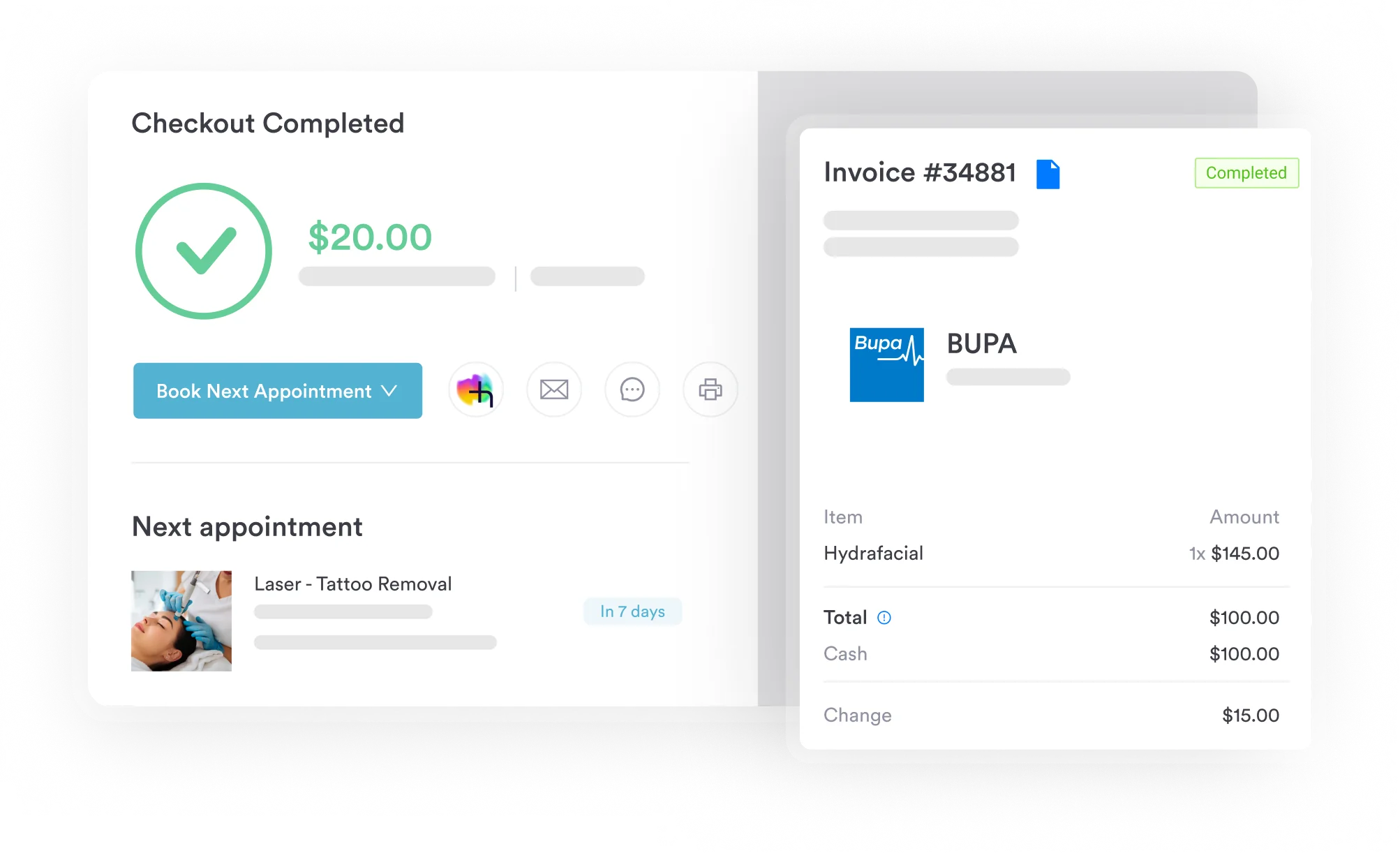
Pabau sends CCSD-coded claims through Healthcode, so an M1000 invoice reaches Bupa or AXA Health with its pre-auth reference attached.
An M1000 claim moves through Pabau in seven steps.
Verify the pre-authorisation reference. Retrieve the pre-auth number obtained before the procedure and confirm it is still valid. Record it in the patient’s billing record before generating the invoice.
Create the invoice against the correct patient episode. Link the invoice to the specific consultation or theatre admission date. Multiple procedures on the same date require each to be accurately coded on the invoice.
Enter CCSD Code M1000. Select M1000 from the CCSD code list. Add the correct ICD-10 diagnosis code that matches the operative indication (e.g. N13.0 for UPJ obstruction or C65 for a renal pelvis tumour). Confirm laterality is captured as a field on the invoice.
Attach the pre-authorisation reference number. Record this in the pre-auth field on the invoice. Most UK private insurers require the pre-auth number to appear on the claim submission for payment processing.
Apply the insurer’s fee schedule rate. M1000 fee levels vary by insurer. Check the applicable fee schedule (Bupa, AXA Health, Aviva, Vitality or WPA) and apply the correct contracted or published rate.
Review for bundling compliance. Before finalising, confirm that no separately bundled component (access cystoscopy, intraoperative RPG) has been added as an additional line item in error.
Submit electronically to the insurer. Send the claim through Pabau’s Healthcode connection or the insurer’s own portal. Keep a copy of the submission confirmation.
Some teams handle several urology consultants and high invoice volumes. For them, a billing checklist built into the software means compliance no longer rests on one coder’s memory. Pabau can also check a patient’s Bupa cover before the theatre date, so a lapsed policy surfaces before the procedure rather than at payment.
Streamline CCSD billing for your urology practice
Pabau helps UK private urology practices record CCSD codes, attach pre-auth references and send claims through Healthcode to Bupa, AXA Health and other insurers.
M1000 claims succeed or fail on the operative note. Name the route, the therapeutic step and the side, and an insurer has little left to query.
The trade-off is a slightly longer note in theatre against a denial and resubmission weeks later. Build the checkpoints into your templates once, and every urologist on the team documents to the same standard.
Book a demo to see how Pabau links operative notes, pre-auth references and Healthcode claims for UK urology practices.
Continue your research
Want to reduce claim errors across your practice?Pabau claims management provides electronic claim submission and invoice tracking for UK private practices.
Coding an open kidney operation instead?CCSD code M0300 covers partial excision of the kidney.
Treating a kidney injury?CCSD code M0550 covers repair of a kidney wound.
Frequently asked questions
What does CCSD Code M1000 cover?
CCSD code M1000 covers therapeutic endoscopic operations on the kidney other than stone work. Examples are ablating a renal pelvis tumour, endopyelotomy and deroofing renal cysts. Cystoscopy and retrograde catheterisation are included, and diagnostic procedures are not covered.
Is kidney stone removal coded as CCSD M1000?
No. Endoscopic fragmentation of kidney calculi is M0910, and ureteroscopic extraction of a ureteric calculus is M2730. Percutaneous nephrolithotomy is M0940. M1000 covers endoscopic kidney operations other than stone work.
Is cystoscopy included under CCSD M1000?
Yes. Cystoscopy is named in the M1000 descriptor as the initial access step, so it is bundled into the code and not billed separately. A standalone diagnostic cystoscopy is coded M4510 (flexible) or M4514 (rigid).
Does CCSD M1000 require pre-authorisation from private insurers?
Yes, in almost all cases. Bupa, AXA Health, Aviva and Vitality all require pre-authorisation for theatre-based procedures in this category. Obtain the reference before the procedure and attach it to the invoice at submission. Treating without a valid pre-auth reference is the most common cause of M1000 denials.
Can retrograde catheterisation be billed separately alongside M1000?
No. Retrograde catheterisation is named in the M1000 descriptor as an integral part of the procedure, so it is bundled into the code. Billing it as a separate line item is unbundling and leads to rejection. Check the current CCSD Technical Guide if a specific combination is in doubt.
What is the difference between CCSD M1000 and a diagnostic cystoscopy code?
M1000 requires a therapeutic step on the kidney, such as tumour ablation or endopyelotomy. A diagnostic cystoscopy (M4510 or M4514) inspects only the bladder and urethra. A diagnostic kidney endoscopy with biopsy is M1110.
Why would a CCSD M1000 claim be denied?
The most common reason is missing or expired pre-authorisation. Others are a vague operative note or laterality missing from the note or invoice. Billing stone work as M1000 instead of M0910 or M2730 also leads to denials.