CCSD code M0910 – Endoscopic fragmentation of renal calculi
Code Definition
M0910 is the CCSD code for endoscopic fragmentation of calculi of kidney (including cystoscopy and insertion/removal of stent). It covers flexible ureteroscopy (FURS or RIRS) that reaches the kidney retrogradely and breaks up the stone.
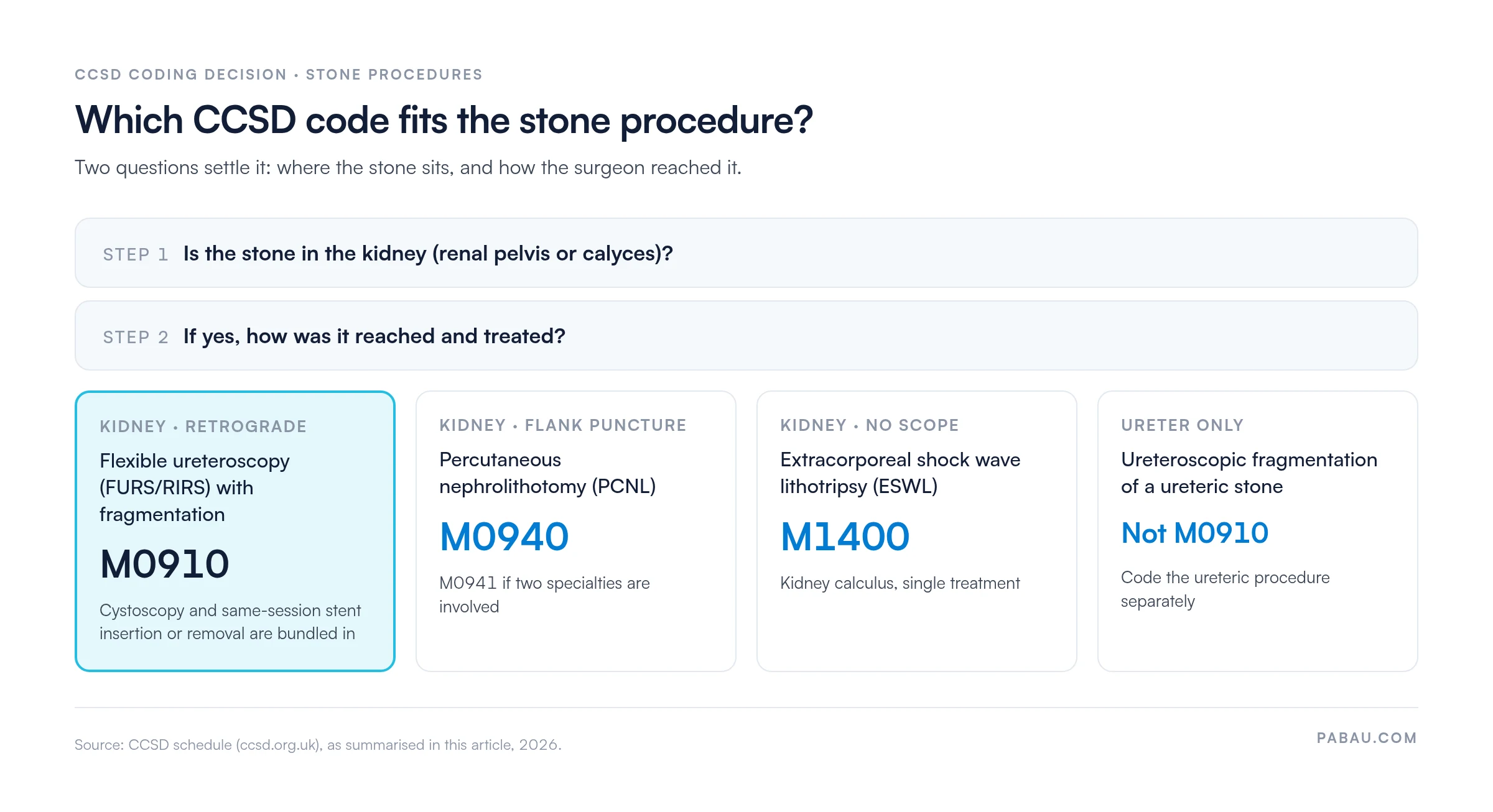
Cystoscopy and stent insertion or removal in the same session are bundled into M0910. Percutaneous nephrolithotomy (M0940) and shock wave lithotripsy of a kidney stone (M1400) are coded separately.
M0910Endoscopic fragmentation of renal calculiHigh match
Confidence score
98%
Why this code?
Matches patient diagnosis
Supported by clinical notes
Commonly used for this condition
Why practices choose Pabau
Save hours every week
Automate repetitive tasks and focus on what matters most—your patients.
Improve accuracy
Reduce coding errors and ensure compliance with the latest regulations.
Get paid faster
Clean claims, fewer denials, and faster reimbursements.
Grow with confidence
Powerful insights and reporting to help your practice thrive.
HIPAA compliant•SOC 2 certified•GDPR-compliant•Trusted by 4,000+ clinics worldwide
Key takeaways
M0910 covers retrograde endoscopic fragmentation of kidney stones, with cystoscopy and same-session stent insertion or removal bundled into the one code.
Billing a cystoscopy code alongside M0910 is unbundling, and insurers reject the combination.
Bupa, AXA Health, Aviva and Vitality usually require pre-authorisation before M0910 is performed on an insured patient.
Percutaneous nephrolithotomy (M0940) and shock wave lithotripsy of a kidney stone (M1400) are separate codes, so the access route decides the claim.
CCSD Code M0910: Definition and clinical scope
CCSD Code M0910 is defined in the CCSD schedule as “Endoscopic fragmentation of calculi of kidney (including cystoscopy and insertion/removal of stent).” “Endoscopic” means the surgeon reaches the stone retrogradely through the urinary tract, not through the skin. “Calculi of kidney” limits the code to renal stones, so ureteric stones without kidney access take a different CCSD code. The parenthetical makes cystoscopy and stent work part of the code rather than add-ons.
M0910 sits in Chapter 12 of the schedule, under sub-chapter 12.1.0 Kidney/Renal Pelvic, alongside the other kidney procedures in the full CCSD code list. It is the correct code whenever a urologist uses flexible ureteroscopy (FURS) or retrograde intrarenal surgery (RIRS) to fragment kidney stones. The setting is usually a private hospital or independent treatment centre.
The procedure: Endoscopic fragmentation of renal calculi, step by step
Understanding what the procedure involves helps billing staff verify that the operative note contains the right documentation triggers. A typical M0910 procedure follows this sequence:
Cystoscopy: The urologist passes a cystoscope transurethrally to inspect the bladder and identify the ureteric orifice. M0910 bundles this step, so do not code it separately.
Guidewire and ureteric access sheath placement: The surgeon advances a guidewire up the ureter under fluoroscopic guidance. They usually insert a ureteric access sheath next, so the ureteroscope can pass repeatedly.
Flexible ureteroscopy to the kidney: The surgeon passes a flexible ureteroscope (FURS) retrogradely up the ureter and into the renal collecting system. They then see the stone under direct endoscopic vision.
Stone fragmentation: Then the urologist fragments the calculus using a holmium:YAG laser (the dominant modality), thulium fibre laser (TFL), or pneumatic lithotripter. The code is modality-agnostic, so M0910 does not mandate any specific fragmentation technology.
Stone retrieval: The surgeon retrieves fragments using a stone basket (e.g. Dormia basket) where clinically indicated, or left to pass spontaneously if small enough.
Stent insertion or removal: The surgeon inserts a double-J (JJ) ureteric stent at the same session for ureteric oedema, residual stone burden or risk of obstruction. Likewise, if they remove a stent from a previous procedure at this session, M0910 also bundles that removal.
Closure: Finally, the surgeon withdraws the instruments and completes the procedure. General anaesthesia is usually required, and the anaesthetist submits a separate claim.
In contrast, this retrograde approach is distinct from percutaneous nephrolithotomy (PCNL), which reaches the kidney through the flank. Surgeons code PCNL as M0940, or M0941 if two specialties take part.
What M0910 includes and excludes
The bundling rules for M0910 are explicit. Because the code bundles these items, billing any included component separately is unbundling. It will trigger denial or clawback. The table below sets out what M0910 does and does not cover.
Component
Included in M0910?
Notes
Cystoscopy
Yes, bundled
Do not bill separately; the CCSD descriptor names it
Ureteric stent insertion (same session)
Yes, bundled
The code includes a JJ stent placed in the same operative episode
Ureteric stent removal (same session)
Yes, bundled
The code includes removal of an existing stent at the same operative visit
Stone basket retrieval
Yes, bundled
You cannot bill Dormia basket use during the same procedure separately
JJ stent removal at a later visit
No, separate code
A later stent removal attracts its own CCSD code, so do not use M0910
Anaesthesia
No, separate claim
The anaesthetist submits a separate invoice under the relevant CCSD anaesthesia code
Fluoroscopy / KUB X-ray
No, usually separate
The radiologist or imaging provider submits imaging charges separately
Post-operative outpatient consultations
No, separately billable
Follow-up consultations use the right CCSD consultation code
Assistant surgeon fee
No, separate claim
Where the insurer accepts an assisting surgeon, that surgeon submits a separate claim
The most common unbundling error is a cystoscopy code billed alongside M0910. Because the descriptor names the cystoscopy, insurers reject the combination on sight. CCSD also lists M1000 among the codes it treats as an unacceptable combination with M0910.
Clinical indications: When is M0910 the correct code?
M0910 applies when a urologist performs retrograde endoscopic stone fragmentation in the kidney. The clinical threshold for the procedure usually involves one or more of the following:
Confirmed renal calculi on imaging (CT KUB or ultrasound) that are symptomatic or obstructing
Stone size or position making extracorporeal shock wave lithotripsy (ESWL) unsuitable or unlikely to succeed
Failed conservative management where spontaneous passage is not expected
Stones causing hydronephrosis or recurrent urinary tract infections
ICD-10 diagnosis codes to pair with M0910
Every M0910 claim requires a paired ICD-10 diagnosis code. The most commonly used are:
ICD-10 code
Description
Typical use with M0910
N20.0
Calculus of kidney
Most common pairing, where imaging confirms a renal stone
N20.2
Calculus of kidney with calculus of ureter
Stone in both kidney and ureter, so renal fragmentation is the primary procedure
N13.2
Hydronephrosis with renal and ureteral calculous obstruction
Obstructing renal stone causing hydronephrosis requiring urgent intervention
N23
Unspecified renal colic
Acute presentation. Use it when you cannot yet confirm a more specific stone code at submission
For example, pairing M0910 with a ureteric-only code such as N20.1, when the surgeon treated a renal calculus, is a denial trigger. The diagnosis code must reflect the anatomical site of treatment.
Neighbouring CCSD codes: How to choose the right one
Choosing between M0910 and its neighbours comes down to two questions. Is the stone in the kidney or the ureter, and how did the surgeon reach it? The chart below maps each route to its code, and the table adds the detail.
The access route recorded in the operative note is what separates M0910 from PCNL and shock wave lithotripsy. Codes come from the CCSD schedule.
Procedure
CCSD code
Stone site
Access route
Key differentiator
Endoscopic fragmentation of renal calculi (FURS/RIRS)
M0910
Kidney
Retrograde (transurethral)
This code; includes cystoscopy and stent work
Percutaneous nephrolithotomy (PCNL)
M0940 (M0941 if two specialties take part)
Kidney
Percutaneous (flank puncture)
Different access route, usually for larger stones (>2 cm)
Extracorporeal shock wave lithotripsy (ESWL)
M1400 (kidney, single treatment)
Kidney
External (non-invasive)
No endoscopy, because the shock waves act externally
Ureteroscopy with fragmentation of ureteric stone
Separate CCSD code
Ureter only
Retrograde
Stone in ureter, not kidney; M0910 does not apply
Cystoscopy with ureteric stent insertion only
Separate CCSD code
N/A (drainage only)
Retrograde
No stone fragmentation performed; stenting alone without lithotripsy
Together, the diagnostic imaging report and the operative note confirm which code is correct. If the surgeon reached a stone in the renal pelvis or calyces with a flexible ureteroscope and fragmented it, M0910 is the code. Otherwise, if the surgeon went through the flank, it is PCNL. Likewise, if no scope entered the patient, it is ESWL. Finally, open surgical removal of a kidney stone has its own code, M0610.
Pro Tip
Flag the operative note at the point of dictation. Ask the urologist to state four points clearly. They are the stone site (renal/kidney), the access route (flexible ureteroscopy, retrograde), the fragmentation modality and the stent status at closure. These four data points map directly to the M0910 descriptor and settle the most common coding disputes before the claim goes out.
Documentation requirements for M0910 billing
Inadequate operative documentation is the most preventable cause of M0910 claim denial. The endoscopy or operative report must contain all of the following for the claim to be supportable:
Confirmed renal access: The note must state that the flexible ureteroscope reached the kidney (renal pelvis or calyceal system), not only the ureter
Stone visualisation: Record direct endoscopic visualisation of the calculus, along with its rough size and location within the kidney
Fragmentation modality: Name the specific technology used, such as “Holmium:YAG laser lithotripsy at 0.5 J, 20 Hz” or “thulium fibre laser fragmentation.” Record it even though M0910 is modality-agnostic
Stone retrieval: Record whether the surgeon retrieved fragments with a basket or left them to pass, and the estimated residual stone burden
Stent status: State whether the surgeon inserted, removed or left a JJ stent in situ, and document the stent size and position confirmed on fluoroscopy
Surgeon identity and date: The operating consultant’s name, GMC number, and the procedure date must appear on the note
Pre-authorisation reference number: Record the insurer’s pre-authorisation number on the claim form and the operative note where the insurer requires it
Next, attach the completed operative note to the patient record and link it to the claim, so the note and the invoice never travel separately. If an insurer queries the claim, the billing team can then answer from one record.
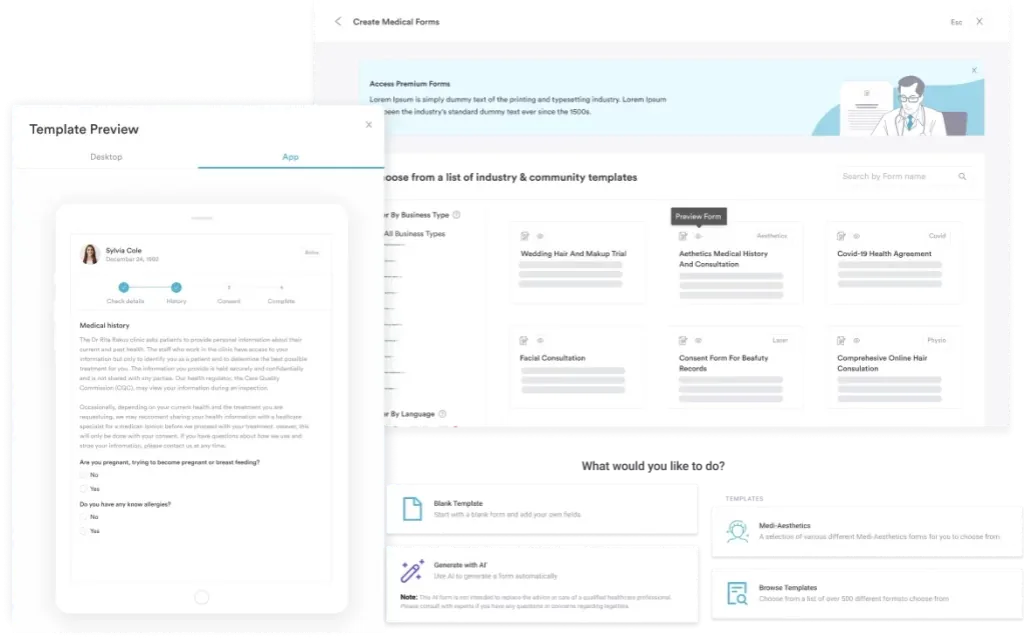
Pabau’s form builder, part of the practice software we build, turns the seven documentation points into a structured operative note for every M0910 case.
Pre-authorisation requirements by insurer
The major UK private health insurers usually require pre-authorisation before the surgeon performs M0910 on an insured patient. In fact, proceeding without it is a leading reason for non-payment of the surgeon’s fee, regardless of clinical necessity. Policies change, so teams should verify requirements on each insurer’s current provider portal before booking the procedure. Refer to Bupa CCSD procedure codes for Bupa-specific guidance.
Insurer
Pre-auth required?
What to submit
Check current portal
Bupa
Yes, usually required for elective surgical procedures
Pre-authorisation does not guarantee payment. Instead, it confirms only that the insurer has assessed the clinical case as right. However, the insurer can still deny the claim if documentation is weak or the code you submit differs from the authorised one.
Why M0910 claims get denied and how to prevent it
M0910 denials follow predictable patterns. Still, teams can catch most before the invoice leaves the practice. The table below maps the most common denial reasons to their corresponding prevention step.
Denial reason
How it happens
Prevention
Missing pre-authorisation
The team performed the procedure before obtaining or logging insurer approval
Record the pre-auth reference number before booking. Do not proceed without it.
Unbundling of cystoscopy
The team submits a cystoscopy code alongside M0910
Remove any separate cystoscopy code, because the M0910 descriptor clearly includes it
Wrong code selected (PCNL vs M0910)
PCNL code submitted for what was actually a retrograde FURS procedure, or vice versa
Verify the access route in the operative note before coding; retrograde = M0910, percutaneous = PCNL range
Missing or vague operative note
The procedure report lacks anatomical site, fragmentation modality, or stent status
Use a structured endoscopy report template capturing all seven documentation points listed above
ICD-10 mismatch
A ureteric stone code (N20.1) paired with M0910, which specifies renal calculi
Confirm the ICD-10 code matches the anatomical site in the operative note (N20.0 for renal calculus)
Policy holder details error
Patient name, date of birth, or membership number does not match insurer records
Verify policy details at registration; take a copy of the insurance card or digital certificate
Benefit limit or exclusion
Kidney stone treatment excluded from the patient’s policy or annual benefit exhausted
Run a benefits check before booking, and confirm the patient’s plan covers the procedure
Billing M0910 alongside anaesthesia and supporting services
M0910 covers the surgeon’s procedural fee only. Several supporting services generated during the same episode attract separate claims, each submitted by the relevant provider.
Anaesthesia: The anaesthetist submits a separate invoice using the right CCSD anaesthesia code. The time-based or session-based anaesthesia fee is entirely separate from M0910 and is usually pre-authorised at the same time as the surgical procedure.
Fluoroscopy and imaging: The radiologist or imaging facility bills KUB X-rays, fluoroscopy during stent placement, and post-operative imaging separately. These are not included in M0910 and do not require the surgeon to adjust their claim.
Post-operative consultations: Follow-up outpatient appointments use the right CCSD outpatient consultation code. Also, the M0910 procedure fee does not include post-operative review.
Stent removal at a later visit: Sometimes the surgeon leaves the JJ stent in situ and removes it at a later flexible cystoscopy visit. Code that removal separately. It falls outside M0910 because it occurs in a different operative episode.
Assistant surgeon: Where a second surgeon assisted and the insurer accepts assistant surgeon fees, the assisting consultant submits a separate claim. Not all insurers pay this automatically; check the policy terms before assuming it is recoverable.
Finally, check the Healix fee schedule for its current CCSD-based procedure fees and unbundling guidelines. These apply to Healix-administered policies and show how major insurers treat associated charges.
How Pabau keeps M0910 claims accurate from pre-authorisation to payment
In many urology practices, the pre-authorisation number sits in an email and the operative note in the hospital system. Then someone raises the invoice somewhere else again. That split is where a missing reference number or a stray cystoscopy line slips onto the claim.
Pabau keeps the booking, the clinical record and the invoice on one patient file. With its claims tools for consultants, the billing team submits the M0910 claim through Healthcode. The claim starts from the record that holds the pre-authorisation reference and operative note.
As a result, practices see fewer claims returned for a missing reference or a mismatched code, and one view of where each insurer claim stands.
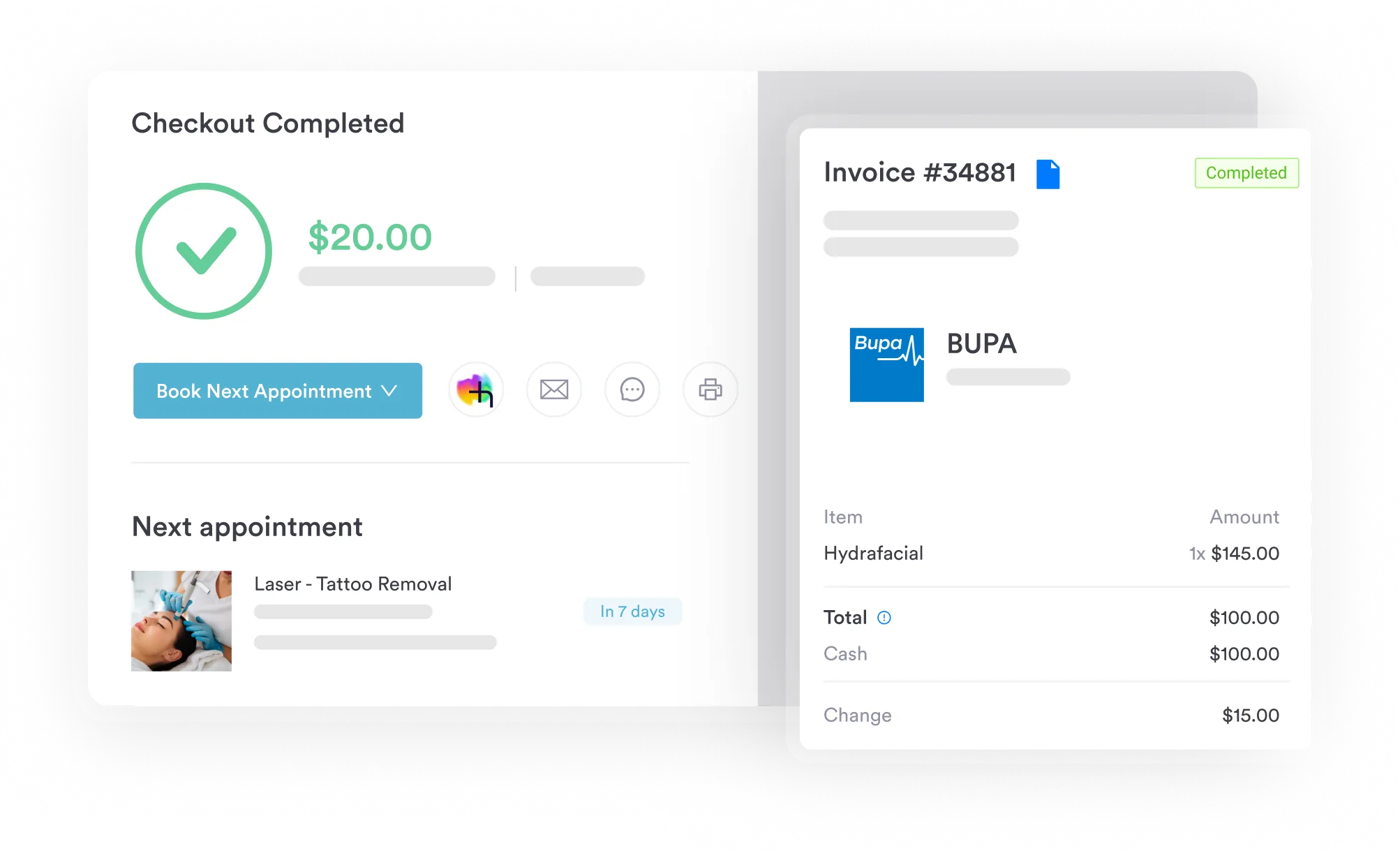
Pabau raises the invoice against the patient’s insurer at checkout, so the Bupa claim for M0910 starts from the record that holds the pre-authorisation.
Manage CCSD billing and pre-authorisation tracking in one place
Pabau helps UK private practices track insurer pre-authorisation status, store operative documentation alongside patient records, and submit accurate CCSD claims without the paperwork pile-up.
Code M0910 when the operative note shows a retrograde scope reaching the kidney and fragmenting the stone. Bill cystoscopy and same-session stent work inside it, and leave anaesthesia, imaging and later stent removal to their own claims.
The trade-off worth remembering is that theatre decides the code, not the billing office. A note that omits the stone site, access route or stent status leaves the coder guessing and invites an insurer query.
So get the pre-authorisation reference on file before you book the list, and the most common M0910 denial never happens. Book a demo to see how Pabau links pre-authorisation, operative notes and Healthcode claims for your urology practice.
Continue your research
Using CCSD codes across all Bupa-covered procedures?Bupa CCSD procedure codes covers the full Bupa code schedule and how to submit claims accurately.
Looking up a neighbouring urology code?CCSD codes collects every CCSD procedure code reference in one place.
Frequently asked questions
What does CCSD Code M0910 cover?
CCSD Code M0910 covers endoscopic fragmentation of calculi of the kidney, including cystoscopy and insertion or removal of a ureteric stent. The code covers those components when the surgeon performs them in the same session via a retrograde transurethral approach. It is a composite code, so billing the bundled components separately is unbundling.
Is cystoscopy separately billable when using CCSD Code M0910?
No. The M0910 descriptor names cystoscopy as an included component. Therefore, submitting a separate cystoscopy code alongside M0910 is unbundling, and the insurer will deny the claim or claw it back.
Can a JJ stent removal be billed separately if it happens at a later visit?
Yes. Code a JJ stent removal at a later separate visit under its own CCSD procedure code, not M0910. The M0910 bundling rules apply only to stent work in the same operative session as the stone fragmentation. A return visit for stent removal is a distinct procedure, so it attracts a separate fee.
Does M0910 apply to ureteric stones as well as kidney stones?
No. M0910 specifies “calculi of kidney.” A stone located in the ureter only, without renal access, would be coded under a separate CCSD urology code for ureteric fragmentation. Using M0910 for a purely ureteric procedure would constitute miscoding and risks denial on ICD-10 mismatch grounds.