ICD-10 Code S42.444P: Medial epicondyle fracture, right humerus
ICD-10 Code S42.444P: full descriptor and code validity ICD-10 Code S42.444P car...

Last Updated: Oct 13, 2026
Billable Code Specific Code
Y65.0 is the billable ICD-10-CM code for mismatched blood in transfusion.
It is an external cause code, so it records the transfusion error itself. T80.3 (ABO incompatibility reaction) records what the mismatch did to the patient. Coders who swap the two hand auditors a sequencing error on an external cause code review. The FY2026 edition took effect on October 1, 2025.
Let Pabau's smart automation suggest the right codes, reduce claim denials, and keep your practice compliant—effortlessly.
Automate repetitive tasks and focus on what matters most—your patients.
Reduce coding errors and ensure compliance with the latest regulations.
Clean claims, fewer denials, and faster reimbursements.
Powerful insights and reporting to help your practice thrive.
HIPAA compliant SOC 2 certified GDPR-compliant Trusted by 4,000+ clinics worldwide

Y65.0 is a billable ICD-10-CM code for mismatched blood in transfusion, effective October 1, 2025.
It is an external cause code that documents the misadventure itself, so it is never the principal diagnosis.
T80.3 codes the resulting ABO incompatibility reaction and is sequenced alongside Y65.0 when documented.
Documentation must name the type of mismatch, whether ABO, Rh, or another blood group system.
Pabau’s structured patient records capture external cause codes and the audit trail an adverse event claim needs.
ICD-10 code Y65.0 is a billable, specific ICD-10-CM code that can be used to indicate a diagnosis for reimbursement purposes. It represents a patient safety misadventure, not a clinical complication, which is the distinction that determines both code selection and sequencing. The code falls within the V00-Y99 block, external causes of morbidity. It captures the cause of an adverse event rather than its physiological result.
According to the CDC/NCHS ICD-10-CM web tool, Y65.0 has been a stable billable code through multiple fiscal years. The FY2026 edition did not change its descriptor or hierarchical position. Coders verifying current-year validity should confirm against the annual CMS update files. Adjacent codes in the Y65 block have seen minor descriptor revisions in recent cycles.
The ICD-10-CM alphabetic index recognizes several alternate descriptions that map to Y65.0. These synonyms matter for documentation review. A physician note may use any of these terms, and the coder has to recognize each one as the same code.
None of these synonyms change the code assignment. All three index to Y65.0 in ICD-10-CM. Y65.0 is the correct external cause code when the documentation uses any of these phrases and describes incompatible blood given during a transfusion. The mismatch has to have occurred during the current encounter.
Understanding the hierarchy around Y65.0 helps coders navigate adjacent codes and apply sequencing rules correctly. The full hierarchy from the WHO ICD-10 browser and ICD-10-CM tabular list is as follows:
Y65 itself is non-billable, so coders must always drill down to a specific subcode. Y65.0 is the only Y65 subcode that covers transfusion misadventures. Do not confuse it with the T80-T88 codes, which capture transfusion reactions as adverse effects rather than misadventures.
Most Y65 subcodes are billable, but Y65.5 is not. It branches into Y65.51, Y65.52 and Y65.53, which carry the billable detail on wrong-procedure events. The parent code Y65 is reserved for category-level reference only. When documentation describes a transfusion misadventure that does not fit Y65.0, review Y65.8 before defaulting upward to the non-billable parent. The ICD-10-CM code index lists the adjacent categories if you need to check the surrounding structure.
Y65.0 applies when incompatible blood is administered during a transfusion procedure, regardless of whether a clinical reaction occurs. The code captures the misadventure, not the outcome. Three blood group incompatibility types fall under this code’s clinical scope:
For coders, the distinction is a practical one. Y65.0 documents the administrative or procedural error, meaning that the wrong blood was given. T80.3 and its subcategories document the patient’s physiological response. Both codes may appear on the same claim, sequenced appropriately.
When reviewing documentation for Y65.0, look for the blood bank report or nursing incident note that confirms the specific incompatibility type. A physician note reading ‘transfusion reaction’ on its own is not sufficient. The documentation must confirm that mismatched blood was administered, not simply that a reaction occurred. Request the blood bank crossmatch report if the type of mismatch is unclear from the chart.
The ICD-10-CM Official Guidelines for Coding and Reporting, co-maintained by CMS and the CDC/NCHS, treat Y65.0 as an external cause code. That classification decides how the code is sequenced and how a patient safety event reaches the claim.
A mis-sequenced external cause code is a familiar trigger for a payer edit. That makes claim denial management a coding job on a Y65.0 claim, not a billing-team job. The order is decided before the claim is ever built.
T80.3 (ABO incompatibility reaction) is the clinical complication code that pairs with Y65.0 when an ABO mismatch causes a patient response. The two codes serve different classification purposes and should both appear on the claim when the documentation supports them.
T80.3x subcodes specify the type and severity of the ABO reaction. T80.30 is unspecified, T80.310 covers the acute hemolytic transfusion reaction from ABO incompatibility, and T80.311 covers the delayed hemolytic reaction. Use the most specific subcode the documentation supports. The 7th character on T80.3x codes denotes encounter type, whether initial, subsequent, or sequela. It has to align with the patient’s current encounter status.
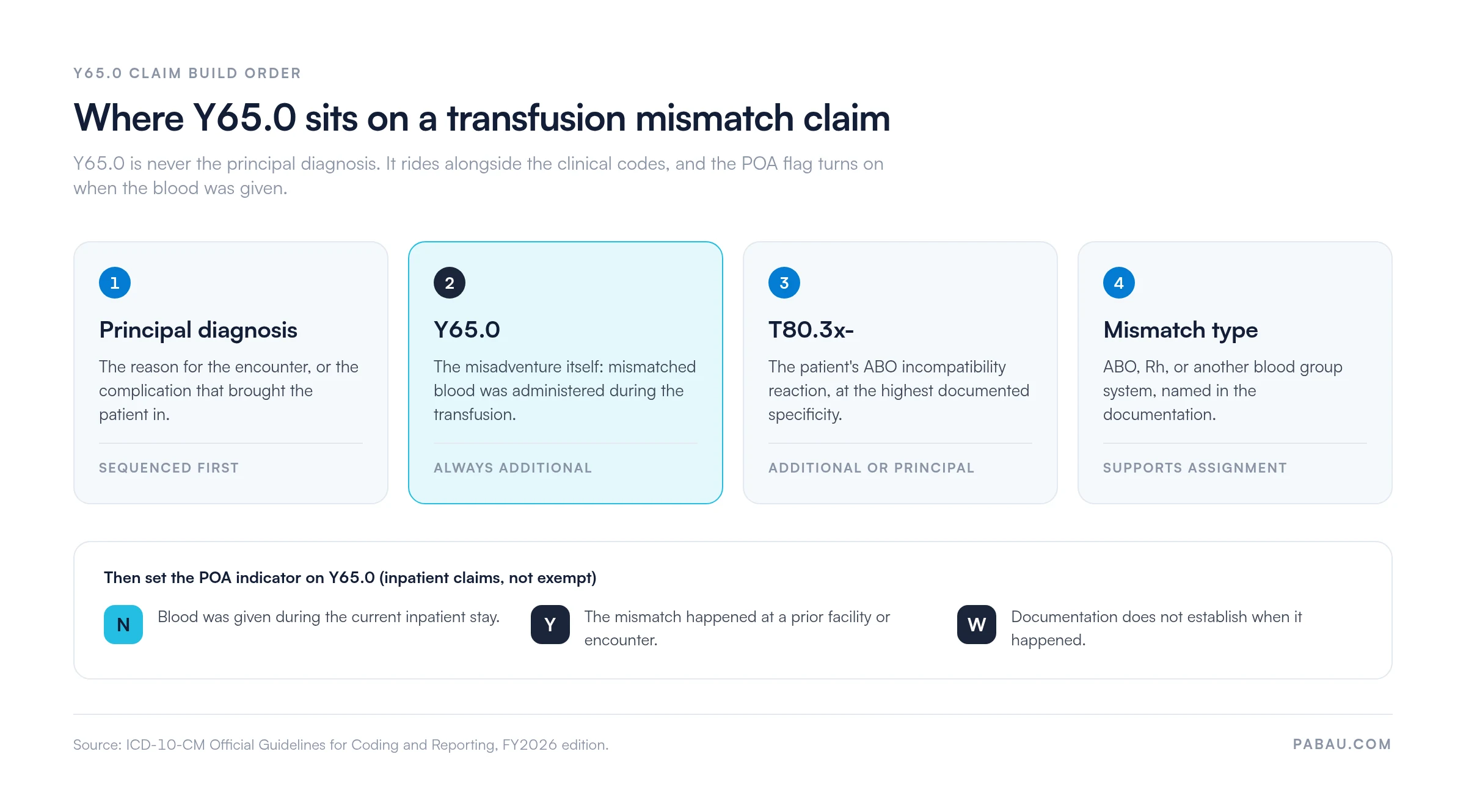
The Present on Admission (POA) indicator is required on all inpatient hospital claims submitted to Medicare and Medicaid. For Y65.0, the POA reporting rules follow the external cause code logic set out in the ICD-10-CM Official Guidelines.
External cause codes in the V00-Y99 range are not on the POA exempt list for inpatient claims. Assign the POA indicator from when the misadventure occurred, not from when it was identified or documented. A mismatch from a prior shift that is only recognized today still receives a POA of “N”. What matters is that the blood was administered during the current admission.
Sequencing and the POA flag are two halves of the same decision, so the chart below puts the whole claim on one page.
Documenting external cause codes like Y65.0 takes more than code selection. It takes an audit trail. The record has to show what happened, who administered the blood product, and how the patient responded. A code reference gives you the definition. The clinical record has to carry the evidence.
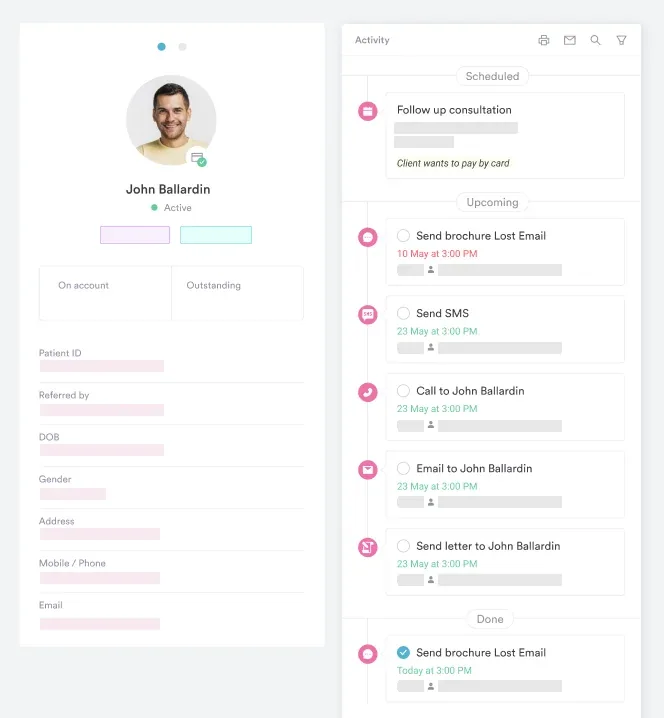
Practice management software like Pabau keeps that evidence in one timestamped encounter log. Every entry is attributed and dated, so a coder can trace the mismatch back to the shift it happened on. Payer audits and patient safety investigations both ask for that level of specificity.
For US practices submitting ICD-10-coded claims, Pabau’s claims software for coders submits electronically through the Claim.MD clearinghouse. Code combinations are validated before they reach the payer, so a Y65.0 sequencing error surfaces at submission rather than at the remittance. The same record that supports the code also supports the appeal if a payer questions it.
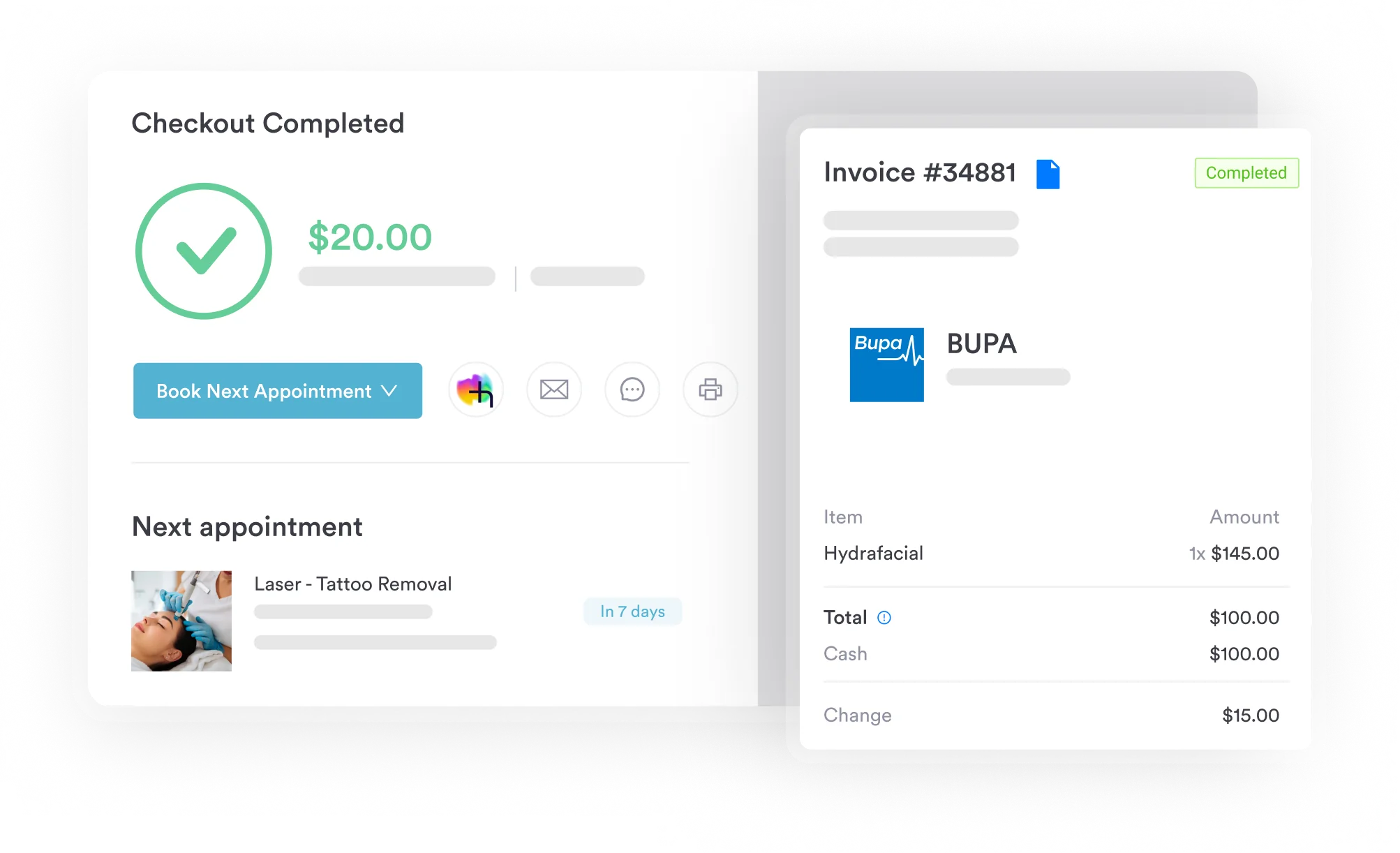

Pabau’s clinical records capture ICD-10 codes at the encounter level. Your team holds the documentation trail before a claim reaches the clearinghouse.

ICD-10 code Y65.0 captures the misadventure of transfusing mismatched blood, not the clinical reaction that follows. Getting that distinction right decides whether the companion T80.3 codes are sequenced correctly. It also decides whether the external cause code carries the POA indicator inpatient claims require. Documentation of the mismatch type, the encounter timing and the clinical response is what separates a clean claim from an audit flag.
The work that decides a Y65.0 claim happens before the coder opens the encounter, in how the transfusion event was recorded. Fix the record and the sequencing follows. Book a demo to see how Pabau captures adverse event documentation your coders can bill from.

Need guidance on submitting ICD-10-coded claims electronically? Claim.MD clearinghouse guide explains how Pabau routes 837P claims through the Claim.MD network for real-time eligibility and ERA processing.
Concerned about clean claim requirements for external cause codes? Clean claim requirements in medical billing covers the elements payers check before processing a claim, including external cause code sequencing.
Need the compliance standards behind a coded claim? Medical billing compliance sets out the documentation and audit requirements that apply to external cause codes like Y65.0.
ICD-10 code Y65.0 is a billable external cause code used to document a misadventure in which mismatched blood was administered during a transfusion procedure. It captures the operational or procedural error, not the patient’s clinical reaction. It is always assigned as an additional code alongside the diagnosis codes for the condition and any resulting complication such as ABO incompatibility reaction (T80.3-).
Yes, Y65.0 is a billable, specific ICD-10-CM code valid for reimbursement purposes in the FY2026 edition (effective October 1, 2025). Its parent code Y65 is non-billable. Coders must always use Y65.0 or another specific Y65.x subcode rather than the parent category.
Y65.0 documents the misadventure, meaning that the wrong blood was given. T80.3 documents the patient’s ABO incompatibility reaction. Both may appear on the same claim when an ABO mismatch causes a clinical reaction. Y65.0 is always an additional external cause code and is never the principal diagnosis. T80.3 may be principal if the reaction is the reason for the encounter.
Documentation must confirm that mismatched blood was administered during a transfusion, and should specify the incompatibility type (ABO, Rh, or other blood group system). A general notation of “transfusion reaction” is not sufficient on its own. The blood bank crossmatch report, nursing incident documentation, and the attending physician’s note are typically the supporting sources coders reference.
The POA indicator for Y65.0 is typically “N” (not present on admission) when the transfusion mismatch occurred during the current inpatient stay. It is “Y” if the patient was admitted because of a mismatch that occurred at a prior facility or encounter. “W” applies when timing cannot be clinically determined from the documentation.
The ICD-10-CM alphabetic index recognizes three synonyms that map to Y65.0: blood group incompatibility during transfusion; transfusion of mismatched blood; and wrong blood transfused. All three index to the same code and are treated identically for coding and reimbursement purposes.