

ICD-10 Code S42.444P: Medial epicondyle fracture, right humerus
ICD-10 Code S42.444P: full descriptor and code validity ICD-10 Code S42.444P car...

Last Updated: Oct 13, 2026
Billable Code Specific Code
S62.291B is the billable ICD-10-CM code for other fracture of first metacarpal bone, right hand, initial encounter for open fracture.
It carries three fixed elements: right-hand laterality, an open fracture, and the initial encounter. Change any one of them and a different code applies.
Then it covers CPT pairing, the four errors that trigger denials, and the documentation a clean claim needs.
Let Pabau's smart automation suggest the right codes, reduce claim denials, and keep your practice compliant—effortlessly.
Automate repetitive tasks and focus on what matters most—your patients.
Reduce coding errors and ensure compliance with the latest regulations.
Clean claims, fewer denials, and faster reimbursements.
Powerful insights and reporting to help your practice thrive.
HIPAA compliant SOC 2 certified GDPR-compliant Trusted by 4,000+ clinics worldwide

ICD-10 code S62.291B covers an other fracture of the first metacarpal bone of the right hand, at the initial encounter for an open fracture.
S62.291B is billable and valid for HIPAA-covered claim submission. It took effect on October 1, 2025 under the 2026 edition.
The 7th character B means initial encounter for open fracture. Using A instead is the most common coding error on this code.
The physician must document a wound communicating with the fracture site. Without that language, the coder defaults to S62.291A.
Practice management software like Pabau attaches the correct diagnosis code to every claim, which cuts denials at the 7th character level.
ICD-10 Code S62.291B is a billable, valid-for-submission ICD-10-CM diagnosis code. It describes an other fracture of the first metacarpal bone of the right hand, at the initial encounter for an open fracture.
“Other fracture” here excludes Bennett fractures and Rolando fractures. Those two carry their own codes, S62.21x and S62.22x.
ICD-10-CM codes are updated every year by the Centers for Medicare and Medicaid Services and the National Center for Health Statistics. The CMS coding resources page publishes each release. The 2026 edition, effective October 1, 2025, confirms S62.291B as billable and unchanged from prior editions.
Each segment of S62.291B encodes a specific clinical fact. Coders who understand the structure can quickly verify the code is correct before submission.
The first metacarpal is the thumb metacarpal. It is the shortest and most radially positioned of the five metacarpal bones. Fractures here are among the most common hand fractures seen in emergency and orthopedic settings.
The CDC/NCHS official ICD-10-CM web tool confirms the full tabular description and index references for S62.291B.
The 7th character is what separates a clean claim from a denial. The S62.291 family takes seven valid extensions, each with its own clinical meaning. Confusing A with B is the most common error in this family.
The ICD-10-CM Official Guidelines for Coding and Reporting define an initial encounter as any visit where the patient receives active treatment for the fracture.
That includes the emergency room visit, fracture manipulation, and surgical repair. Once the patient moves to routine follow-up, the 7th character shifts to D, G, K, or P depending on how the fracture is healing.
The AAPC code lookup adds crosswalk guidance for the S62.291 family, including modifier context and related procedure pairings.
Rehabilitation teams tracking the same fracture through recovery in a physical therapy EMR code the later encounters rather than the initial one.
The A-vs-B decision is clinical, not administrative. It depends entirely on the documented condition of the overlying skin at the fracture site. Coders cannot make this determination themselves and must rely on physician documentation.
An open fracture does not require visible bone. A puncture wound or laceration that lets the fracture hematoma communicate with the outside qualifies clinically. The treating physician must document the fracture as open.
Without that language, the coder defaults to A. Assigning B without documented open-fracture status is a compliance risk and an audit exposure.
The parent-child hierarchy tells coders where the correct level of specificity sits. It also helps billers spot when a payer is asking for a less-specific parent code in a Local Coverage Determination.
Payers require the most specific code available for a clean claim. S62.29 and S62.291 are invalid without a 7th character and will be rejected.
The same hierarchy logic runs through the rest of the injury chapter, including S52.262K. Everywhere in it, 7th character specificity is a billing requirement rather than a documentation preference.
Coders working on hand fracture claims frequently need to navigate the full S62.291 and S62.292 code sets. The table below maps the full 7th character set for both right and left hand variants. It also lists the named fracture codes in the adjacent subcategories.
Bennett fractures are intra-articular fractures at the base of the first metacarpal, involving the carpometacarpal joint. Rolando fractures are comminuted intra-articular variants.
Both carry their own codes. S62.291B applies only when the fracture meets neither named definition. Later encounters on a metacarpal fracture move to codes such as S62.360G.
S62.291B maps to a specific subset of first metacarpal fractures. Knowing what is included, and what is excluded, prevents miscoding in both directions.
Included conditions (approximate synonyms):
Excluded conditions (use a different code):
Practices running a sports medicine practice see first metacarpal fractures from ball sports and contact injuries. Open wounds are more common there than in simple falls. Where the mechanism involves broken glass, add the external cause code external cause code W25.XXXD for the follow-up encounter.
Before selecting S62.291B, verify two things in the clinical note. First, language documenting a wound that communicates with the fracture site. Second, confirmed right-hand laterality. If either is missing or ambiguous, query the treating provider before you submit the claim.
S62.291B is valid for all HIPAA-covered electronic health transactions. That includes professional (CMS-1500) and institutional (UB-04) claim types. Correct use requires pairing the diagnosis code with the appropriate procedure code, correct encounter type, and payer-required modifiers. Box-by-box requirements on the professional claim form change by payer, so one filled sample is not a universal template.
Common CPT procedure code pairings: metacarpal fracture care codes used alongside S62.291B sit in the 26600 to 26615 range. The choice depends on the treatment delivered.
Closed manipulation is 26600 or 26605, and open treatment, including internal fixation where performed, is 26615. Verify the pairing against the provider’s documentation and payer bundling rules, since the ICD-10-CM code alone does not fix it.
Practice management software like Pabau lets orthopedic and hand surgery teams attach diagnosis codes to procedures at the point of care.
That shortens the lag between treatment and submission, which is where encounter-type errors creep in. The CMS Physician Fee Schedule tool carries payment and RVU data for the paired CPT codes.
Practices operating under HIPAA must use ICD-10-CM codes in every covered electronic transaction. HIPAA compliance for medical offices treats correct diagnostic coding as part of claim integrity. Submitting a code with no documented clinical support behind it creates audit exposure.
Four errors account for most denials and audit flags on claims carrying S62.291B. Each one is visible in the claim before it goes out, which makes all four preventable at the coder’s desk.
Practices where coders and clinicians share one documentation workflow see fewer of these errors. Structured note templates that prompt for fracture type and open or closed status are the practical fix.
When you compare claims management platforms, check whether the system flags encounter-type mismatches before submission.
A clean claim using ICD-10 Code S62.291B requires specific clinical documentation elements. These are not optional: without them, the code has no clinical support and creates audit risk.
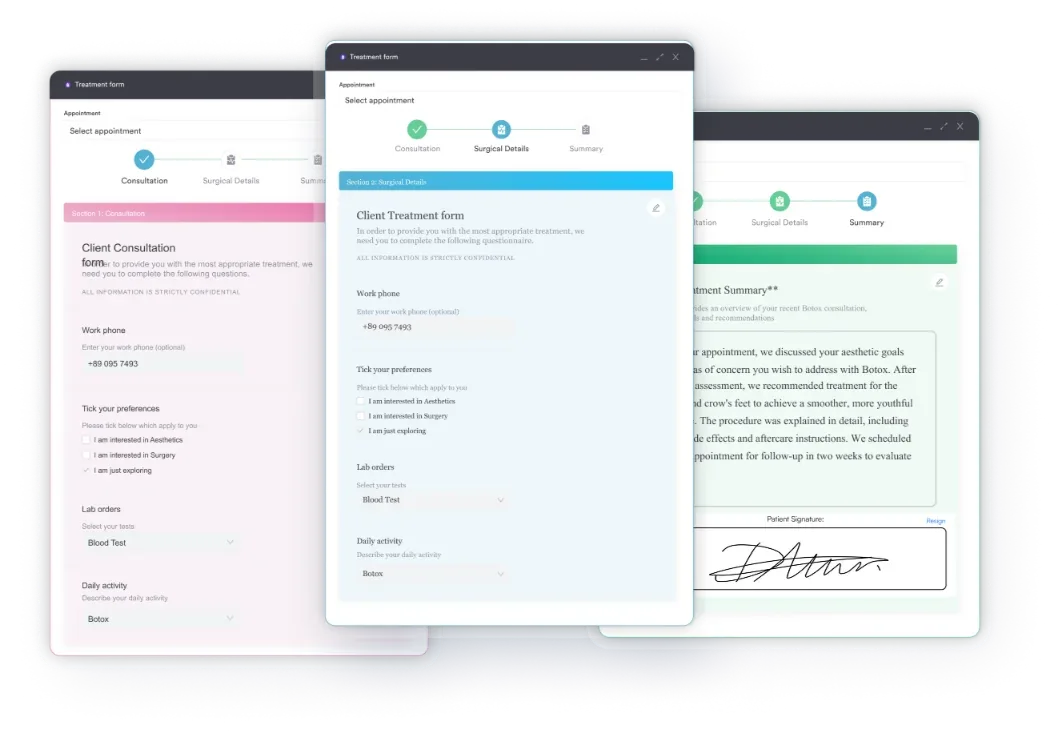
Practices using digital clinical forms can build these prompts into the encounter template itself. That removes the back-and-forth between coder and provider that holds claims up. The same documentation discipline applies to soft tissue injuries of the hand such as S61.441D.
Build a four-box checklist for open hand fractures into your intake workflow. Confirm laterality, record open versus closed, specify the fracture type, and note the encounter type. One completed checklist removes the four most common S62.291B coding errors.
In most practices the fracture note and the claim live in separate systems. A coder reads the note days later, decides whether the record supports an open fracture, and keys the code by hand.
That delay is where A gets used instead of B, and where a follow-up visit keeps the initial-encounter character it should have dropped.
Practice management software like Pabau closes that loop. The clinician documents laterality and open or closed status in a structured field on the encounter form.
Pabau’s claims management software reads that record directly. The diagnosis code attaches to the procedure at the point of care. The claim is then built from that same record rather than retyped from it.
The outcome is fewer avoidable denials on hand fracture claims and a shorter path from treatment to payment. Every Pabau subscription includes claims, clinical notes, and forms, so a small orthopedic practice runs the same workflow as a multi-site group.

Pabau attaches the correct ICD-10 diagnosis code to every procedure at the point of care and flags encounter-type mismatches before the claim leaves your practice. Fewer denials, faster reimbursement.

Most denials on first metacarpal fracture claims come down to a single character. Either the wrong 7th character was chosen, or none was appended at all. S62.291B is specific, billable, and valid for the 2026 coding year.
It only performs that way when the note supports open fracture, right-hand laterality, and initial encounter status.
The practical move is to fix this at the point of documentation, not at the point of billing. A note that names laterality and open status leaves the coder nothing to guess at, and the claim goes out clean the first time. Book a demo to see how Pabau supports accurate diagnostic coding.

Coding a hand fracture that failed to heal? S62.606K covers the nonunion encounter, with the same laterality and 7th character rules applied at the far end of the healing timeline.
Following a metacarpal fracture through delayed healing? S62.360G shows how the subsequent-encounter characters work once active treatment has ended.
Billing a microvascular metatarsal bone graft? Microvascular bone graft billing guide covers the work RVU and the operative note detail that denials trace back to.
Billing a free osteocutaneous flap? Osteocutaneous flap billing guide covers the microvascular anastomosis descriptor and where the code sits in the CPT set.
ICD-10 Code S62.291B is a billable ICD-10-CM diagnosis code. It covers an other fracture of the first metacarpal bone, right hand, at the initial encounter for an open fracture. It is valid for submission in HIPAA-covered transactions under the 2026 ICD-10-CM edition, effective October 1, 2025.
Yes. S62.291B is a billable, specific ICD-10-CM code valid for use on insurance claims and other HIPAA-covered electronic transactions. Parent codes S62.29 and S62.291 are non-specific and not billable; only the fully extended code with a valid 7th character is accepted.
The 7th character B designates initial encounter for open fracture in ICD-10-CM fracture codes. It applies while the patient is receiving active treatment. The fracture must be documented as open, meaning a wound communicates with the fracture site.
S62.291A is used for initial encounter for a closed fracture; the skin is intact with no wound communicating with the fracture. S62.291B is used for initial encounter for an open fracture; a wound communicates with the fracture site, as documented by the treating physician.
S62.291B is the correct code for a right hand open first metacarpal fracture at the initial encounter. It applies only where the fracture is neither a Bennett fracture nor a Rolando fracture. For second through fifth metacarpal open fractures, different S62 subcategory codes apply.
Yes. S62.291B is valid for insurance claim submission under the 2026 ICD-10-CM edition. The code became effective October 1, 2025 and remains a valid, billable code for the current fiscal year. Always verify against the current CMS ICD-10-CM tabular list for any changes in future fiscal years.




