CPT code 93503: Swan-Ganz catheter billing and modifiers
CPT code 93503: Official descriptor and procedure overview In the AMA CPT code s...

Last Updated: Oct 23, 2026

CPT code 20957 covers a microvascular bone graft harvested from the metatarsal, within the musculoskeletal CPT range 20950-20999.
The work RVU sits near 41.5, among the highest in the bone graft family. Confirm the current figure in the CMS Physician Fee Schedule each January.
Medicare pays for CPT 20957 only when medical necessity is documented. A supporting ICD-10 code, such as fracture nonunion or avascular necrosis, belongs in the encounter record.
Pabau’s claims management software ties CPT code documentation to the encounter note, so billing teams catch missing detail before the claim goes out.
CPT code 20957 covers a bone graft, microvascular, including harvesting of graft; metatarsal. It sits in the Other Procedures range of the musculoskeletal section, 20950-20999, maintained by the American Medical Association (AMA). The code never describes conventional or non-vascularized grafting. Microvascular technique is definitional to correct use. A payer reviewing this code looks for the reasoning in the note, not only the conclusion, so the documentation level matters.
A microvascular bone graft differs from a conventional graft in one critical respect. The transferred bone keeps its own blood supply. The surgeon connects donor vessels to recipient vessels at the transplant site, which keeps the bone alive. That microsurgical work is why CPT 20957 carries a much higher work RVU than standard graft codes.
Relative Value Units (RVUs) decide how Medicare calculates payment. For CPT 20957, the high work RVU reflects microsurgical anastomosis and the time a metatarsal harvest takes. Check every figure against the current-year CMS Physician Fee Schedule Look-Up Tool. RVU values update each January 1.
Published tables put the work RVU near 41.5. A CMS-derived table listed 42.61 in 2021, and current third-party lookups return 41.54. Confirm the exact figure for your billing year before you submit. The FastRVU 2026 lookup gives a quick cross-reference.
Practice expense and malpractice RVUs vary by place of service. Pull both facility and non-facility figures when you bill in more than one setting.
Medicare reimburses CPT 20957 by multiplying total RVUs by the national conversion factor, then adjusting for geography through the Geographic Practice Cost Index (GPCI). Rates differ between facility settings, such as a hospital or ASC, and non-facility settings. Private payer rates are contractual and will differ from Medicare. Never assume parity.
Coverage for CPT 20957 is subject to the applicable Local Coverage Determinations (LCDs). The record must show medical necessity, and the claim needs a supporting ICD-10-CM diagnosis code.
Rates update every January, so verify current figures before submitting high-value surgical claims. Practices using claims management software can flag these codes for documentation review before the claim leaves the practice.
Verify CPT 20957 RVU values and Medicare payment amounts against the current CMS Physician Fee Schedule Look-Up Tool each January. Conversion factors and GPCI adjustments change annually, and billing against stale figures is a common source of underpayment for high-value surgical codes.
Modifier selection for CPT 20957 affects both payment and compliance. Incorrect modifier use is a leading cause of denial and audit risk on high-complexity surgical codes. The modifiers below are the ones that usually apply. Verify each against current National Correct Coding Initiative (NCCI) edits and payer policy before use.
A HIPAA-compliant billing workflow keeps the modifier rationale in the operative note, not only on the claim form. Payers increasingly request supporting documentation for high-value modifier combinations on codes like CPT 20957.
With software built for chiropractic practices, each musculoskeletal procedure code sits beside the visit note supporting it.
Medical necessity for CPT 20957 rests on an ICD-10-CM diagnosis code that explains why a microvascular metatarsal graft is indicated. Payers may deny the claim when the diagnosis does not align with the procedure under the applicable LCD. Fracture codes carry the same specificity burden.
Code specificity matters. Use the most specific code available for the anatomical site and laterality.
Documentation should also say why microvascular technique was chosen over conventional grafting or a bone stimulator such as CPT 20979. That reasoning strengthens medical necessity and lowers the risk of a carrier-judgment denial.
Knowing which codes bundle with CPT 20957, and which related codes sit in the same family, prevents both undercoding and NCCI edit denials. CCI edits change periodically, so verify any combination against the current NCCI tables. The AAPC Codify CPT lookup is a useful place to start.
Choosing between 20955, 20956, and 20957 comes down to the donor site in the operative report. Coders sometimes default to 20962 when a metatarsal harvest is clearly documented, which undercodes the claim. Where the note specifies a metatarsal harvest, CPT 20957 is the correct code.
Non-vascularized work belongs to other codes. CPT 20902 covers a conventional graft from any donor area.
Confirm three elements in the operative report before you code CPT 20957. First, microvascular anastomosis was performed rather than conventional placement. Second, the harvest site is the metatarsal. Third, the recipient site and indication carry a supporting ICD-10-CM code. All three are needed for a clean claim.
High-complexity surgical codes like CPT 20957 fail at the documentation stage more often than at the coding stage. The pattern is familiar.
The surgeon completes the procedure, the operative note is dictated days later, and billing submits before the note captures the technique and harvest site. By the time the denial arrives, the window for clean resubmission has narrowed.
Practice management software like Pabau links clinical documentation to CPT codes inside one workflow. Billing teams can see documentation status before a claim is released, which shortens the wait between the procedure date and a clean submission. That matters for plastic surgery practices billing reconstructive work every week.
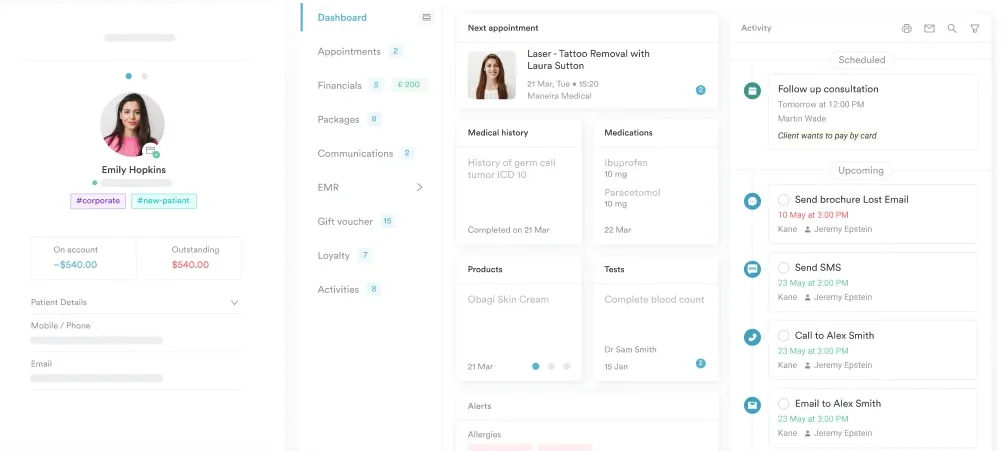
Practices comparing practice management software for surgical specialties usually rank the documentation-to-billing workflow as their most important integration. A standalone CPT lookup answers what the code is, while a practice management platform shows whether the note supported the claim.
On a code worth roughly 41.5 work RVUs, that second answer protects far more revenue. The same holds for sports medicine practices, where metatarsal stress fractures and nonunions turn up regularly.

Pabau links encounter notes to CPT codes. Your billing team submits clean claims for procedures like CPT 20957 without chasing documentation after the fact.

CPT code 20957 turns on three documented elements. Those are microvascular technique, metatarsal harvest, and a supporting ICD-10-CM diagnosis. Get all three into the operative note and the billing follows cleanly. Miss one and a denial is the predictable result.
The judgment worth keeping is about timing. A note dictated days after a high-RVU procedure tends to get defended rather than paid. Fix that sequence and the denial rate across this code family drops.
Pabau connects clinical documentation to CPT code submission in one workflow, so billing teams see what is missing before a claim leaves. For practices billing reconstructive codes across several locations, that visibility protects hard-won revenue. Book a demo to see how Pabau handles surgical CPT billing end to end.

Coding a conventional bone graft instead? CPT 20902 covers grafts from any donor area, with the documentation that separates a major harvest from a minor one.
Billing structural allografts in spine cases? CPT 20931 walks through allograft billing rules and the operative detail payers look for.
Closing a donor site the same day? CPT 12032 explains intermediate wound repair coding, wound measurement, and modifier use.
Need the diagnosis side of fracture billing? S52.001E covers subsequent-encounter fracture coding and the seventh character payers check.
Coding prostate enlargement found on imaging? ICD-10 code for benign prostatic hyperplasia covers this diagnosis for prostate enlargement discovered incidentally, without urinary symptoms.
CPT code 20957 reports a bone graft, microvascular, including harvesting of graft from the metatarsal. It applies when a surgeon moves vascularized bone from the metatarsal to a recipient site using microsurgical anastomosis. Common indications include fracture nonunion, avascular necrosis, and osteomyelitis reconstruction.
Medicare pays CPT 20957 by multiplying total RVUs by the annual CMS conversion factor, then adjusting for geography through the GPCI. The work RVU sits near 41.5, with practice expense and malpractice RVUs added on top. The national average varies by setting and location, so verify current figures in the CMS Physician Fee Schedule Look-Up Tool each January.
The modifiers that usually apply are -51 for multiple procedures and -59 for a distinct procedural service. Use -LT or -RT when the payer requires laterality. Use -62 when two surgeons of different specialties each perform distinct parts of the graft. Verify every modifier against current NCCI edits before submission.
Both codes describe microvascular bone grafts using the same surgical technique, and they differ only by donor site. CPT 20955 specifies a fibula harvest, while CPT 20957 specifies a metatarsal harvest. The donor site in the operative report decides which one applies.
Diagnosis codes supporting medical necessity typically include osteonecrosis (M87.x_) and osteomyelitis (M86.x_). Others are nonunion of fracture (M84.1x_) and pathological fracture in neoplastic disease (M84.5x_). The code must reflect the documented indication and anatomical site, so use the most specific option available to avoid LCD-based denials.
Yes, CPT 20957 is covered when medical necessity is established and documented with a supporting ICD-10-CM diagnosis code. Coverage may be subject to the applicable Local Coverage Determinations (LCDs). A claim without a documented indication that aligns with the LCD may be denied even when the CPT coding is correct.
Check CCI edit bundling for CPT 20957 against the current NCCI tables, because bundling relationships change with annual CMS updates. Related codes in the same family (20955, 20956, 20962) generally cannot be billed with 20957 on the same date for the same site. A modifier justifying distinctness is required.