ICD-10 Code V28.01XD: E-bike driver noncollision accident, nontraffic, subsequent encounter
ICD-10 Code V28.01XD: Definition and billable status ICD-10 Code V28.01XD is the...

Last Updated: Oct 20, 2026
Billable Code Specific Code
S35.10XD is the billable ICD-10-CM code for unspecified injury of inferior vena cava, subsequent encounter.
ICD-10 Code S35.10XD represents an unspecified injury of the inferior vena cava at a subsequent encounter. Medical coders use this code when a patient returns for routine follow-up care after the initial treatment of the IVC injury has already been documented.
This code is part of the FY2026 ICD-10-CM edition, which became effective October 1, 2025. It falls under the S30-S39 block (injuries to the abdomen, lower back, lumbar spine, pelvis, and external genitals). Within that block, it sits in the S35 category, which covers injuries to blood vessels at the abdomen, lower back, and pelvis level.
The word "unspecified" in the code description means the type of injury to the IVC has not been further specified in the clinical documentation. Where documentation supports it, coders should consider more specific sibling codes before defaulting to S35.10XD. Examples include S35.11XD for a minor laceration or S35.12XD for a major laceration.
Let Pabau's smart automation suggest the right codes, reduce claim denials, and keep your practice compliant—effortlessly.
Automate repetitive tasks and focus on what matters most—your patients.
Reduce coding errors and ensure compliance with the latest regulations.
Clean claims, fewer denials, and faster reimbursements.
Powerful insights and reporting to help your practice thrive.
HIPAA compliant SOC 2 certified GDPR-compliant Trusted by 4,000+ clinics worldwide

ICD-10 Code S35.10XD describes an unspecified injury of the inferior vena cava at a subsequent encounter visit
S35.10XD is a billable, specific code valid for HIPAA-covered claims submission as of FY2026 (effective October 1, 2025)
The parent code S35.10 is not billable on its own. Coders must add the placeholder character X plus a 7th character (A, D, or S) before submitting a claim
Pabau’s claims management software supports accurate ICD-10-CM code capture and streamlined billing workflows for trauma and vascular cases
The S35.10 code family requires a placeholder character in the sixth position and a 7th character to be billable. Without both, the parent code S35.10 cannot be submitted on a claim. All three 7th character options represent different phases of patient care for the same underlying injury.
Per the CMS ICD-10 guidelines, the 7th character D applies to a subsequent encounter. That covers routine care after the active phase of treatment is complete. Examples include follow-up visits, wound checks, and the outpatient rehabilitation that physical therapy practices code every day. It does not require a hospitalization to have occurred first.
The sequela character (S) is often confused with subsequent encounter. Use S only when the current visit is for a condition that is a direct late effect of the original IVC injury. It does not apply to routine healing visits. Accurate selection here prevents claim denials and audit exposure.
Document the phase of care clearly in the clinical note before coding. A wound check, staple removal, or routine vascular follow-up after the index injury is stabilized supports the D character for that phase. An unrelated complaint that traces back to the original IVC damage supports the S character instead.
S35.10XD sits within a well-defined hierarchical path in the ICD-10-CM tabular list. Understanding the hierarchy helps coders navigate related codes and select the most specific option available. Use the CDC/NCHS ICD-10-CM tool to browse the full tabular structure and verify code validity for the current fiscal year.
The parent code S35.10 cannot be used for claim submission. Submitting a claim with S35.10 alone, without the placeholder character and 7th character, will result in rejection. The claims management workflow at the billing stage should include a validation step. That step confirms every injury code carries a valid 7th character before submission.

The S35.10x code family covers the full spectrum of inferior vena cava injury types and encounter phases. Selecting the most specific code available is a core ICD-10-CM guideline requirement. Where the clinical record documents the injury type with more specificity, use a more specific code rather than defaulting to S35.10XD.
For a related vascular complication code. Coders can also consult the AAPC Codify ICD-10-CM lookup to confirm the current S35.1xx family for a given fiscal year.
The inferior vena cava is the largest vein in the body. It returns deoxygenated blood from the lower extremities and abdominal organs to the right atrium. IVC injuries most commonly occur in blunt or penetrating abdominal trauma, retroperitoneal surgery, or iatrogenic injury during procedures near the great vessels.
That same blunt-trauma mechanism is one sports medicine practices document routinely for contact-injury patients.
Because IVC injuries can range from a minor contusion to a full-thickness laceration, coders play a direct role in accurate severity documentation. Precise 7th character selection across the care continuum supports continuity of clinical records and reduces the risk of medical necessity denials during trauma billing reviews.
Accurate clinical documentation in patient records ensures the treating physician’s intent maps cleanly to the correct code at each encounter.
Subsequent encounters for IVC injury typically involve vascular surgery follow-up, radiologic surveillance (CT angiography), or general trauma outpatient review. In all these settings, ICD-10 Code S35.10XD provides the correct encounter-level specificity when the injury type is not further documented.
Several ICD-10-CM official guidelines and documentation principles apply specifically to S35.10XD. Applying them correctly minimizes audit risk and supports clean claim adjudication. The HIPAA compliance requirements mandate accurate diagnosis code use as part of the standard transaction set under 45 CFR Part 162.
For the complete official reference, coders should consult the CMS coding guidelines. They cover coding notes, excludes 1 and 2 annotations, and code-first/use-additional instructions for the S35 category.
The ICD-10-CM Alphabetic Index maps several clinical terms and synonyms to S35.10XD. Familiarity with these terms helps coders confirm they have the right code when working from a physician’s clinical narrative rather than a code number. Good medical documentation practices make it easier to map physician language directly to the correct ICD-10 code.
A physician might document “IVC injury” without specifying laceration severity or injury type. When that visit is a follow-up, these synonym terms all map to S35.10XD. A structured digital documentation workflow helps the treating provider’s notes capture more specificity. That extra detail supports more precise code selection when the injury type is identifiable. Coverage verification also surfaces the deductible position, which changes what the practice collects at the desk.

When reviewing older records for subsequent encounters, check whether the original admission used S35.10XA or a more specific sibling code. If the initial encounter used S35.11XA (minor laceration), the subsequent encounter should use S35.11XD, not S35.10XD. Code consistency across the episode of care strengthens audit defense and supports continuity in claims review.
Today, a coder usually catches a missing or mismatched 7th character only after a payer rejects the claim. That means reworking the chart days or weeks after the encounter, on top of the original documentation review.
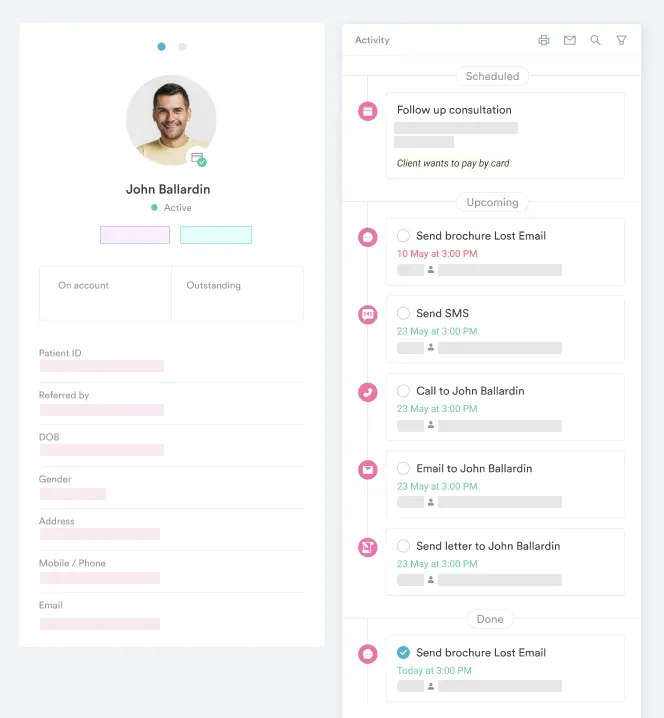
Practice management software like Pabau checks injury codes for a valid placeholder and 7th character before the claim leaves the practice. It also ties each code back to the clinical note that supports it, so the coder can confirm the encounter phase in seconds.
That validation step catches an incomplete S35.10 code before submission instead of after a denial. For trauma and vascular practices coding multiple encounter phases for the same injury, that shortens the billing cycle and reduces audit exposure.

Pabau’s claims management tools help surgical and trauma practices capture accurate ICD-10-CM codes, reduce billing errors, and streamline claim submission across complex multi-code encounters.

IVC injuries require careful encounter-phase tracking throughout the billing cycle. Selecting the wrong 7th character, or leaving it off entirely, is the most common error coders make with the S35.10 family. Both mistakes lead to claim rejections or medical necessity audits.
Coders who verify the 7th character against the clinical note before submission avoid most of these denials. Book a demo to see how Pabau’s claims management software supports that check for trauma and vascular billing.

Coding a related fracture from the same trauma episode? S82.422B covers the open shaft fracture and its Gustilo-Anderson classification.
Handling a pelvic trauma case with reproductive organ involvement? S37.502S covers a bilateral fallopian tube injury sequela.
Coding a burn alongside a vascular injury? T31.42 covers burns involving 40 to 49 percent of body surface area.
ICD-10 Code S35.10XD is the billable ICD-10-CM diagnosis code for an unspecified injury of the inferior vena cava at a subsequent encounter. It is used when a patient returns for routine follow-up care after the initial treatment of an IVC injury has already been completed. The code is valid for HIPAA-covered claims submission under the FY2026 ICD-10-CM edition, effective October 1, 2025.
Yes. S35.10XD is a billable, specific ICD-10-CM code valid for submission on HIPAA-covered transactions. The parent code S35.10 (without the 7th character D) is not billable and will be rejected if submitted on a claim. Always add the placeholder character and 7th character before coding any S35.10 encounter.
The 7th character D designates a subsequent encounter. The patient is receiving routine care during the healing or recovery phase after initial treatment of the injury is complete. It applies to follow-up visits, wound checks, and outpatient recovery appointments, as defined in ICD-10-CM Official Guidelines Section I.C.19.
Subsequent encounter (7th character D) covers routine care during the healing phase of an injury. Sequela (7th character S) covers a late effect or complication that is a direct consequence of the original injury. For example, a follow-up vascular surgery appointment uses the D character for that phase of care. A visit for chronic venous insufficiency caused by the original IVC damage uses the S character instead.
Use S35.10XD only when the clinical documentation does not specify the type of IVC injury. If the record documents a minor laceration, use S35.11XD; if it documents a major laceration, use S35.12XD. ICD-10-CM guidelines require the most specific code supported by documentation, so review the original admission records before defaulting to the unspecified code.
ICD-10-CM Official Guidelines Section I.C.19 governs traumatic injury coding, including 7th character requirements for all S00-T88 codes. For S35.10XD specifically, coders should also apply the guidelines on external cause code sequencing, POA exemption for subsequent encounter codes, and the most-specific-code rule. The CMS ICD-10 coding resources provide the authoritative annual update files and official guideline documents.