ICD-10 Code Y76.0: Diagnostic obstetric and gynecological devices
ICD-10 Code Y76.0: Definition and billable status ICD-10 Code Y76.0 is a valid, ...

Last Updated: Oct 23, 2026
Billable Code Specific Code
M83.5 is the billable ICD-10-CM code for other drug-induced osteomalacia in adults.
The FY2026 edition of M83.5 took effect on October 1, 2025. Coders in endocrinology, orthopedics, internal medicine, and neurology meet it most often, since those practices manage long-term anticonvulsant and corticosteroid regimens. Payment for this code arrives with a remittance advice that explains any adjustment line by line.
Let Pabau's smart automation suggest the right codes, reduce claim denials, and keep your practice compliant—effortlessly.
Automate repetitive tasks and focus on what matters most—your patients.
Reduce coding errors and ensure compliance with the latest regulations.
Clean claims, fewer denials, and faster reimbursements.
Powerful insights and reporting to help your practice thrive.
HIPAA compliant SOC 2 certified GDPR-compliant Trusted by 4,000+ clinics worldwide

ICD-10 code M83.5 describes other drug-induced osteomalacia in adults, a billable FY2026 diagnosis code applicable to patients 15 years and older.
Anticonvulsants, corticosteroids, tenofovir, and certain antacids are among the drug classes most commonly linked to this diagnosis.
The Excludes1 note under M83 bars rickets, renal osteodystrophy, and vitamin D-resistant osteomalacia from the same claim as M83.5.
Pabau’s claims management software and client record tools help practices document drug history accurately, reducing denials.
ICD-10 code M83.5 is a billable, specific ICD-10-CM diagnosis code. It can be used directly for reimbursement without further subdivision. The table below captures the key reference fields coders need when working with this code.
Per the CDC/NCHS ICD-10-CM web tool, M83.5 is valid for use in all settings for encounters on or after October 1, 2025. It is not a placeholder or header code; it requires no additional characters to be billable.
Osteomalacia is the softening of bone tissue caused by defective mineralization. Unlike osteoporosis, which reduces bone density after mineralization has occurred, osteomalacia affects the mineralization process itself, leaving the bone matrix inadequately calcified.
Drug-induced osteomalacia happens because a medication interferes with either vitamin D metabolism or phosphate absorption. Long-term disruption of either pathway costs the skeleton its structural integrity. The result is bone pain, proximal muscle weakness, and raised fracture risk in affected adults.
Nutritional osteomalacia sits elsewhere. Diet or sun exposure drives it, and vitamin D deficiency is coded under E55.x. M83.5 needs a prescribed or over-the-counter drug behind the mineralization defect. Bone pain and proximal muscle weakness also appear in M79.7, so the record must tie the findings to that drug.
Several drug classes are associated with impaired bone mineralization in adults. Practices that treat patients on long-term anticonvulsant, antiretroviral, or corticosteroid regimens should include drug-induced osteomalacia in their differential when bone-related symptoms arise. Good clinical record documentation of prescribing history is what makes this code defensible at audit.
Anticonvulsants are the most commonly implicated class. Clinical literature links more than two years of enzyme-inducing anticonvulsant therapy to defective bone mineralization. The risk climbs when vitamin D supplementation is not co-prescribed.
Corticosteroids raise a harder question. Patients on long-term steroid therapy for a condition such as M32.9 often carry several bone-relevant exposures at once. Name the drug the physician holds responsible, rather than everything sitting on the medication chart.
Practices charting these diagnoses in Jane often compare Jane App alternatives once caseloads and billing get heavier.
The Excludes1 note under M83 governs which codes can share a claim with M83.5. Misreading it is a common source of denials for osteomalacia diagnoses. The same rule applies in other chapters. An Excludes1 conflict on a claim carrying ICD-10 code Q92.5 returns a CO-4 denial. The CMS ICD-10 codes page publishes the annual tabular list where the note appears in its authoritative form.
M83.5 applies only when the record names the drug behind the osteomalacia. No Includes note at M83.5 or M83 supplies that requirement. Without a documented causative medication, unspecified adult osteomalacia defaults to M83.9.
The Excludes1 notation for the M83 category means the following conditions are mutually exclusive with M83.5 and cannot appear on the same claim:
This is a hard rule. If a patient has both a drug-induced component and an active rickets diagnosis, M83.5 and E55.0 cannot appear on the same claim. The coder must select the code that best represents the primary diagnosis and query the physician if the documentation is ambiguous.
ICD-10 code M83.5 sits within the M83 adult osteomalacia category. Understanding the full sibling code set helps coders select the most specific code for each clinical scenario. The table below lists all M83 subcategory codes valid for FY2026, per the WHO ICD-10 browser and the US ICD-10-CM tabular list.
M83.4 and M83.5 are easy to confuse. Aluminum bone disease in dialysis patients follows its own pathophysiology, driven by aluminum accumulation in the skeleton. M83.5 covers drug-induced impairment through the vitamin D or phosphate route. A patient on high-dose aluminum antacids who is not on dialysis belongs in M83.5. When the record documents a GI malabsorption syndrome rather than a drug cause, ICD-10 code M83.2 is the sibling to assign.
The medical record must support every element of the M83.5 diagnosis before the code can be assigned. Missing documentation is the primary reason this code is queried or denied. Practices using digital intake forms to capture full medication history at intake are better positioned to build the supporting documentation trail from the first visit.

The following documentation elements are required:
Practices managing patients with complex polypharmacy histories benefit from HIPAA-compliant documentation workflows that maintain a complete and searchable medication record. When the prescribing history spans multiple providers, the coder should ensure all relevant drug information is consolidated in the chart before assigning M83.5.
Osteomalacia coding generates a predictable set of errors. Each one is catchable at the billing desk before the claim goes out.
Accurate coding depends on the clinical record, the payer’s coverage policies, and the AAPC ICD-10-CM code lookup resources that help coders verify code-level details. When in doubt, query the physician before submitting. A coding cheat sheet that spans CPT, ICD-10, and HCPCS keeps those verification steps in one place.
Physician notes and EMR problem lists often use terminology that differs from the official code descriptor. Knowing the approved synonyms helps coders map clinical language to M83.5 accurately. Mapping those phrases consistently keeps the diagnosis intact from the encounter note through to the claim.
When reviewing physician notes, also watch for phrases like “osteomalacia secondary to [drug name]” or “bone disease related to [anticonvulsant/antacid/antiretroviral].” These narrative formulations, when written by the responsible physician, support M83.5 assignment.
M83.5 has remained structurally stable through several ICD-10-CM fiscal year editions. The table below confirms its status across recent years, based on the CMS ICD-10-CM annual update files.
Coders should verify code status at the start of each fiscal year using the CDC/NCHS web tool or the CMS update files. Practices using practice management software with integrated coding tools stay current on annual ICD-10-CM updates without manual tracking.
Most coding errors involving M83.5 start at intake rather than at the billing desk. When medication history is incomplete or stored apart from the clinical notes, coders cannot build the documentation chain M83.5 requires. Practice management software like Pabau links its claims management software to the clinical record, so nothing is lost in the handoff.
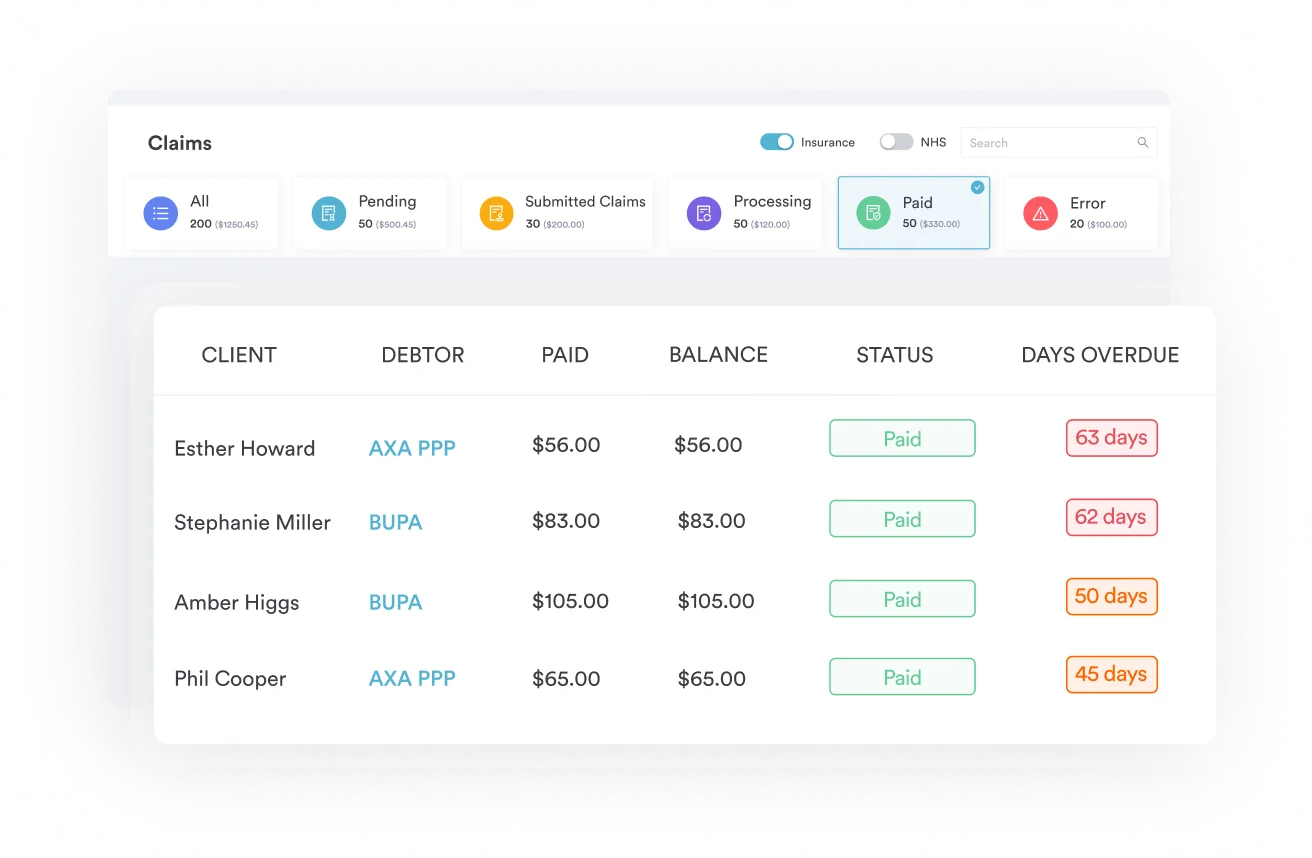
Practices using Pabau can capture structured medication histories at intake and write clinical notes that state the drug-disease relationship in the physician’s own words. That documentation is what makes M83.5 auditable when a payer requests supporting records.
Practices with polypharmacy panels get more out of that setup. Pabau’s functional medicine software workflows coordinate care across prescribers and hold one unified medication record. For bone and metabolic conditions.

Pabau connects medication history, clinical notes, and billing in one platform. See how structured documentation workflows reduce claim denials for diagnostic codes like M83.5.

M83.5 rewards one habit above all others. When the physician names the drug in the assessment and the labs back it up, the code is defensible and the claim holds. Reaching for M83.9 instead trades that specificity for nothing.
The trade-off worth remembering is where the drug link lives. A medication list alone will not carry it. Put the causation statement in the physician’s note, and the coding follows. Book a demo to see how Pabau keeps medication history, clinical notes, and billing in one record.

Coding another musculoskeletal diagnosis with regional specificity? M45.3 shows how site-specific spinal codes are selected and documented.
Need to code a joint condition driven by an underlying disease? M36.2 walks through secondary coding when the systemic disease causes the damage.
Facing an unspecified-code decision? M66.9 explains when an unspecified code is defensible and when it invites a query.
Documenting a spinal diagnosis without a confirmed cause? M43.9 covers the record detail payers look for before they accept the code.
ICD-10 code M83.5 is the billable ICD-10-CM diagnosis code for other drug-induced osteomalacia in adults. It describes adult-onset bone softening caused by a specific medication interfering with vitamin D metabolism or phosphate absorption. The code is valid for FY2026 and applicable to patients aged 15 years and older.
Yes. M83.5 is a specific, billable ICD-10-CM code that requires no additional characters. It became effective on October 1, 2025 for FY2026 encounters and can be used directly for reimbursement purposes when supported by appropriate clinical documentation.
Anticonvulsants (phenytoin, phenobarbital, carbamazepine) are the most commonly implicated drug class, followed by tenofovir disoproxil fumarate, long-term high-dose aluminum-containing antacids, cholestyramine, and corticosteroids. Each acts through a distinct mechanism: anticonvulsants accelerate vitamin D catabolism, tenofovir causes phosphate wasting, and aluminum antacids bind dietary phosphate in the gut.
The record must link the named causative drug to the osteomalacia diagnosis in the physician’s own words. It also needs supporting labs, such as low vitamin D, hypophosphatemia, or elevated alkaline phosphatase. Add a prescribing history with the drug name and duration, plus confirmation that the patient is 15 or older.