CPT code 93503: Swan-Ganz catheter billing and modifiers
CPT code 93503: Official descriptor and procedure overview In the AMA CPT code s...

Last Updated: Oct 23, 2026
Billable Code Specific Code
M66.9 is the billable ICD-10-CM code for spontaneous rupture of unspecified tendon.
Let Pabau's smart automation suggest the right codes, reduce claim denials, and keep your practice compliant—effortlessly.
Automate repetitive tasks and focus on what matters most—your patients.
Reduce coding errors and ensure compliance with the latest regulations.
Clean claims, fewer denials, and faster reimbursements.
Powerful insights and reporting to help your practice thrive.
HIPAA compliant SOC 2 certified GDPR-compliant Trusted by 4,000+ clinics worldwide

ICD-10 Code M66.9 is the billable FY2026 code for a spontaneous tendon rupture with no site or laterality documented.
Assign it only after a provider query fails to produce the tendon site or side.
Within M66, a code ending in 8 means other site and a code ending in 9 means multiple sites.
The ICD-9-CM equivalent is 727.60, mapped through CMS General Equivalence Mapping as an approximate crosswalk.
Practice management software like Pabau can require tendon site and side in the note, so fewer claims go out unspecified.
ICD-10 Code M66.9 is the billable diagnosis code for a spontaneous rupture of a tendon when the record names no site and no side. It sits at the bottom of the M66 hierarchy, so it applies only once every more specific option has been ruled out.
The code is valid for the 2026 fiscal year, effective October 1, 2025. It appears in Chapter 13 of the ICD-10-CM tabular list, which covers diseases of the musculoskeletal system and connective tissue (M00-M99). Within that chapter it sits in block M65-M67, disorders of synovium and tendon.
The official description is “Spontaneous rupture of unspecified tendon”. That means a tendon tear with no triggering traumatic event, at a site the record does not name.
The table below summarizes the administrative and billing attributes of the code. Both the Centers for Medicare and Medicaid Services (CMS) and the National Center for Health Statistics (NCHS) maintain them.
A spontaneous tendon rupture happens without a precipitating traumatic event. It is atraumatic by nature, developing from progressive tendon degeneration, an underlying systemic condition, or prolonged mechanical stress. That separates M66.9 from the traumatic rupture codes, which live in the injury chapter under S-codes.
Tendon degeneration usually does the groundwork. Chronic tendinopathy weakens the collagen matrix over time, and the tendon then fails under a load it would otherwise tolerate.
Conditions associated with spontaneous rupture include corticosteroid use, fluoroquinolone antibiotic exposure, diabetes. The CDC/NCHS ICD-10-CM web tool keeps these ruptures in category M66, separate from tendinitis and from traumatic injury codes.
The “unspecified” qualifier applies in two situations. In the first, the provider’s documentation genuinely omits the tendon site and laterality, and no other record clarifies it. In the second, the coder has not yet queried the provider and is using M66.9 as a placeholder.
The ICD-10-CM Official Guidelines for Coding and Reporting rule out that second use. Treat the code as a last resort, reached once every specificity option in the record has been exhausted.
Chiropractors work with these codes constantly, and chiropractic software keeps adjustments, plans, and progress in one record.
The M66 category runs from broad to narrow. Tendon type comes first, then anatomical site, then laterality. M66.9 is the catch-all at the bottom, so work through the decision logic below before you assign it.
One trap sits outside M66 altogether. A non-traumatic rotator cuff tear belongs with the shoulder lesion codes, such as M75.121, rather than anywhere in M66. Practices with heavy musculoskeletal volume also benefit from a structured query routine. Documentation tools inside sports medicine software can prompt for tendon site and laterality while the provider is still with the patient. An authorization request approved for one code does not cover a different code billed on the day. A coding error surfaces as a cash flow problem weeks later, which is why the healthcare revenue cycle is measured end to end.
Several clinical terms map to M66.9. Knowing the alternates helps you recognize the code when a provider’s note uses different language.
A “tendon tear” with no mechanism attached maps differently from a sports injury tear. Where the record describes a tear after a fall, a collision, or an acute force, check whether an S-code from the injury chapter fits better. That distinction causes a lot of coding errors, and the mistakes section below returns to it.
A cut through a long flexor tendon at the ankle or foot is a clear S-code case. On an initial encounter it codes to S96.029A where the note does not state which foot.
The table below lists the M66 subcategories. When the record names the tendon, select a child code rather than M66.9. Code validity can be confirmed against the CDC/NCHS tabular list each fiscal year.
The final digit in each block does a job worth spelling out, because aggregator sites blur the two. A code ending in 8 means the provider named a site that falls outside the listed anatomical groups.
A code ending in 9, such as M66.89, means the record documents two or more sites. Neither one stands in for M66.9, where no site is documented at all.
Unspecified codes invite payer scrutiny. ICD-10 code K37 raises the same question in the digestive chapter. Unspecified appendicitis holds only until the operative and pathology reports name a specific form. These are the errors that most often turn a spontaneous tendon rupture claim into a denial or an audit flag.
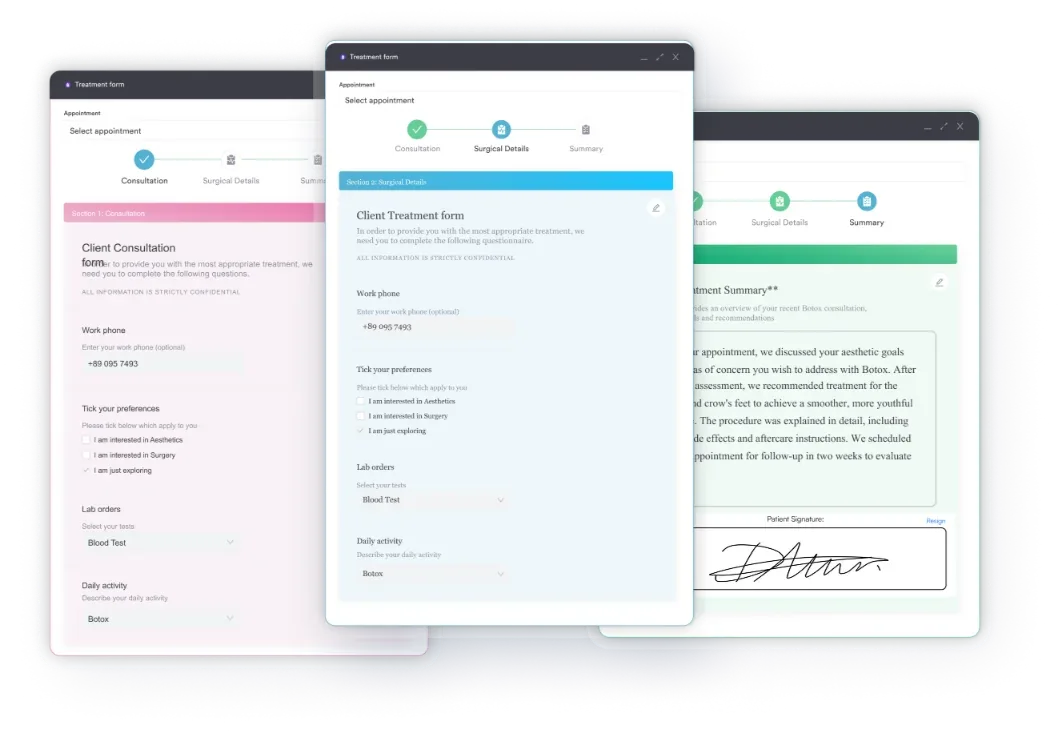
Physical therapy and orthopedic practices cut these errors by building structure into the clinical note itself. The digital intake forms in Pabau, our practice management platform, let you add tendon site and laterality fields to a documentation template. Fewer incomplete records then reach the billing queue.
For M66.9 to survive audit scrutiny, the record has to support the atraumatic nature of the rupture. Payers reviewing musculoskeletal claims will ask whether the documentation justifies an unspecified code or whether a more specific one was available. The same audit logic covers other last-resort codes in Chapter 13. M87.9 applies to osteonecrosis when the record names neither the affected bone nor the cause.
Run a monthly audit on your M66.9 volume. If it clears 15% of your spontaneous tendon rupture claims, your note templates are the place to look. Flag those encounters for provider query before the next submission cycle.
Practices with high orthopedic or sports medicine volume benefit from standardized documentation prompts. Musculoskeletal caseloads managed through Pabau’s client record can carry laterality and tendon site fields inside the clinical note template. Providers then capture the detail coders need without a separate query cycle.
Legacy payer systems and retrospective data analysis often need M66.9 mapped back to ICD-9-CM. The crosswalk below comes from the General Equivalence Mapping (GEM) maintained by CMS and NCHS. GEM crosswalks are approximate rather than exact, so never use one in place of a current-year coding decision.
For bidirectional lookups or scenario-based mapping across the M66 family, tools such as CrossCoder add procedure-to-diagnosis crosswalks and policy references. Validate the result against the individual payer’s requirements, since some systems still run an older GEM version.
Historical record review and quality audits in a physical therapy practice will turn up ICD-9 codes in pre-2015 encounter data. The 727.60 to M66.9 mapping is the closest single-code equivalent. Some cases coded to 727.60 map more precisely to a site-specific M66 code, where the underlying record holds more detail.
Where M66.9 is the primary diagnosis, the paired CPT code has to describe a procedure consistent with a spontaneous, non-traumatic rupture. The table lists the codes most often submitted alongside it. Medical necessity documentation must support each pairing before the claim goes out.
Check every pairing against current AMA CPT guidance before submission. An imaging code such as 73221 often produces the detail that upgrades the diagnosis to a specific one. The AAPC CPT-to-ICD-10 crosswalk holds medical necessity references for the common pairings.
Misaligned CPT-to-ICD pairings are a leading trigger for denials and pre-payment audits in orthopedic and physical therapy billing.
Most M66.9 usage starts at the point of care. The note the provider fills in never asks for the fields the coder will need, so the detail goes unrecorded. The fix is a specificity prompt inside the clinical note rather than a query cycle after the fact.
A platform with built-in electronic health records lets you design note templates with required fields for tendon site and laterality. When a provider finishes a musculoskeletal note, those answers arrive as structured data rather than free text. That matters most in physical therapy EMR settings, where spontaneous tendon pathology turns up every week.
Pabau handles this through its digital forms and structured client record. You can build laterality dropdowns, anatomical site pickers, and mechanism-of-injury fields into a template.
Capture those fields consistently and the billing team receives complete records, unspecified code usage drops, and the claims profile improves. Because Pabau is practice management software rather than a coding add-on, one record feeds scheduling, notes, and billing.

Pabau’s digital forms and claims tools prompt providers for site and laterality, then check the diagnosis against the procedure billed. Fewer claims leave the practice unspecified.

M66.9 is a legitimate billable code, and it belongs on a claim only where the record truly cannot support a more specific M66 child code. Read a rising M66.9 rate as a note-template problem rather than a coding one. The fix then moves to the point of care, where it is cheapest.
Two failures account for most of the trouble, and they repeat every year. Coders skip the query for site and laterality, and the note never separates an atraumatic rupture from a traumatic one. Build both questions into the template and the unspecified code goes back to being an exception.
Pabau gives musculoskeletal practices the structure to capture specificity at the point of care and to catch a code-to-procedure mismatch before submission. Book a demo to see how it fits orthopedic, physical therapy, and sports medicine billing.

Coding a healing pelvic organ injury? urinary and pelvic organ injury code S37.893D applies to the healing phase after a laceration of another urinary or pelvic organ.
Coding an abdominal transection instead? abdominal transection code S38.3XXA is the billable code for a partial transection of the abdominal wall at the initial encounter.
Coding another musculoskeletal diagnosis? M45.3 shows how region-level specificity works once the record names a spinal segment.
Was the rupture traumatic instead? S33.4XXD shows how the injury chapter handles mechanism, laterality, and encounter type.
Coding pain rather than rupture? M54.2 covers cervicalgia and shows how a site-level code replaces an unspecified fallback.
ICD-10 Code M66.9 classifies a spontaneous, atraumatic rupture of a tendon. It applies when the record does not specify which tendon ruptured or on which side. The code sits in the M66 category of the musculoskeletal chapter (M00-M99) of ICD-10-CM. It is valid for HIPAA-covered transactions in FY2026.
Yes. M66.9 is a billable, specific ICD-10-CM code valid for claim submission in FY2026, effective October 1, 2025. It is accepted for HIPAA-covered transactions. Use it only where a more specific M66 child code cannot be assigned from the available documentation.
M66.9 applies only where the record does not identify the ruptured tendon by name, site, or laterality. A provider query must also have come back empty. Once the record names the tendon and the side, a more specific M66 child code must be used instead.
The approximate ICD-9-CM equivalent is 727.60, nontraumatic rupture of unspecified tendon. The mapping comes from the CMS and NCHS General Equivalence Mapping. It is approximate rather than exact, so use it for legacy data work rather than current billing decisions.
The usual pairings are tendon repair codes such as 27650, 23410, and 26356. Musculoskeletal MRI codes 73221 and 73223 also appear, along with office visit codes 99213 and 99214. The CPT code has to match the procedure performed, and the diagnosis has to support medical necessity for it.
Four errors account for most of them. Coders use M66.9 when a site-specific M66 code was available, or confuse a spontaneous rupture with a traumatic one that needs an S-code. They also pair the code with a site-specific CPT code the documentation cannot support. A fourth error is skipping the provider query when the site or side is unclear.