ICD-10 code S61.201A: Open wound of left index finger without nail damage
ICD-10 code S61.201A covers a left index finger wound of unstated type ICD-10 co...

Last Updated: Oct 16, 2026
Billable Code Specific Code
M84.9 is the billable ICD-10-CM code for disorder of continuity of bone, unspecified.
Let Pabau's smart automation suggest the right codes, reduce claim denials, and keep your practice compliant—effortlessly.
Automate repetitive tasks and focus on what matters most—your patients.
Reduce coding errors and ensure compliance with the latest regulations.
Clean claims, fewer denials, and faster reimbursements.
Powerful insights and reporting to help your practice thrive.
HIPAA compliant SOC 2 certified GDPR-compliant Trusted by 4,000+ clinics worldwide

ICD-10 Code M84.9 describes a disorder of continuity of bone, unspecified, within the M80-M94 osteopathies chapter.
M84.9 is a billable ICD-10-CM code valid for claim submission. Use it only when documentation cannot support a more specific M84 subcode.
Payers may flag M84.9 during audits if clinical records contain enough detail to justify a more specific code such as M84.3x or M84.4x.
Pabau’s claims management software helps practices link accurate ICD-10 codes to clinical records before submission, reducing denial risk.
M84.9 has a narrow role in coding practice. Coders should reach for it only after confirming that the record cannot support one of the more specific M84 subcodes, since assigning an unspecified code when a precise one is documented is a common trigger for payer audits.
Within the hierarchy, M84 sits under the Osteopathies and Chondropathies block (M80-M94), part of the Musculoskeletal and Connective Tissue Diseases chapter (M00-M99). “Disorder of continuity of bone” covers any condition affecting the structural integrity of bone, including fractures, non-unions, malunions, and stress reactions.
The “unspecified” qualifier means the documentation doesn’t identify which type is present. That distinction matters for HIPAA-compliant clinical documentation practices, where specificity directly affects reimbursement and audit outcomes.
The 2026 ICD-10-CM edition of M84.9 became effective on October 1, 2025. According to the CDC/NCHS code tool, M84.9 is classified as a valid, billable code for the current fiscal year.
Physical therapy, orthopedic, and sports medicine practices, along with primary care physicians treating musculoskeletal presentations, are among the most common users of this code.
Practitioners at physical therapy practices should be especially familiar with when M84.9 is appropriate versus when a more specific subcode is warranted.
Yes. M84.9 is a billable and specific ICD-10-CM code valid for reimbursement purposes. It can be used as a principal or secondary diagnosis on professional claims (CMS-1500) and facility claims (UB-04).
M84.9 is not POA-exempt. Because it describes a current, active musculoskeletal condition, inpatient facilities must assign a Present on Admission (POA) indicator (Y, N, U, or W) on UB-04 claims.
One important caveat: billable does not automatically mean safe from denial. Some payers apply medical necessity edits that flag unspecified diagnosis codes when a more specific alternative exists and the clinical record appears to support it.
Coders at sports medicine practices that frequently document stress fractures or pathological fractures should confirm M84.9 is the only option before submitting, rather than defaulting to it for convenience.
Understanding where ICD-10 code M84.9 fits within the coding hierarchy helps coders navigate the M84 category quickly and choose the right level of specificity. The classification moves from broad to narrow across four levels.
The category M84 is itself a subcategory of the M80-M94 block, which covers a wide spectrum of bone and cartilage pathology, including osteoporosis (M80-M81), osteonecrosis (M87), and Paget’s disease (M88).
Within M84, the subcategories range from M84.0 (malunion of fracture) through M84.8 (other disorders of continuity of bone), with M84.9 serving as the residual “unspecified” code at the end of the category.
The CMS ICD-10 codes page provides annual updates to the tabular list, where this hierarchy is formally defined. Facilities managing musculoskeletal documentation should understand this structure when selecting codes for bone-related diagnoses.
In software built for chiropractic practices, M-code diagnoses drive care plans measured visit by visit.
M84.9 is appropriate only when two conditions are both true: the clinical record documents a bone continuity disorder, and the record does not provide enough detail to support a more specific code from the M84 subcategory list. This is a narrow window.
In practice, M84.9 applies most often to:
What M84.9 is not for: cases where the provider documents a stress fracture, pathological fracture, malunion, non-union, or periprosthetic fracture. Each of those conditions has its own M84 subcategory with site-specific and laterality-specific codes.
Assigning M84.9 in those scenarios when documentation clearly supports a more specific code is a coding error, not a conservative choice. The same logic governs other “unspecified” codes.
The clinical record must satisfy two basic requirements before a coder assigns M84.9: it must establish that a bone continuity disorder exists, and it must genuinely lack the detail needed to assign a more specific code. Both conditions need to be traceable in the documentation, not assumed.
Key documentation elements to support M84.9:
From an audit perspective, a clinical record that contains imaging or clinical findings consistent with a stress fracture or pathological fracture but is coded to M84.9 stands out to payers and auditors.
Practices that maintain structured clinical records. Accurate documentation also supports broader physiotherapy compliance requirements for musculoskeletal practices.
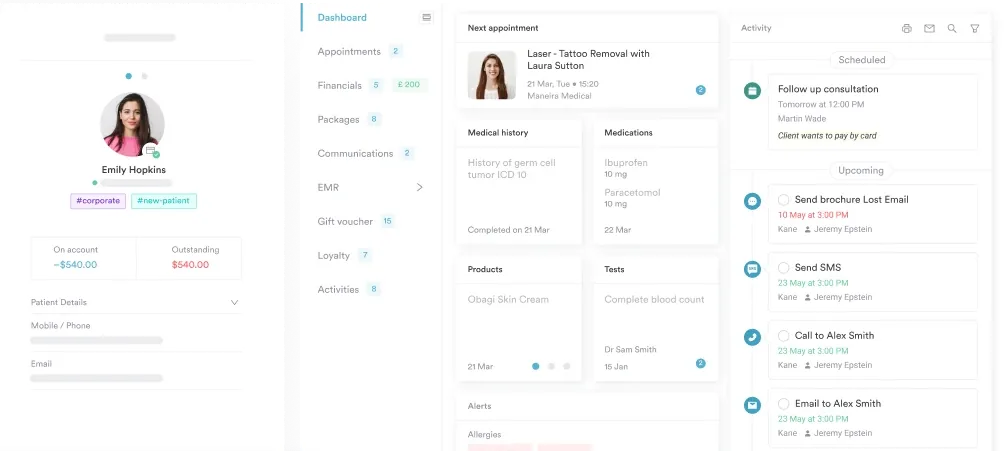
Before assigning M84.9, run a quick documentation check: does the record contain imaging language (X-ray, MRI, CT) that uses terms like ‘stress reaction,’ ‘pathological change,’ ‘non-union,’ or ‘malunion’? If yes, query the physician or review the tabular list for a more specific M84 subcode. Reserve M84.9 for genuinely undifferentiated bone continuity findings.
Before assigning ICD-10 code M84.9, coders should review the full M84 subcategory list. Each subcategory covers a distinct clinical scenario, and most require site and laterality specificity at the 5th or 6th character level. Fracture subcategories (M84.3, M84.4, M84.5, M84.6, and M84.7) additionally require a 7th character to indicate encounter type.
The 7th character for fracture subcodes (M84.3, M84.4, M84.5, M84.6, and M84.7) follows a standard encounter-type pattern: A (initial encounter), D (subsequent encounter), G (subsequent encounter for fracture with delayed healing), K (subsequent encounter for fracture with non-union), P (subsequent encounter for fracture with malunion), and S (sequela).
Selecting the correct 7th character matters for claim adjudication, since payers use encounter type to determine medical necessity for ongoing treatment episodes. A coder who assigns M84.9 to avoid navigating the 7th character requirement for a documented stress fracture is taking a compliance risk, not a shortcut.
Practices managing these code decisions may benefit from reviewing how specificity requirements work in other diagnostic chapters.
The ICD-10-CM Official Guidelines for Coding and Reporting, maintained by CMS and published annually by the CDC/NCHS, set out the governing rules for unspecified codes and fracture coding. Key guidelines that apply directly to M84.9 coding decisions include the following.
The WHO ICD-10 browser provides the international classification framework from which ICD-10-CM is derived. The US version introduces additional specificity requirements not present in the WHO base classification, including laterality and the 7th character system for fractures.
Coders working in US healthcare settings should always use ICD-10-CM sources rather than the international WHO tables.
Practices supporting osteopathy or musculoskeletal specialties should apply the same compliance context when documenting bone-related diagnoses across care settings.
Coding errors at the diagnostic level most often trace back to incomplete documentation at the point of care, not a coding team mistake. When clinicians document findings in vague or incomplete language, coders must choose between querying for clarification, which delays claims, or assigning an unspecified code, which risks denial or audit.
Closing that shortfall requires clinical records to capture the right level of detail before the note is finalized.
Pabau’s claims management software connects clinical documentation directly to billing workflows, making it easier for practices to verify that diagnosis codes are supported by the underlying record before submission. Rather than treating coding as a back-office reconciliation task, Pabau surfaces this linkage within the clinical workflow itself.
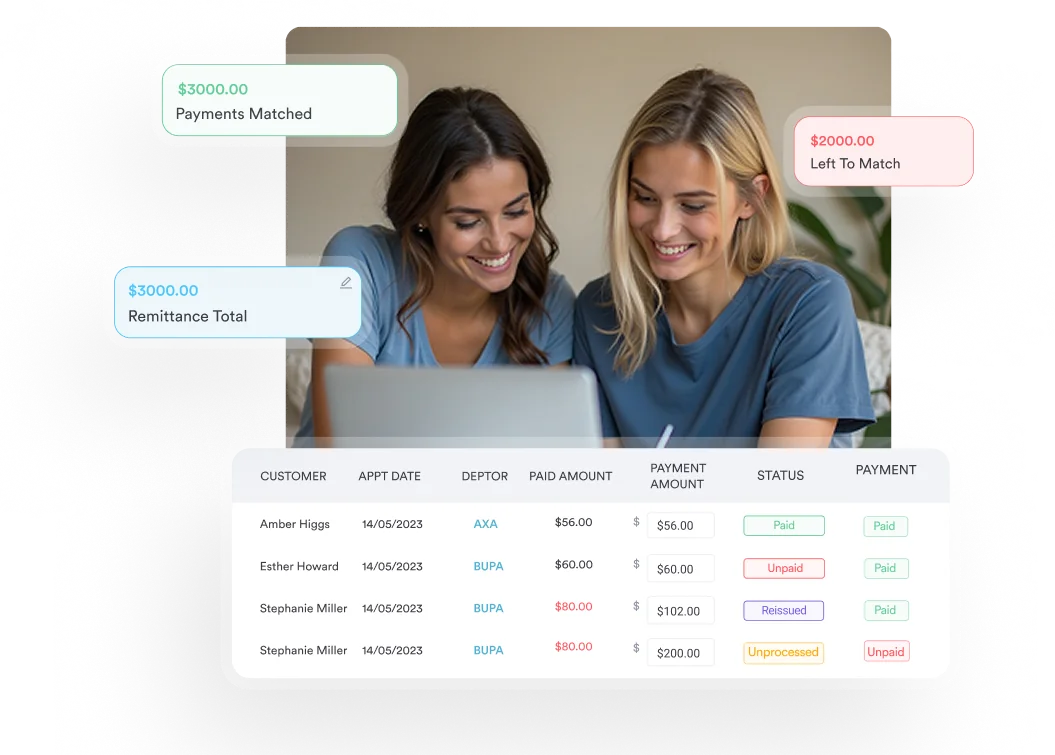
Practices dealing with musculoskeletal coding complexity benefit from structured documentation tools.
For physical therapy and orthopedic-adjacent practices tracking clinical compliance requirements, Pabau’s documentation features support the specificity needed to avoid falling back on unspecified codes unnecessarily.

Pabau connects clinical documentation to billing workflows so your team can verify diagnosis code accuracy at the point of care, not after a denial. See how Pabau supports cleaner claim submission.

M84.9 serves a specific and limited purpose: it covers bone continuity disorders when the clinical record genuinely cannot support a more precise code. Used correctly, it is a legitimate billable code. Used as a default, it creates audit exposure that more specific M84 subcodes would avoid.
The decision point is always the clinical record. When documentation is structured and complete, coders have the detail they need to assign the right code the first time. Pabau’s documentation and digital forms tools help clinicians capture the specificity that supports accurate ICD-10 coding across every encounter type.
To see how Pabau handles clinical documentation for musculoskeletal and specialist practices, book a demo.

Need to understand ICD-10 specificity in another diagnostic chapter? M34.9 walks through unspecified-code rules and documentation requirements for systemic sclerosis.
Billing for orthotic devices tied to a bone-healing diagnosis? L0610 explains the CCSD code coders pair with M84 category diagnoses in orthopedic claims.
ICD-10 Code M84.9 is a billable ICD-10-CM diagnosis code for “Disorder of continuity of bone, unspecified.” It belongs to category M84 within the M80-M94 Osteopathies and Chondropathies block and is used when clinical documentation confirms a bone continuity disorder but does not specify whether it is a stress fracture, pathological fracture, malunion, non-union, or other defined type.
Yes. M84.9 is a billable and specific ICD-10-CM code valid for submission on both CMS-1500 (professional) and UB-04 (facility) claim forms. It is not POA (Present on Admission) exempt: inpatient facilities must assign a POA indicator (Y, N, U, or W) for this code. Payers may also question or deny M84.9 if the clinical record contains enough detail to support a more specific M84 subcode.
“Disorder of continuity of bone” refers to any condition that disrupts the structural integrity of bone, including fractures, non-unions, malunions, and stress reactions. The “unspecified” qualifier means the clinical documentation does not identify which specific type of disruption is present. It is a residual code used when documentation is genuinely insufficient to assign any of the more specific M84 subcategories.
Use M84.9 only when the medical record documents a bone continuity disorder but genuinely lacks the information needed to assign M84.0 (malunion), M84.1 (non-union), M84.3 (stress fracture), M84.4 (pathological fracture), or another specific subcode. If the record contains imaging findings or clinical language that maps to a more specific type, a physician query should be initiated rather than defaulting to M84.9.
M84.40 is the unspecified-site code for pathological fracture (not elsewhere classified), while M84.9 is the unspecified code for the entire M84 category when the type of bone continuity disorder is unknown. Use M84.40 when the provider has documented a pathological fracture but has not specified the anatomical site. Use M84.9 only when the type of bone continuity disorder itself (not just the site) is undocumented.
The clinical record must establish the presence of a bone continuity disorder (through imaging, clinical findings, or physician documentation) and must lack sufficient detail to assign a more specific M84 subcode. Acceptable supporting documentation includes imaging reports that reference bone abnormality without specifying fracture type, and provider notes that use general terminology such as “bone continuity disorder” without further qualification. If documentation supports a specific type, assign the appropriate subcode instead.