
ICD-10 Code R63.4: Abnormal weight loss
ICD-10 code R63.4: Definition, billability and code structure ICD-10 code R63.4 ...

Last Updated: Nov 13, 2026
Billable Code Specific Code
J84.9 is the billable ICD-10-CM code for interstitial pulmonary disease, unspecified. It applies when the physician documents interstitial lung disease (ILD) but names no histologic pattern, etiologic subtype or fibrosis.
The code closes category J84, Other interstitial pulmonary diseases, in Chapter 10 of ICD-10-CM. Before assigning it, check the record for a more specific code. Documented IPF codes to J84.112, idiopathic NSIP to J84.113, cryptogenic organizing pneumonia to J84.116, and fibrosis without a subtype to J84.10.
Let Pabau's smart automation suggest the right codes, reduce claim denials, and keep your practice compliant—effortlessly.
Automate repetitive tasks and focus on what matters most—your patients.
Reduce coding errors and ensure compliance with the latest regulations.
Clean claims, fewer denials, and faster reimbursements.
Powerful insights and reporting to help your practice thrive.
HIPAA compliant SOC 2 certified GDPR-compliant Trusted by 4,000+ clinics worldwide

ICD-10 Code J84.9 is the billable code for interstitial pulmonary disease when the physician documents ILD without a specific type or fibrosis.
Query the treating physician before assigning J84.9, because documented IPF, NSIP, COP or fibrosis each has a more specific code.
Payers scrutinize unspecified codes, so the record needs HRCT findings, PFT results and a note on why the subtype can’t be named yet.
Drug-induced ILD (J70.2-J70.4) is an Excludes1 of J84, and hypersensitivity pneumonitis and sarcoidosis code to J67.- and D86.0 instead of J84.9.
Pabau’s claims management software works with the Claim.MD clearinghouse for eligibility checks, electronic claims and remittance tracking.
ICD-10 Code J84.9 is a valid, billable ICD-10-CM diagnosis code with the official descriptor “Interstitial pulmonary disease, unspecified.”
It has been valid from FY 2016 through the current FY 2027 code set, as confirmed in the CDC/NCHS ICD-10-CM web tool. No 7th-character extension is required. The code sits at the end of the J84 category and applies only once every more specific subcode has been ruled out.
The CMS ICD-10-CM coding resources page publishes annual code files and the full tabular list. Coders should verify the code’s active status each October when new FY updates take effect. Neighboring respiratory codes such as J84.10 and J84.112 sit in our ICD-10-CM code library.
J84.9 is the residual “unspecified” code at the end of the J84 category. The category spans J84.0 through J84.9, including J84.1x, J84.2 and J84.8x. Knowing where J84.9 sits relative to the specific subcodes is the fastest way to cut overuse of the unspecified code.
Work through the specific subcodes from the top down. ICD-10 Code J84.9 becomes the right assignment only when no specific subtype or fibrosis is documented and a physician query has been attempted.
The J84 category carries Excludes1 and Excludes2 notes that govern when J84.9 applies and when it does not. Misreading it is a common reason coders assign J84.9 incorrectly.
Practical rule: Before assigning J84.9, check whether the documentation supports hypersensitivity pneumonitis (J67.-), pulmonary sarcoidosis (D86.0) or a drug-induced disorder (J70.2-J70.4). Drug-induced disorders are barred by the J84 Excludes1 note. Hypersensitivity pneumonitis and sarcoidosis code to J67.- and D86.0 because they are specific diagnoses, so J84.9 is not assigned for the same condition. Eosinophilic pneumonia sits in a separate category and codes to J82.81 or J82.82.
The ICD-10-CM Official Guidelines instruct coders to assign the most specific code supported by physician documentation. For ILD, that means working through the specific subtypes before defaulting to J84.9. The table below maps clinical scenarios to the correct code assignment.
Critical distinction: J84.10 (pulmonary fibrosis, unspecified) sits above J84.9 in specificity. If the physician has documented fibrosis, even without naming the subtype, J84.10 is the correct code. J84.9 is for ILD documented without a specified type or fibrosis.
Pick the pattern the physician documented in the picker below to see which code it supports.
Pick what the physician documented
Which J84 code the chart supports
J84.112
Idiopathic pulmonary fibrosis
J84.113
Idiopathic NSIP
J84.116
Cryptogenic organizing pneumonia
Code the named subtype. Assigning J84.9 here undercodes the encounter.
J84.10
Pulmonary fibrosis, unspecified
Documented fibrosis without a named subtype codes to J84.10, which is more specific than J84.9.
M05.10
Rheumatoid lung disease with RA, per the tabular list
J84.17-
ILD with fibrosis in diseases classified elsewhere, where documented
Follow the tabular list for the named connective tissue disease before reaching for J84.9.
J67.-
Hypersensitivity pneumonitis
D86.0
Sarcoidosis of lung
J70.2–J70.4
Drug-induced interstitial lung disorders
Each has its own specific code. Code that condition, not J84.9. Drug-induced disorders are an Excludes1 of J84.
J84.9
Interstitial pulmonary disease, unspecified
ILD is documented, but no type and no fibrosis are stated. Query first, then code J84.9.
R06.0-
Dyspnea
R91.8
Other nonspecific abnormal finding of lung field
In outpatient settings, “suspected” or “probable” ILD codes to the presenting symptoms, not J84.9.
Code choices follow the ICD-10-CM tabular list and Official Guidelines (Section IV.H for uncertain outpatient diagnoses), as covered in this article.
Several conditions present with ILD-like findings on HRCT but code to other categories. Assigning J84.9 when one of these is the correct diagnosis creates a coding error that payers flag on audit.
The American Thoracic Society’s official guidelines set the diagnostic criteria that separate IPF from hypersensitivity pneumonitis and other ILD subtypes. Those criteria decide whether J84.112 or J84.9 is the appropriate code.
Before assigning J84.9, run the differential diagnosis check: (1) Is there a known antigen exposure? Query for J67.x. (2) Is there a systemic granulomatous disease? Consider D86.x. (3) Did the patient take a drug known to cause ILD? Check J70.x. Only when all specific alternatives are ruled out does J84.9 become the defensible choice.
Payer medical necessity review for J84.9 centers on two questions. Does the record establish an ILD diagnosis? And does it explain why a more specific code cannot be assigned? Both must be answered in the clinical note rather than inferred from imaging results alone.
Documentation that supports J84.9 must include all of the following:
Radiologist impressions are not physician diagnoses. A chest CT report that reads “findings consistent with interstitial lung disease” does not constitute a physician-documented diagnosis of ILD. The treating physician must interpret and adopt that finding in their own note. Coders who assign J84.9 based solely on radiologist language are creating a documentation deficiency that payers audit actively.
Similarly, if the note says “idiopathic pulmonary fibrosis suspected” or “likely IPF,” that tentative language does not support J84.9. Per ICD-10-CM Official Guidelines, Section IV.H (outpatient uncertain diagnosis), “probable” and “suspected” diagnoses in outpatient settings cannot be coded as confirmed. The physician must state the diagnosis definitively, or the encounter codes to symptoms such as dyspnea (R06.0x) or abnormal lung imaging (R91.8). When the note records “shortness of breath” rather than dyspnea, the symptom code is R06.02.
ICD-10 Code J84.9 supports a defined set of CPT services. Payers run edits that cross-check whether the procedure code is clinically appropriate for the diagnosis. An HRCT claim paired with an unrelated diagnosis fails those edits regardless of documentation quality. Use the AAPC Codify ICD-10-CM lookup to verify CPT-to-ICD-10 medical necessity crosswalks for each service.
When a lavage or biopsy names the pattern, recode the encounter to the specific J84 subcode. The lavage itself is reported with 31624, which carries its own documentation requirements.
CMS and Medicare Administrative Contractors (MACs) publish Local Coverage Determinations (LCDs) for pulmonary services. No single national LCD covers J84.9 as the sole diagnosis. Coverage for pulmonary function testing, home oxygen and pulmonary rehabilitation follows each service’s own criteria, and J84.9 alone does not satisfy them. Claims management software with built-in eligibility checks helps surface LCD requirements before the claim is submitted.
Key payer requirements that commonly apply to J84.9 claims:
J84.9 denials follow predictable patterns, so pre-submission edits can catch them before the claim reaches the payer. Our guide to denial management in healthcare covers the broader framework. The J84.9-specific triggers are below.
Clean claim submission standards require that the diagnosis code, procedure code, and documentation all align before the claim goes out. Our overview of clean claim submission standards covers the pre-submission checklist that reduces denial rates across code families.
The single highest-value action a CDI specialist can take on an ILD encounter is querying the treating physician before the code is assigned. A well-timed query that moves J84.9 to J84.112 (IPF) improves HCC risk adjustment accuracy and removes the unspecified-code flag from the claim. It also gives antifibrotic prior authorization requests the documented IPF that plans typically require.
Query before coding. CDI queries issued after the claim is submitted create a corrected-claim scenario that is both administratively burdensome and potentially subject to audit scrutiny. The optimal window is during the encounter or within the same encounter date before the claim goes out.
Trigger a physician query when any of the following appear in the chart:
Use this template as a starting point. AHIMA and AHA Coding Clinic guidance requires that queries be non-leading, offer multiple clinically supported options, and be documented in the medical record:
Patient: [Name/MRN] | Encounter: [Date]
The clinical documentation for this encounter includes HRCT findings of [describe pattern] and PFT results showing [describe]. To support accurate diagnosis coding, could you please clarify the specific diagnosis for this patient’s interstitial lung condition? Options include:
Please document your response in the medical record.
This format follows AHIMA’s CDI query guidelines. It passes the non-leading test by presenting every clinically plausible option, including J84.9 and “unable to determine.”
The ICD-10-CM Official Guidelines for Coding and Reporting, Section I.C.10 (Diseases of the Respiratory System), govern J84.9 assignment. Three guideline principles apply directly:
Run a quarterly audit: pull all claims where J84.9 was the primary diagnosis. For each, check whether a more specific J84 subcode appears anywhere else in the record (problem list, imaging report, discharge summary). When specific ILD documentation keeps turning up in charts billed as J84.9, fix the CDI query workflow before retraining individual coders.
Without connected billing software, a pulmonology billing team checks eligibility on payer portals, keys each claim by hand and reconciles remittances separately. Every manual hand-off is a chance for an unspecified ILD claim to go out unchecked.
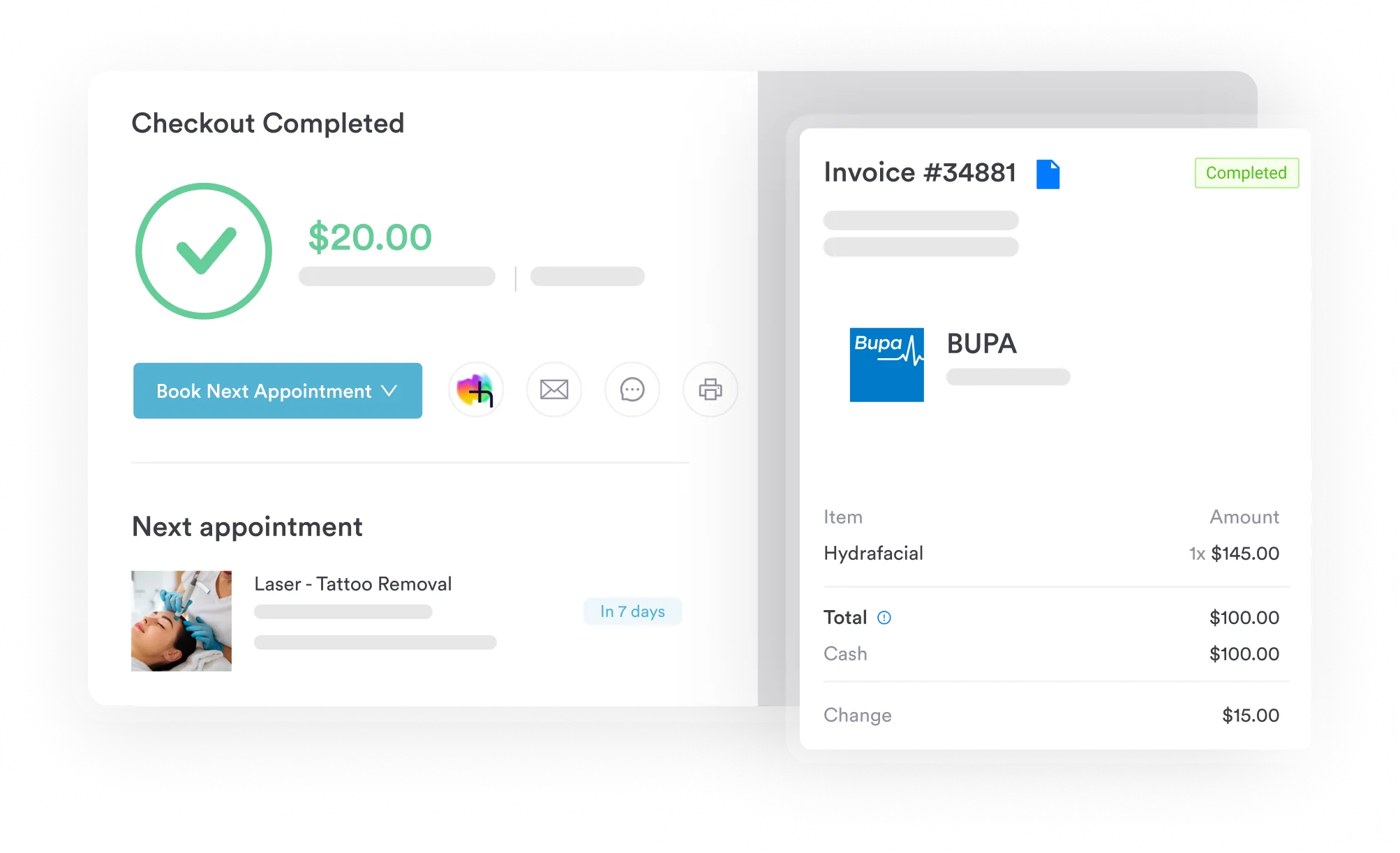
Pabau, the practice management and billing platform we build, connects to the Claim.MD clearinghouse. Your team runs insurance eligibility checks and submits electronic claims to the payers on Claim.MD’s list from the patient record.
Remittance tracking then shows which ILD claims came back denied. Your coders can query the physician and correct those claims while the encounter is still fresh.

Pabau connects to the Claim.MD clearinghouse for eligibility checks, electronic claims and remittance tracking. Your team confirms coverage before J84.9 claims go out.

ICD-10 Code J84.9 is a legitimate billing code, but it carries more denial risk than any specific J84 subcode. Treat it as the answer to a physician query, never as a substitute for one.
Querying before coding moves the work from appeals back to the chart, where one line from the physician settles the code. The trade-off is a short delay before submission, which costs far less than a denied claim.
Pabau’s claims tools, connected to Claim.MD’s clearinghouse, support eligibility checks, electronic claims and remittance tracking for pulmonology billing teams. Book a demo to see how the claims workflow handles ILD coding scenarios.

Need a framework for handling denial codes across claim types? Denial codes in medical billing covers CARC and RARC code interpretation for building a systematic denial appeal process.
Looking to understand how ILD claims move through the revenue cycle? Revenue cycle management fundamentals explains how diagnosis codes, claim submission, and remittance processing connect.
Want to verify eligibility and reduce prior auth delays on pulmonary claims? Insurance eligibility verification details the pre-submission checks that prevent unnecessary rejections.
ICD-10 Code J84.9 is the billable diagnosis code for interstitial pulmonary disease, unspecified. It is used when a physician documents interstitial lung disease but the record supports no more specific J84 subcode. It sits at the end of category J84, Other interstitial pulmonary diseases, in ICD-10-CM Chapter 10.
J84.9 is appropriate only when the physician has confirmed ILD but the workup names no subtype or fibrosis. That means no IPF, NSIP, COP or CTD-associated ILD is documented, and a CDI query to the treating physician came back inconclusive. If any specific subtype is documented anywhere in the record, that subcode takes precedence.
Yes, J84.9 is a valid, billable ICD-10-CM code as confirmed in the CDC/NCHS tabular list. No 7th-character extension is required. It has been valid since FY 2016 and remains active through the current FY 2027 code set.
J84.112 is the specific code for idiopathic pulmonary fibrosis (IPF), and it requires the physician to document that diagnosis explicitly. J84.9 is the residual code for ILD documented without a specified type or fibrosis. Plans typically require documented IPF in prior authorization for antifibrotic drugs such as nintedanib and pirfenidone.
The leading trigger is assigning J84.9 when the chart supports a more specific subcode. Missing medical necessity documentation, such as an absent HRCT report or PFT results, is another. Payers also deny CPT-to-ICD mismatches, and antifibrotic prior authorization requests that carry J84.9 when the plan requires documented IPF.
The J84 Excludes1 note lists drug-induced interstitial lung disorders (J70.2-J70.4) and interstitial emphysema (J98.2). Lung diseases due to external agents (J60-J70) are an Excludes2 note. Sarcoidosis (D86.0) and hypersensitivity pneumonitis (J67.-) have their own codes. Eosinophilic pneumonia codes to J82.81 or J82.82.