GLP-1 diet plan
A GLP-1 diet plan is a structured eating framework for patients taking semagluti...

2
Last Updated: Oct 13, 2026

Neck pain exercises work best when matched to the cause, so stretching targets muscle tension while strengthening targets the deep cervical and postural muscles.
Deep neck flexor activation, through chin tucks and supine progressions, has the strongest evidence for chronic neck pain and forward head posture.
Cervical disc and nerve-related pain needs a modified approach, including no end-range flexion and a professional assessment before any exercise program.
Ergonomic load matters as much as the exercises, since a screen below eye level more than doubles what the cervical spine carries.
Pabau helps physical therapy practices document exercise plans, track patient progress, and automate recall appointments, so patients stay on track between visits.
Systematic reviews of population studies put the annual prevalence of neck pain at around a third of adults. That makes it one of the most common musculoskeletal complaints in physical therapy.
For most people, the right neck pain exercises reduce symptoms and restore mobility within weeks. The harder part is matching the exercise to the cause, and knowing when to rest instead of push through.
This guide covers stretching, strengthening, deep neck flexor activation, and condition-specific protocols for stiffness, shoulder overlap, and cervical disc problems. It also covers the ergonomics that stop the pain returning. Everything here assumes a head and neck assessment has already ruled out the serious causes.
Neck pain has several distinct causes, and each one responds to a different emphasis in the exercise plan. Most non-specific presentations are documented under M54.2. AI healthcare software can now draft that assessment documentation as the clinician works. The table below matches the common presentations to the exercise priority they need.
Some symptoms need medical attention before any exercise. Clear these first:
Musculoskeletal care guidelines consistently advise medical clearance before exercise when any of these are present.
Stretching is the fastest route to relief. It targets the muscles that tighten in response to poor posture, stress, or long static positions. These four stretches cover the structures most often involved. If the same muscle tightness also brings on headaches, a set of tension headache stretches adds the suboccipital work these four leave out.
Sit or stand tall. Tilt the right ear toward the right shoulder, keeping the left shoulder anchored down. Hold 20-30 seconds, then repeat on the left. For a deeper upper trapezius stretch, rest one hand on the opposite side of the head without pulling.
Keeping the chin level, slowly rotate the head to look over one shoulder. Hold at the end of comfortable range for 15-20 seconds, then return to center. Three repetitions each side. This targets the sternocleidomastoid and the posterior cervical muscles.
Rotate the head 45 degrees to one side, then tilt the chin toward the armpit. Apply gentle overpressure with the same-side hand on the back of the head. Hold 30 seconds. The levator scapulae runs from the upper cervical vertebrae to the top of the shoulder blade. That makes this one of the most effective stretches for the familiar neck kink.
Sitting, tuck the hand of the side you want to stretch under the thigh. Tilt the head away and slightly forward. The hand-under-thigh position keeps the shoulder depressed passively, so the patient gets more stretch without having to hold it down.
Before any neck stretching session, apply a warm compress or take a warm shower for 5-10 minutes. Warmth reduces muscle viscosity and allows a more effective stretch at a lower pain threshold. Do not stretch into sharp or radiating pain.
The deep neck flexors, longus colli and longus capitis, support the cervical spine from the front. In patients with chronic neck pain and forward head posture, these muscles are consistently under-activated, which leaves the superficial muscles to compensate. Training them is one of the most evidence-supported interventions in neck rehabilitation.
Endurance is the quality that matters here, not peak strength. The neck flexor endurance test gives you a baseline in seconds to re-test against later. Log the score in the patient’s electronic health record so re-tests land next to the baseline.
Sit with the spine long. Draw the chin straight back, creating a double chin without tilting the head up or down. Think of gliding the head backward along a horizontal rail. Hold five seconds, repeat 10 times. The craniocervical flexion test scores this same movement pattern in the clinic.
Lie on your back with the knees bent. Perform the chin tuck, pressing the neck gently toward the floor, then lift the head about an inch off the surface. Hold 10 seconds and lower slowly. Five repetitions is enough in the early stages. Build to 10 as endurance improves over two to three weeks.
Multiple randomized trials support deep cervical flexor training for chronic neck pain and cervical endurance. The Cochrane review on exercise for neck pain found low-to-moderate-quality evidence for cervical and scapular strengthening in chronic cases. It found no high-quality evidence overall, so treat the effect as promising rather than settled.
Stretching restores flexibility. Strengthening builds the stability that holds it. For patients in sports medicine practices or those with heavy occupational neck loads, cervical and scapular endurance is what prevents recurrence. Practices that pay therapists per session can automate payouts with commission tracking software.
Sitting or standing, draw the shoulder blades together and slightly down, as if holding a pencil between them. Hold five seconds, then release. Ten repetitions. This re-engages the mid-trapezius and rhomboids, reducing the upper trap dominance that keeps neck tension going.
Place one hand on the forehead. Push the head gently into the hand while the hand resists, so nothing moves. Hold five seconds. Repeat on the back, left, and right sides of the head. This builds cervical endurance without compressing the joints, which suits most presentations including early-stage disc conditions.
Place a foam roller horizontally across the mid-back and support the head with both hands. Let the thoracic spine extend gently over the roller. Moving the roller to different thoracic levels targets the stiffness that forces the cervical spine to compensate. Five gentle repetitions at each level, never forcing past comfortable range.
The cervical spine and shoulder girdle share a lot of muscular anatomy. The trapezius, levator scapulae, and scalenes all attach in both regions, which is why neck pain so often radiates into the shoulder. These stretches target that overlap directly.
Morning neck stiffness is often worse than the pain felt later in the day. Joint fluid and muscle tissue cool overnight, and the cervical spine loses some hydration in static positions. This sequence works best before getting out of bed, or straight after waking.
This sequence works particularly well for degenerative disc disease and inflammatory conditions, where overnight positional loading drives most of the stiffness. Clinicians can capture symptom timing and morning stiffness scores at the initial assessment using digital intake forms in practice management software like Pabau.
Where inflammation or lifestyle factors drive symptoms, functional medicine practices often layer dietary work alongside the exercise plan. Some also offer procedures like hormone pellet insertion, which need the same careful documentation and follow-up.
A cervical disc herniation or radiculopathy changes the safety rules. Exercises that help ordinary muscle tension can worsen disc-related pain or neurological symptoms when applied without modification.
Spurling’s test is the usual screen when arm symptoms point to nerve root involvement. The phasing logic used in graded rehabilitation protocols applies to the neck as well. Load only what stays symptom-free. For pediatric caseloads, the Sensory Profile 2 scoring guide covers an equally structured assessment.
Anyone with arm symptoms should be assessed by a physical therapist before attempting self-directed exercise. That includes tingling, weakness, and numbness. Cervical disc conditions vary enormously in severity and in how they respond to movement, so generic self-management does not serve them well. Recording each session’s findings in clinical notes software makes the response to movement easy to compare over time.
Exercise builds capacity. Ergonomics removes the daily load that depletes it. Patients who do their exercises but return to the same workstation habits keep relapsing. The neck pain clinical guideline puts ergonomic modification alongside exercise in effective management.
The same positioning rules apply in transit. Travel clinics that advise long-haul patients recommend a pillow that keeps the head level during in-flight sleep.
A patient on a six-week progressive program needs follow-up at the right intervals. Notes have to be updated after each session, with a recall booked when reassessment is due. Missed appointments and undocumented progress are where outcomes quietly slip.
Pabau’s physical therapy EMR is built for that workflow. Treatment notes attach directly to each appointment, and exercise protocols sit inside the client records. The whole course of treatment is visible in one place, without digging through paper.
Automated workflows send recall reminders when a progress check is due, so nobody chases follow-ups by hand. That feeds straight into patient retention, because the patients who drop out are usually the ones nobody contacted.
Consistent structure helps too. Structured clinical notes use the same prompts every session, so no assessment detail goes missing across a course of treatment. The rest of the admin layer runs quietly through practice management tools in the background.
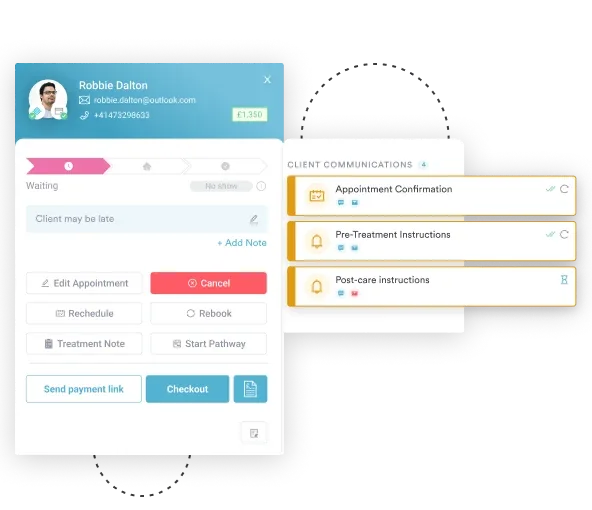

Pabau helps you document exercise programs, track patient progress, and automate follow-up reminders, so patients stay on track between sessions. See how it works for physical therapy and rehab teams.

Pick the two or three exercises that match the presentation in front of you, and prescribe those properly. A short program done daily beats a long one abandoned in week two.
The trade-off worth remembering is time. Deep flexor endurance takes six to eight weeks to shift, and the evidence behind it is moderate at best. Set that expectation at the first session, then re-test instead of guessing whether it worked. Practices comparing systems for this kind of follow-up can start with our Pabau vs Healthbridge breakdown.
Pabau’s physical therapy tools document exercise plans, automate recalls, and keep session notes consistent. Book a demo to see how that works for a physical therapy or rehab team.

Need to measure deep flexor control? Craniocervical flexion test gives you the scored protocol and a printable recording form.
Screening for first-rib restriction? Cervical rotation lateral flexion test covers the procedure and the evidence behind it.
Shoulder symptoms clouding the picture? Kim test walks through performing, interpreting, and documenting the shoulder screen.
Building out a lower-limb screen? Knee to wall test shows how to measure and interpret ankle dorsiflexion range.
Assessing rectus femoris tightness? Ely’s test explains how to perform it and grade the result.
The best neck pain exercises combine three types. Chin tucks activate the deep cervical flexors. Lateral flexion and levator scapulae stretches restore mobility. Scapular retractions support posture. For most non-specific neck pain, doing all three daily for six to eight weeks improves pain and range of motion.
Some are, and some are not. Chin tucks and prone extension are generally safe for cervical disc conditions. End-range flexion, loaded rotation, and high-impact upper body exercise should be avoided until a physical therapist clears them. Anyone with arm pain, tingling, or hand weakness alongside neck pain should be assessed before starting a self-directed program.
Most physical therapy protocols recommend neck exercises daily, typically 10-15 minutes. Stretches can be done twice a day, morning and evening. Strengthening work, including isometric resistance and deep flexor progressions, is usually prescribed five to seven days a week at low intensity. Consistency over six to eight weeks beats occasional high-intensity sessions.
See a doctor or physical therapist right away if neck pain comes with neurological symptoms. Those include radiating arm pain, hand numbness or tingling, loss of grip strength, and dizziness. The same applies after a fall or a road accident. These signs may point to nerve involvement or structural injury that needs investigation before exercise begins.