Hyperbole and a Half pain scale: Every level + free template
The Hyperbole and a Half pain scale is Allie Brosh’s humorous pain chart, ...

1
Last Updated: Oct 5, 2026

The Kim test checks for a posteroinferior labral tear, the injury that anterior instability tests tend to miss.
Seat the patient, abduct the arm to 90 degrees, apply an axial load, then elevate 45 degrees with a posteroinferior glide.
A positive result is a sudden onset of posterior shoulder pain, whether or not a clunk comes with it.
Accuracy sits at roughly 80% sensitivity and 94% specificity, and adding the jerk test lifts combined sensitivity to about 97%.
Record the side tested, the force applied, and the patient’s own words, so a positive test turns into an imaging referral.
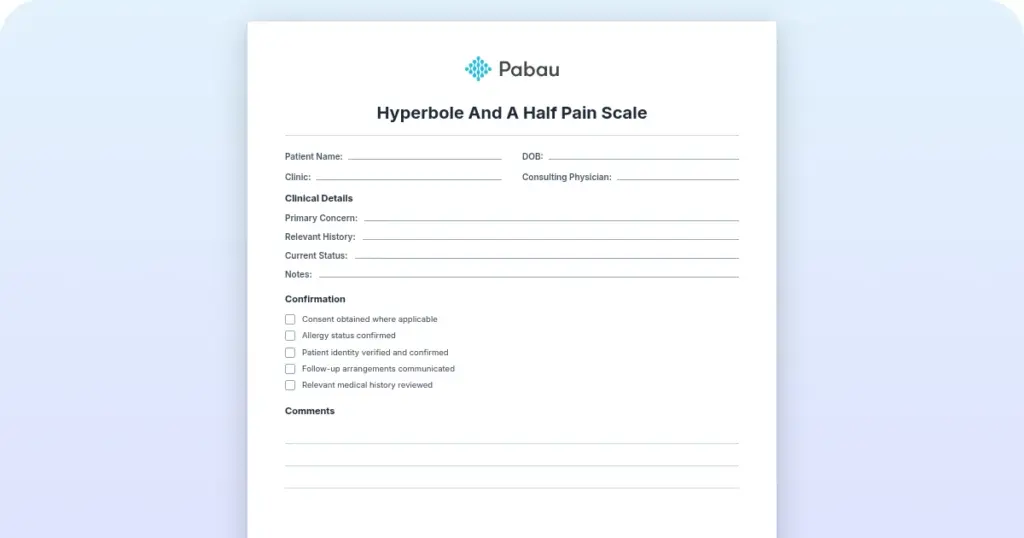
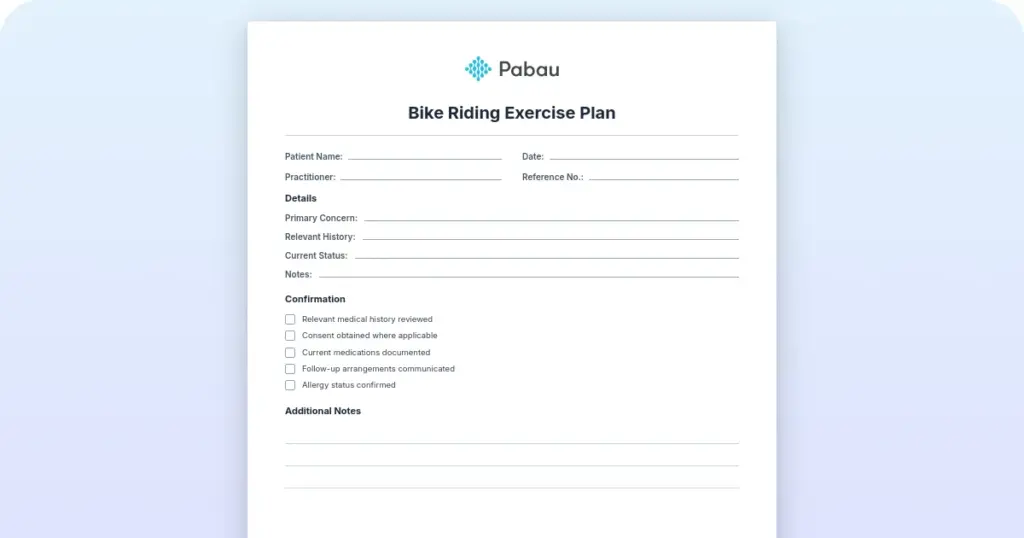
A one-page clinical form that records patient history, range of motion, and the exact technique you used. The findings section covers pain and its location, click or clunk, severity, the patient’s response, and your preliminary impression.
Download templatePosterior labral tears hide behind ordinary shoulder pain. Your patient describes a deep ache at the back of the joint, plus a click when they reach across their body. The anterior instability tests come back clean, and the picture stays muddy.
The Kim test was built for that presentation. It loads the posteroinferior labrum directly, so a positive result gives you a firm reason to request imaging. Hold the arm loosely or push in the wrong direction, though, and the result tells you very little. Technique is most of the value here.
The Kim test is an orthopedic special test for posteroinferior labral tears of the glenohumeral joint. Seung-Ho Kim and colleagues described it in the American Journal of Sports Medicine in 2005, alongside a head-to-head comparison with the jerk test. It now sits in most shoulder instability assessments.
The posteroinferior labrum is the rim of fibrocartilage that deepens the socket at the back and underside of the glenoid. It resists the humeral head sliding backward and downward when the arm is loaded.
Once that rim tears, patients report catching, a sense of the joint slipping, and pain in specific positions. The test recreates that mechanism. You compress the joint, then push the humeral head down and back while lifting the arm on a diagonal. If the labrum is torn, the force provokes it, and the patient feels it straight away.
The whole test takes under a minute. Work through it in the same order every time, because the result depends on where the arm sits and where the force goes.
Sit the patient upright in a chair with a back rest. The chair back stabilizes the scapula, which stops it tilting away and unloading the labrum. Ask them to let the shoulder relax. A shrugged, guarded shoulder changes the mechanics and blurs the finding.
Stand behind the patient, on the side you are testing. Grasp the elbow with one hand and the mid to proximal humerus with the other. Raise the arm to 90 degrees of abduction. Both hands stay on the arm, because each one applies a different part of the force.
With the arm at 90 degrees, apply a steady axial load along the humerus, pushing the head into the socket. Now elevate the distal humerus about 45 degrees on an oblique diagonal. At the same time, glide the proximal humerus down and back with your other hand.
Build the force smoothly. Sudden jerking belongs to the jerk test, not this one.
A positive Kim test is a sudden onset of posterior shoulder pain during the maneuver. Sometimes a jerk or clunk comes with it, though the pain alone is enough to call it positive. Release the force as soon as the patient reports it, then write down what they said in their own words.
Two situations come up often enough to plan for. Some patients cannot reach 90 degrees of abduction without pain from the rotator cuff. Test the range you can reach comfortably, note the limitation, and lean on the jerk test rather than forcing the position.
Others report vague discomfort instead of a clear onset of pain. Record that as a negative result, then repeat the test at the next visit once the shoulder has settled.
Treat a positive Kim test as strong support for a posteroinferior labral tear, not as the diagnosis. Confirmation still needs MRI or an MR arthrogram. Posterior capsule tightness, rotator cuff pathology, and posterior impingement all sit in the same differential.
The numbers make the asymmetry clear. Take a patient whose history and injury mechanism put the odds of a labral tear at roughly 40%. A positive Kim test lifts that to about 90%. A negative test only brings it down to about 12%, which is low but not zero.
So a negative result should not close the case when the story still points at the labrum. Around one tear in five produces a negative test, usually the smaller lesions with little mechanical instability.
Clinical context decides your next move. A positive test in a young thrower with a history of subluxation carries a lot of weight. The same finding in a sedentary patient with a gradual ache carries much less.
With a tool that tracks clinical measurements, baseline and follow-up scores sit side by side in the patient record.
The Kim test is roughly 80% sensitive and 94% specific. Those figures come from the original 2005 study, which measured the test against arthroscopic findings.
High specificity is what makes a positive result useful. Sensitivity of 80% is good, but it still leaves room for false negatives. That is the argument for pairing the test rather than running it alone.
Both tests load the same structure, and they pick up different lesions. The Kim test is more sensitive when the tear sits predominantly inferior. The jerk test is more sensitive when it sits predominantly posterior. Run the pair and combined sensitivity reaches about 97%.
Two positives together make a posteroinferior labral tear very likely, so imaging is clearly indicated. When the tests disagree, weigh the patient’s history and where their symptoms sit before you refer.
The Kim test answers one question, so it works best inside a short sequence. Four other tests map the rest of the joint.
The full battery takes five to 10 minutes. Sequencing matters more than speed, so leave the most provocative test until last. Once a patient has felt a genuine apprehension response, they guard, and everything after that gets harder to read.
A Kim test that never reaches the record cannot trigger a referral. Write it up the same way every time, in enough detail that a colleague could repeat the test and compare. A standard SOAP note structure handles it in four lines. Filling out a physical therapy intake form first captures that history, so the SOAP note only needs the new finding.
Two details go missing more often than the rest. One is the side tested. The other is the patient’s exact wording. Both matter later, because “sharp pain at the back of the shoulder” supports a labral referral, while “felt tight” does not.
US practices billing the visit still need an evaluation code. Let the history and your clinical decision making set the complexity, not the number of tests you ran.
If your notes are digital, build the test into the form instead of leaving it to free text. A structured field forces the result to be recorded, and it keeps the finding searchable when you audit outcomes.
Anyone who assesses shoulders regularly gets value from a standard form.
Occupational therapists can slot the test into a wider upper limb assessment.
Multi-site practices get comparability. Every clinician records the same fields, so a medical director can audit how often positive tests led to imaging. They can also check how often imaging confirmed the tear.
Athletic trainers working pitchside need the opposite. A form short enough to finish on a phone beats a thorough one nobody opens.
The template works on paper and as a digital form. Pair it with a physical therapy intake form and the shoulder history sits right next to the test result. Either way, it stops the finding living only in someone’s memory.
Special tests rarely fail on the clinical side. The test gets done, the result gets mentioned in passing, and the referral never gets raised. Practice management software like Pabau closes that loop by keeping the assessment and the follow-up in one record.
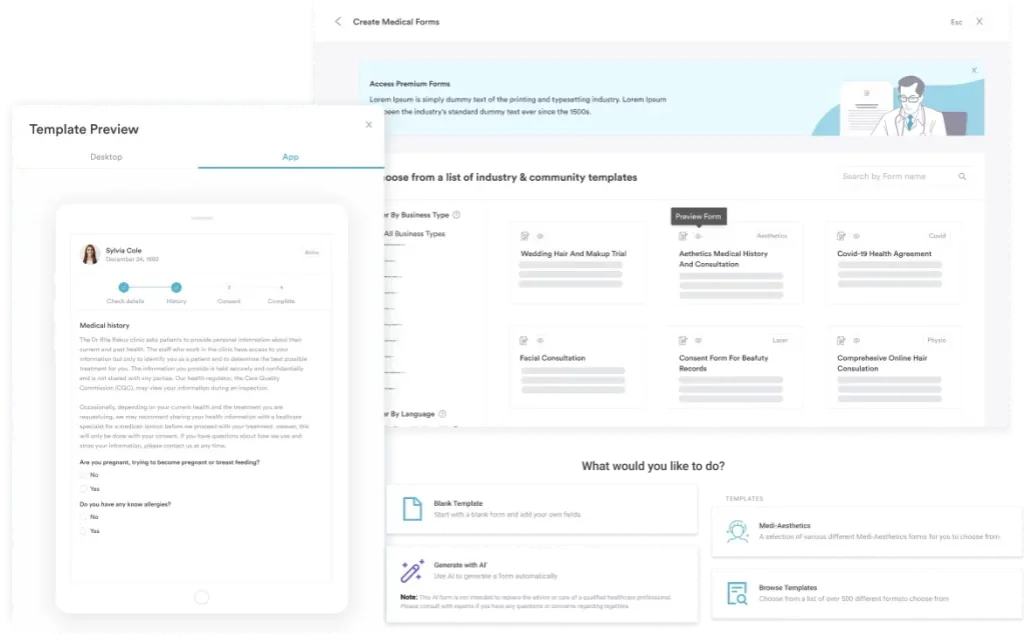
You can build the Kim test into a digital form with fixed fields for position, force, findings, and plan. The completed form saves straight to the client record, so the next clinician sees the finding without asking.
That leaves you checking the wording instead of typing it.
The follow-up then runs on the same system. Book the review appointment, attach the imaging request to the record, and set a reminder so nothing waits on someone remembering. Reporting shows you how many positive tests became confirmed diagnoses across the team.
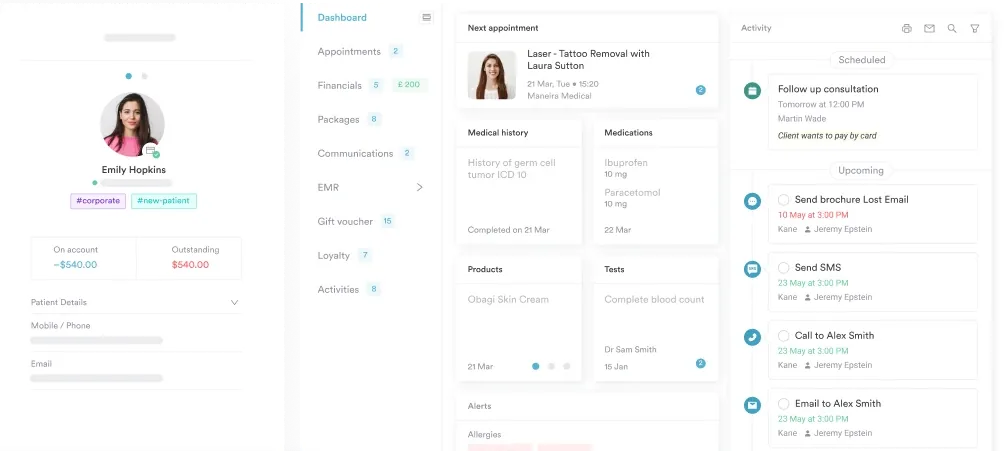

Build the Kim test into a digital assessment form and save the result straight to the client record. Pabau Scribe can draft the note for you.

The Kim test earns its place because it is quick, repeatable, and specific. A positive result is a strong reason to request imaging. A negative result narrows your thinking without closing the door.
What happens after the test is what changes outcomes. Standardize the arm position, and standardize the wording in your notes. Pair the test with the jerk test whenever instability is on the table. Then make sure positive results leave the building as referrals.
Download the template above to keep shoulder assessment consistent across your team. Book a demo to see how Pabau keeps assessment findings, referrals, and follow-ups in one patient record.

Need the rest of the shoulder exam on paper? Shoulder range of motion chart template gives you a printable record for flexion, abduction, and rotation measurements.
Measuring movement across the whole body? Range of motion assessment walks through goniometry technique and how to record the numbers consistently.
Building out your special test library? Thompson test covers the calf squeeze for a suspected Achilles rupture, with the same documentation discipline.
Grading strength consistently at the top of the scale? Manual muscle testing guide explains the 0-5 scale and how a 4 versus 5 changes a discharge decision.
Seeing heel pain in the same caseload? Windlass test shows how to load the plantar fascia and what to record when the patient reports pain.
It checks for a posteroinferior labral tear in the shoulder. Clinicians reach for it when a patient reports posterior shoulder pain, clicking, or a feeling that the joint slips.
Seat the patient, abduct the arm to 90 degrees, then hold the elbow and proximal humerus. Apply an axial load, elevate the arm 45 degrees on a diagonal, and glide the humeral head down and back.
A sudden onset of posterior shoulder pain. A clunk may or may not come with it, and the pain on its own is enough to call the test positive.
About 80% sensitivity and 94% specificity in the original 2005 study. Run it alongside the jerk test and combined sensitivity rises to roughly 97%.
Use both. The Kim test picks up more inferior lesions and the jerk test more posterior ones, so together they cover the posteroinferior labrum.
Record the side tested, the arm position, the force you applied, and the patient’s exact response. Note the imaging referral and who will review it.