Healthcare workforce planning: a practical guide for practice leaders
Healthcare workforce planning is the structured process of matching clinical cap...

Last Updated: Oct 13, 2026

These 11 LPN interview questions are grouped by the competency each one tests: clinical skill, communication, adaptability, teamwork, and tech comfort.
Every question comes with what a strong answer sounds like and what a weak one signals, so you can score candidates consistently.
Behavioral and situational questions reveal more than a resume, because they show how a candidate acted when a patient’s condition changed.
Watch for the red flags that repeat across answers, such as vagueness, blame-shifting, and no example of independent judgment.
Practice management software like Pabau keeps staff records, permissions, and shift schedules in one place, so a new LPN starts treating patients sooner.
Hiring an LPN who leaves after a few months is a costly mistake. So is hiring one who lacks the clinical skills your practice or med spa relies on every day.
Most guides to common questions for nursing interview prep are written for the candidate. This one is written for the person doing the hiring.
Below are 11 LPN interview questions, grouped by the competency each one tests. For every question you’ll see what a strong answer sounds like, and what a weak one tells you.
Treat it as a competency based interview rather than a chat about a resume. You’re testing clinical judgment, communication, adaptability, teamwork, and comfort with your software.
Get that right and you learn how someone behaves on a busy Tuesday, not how well they rehearsed.
Look for eight things: clinical expertise, patient assessment, communication, documentation, compassion, time management, safety knowledge, and teamwork.
Formal training and certifications are the entry ticket. The eight traits below are what separate an LPN who fits your team from one who merely qualifies on paper.
Here is what to probe for during the interview:
A candidate can be strong on the first four and thin on the last four. That combination is worth knowing about before you make an offer, not after.
The list below mixes common behavioral interview questions with situational ones. Behavioral questions ask what a candidate has already done. Situational ones pose a scenario they may never have faced.
Together they show judgment under pressure, which a resume can’t. Use the table to see which competency each question is testing and what a weak answer looks like.
Ask them in the same order every time. That way you hire a skilled, compassionate, and reliable nurse, not the person who simply interviewed best.
| Question | Competency it tests | Red flag in the answer |
|---|---|---|
| 1. Tell me about yourself | Motivation and background | No detail on training or why nursing |
| 2. Your healthcare experience | Clinical breadth | Vague settings, unexplained short stints |
| 3. Why do you want to work here? | Culture and values fit | No research on your practice |
| 4. What makes a successful LPN? | Understanding of the role | Generic traits, no clinical specifics |
| 5. A fast decision on patient care | Critical thinking | Waits for the RN in every scenario |
| 6. Strengths you bring the team | Teamwork | Says they never need help |
| 7. Taking initiative unprompted | Adaptability and drive | Only does what is assigned |
| 8. Disagreeing with an RN | Professional communication | Would never raise a concern |
| 9. Concerns from a patient’s family | Empathy and de-escalation | Passes every question to the RN |
| 10. Software you have used | Tech comfort | Prefers paper client records |
| 11. Hardest part of the job | Self-awareness | “Difficult patients,” and nothing more |
This open-ended question tests motivation, and it’s a good one to open with. It helps candidates loosen up before you move on to tougher topics.
It also gives you insight into their background and their commitment to nursing. In one survey, 79% of nurses said they would pick the profession again.
You want an LPN in that 79%, not the other 21%.
A strong response covers their education, the nursing school they attended, their license, and the courses they completed. It should also connect their experience to why they chose the job.
A weak response lacks detail and enthusiasm. Stating the number of years worked, with nothing on skills or motivation, tells you almost nothing about the candidate.
This question tests clinical breadth: how many settings they’ve worked in and how quickly they adapt to a new one.
A good response names the types of facility they’ve worked in and the responsibilities they held. It also covers how they worked with registered nurses (RNs) and other professionals.
A poor response, such as “I’ve worked in many different healthcare settings over the past two years,” is too vague. It may also point to frequent job changes worth asking about directly.
This question tests culture fit: whether their skills, values, and career goals line up with the job and your practice.
You also want evidence they’ve researched your business. If they can name specifics about your treatments or your ethos, they’ve prepared properly.
Good answer: “I’ve followed your practice for a while. I admire your commitment to patient-centered care and would love to contribute to the team.“
Poor answer: “I love that the team is made up of people my age.” That focuses on the social side rather than patient care or professional growth.
This question tests how well the candidate understands the role they’re applying for.
An experienced LPN will know that a good answer includes qualities such as:
A candidate who names none of these, or answers in generalities, may have limited hands-on experience of what the role demands day to day.
Situational interview questions like this one test critical thinking, decision-making, and composure when a patient’s condition changes without warning.
A strong answer follows a clear shape. The candidate spotted a problem, made a call, told the right person, and can say how it turned out.
A weak answer, such as “I can’t think of a situation, but I usually wait for the RN’s instructions,” suggests thin experience. It can also signal low confidence in acting alone.
This question tests teamwork, and whether the strengths a candidate is proudest of are the ones your practice actually needs.
A well-thought-out answer covers qualities like:
A poor answer claims they never need help from colleagues. An LPN works with MDs, RNs, and front-desk staff all day, so that answer signals a problem.
This question tests drive: whether the candidate acts without waiting for a supervisor to tell them to.
Good answer: “After a chemical peel, I noticed a patient had more redness and swelling than I’d expect, even though they’d been screened for allergies. I checked in with them, assessed the symptoms, and told the RN straight away.
We adjusted the aftercare plan and offered soothing treatments, and the patient felt supported throughout.” That answer shows attentiveness, responsibility, and a proactive mindset.
Poor answer: “I only do what I’m assigned.” That suggests no appetite for going beyond the basic job description.
This question tests professional communication: whether the candidate can disagree with a senior colleague without either backing down or picking a fight.
A strong candidate wouldn’t follow an instruction they had doubts about. They would state the facts, ask for clarification, and confirm patient safety before proceeding.
A less experienced candidate may say they’d simply follow directions. That hesitation to speak up can point to low confidence or weak critical thinking.
This question tests empathy and de-escalation, because LPNs field family questions far more often than RNs do.
A strong response shows active listening, empathy, and reassurance. The candidate acknowledges the concern, explains the care being given, and escalates to the RN when it matters.
Poor answer: “I would tell them it’s best to talk with the RN.” Handing over every question erodes the family’s trust in the whole team.
This question tests tech comfort, which decides how much of your onboarding time goes on software training rather than clinical work.
An experienced LPN should be at home in an electronic health record (EHR) or a practice management system like Pabau, Zanda Health, or Semble. Costs differ widely between them, as our Practice Better pricing breakdown shows.
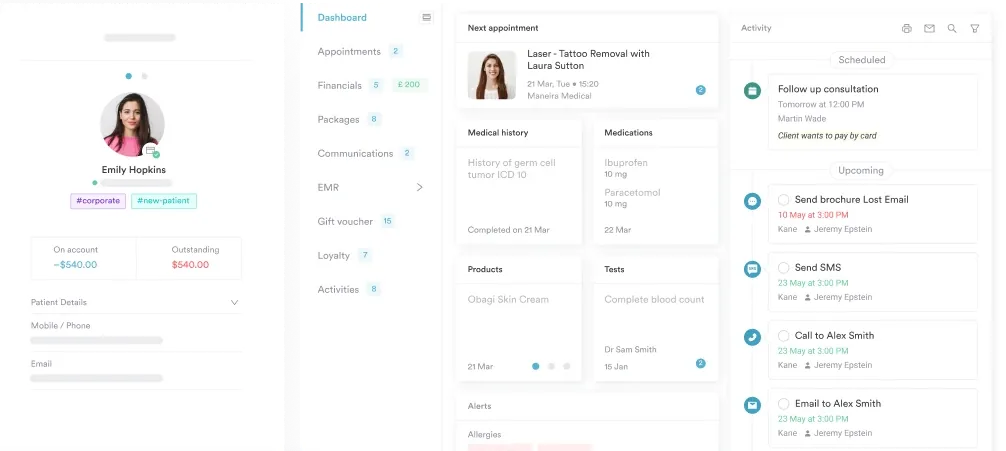
A strong answer names specific tasks rather than the software brand. Listen for work such as:
If a candidate has no direct experience, their willingness to learn matters just as much. A weak answer is a stated preference for keeping client records on paper.
This question tests self-awareness, and it’s the one candidates prepare for least.
A strong answer names a challenge they’ve actually met, such as managing time across a fully booked day. It then explains what they changed to handle it better.
A poor answer, such as “Dealing with difficult patients,” with nothing after it, suggests a narrow view of the job.
Keep these seven in reserve for when an interview goes somewhere you didn’t plan, or when an answer needs testing a second time.
Strong candidates almost always arrive with questions of their own. Here are the eight you should be ready to answer, and what a useful answer covers.
Four patterns matter more than any single wrong answer: vagueness, blame, passivity, and no curiosity about the job.
Score each answer pass, borderline, or fail while the candidate is still talking. Two borderlines in the same competency is a clearer signal than any overall impression.
Two candidates can still finish level once you tally the scores. The interview follow-up note each one sends breaks the tie, since it previews the written communication a patient-facing hire uses daily.
Choosing the candidate is the quick part. Getting them productive means license checks, system access, shift cover, and training records, usually scattered across email and spreadsheets.
Pabau, our all-in-one practice management software, keeps that in one staff record. You set their permissions, add them to the schedule, and log their certifications before day one.
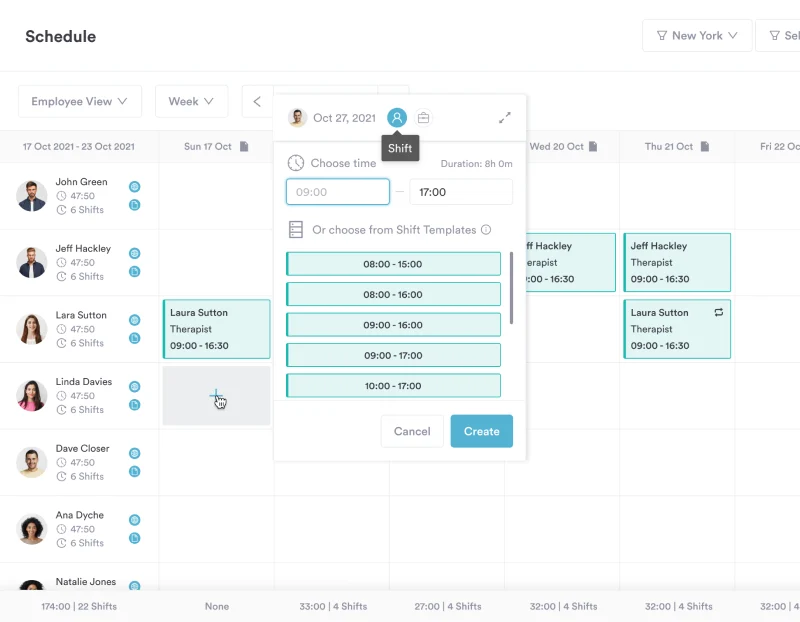
Permissions decide what a new LPN can see and change, so patient data stays protected while they learn your workflows. It also means you can hand them real work in week one. The finance side needs the same prep, since a reimbursement form template saves your manager from fielding ad hoc receipts.
Book their first one-on-one in that same week too. A one-on-one meeting agenda confirms role clarity while any misunderstanding is still cheap to correct. Put the 30, 60, and 90-day reviews on the calendar now. A staff evaluation form shows your new LPN how they are tracking before probation ends.
From there, the same system handles the rest of the team’s day. It covers:

Pabau keeps staff permissions, schedules, and training records in one place, so a new LPN starts treating patients sooner. Your managers spend less of the first month on paperwork.

Two candidates can give the same answer and mean very different things by it. The difference shows up in the detail they volunteer without being asked for it.
So ask the same 11 questions in the same order, and score each answer while it’s fresh. Notes you can compare side by side beat your memory of a good conversation.
Getting this wrong costs more than a rehire. Your team also spends months covering shifts and double-checking someone else’s documentation. Book a demo to see how Pabau keeps staff records, permissions, and schedules in one place once your new LPN starts.

Heading into a pay negotiation with a candidate? Negotiation worksheet helps you plan your goals, strategy, and likely responses beforehand.
Interviewing for a social work role on your team? Social worker interview questions covers clinical skills, ethical considerations, cultural competence, and professional experience.
Curious what payroll looks like with variable staff hours? Healthcare payroll software options compares platforms that handle commission and shift-based pay.
Need a paper trail for performance talks? Employee counseling form template gives you a dated record of the issue and the agreed next steps.
Assessing your own leadership skills first? Leadership assessment template scores leadership across decision-making, team skills, strategic thinking, and emotional intelligence.
Ask 10 to 12 questions in a 45-minute interview. That leaves room for follow-ups and for the candidate’s own questions, which tell you as much as their answers. Fewer than eight rarely covers clinical skill, communication, and teamwork properly.
Score each answer against the competency the question tests, not against how confident the candidate sounded. Mark it pass, borderline, or fail before you move on. The strongest signal is a specific example with a named decision and a stated outcome.
Use both. Behavioral questions ask what a candidate has already done, which reveals habits. Situational questions pose a scenario they may never have met, which reveals judgment. A short list mixing the two covers experience and reasoning in one sitting.
Vague answers with no examples, blaming former colleagues, and waiting for the RN in every scenario. Preferring paper over an electronic record is another, since your documentation depends on it. No questions for you at the end usually means low interest.