CRM for chiropractors: how to manage patients, bookings and marketing
A CRM for chiropractors is a patient relationship management system built around...

Last Updated: Oct 13, 2026
A thank you letter for job interview is a short professional note you send your interviewer within 24 hours of meeting. It thanks them for their time, confirms your interest in the role, and reminds them why you fit it.
For a practice manager on the hiring side, the note does a second job. It previews the written communication a patient-facing hire will use every day, before that person has worked a single shift.
According to Indeed’s career advice team, most hiring managers expect a follow-up note, yet fewer than half of candidates send one. Sending one puts you in the smaller group, for roughly ten minutes of work.
This guide covers format, timing, subject lines, and three sample letters you can copy and adapt today.
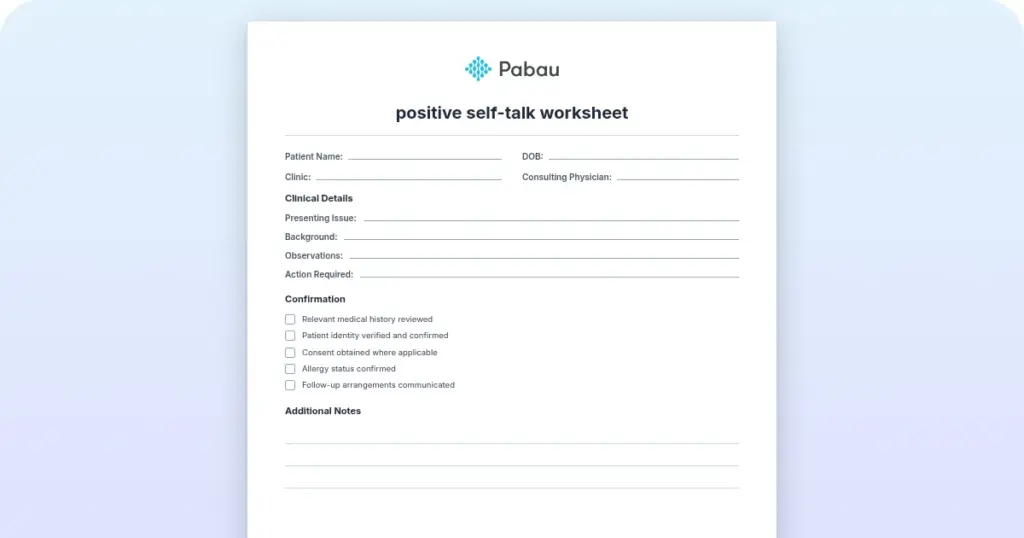
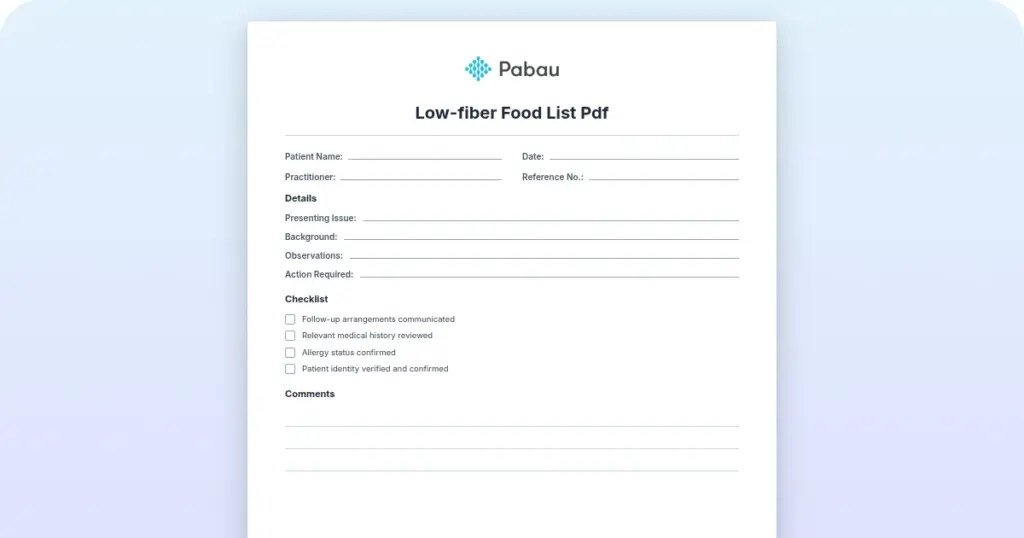
A printable letter form with blocks for the recipient, date, subject line, and sign-off. Three bracketed paragraphs sit in the middle for your opening, your detail, and your next step.
Download template
A thank you letter for job interview is a short note sent within 24 hours to thank the interviewer and confirm your interest.
Subject lines that name the role or your own name get opened, while vague ones like “following up” get missed.
One specific detail from the conversation is what separates a memorable note from a forgettable one.
A late, generic, or misspelled note can undo a strong interview, so proofread it before you send.
Practice managers can read a candidate’s follow-up note as evidence of how that person will write to patients.
A thank you letter for job interview is a brief note sent after the interview. It acknowledges the interviewer’s time, restates your enthusiasm for the position, and leaves a strong final impression. It nearly always goes by email.
A formal typed letter or a handwritten note still works in some industries. Email wins for most roles because it arrives while the decision is still being made.
In a practice, the letter carries extra weight. Managers hiring for reception or coordinator roles read it as a sample of how that person will write to patients.
The letter covers three core elements:
It also closes a sequence that started with your application. If you are still at the front of that sequence, our cover letter template covers the opening move.
Practice hiring is competitive, and the distance between a shortlisted candidate and an offer often comes down to small professional signals. A timely, personalized note is one of the easiest to get right.
For managers reviewing candidates, the follow-up often breaks a tie. Two applicants can look identical on paper and interview equally well. The one who followed up thoughtfully is the one still being discussed the next morning.
Practices and med spas hiring for reception, clinical coordinator, or esthetician roles see applications with near-identical credentials. The follow-up note is one of the few personal signals a shortlist still carries.
From the candidate’s side, the letter does three practical jobs beyond politeness:
Send your note within 24 hours of the interview. Indeed sets that as the standard, and career resources at institutions including Harvard Law School’s OPIA toolkit say the same. Wait longer and the letter risks landing after the decision is made.
For a same-day send, draft the note within two to three hours, while the conversation is still fresh. That is what lets you name a specific detail instead of leaning on the template.
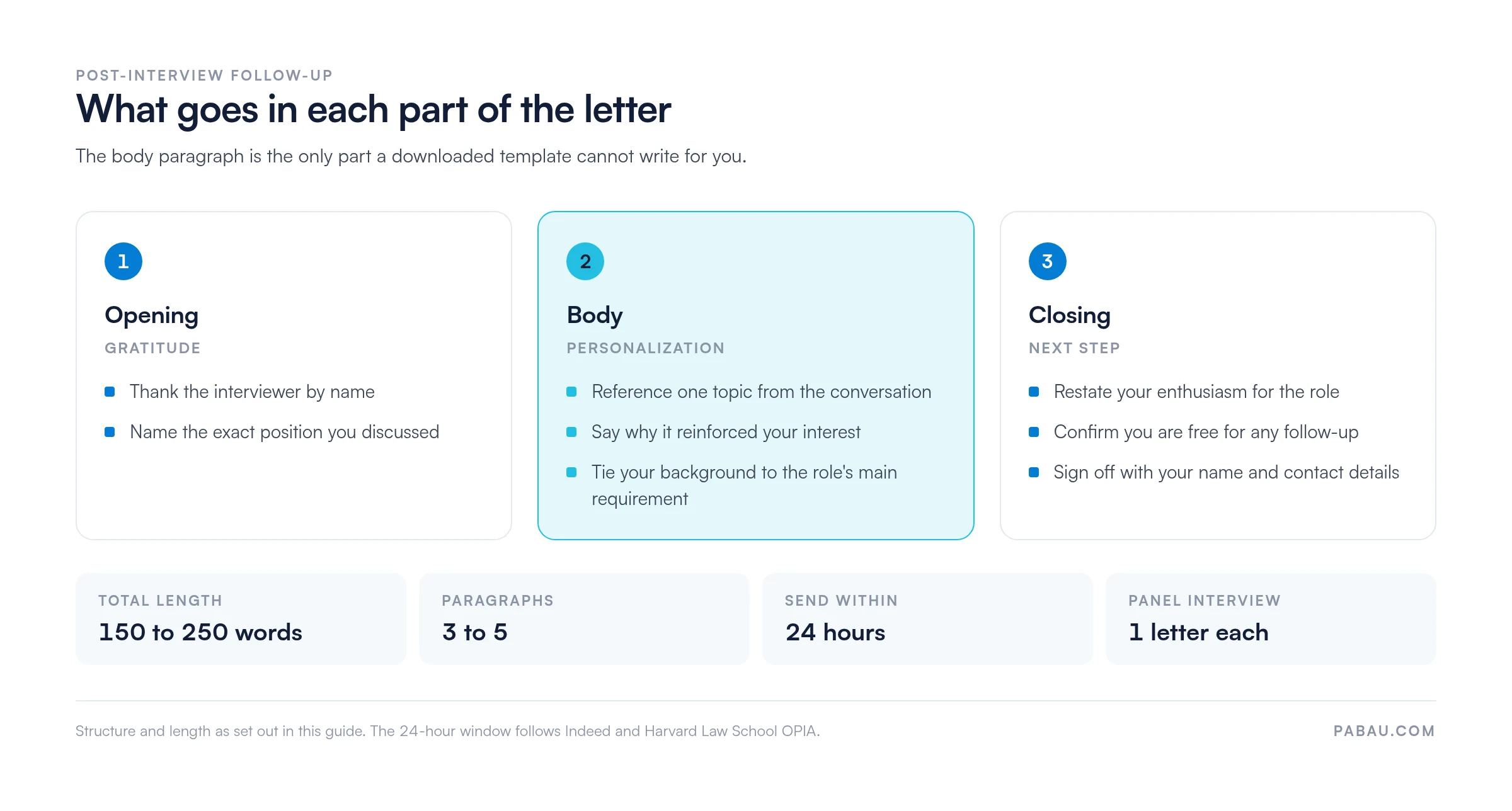
A thank you letter for job interview runs on a simple three-part structure. Keep the whole note to three to five short paragraphs, or 150 to 250 words for an email.
Each part has its own job, and only one of them changes from candidate to candidate.
Your subject line decides whether the email gets opened at all. Keep it clear and professional. The Muse points to lines along these lines:
Avoid vague subject lines like “Following up” on its own, or “Quick question”. The hiring manager cannot connect those to your interview at a glance. Always include the role title or your name.
Draft the note before you leave the building or hang up the call. Write down the topic you want to reference while it is still fresh in your head. Polish the draft at home and send it the same day, while the interviewer still remembers the conversation.
The samples below cover the three most common scenarios. Swap the bracketed fields for your own role, interviewer, and conversation detail. The blank form is in the download above.
Subject: Thank you for your time, [Interviewer Name]
Dear [Interviewer Name],
Thank you for taking the time to meet with me today about the [Job Title] position at [Practice Name]. I enjoyed learning more about the team and the role, particularly our conversation about [specific topic, e.g. patient communication workflows].
That discussion reinforced my enthusiasm for the position. My experience in [relevant background, e.g. coordinating patient intake] maps directly to the priorities you described, and I am confident I can contribute quickly.
Please let me know if you need any further information. I look forward to hearing from you.
Kind regards,
[Your Name]
[Phone] | [Email]
Subject: Thank you, [Your Name] re: [Job Title] interview
Hi [Interviewer Name],
Thank you for taking the time to speak with me about the [Job Title] role today. I came away even more excited about the opportunity, especially after hearing about [specific detail from conversation].
I would love the chance to contribute to [Practice Name]. Please do reach out if you have any questions.
Best,
[Your Name]
Subject: Great speaking with you, [Interviewer Name]
Dear [Interviewer Name],
Thank you for taking the time to speak with me by phone today about the [Job Title] position. Even in a short screening call, I got a clearer picture of the role. It confirmed this is the kind of opportunity I am looking for.
I am particularly drawn to [one specific detail from the call, e.g. the collaborative team structure]. I hope to continue the conversation in person and show what I can bring to the role.
Kind regards,
[Your Name]
[Phone] | [Email]
Most thank you letters read the same. A generic “thank you for your time, I look forward to hearing from you” note does the minimum and leaves no impression. Four habits separate a memorable follow-up from a forgettable one.
The same standards apply in reverse. A manager working through a list of LPN interview questions can read the follow-up note too. It is one more piece of evidence on how a candidate communicates.
A badly written thank you letter does more damage than no letter at all. These are the mistakes hiring managers notice most.
A structured template works in two directions in any practice.
Job seekers in healthcare roles get a ready-made structure, whether they are nurses, clinical coordinators, practice managers, receptionists, or aesthetic practitioners. Healthcare interviews cover clinical scenarios, compliance knowledge, and patient communication. A well-organized follow-up is a second chance to reinforce competence in those areas.
Managers running the hiring process get a standard they can hand to candidates they coach, or to new managers learning to run interviews. Multi-stage hiring stays professional and documented when the follow-up expectation is written down rather than assumed.
Once someone is hired, the paperwork moves from the inbox to the schedule. Pabau’s team management tools hold staff schedules, permissions, and performance in the system that already runs the practice’s day.
Starting from a blank page every time produces inconsistent results. A structured template solves three practical problems.
Speed. Drafting under time pressure leads to rushed, generic messages, and the 24-hour window is tight. A template gives you a skeleton to personalize in ten minutes.
Consistency. A standard format makes quality easy to judge. That helps whether you are coaching a candidate or reviewing how your own team follows up after meetings.
Professionalism. A well-formatted letter signals that you take the process seriously. In healthcare hiring, where patient communication is part of the job, that signal carries more weight than in most industries.
The thank you letter is the last step of the interview. What follows it is admin: contracts, start dates, schedule slots, system logins, and a record of who approved what. Most practices spread that across email threads and a shared drive.
Practice management software like Pabau keeps that work beside the rest of the practice’s day. A new starter gets their own schedule and permissions, so the front desk can see who is working without asking. Commission and performance tracking sit in the same place, which matters as soon as the hire starts treating patients.
That leaves the calendar, the patient records, and the team running on one practice management system. Your hiring paperwork stops living in an inbox, and a manager covering a shift can answer a staffing question in seconds.
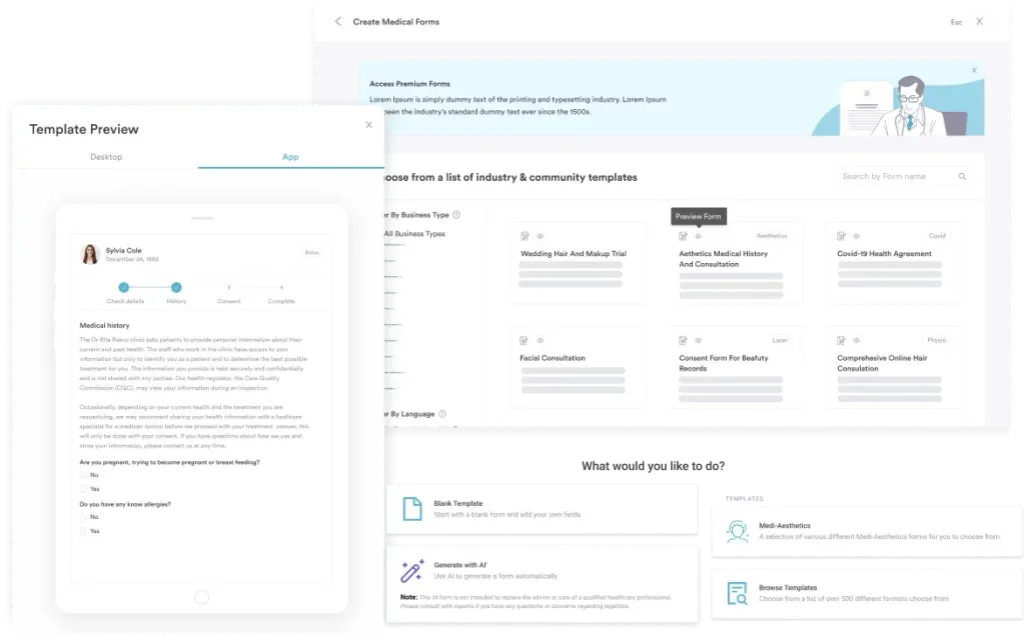

Pabau’s team management tools hold staff schedules, permissions, and performance in the same system that runs your calendar and patient records.

The thank you letter is one of the simplest professional habits to build and one of the most consistently skipped. Send a personalized note within 24 hours and you stay in the conversation while the decision is still open.
Download the form above, adapt it to the interview you just had, and send it the same day. If you are on the hiring side, set the same expectation for every round you run, then judge candidates against it.
Running a practice means the hire is only the start of the paperwork. Book a demo to see how Pabau keeps staff schedules, records, and patient care in one place.

Need a question set before the interview? Social worker interview questions gives you a structured set you can adapt to other roles.
Still at the application stage? Cover letter template walks through the letter that gets you into the interview room.
Just made a hire? Annual review template sets out how to structure the first formal performance conversation.
A thank you letter for job interview is a short professional note sent to your interviewer within 24 hours of meeting. It thanks them for their time and restates your interest in the role. Referencing a specific moment from the conversation is what keeps it from reading as generic.
Send it within 24 hours of the interview, and the same day is better. Waiting 48 hours or more risks the letter arriving after the hiring decision has already been discussed, which cuts its impact sharply.
Clear, specific subject lines work best. Try “Thank you for your time, [Name]” or “Following up: [Job Title] interview”. Avoid vague lines like “Following up” on its own, because the hiring manager cannot place them.
Keep it to 150 to 250 words for an email, across three to five short paragraphs. A longer message risks not being read in full, and a very short one can read as dismissive. Three paragraphs covering gratitude, a personal detail, and a confident close is the right length.
Email is the right choice for most roles because it arrives immediately and can be read before the hiring team disperses. A handwritten note is a strong differentiator for senior or relationship-heavy roles, but it rarely suits a decision expected within days.
Keep it to two paragraphs. Thank the interviewer by name for the call and name the role. Reference one specific detail from the conversation, then close by confirming your interest and availability. The phone interview sample in this guide is written for exactly that.