Pabau vs ICANotes: Psychiatry billing software compared
Psychiatry billing software decides whether your practice gets paid accurately, ...

Last Updated: Oct 14, 2026

Klara pricing is quote-based, with no public rate card, so practices must request a demo to get figures.
Cost factors include number of providers, practice size, and which features are enabled, with ModMed integration affecting value significantly.
Key features covered by Klara include two-way patient messaging, automated reminders, digital intake forms, and telehealth video visits.
Pabau prices by location and user count, with every feature included in every subscription, unlike Klara’s quote-based model.
Most practices researching patient communication software hit the same wall: Klara looks promising, but there’s no price on the website. No tier breakdown, no per-provider rate, no ballpark figure. Just a “Request a Demo” button. That opacity frustrates practice managers trying to build a software budget, and it makes comparing Klara pricing against alternatives harder than it should be.
This guide breaks down what Klara costs, what affects the price, and what you get for it. It also covers the best alternatives in 2026, including practice management software like Pabau as a transparent, all-in-one option.
Klara does not publish its pricing. There is no public rate card, no free plan, and no self-serve trial. Every practice goes through a sales conversation before receiving a custom quote. This is confirmed across Klara’s Capterra listing and multiple third-party review sources as of 2026.
Based on third-party reporting and review platform data, Klara pricing is typically structured around three variables. Those are the number of providers in the practice, practice size (patient volume), and the feature set selected.
Larger practices with more providers and deeper feature requirements pay more. Smaller solo practices often find the quote-based model results in pricing that feels disproportionate to their scale.
Klara is owned by ModMed (Modernizing Medicine), which positions the platform primarily within its dermatology and specialty practice ecosystem.
Quote-based pricing is common in enterprise healthcare software. Deal size varies enough across practice types that a public rate card would either underserve large accounts or scare off smaller ones. The model works for the vendor. It adds friction for the buyer.
What to expect in a Klara sales conversation: a discovery call about your specialty, EHR system, provider count, and current patient communication workflows. The quote follows, often tied to an annual contract. Practices already on ModMed may find Klara bundled into their existing contract, which changes the pricing dynamic considerably.
Understanding what Klara pricing buys is as important as the number itself. Klara is a patient communication platform, not a full practice management system. Its core capabilities are concentrated in the messaging and appointment workflow layer.
For practices evaluating how to improve patient engagement through software, Klara’s feature set is strong within its communication focus. That focus narrows when practices need billing, scheduling, and clinical documentation in the same system.
What Klara does not include natively: scheduling, billing, clinical notes, or inventory. Practices using Klara still need a separate EHR and practice management system running alongside it. That parallel-system cost is worth factoring into any total-cost-of-ownership calculation.
Klara’s integration depth is not uniform across EHR platforms. The strongest connection is with ModMed, its parent company’s platform. Practices running ModMed for dermatology, ophthalmology, or other specialties can expect tight bi-directional data flow between Klara messaging and their clinical record.
For practices on other EHR systems, Klara supports integrations with platforms including athenahealth. The depth and reliability of those connections varies, so practices should verify directly with Klara’s implementation team before signing a contract.
This is a meaningful distinction. A practice on a well-supported EHR gets a smoother experience, while one on a less-supported system may encounter workarounds or manual data entry.
Practices considering EHR integration as a buying criterion should ask Klara about their current EHR and the data fields that sync. They should also confirm whether the integration is bidirectional. The alternative, building a healthcare CRM layer on top of a disconnected EHR, adds operational overhead that erodes the time-saving value of patient communication automation.
Klara is a strong fit for a specific type of practice. It is not the right tool for everyone, and being honest about that match saves time on both sides of the evaluation.
Klara is a harder sell for solo practitioners, practices not on ModMed, or those needing a single platform covering scheduling, billing, and clinical documentation. The custom pricing model also creates friction for practices with limited time to invest in a sales process. For those practices, an all-in-one alternative may be a faster path to value.
Before entering a Klara sales conversation, document your current patient communication costs. Note front desk hours spent on calls, no-show rates before and after reminders, and any existing messaging software costs. That data speeds up the ROI case for any patient communication platform and strengthens your negotiating position.
Klara holds a 4.6/5 rating on Capterra, based on more than 200 verified reviews. You can read additional reviewer feedback on G2.
Pricing sentiment on review platforms follows a clear pattern. Practices on ModMed tend to rate Klara’s value favorably because the integration depth justifies the investment.
Practices not on ModMed are more likely to describe the cost as difficult to justify. That’s especially true when the platform’s core value is messaging that a lower-cost point solution could replicate. That split reflects Klara’s positioning as a premium product built primarily for the ModMed ecosystem.
Practices evaluating patient care management tools more broadly should weigh whether communication-layer improvements alone justify the Klara investment. The alternative is a system that also handles scheduling and clinical documentation.

Pabau combines two-way messaging, automated appointment reminders, digital intake forms, and online booking in a single platform with transparent pricing. No custom quote required.

The patient communication software market has several credible options beyond Klara. The right alternative depends on practice size, budget, EHR stack, and whether the practice needs communication-only tools or a broader platform.
The core difference between Pabau and Klara is scope. Klara is a patient communication platform that sits alongside your existing EHR and practice management system. Pabau is a full practice management software platform that includes patient communication as one layer of a broader operational system.
Where Klara’s value depends significantly on how well it connects to your existing EHR, Pabau replaces the need for that dependency. Scheduling, clinical records, billing, two-way messaging, digital intake forms, and online booking live in the same system. Staff manage scheduling, records, and messaging from one interface rather than toggling between Klara and a separate EHR.
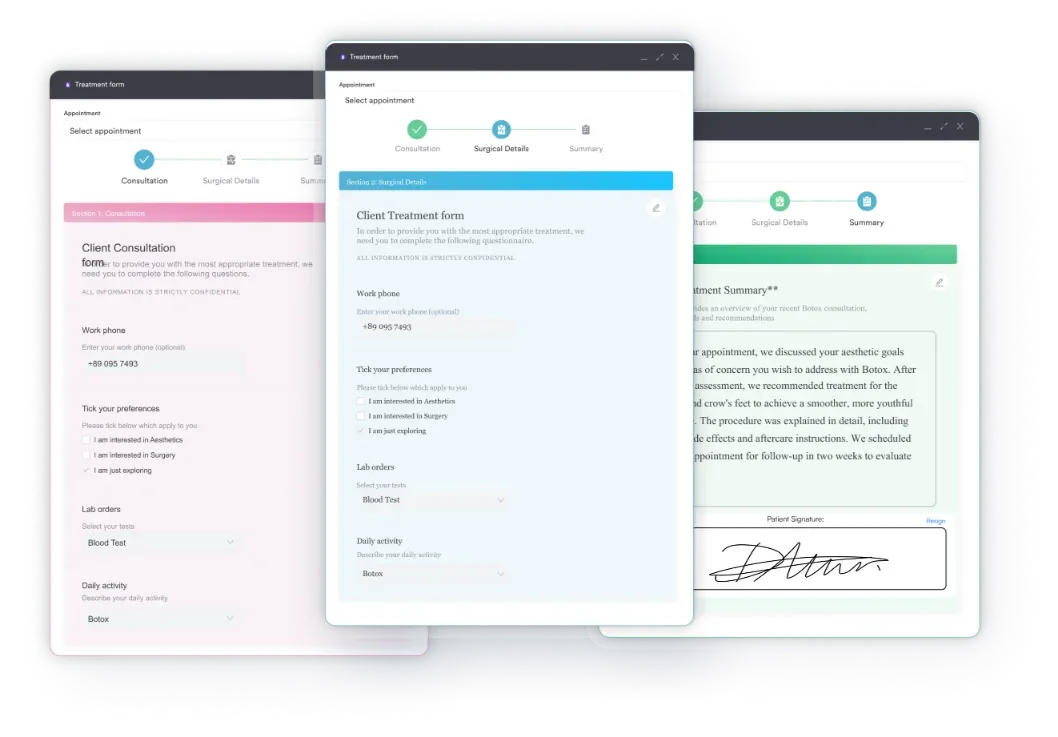
For practices using telehealth software and patient scheduling software as separate tools, Pabau consolidates those into a single subscription. That consolidation has a meaningful effect on total software spend. Practices currently paying separately for an EHR, a scheduling tool, and a patient messaging platform see the biggest savings.
On pricing transparency: Pabau publishes pricing starting from $104/month, so practices can evaluate cost before booking a demo. Pabau holds a 4.7/5 rating on Capterra from more than 650 verified reviews, with reviewers highlighting the all-in-one approach, scheduling, and billing features as strengths.
That transparency and feature set make it a practical comparison point for practices that find Klara’s quote-based model frustrating.
Pabau is particularly well-suited for aesthetic clinics, medical spas, dermatology practices, and specialist clinics. These practices need HIPAA-compliant messaging alongside clinical documentation, consent management, and financial workflows in one place.
For practices that primarily need messaging and reminders on top of an existing EHR they plan to keep, Klara may be the better match. The same applies to the communication-focused alternatives in the table above.
Pabau’s secure staff messaging workflows and appointment reminder text templates give practices a starting point for patient communication without needing a separate communication platform. The result: fewer logins, fewer contracts, and a cleaner patient data trail across every touchpoint.
Klara pricing is opaque by design. The platform is a strong choice for specialty practices already embedded in the ModMed ecosystem, where deep integration justifies the custom-quoted cost.
For practices outside that ecosystem, the value equation becomes harder to close. That’s especially true when messaging and reminders are the primary need, and the total cost includes Klara plus a separate EHR and practice management system.
If your practice needs scheduling, billing, clinical documentation, and patient communication in a single platform, Pabau is worth a direct comparison. You can evaluate its pricing before picking up the phone. Book a demo to see how it handles the full patient journey, from booking through post-visit follow-up, in one place.

Need to reduce no-show rates before switching platforms? Reducing patient no-show rates outlines practical workflow changes that work independently of which messaging platform you use.
Evaluating your practice’s overall software stack? Clinic management software buyer’s guide covers the key features to assess across scheduling, billing, and patient communication tools.
Considering a move to paperless intake? Digital medical forms at your practice explains how practices transition from paper-based intake to digital workflows and what to expect.
Klara is a patient communication platform owned by ModMed (Modernizing Medicine). It offers secure two-way messaging, automated appointment reminders, digital intake forms, and telehealth video visits. Klara is not a full EHR or practice management system, though it integrates with external clinical platforms, most deeply with ModMed.
Klara does not publish monthly pricing. Costs are quote-based and depend on the number of providers, practice size, and features selected. Practices must request a demo and go through a sales process to receive a figure. There is no public rate card as of 2026.
No. Klara does not offer a free plan or a self-serve trial. All access requires a custom quote and typically involves an annual contract commitment.
The best alternatives for small practices are OhMD and Curogram, which offer transparent, lower-cost communication-focused tools. Pabau is another option for practices that want to consolidate scheduling, billing, and patient messaging into one platform, with visible pricing starting from $62/month.
Klara’s value is significantly stronger within the ModMed ecosystem. Practices on other EHR platforms report more limited integration depth and a harder cost justification. Alternatives with transparent pricing and broader EHR compatibility may offer better value outside the ModMed environment.
Klara supports integrations with other platforms including athenahealth, though the depth of those connections varies. Practices should verify their specific EHR compatibility and the bidirectional data fields supported directly with Klara before committing to a contract.