Normal ECG values chart: Adult and pediatric reference ranges
A normal ECG values chart lists the expected range for every measurement on an e...

2
Last Updated: Oct 12, 2026
A medical disclaimer is a legal statement that your health content is educational only and doesn’t replace professional medical advice, diagnosis, or treatment. Healthcare practices, wellness blogs, and health publishers display one to limit liability and set clear expectations for readers and patients.
Below, you’ll find the six clauses a website disclaimer needs, where to display it, and how to adapt it. You can also download a free signable version for patients to complete at your practice.
A signable patient declaration in which patients confirm their medical history is complete, their questions were answered, and they’ll report any changes. It includes patient and practitioner signature fields and an option to keep the patient’s family doctor informed.
Download template
A medical disclaimer states that your health content is educational only and doesn’t replace professional medical advice, diagnosis, or treatment.
Most jurisdictions don’t legally require one, but a clear disclaimer limits liability exposure and sets honest expectations for readers and patients.
A complete disclaimer has six clauses, from an informational-only statement to a reminder that health advice varies by person.
Show it in your site footer, above health content, and inside the intake and consent forms patients sign.
Pabau, the practice management platform we build, lets you add the disclaimer to digital intake forms so every patient signs it before treatment.
A medical disclaimer is a legal notice that separates health-related content from professional medical advice. It states that the information is educational and doesn’t replace a consultation with a qualified healthcare professional.
A medical disclaimer does three jobs:
You’ll find disclaimers on practice websites, health blogs, telehealth platforms, and wellness apps. They exist because a reader who acts on health information without professional oversight, and is harmed, may try to hold the publisher responsible.
A medical disclaimer protects both your practice and your patients. Picture a patient who follows your blog advice without seeing a clinician, then has a bad outcome. Without a disclaimer, they could claim they relied on your medical advice and bring a negligence claim.
An effective disclaimer covers six components. Each one removes doubt about what your content is, and what it isn’t.
A disclaimer that covers all six leaves far less room for a reader to argue they mistook your content for personal advice. The breakdown below pairs each clause with the risk it handles.
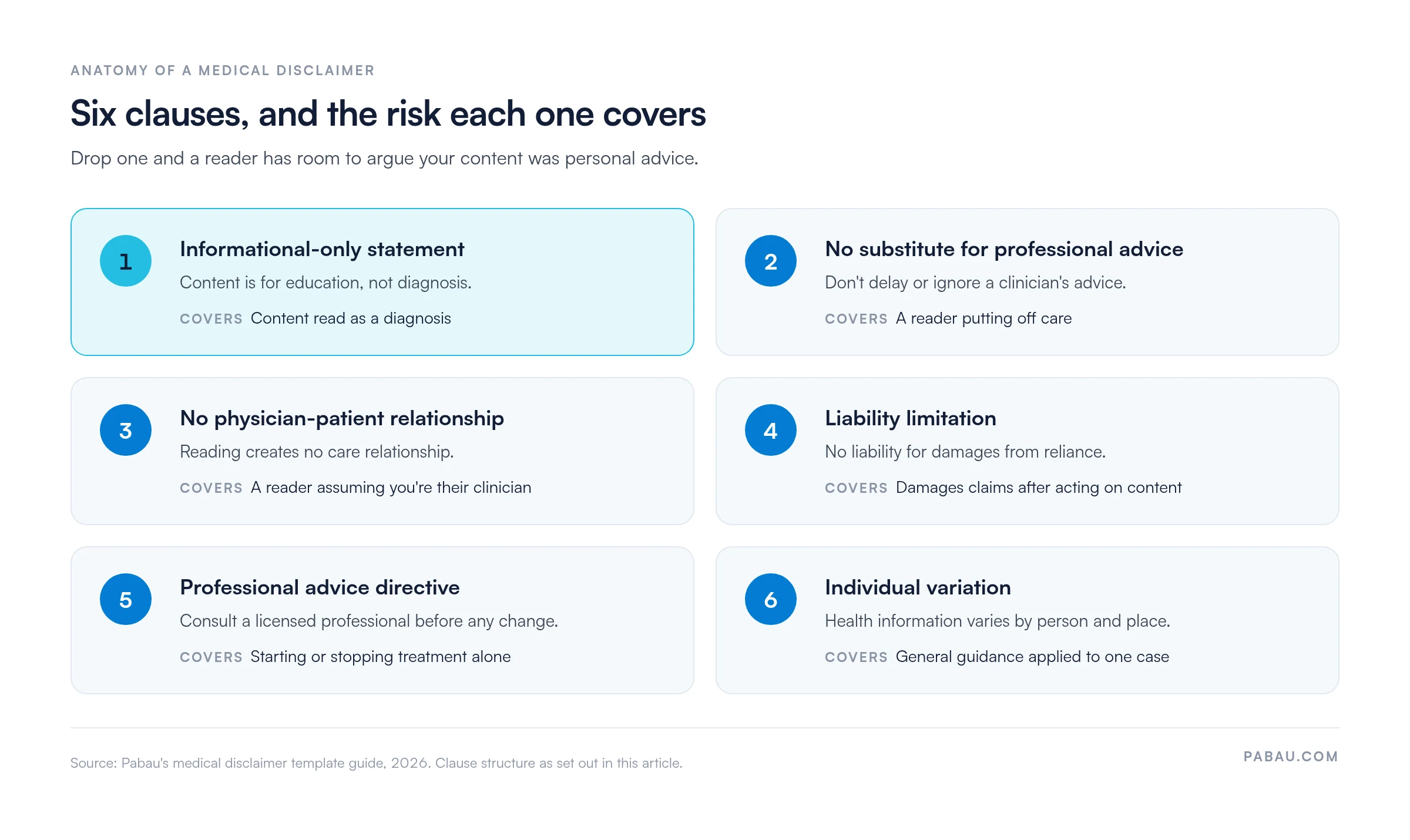
Placement matters. A disclaimer mentioned once on a page nobody visits does little. Readers should meet it before they engage with your health content.
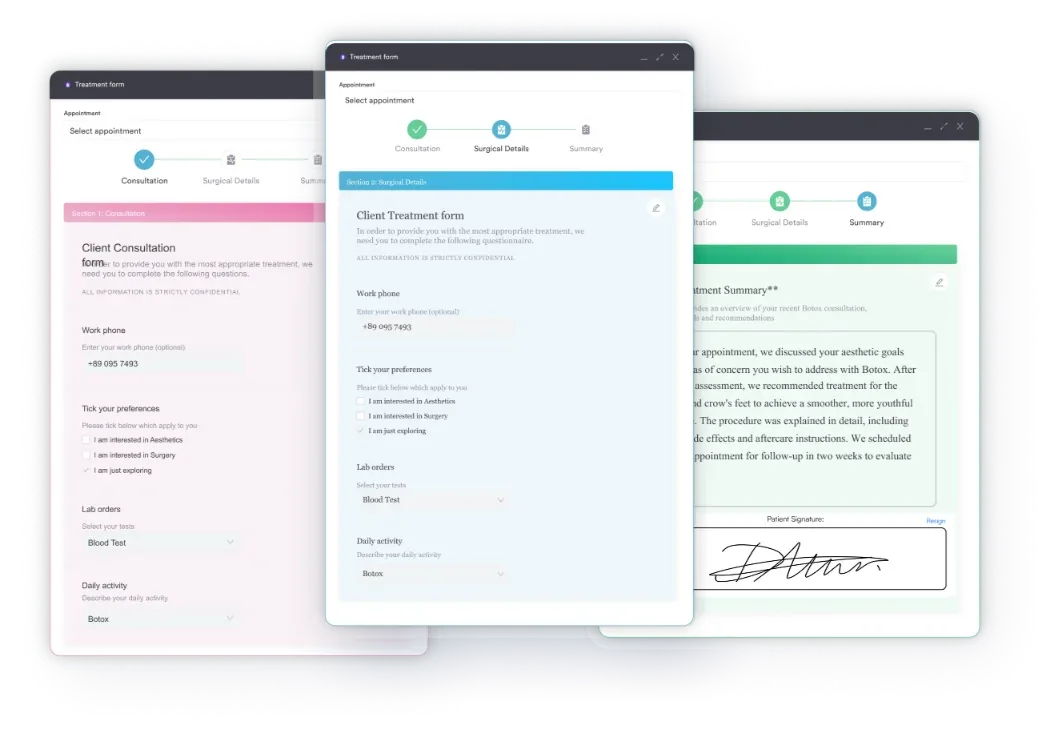
With digital intake forms, the disclaimer becomes part of intake itself. Every new patient reads and acknowledges it before their first appointment.
These three documents overlap, but each one covers ground the other two don’t.
You need all three. A privacy policy won’t tell readers your blog isn’t medical advice, and a disclaimer won’t explain how you handle their data.
None of them replace the signed forms that cover treatment itself. An adult medical consent form records that a patient understood a procedure’s risks before agreeing to it.
Where a patient waives claims tied to a specific activity or service, use a release of liability document instead. Sharing a patient’s records with a third party calls for a HIPAA authorization form.
The six clauses above are written for general use. Adapt them to your practice type, location, and services before you publish.
Many practices keep the disclaimer on the website and a paper copy at the front desk. When a question comes up later, nobody can show which patient saw which version, or when.
In Pabau, the disclaimer becomes a step in your digital intake forms. Patients read and sign it before the appointment, and the signed copy is stored against their patient record. Care Pathways guide patients through forms and consents ahead of the visit, so your front desk isn’t chasing signatures on the day.
When you update the wording, you edit one form, and every new patient gets the current version. Pabau’s compliance management tools keep those signed records easy to find when an auditor asks.

Add your medical disclaimer to Pabau’s digital intake and consent forms, so every patient reads and signs it before their first appointment.

A disclaimer won’t stop every claim, but it changes the argument. A reader can no longer say they had no warning that your blog post wasn’t personal advice.
Publish the six-clause version on your website first, since it covers the widest audience. Then add the signable version to your intake process, so patients acknowledge it before treatment.
If you work across several states or countries, have a lawyer check the wording for each one. Book a demo to see how Pabau collects signed disclaimers with your intake forms before the first appointment.

Need a waiver for higher-risk services? Indemnity waiver form walks through what a waiver should include, section by section.
Releasing records to another provider? Medical release form covers the patient permission you need before sharing health information.
Setting up a first-visit form? New patient intake form template shows where a disclaimer acknowledgment fits alongside history and contact details.
Using patient photos in marketing? Photo release form explains when you need written permission and what the form should say.
A medical disclaimer states that website content is not medical advice. Informed consent is a specific agreement a patient signs before undergoing a procedure, confirming they understand the risks, alternatives, and benefits. Both matter. Informed consent is signed before treatment, while a disclaimer is a standing notice on your website or in your materials.
Legal requirements vary by jurisdiction. The UK, US, and most countries do not mandate a disclaimer by law, but regulators and professional bodies generally encourage them as best practice. A disclaimer reduces liability and shows responsible publishing, so it’s wise to include one either way.
You can use a template as a starting point. A disclaimer copied word for word from another site may not reflect your practice, services, or jurisdiction. Customizing the template to name your business, services, and location creates a stronger legal document tailored to your situation.
No. A disclaimer limits but does not eliminate liability. Courts may disregard a disclaimer if you gave personal medical advice, such as a diagnosis or a treatment recommendation. A disclaimer is one layer of protection. Professional liability insurance and careful content practices matter just as much.
Display your medical disclaimer before patients book or enter a telehealth session. Your disclaimer covers the educational content on your website. It doesn’t cover the medical advice you give inside an established doctor-patient relationship. Include a statement in your telehealth terms clarifying the scope of your advice.
Draft a disclaimer that references the primary jurisdiction where you operate and mention that regulations vary. Example: “This information reflects UK healthcare standards and CQC guidance; practices operating in other jurisdictions should adapt this disclaimer to comply with local law.” Have a lawyer review the version for each territory where you operate.