Journal prompts for mental health
Journal prompts for mental health are guided questions that help people process ...

2
Last Updated: Oct 13, 2026

A thought record worksheet is a cognitive behavioral therapy tool that helps a client slow down one distressing thought and answer it on paper.
This template is a single page with five fields: situation, emotions and physical sensations, thought, unhelpful thinking styles, and my response.
The fourth field asks the client to name the thinking style behind the thought, and that step makes the response much easier to write.
There is no numeric mood scale on the form, so record any rating in your session note rather than on the client sheet.
Practice management software like Pabau sends the worksheet from the client record, so completed copies file themselves back into the same chart.
A single-page printable form with a date line and five write-in fields: situation, emotions and physical sensations, thought, unhelpful thinking styles, and my response. Each field is full width, so there is room for a handwritten entry between sessions.
Download templateA thought record worksheet is a cognitive behavioral therapy (CBT) tool that puts one distressing thought on paper so the client can answer it. This template is the short version of that exercise.
It runs to a single page and holds five fields with no scoring. The client writes the situation, what they felt in mood and body, the thought itself, the thinking style behind it, and their response.
That shape suits the client who is new to CBT, and the client who would abandon a wide grid before the second entry.
Below you get the purpose of each field, a completed example, and a way to track change without a rating scale. It also shows where the short form fits beside longer records in your therapy practice workflow.
A thought record worksheet is a structured form for capturing a distressing thought and writing a considered reply to it. It follows the cognitive model set out by Aaron Beck. A situation triggers an automatic thought, and that thought drives the feeling and the behavior that follow.
Writing the sequence down pulls those pieces apart, which is very hard to do in your head while upset. Two useful things happen once the thought leaves the client’s head. It becomes something they can look at rather than something they are stuck inside. It also becomes reviewable, so you can read last Tuesday’s thought together in the next session.
CBT is recommended as a first-line psychological treatment for depression in NICE guidance, and thought records are one of the exercises inside that treatment. The worksheet is not a screening tool and not a diagnosis. It trains one skill, which is examining a thought instead of believing it on arrival.
The form has a date line at the top and five fields stacked down the page. Each one is a full-width box with room to write by hand.
The form carries no evidence for and evidence against columns, and no 0 to 100 mood scale. The evidence work still happens. It happens in conversation, and only the conclusion reaches the response field.
Clients work down the page in that order for a reason. Each field feeds the next one, and skipping the thinking style makes the response much harder to write.
The fourth field asks the client to name the pattern behind the thought, and that single step does most of the work on this form. A thought with a name is easier to argue with than a thought that feels like plain truth.
Clients do not need the whole list of cognitive distortions. Give them four or five styles that match phrases you have already heard them use, and add more as the work continues.
Treat the label as a prompt rather than a verdict. If a client argues about which style applies, let the discussion run, because weighing the options is the intervention.
Ask clients to write the thought in quotation marks, exactly as it arrived. A quoted thought can be answered, while a tidy summary of the mood gives the response field nothing to work with.
The response field is where the thought gets answered, and clients find it the hardest of the five. A response works when the client can read it back a week later and still believe it. These questions get them there:
Those questions are the evidence work that wider thought records give their own columns. Here they stay in the conversation, and the client writes down what they concluded.
Steer clients away from the cheerful reply. “Everything will be fine” is not a response, because nothing in it can be checked. A response naming two fixed errors, seven years in the role, and a corrected version sent by noon can be checked.
Here is the same five-field worksheet filled in after a difficult afternoon at work.
Read the last row again and notice what it avoids. It does not deny the error, and it does not promise a happy ending. It states what happened, sets that beside what else is true, and finishes with something the client can do tonight.
Some CBT thought records are much wider. They add separate columns for evidence supporting the thought, evidence against it, a balanced alternative, and a mood rating taken before and after.
This template deliberately does none of that. Five fields fit on one page, take about five minutes, and survive a bad week. Use it when a client is new to CBT, when concentration is limited, or when a wide grid has already been abandoned once.
Move to a wider record when the client is fluent with this one and the work needs more structure. The two formats work together. Many clients keep the short form for daily use. They then complete a longer record with you in session, where you can prompt the evidence questions directly.
Anxious thoughts are usually predictions, which is what makes this form useful for them. A client with social anxiety writes down that everyone will judge them. They name that prediction as fortune telling. Then they set it beside how the last three occasions went.
Depressive thoughts tend to be verdicts rather than predictions. “I am worthless” and “nothing will change” are global statements, so the response field has to stay concrete. One specific counter-example beats a page of reassurance. When a response stalls on what to do next, a behavioral activation worksheet carries that part of the work.
The emotions and physical sensations field earns its place with both presentations. Clients who cannot name a thought can almost always name a symptom. A racing heart or heavy limbs gives you somewhere to start looking for the thought.
Patterns arrive faster than most clients expect. Three records in, the same situation or the same thinking style usually appears twice, and that repetition is what shapes the next few sessions.
Review can also surface risk. If an entry names hopelessness or self-harm, set the homework aside and work through your suicide prevention worksheet instead.
Handing over the paper copy is only one option. You can also send the form through a client portal, which suits clients who lose printouts but never lose their phone.
This worksheet has no mood scale, so progress has to be recorded somewhere other than the client sheet. Three practical options work well:
Keeping the numbers off the client’s page has an upside. Some clients score strategically to please the therapist, and others find a scale discouraging when the figure barely shifts between weeks.
In most practices the PDF goes out on paper, and the completed copy ends up in a folder or as a photo on a phone. Practice management software like Pabau keeps the same worksheet inside the client’s file instead of alongside it.
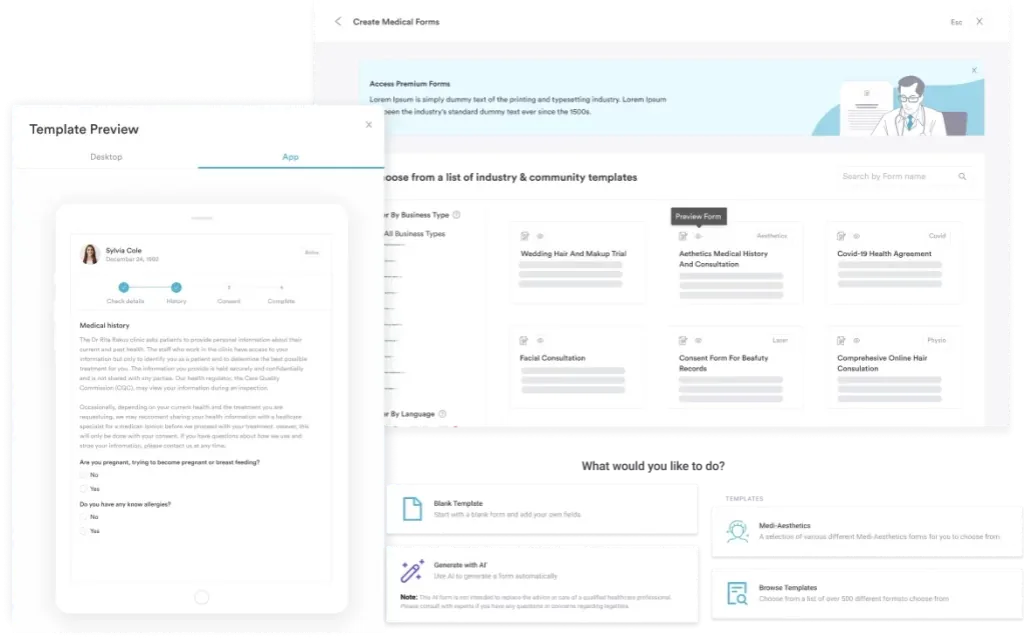
You can send the thought record as a digital form before or after a session. The client completes it on their phone, and the finished copy files itself against their record in your mental health practice management system. Nothing needs scanning, and nothing is left in a drawer.
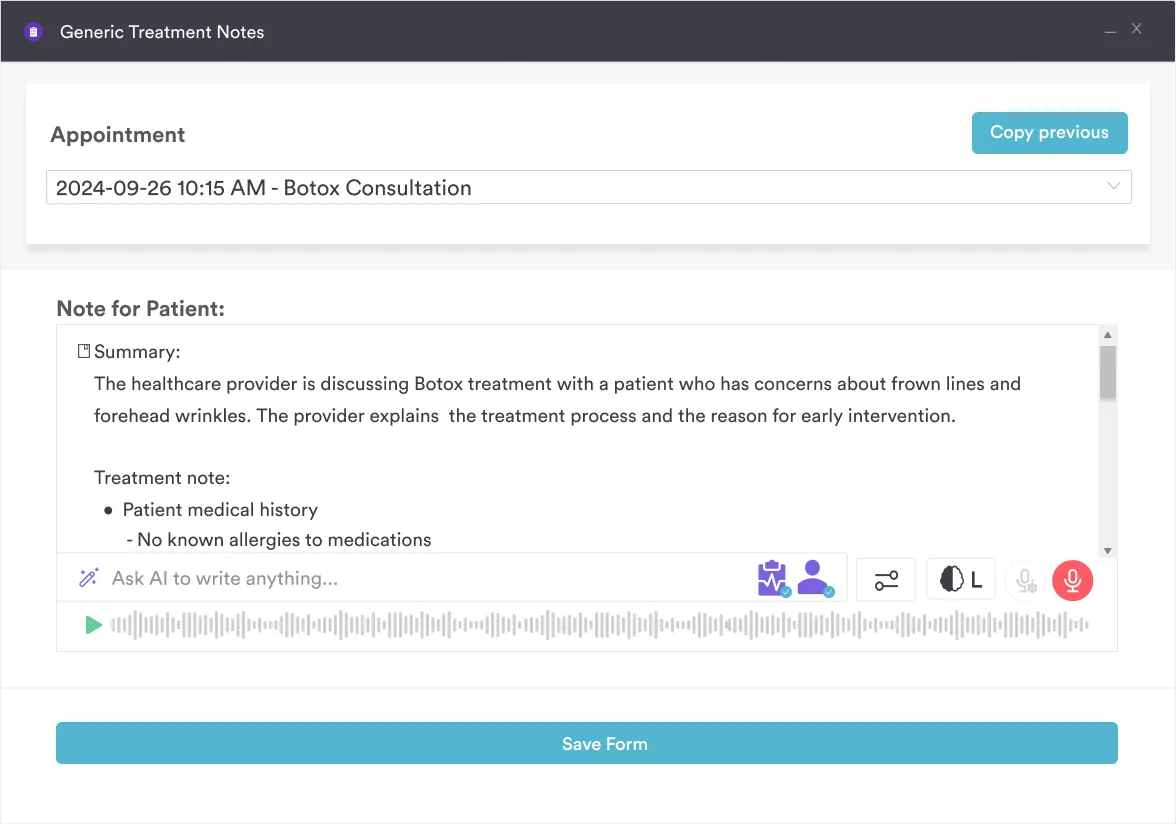
Reviewing the record in session creates its own admin. Pabau Scribe. Their own wording reaches the chart without typing.
The result is a documented trail of the cognitive work. You can see which thoughts recurred, which thinking styles the client named, and how their responses changed across a course of treatment.

Pabau’s digital forms send thought records to clients and file the completed copies straight into their chart. Homework, notes, and progress stay in one place, so review takes minutes.

The five fields on this worksheet earn their place because clients finish them. A short record completed most weeks does more clinical work than a comprehensive grid completed once and never opened again.
The field that carries the exercise is the fourth one. Once a client names the thinking style without prompting, they have started answering the thought before they reach the page. That is the skill you were teaching.
Print it, walk one through in session, and review the first two entries before you assign any more. Book a demo to see how Pabau sends CBT worksheets to clients and keeps completed records in their file.

Looking for a faster trauma protocol? Accelerated resolution therapy explains how ART treats trauma in fewer sessions than traditional protocols.
Working with cognitive decline instead? 7 stages of dementia chart maps symptoms, functional losses, and typical duration across each GDS stage.
Working with body-based distress? Somatic experiencing exercises pair well with the emotions and physical sensations field.
Want wider between-session homework? Wellness wheel worksheet maps the life areas a client wants to change.
Supporting a client’s recovery program? AA Step 3 worksheet covers the Step 3 decision with reflection prompts and written commitment statements.
A thought record worksheet is a CBT form for writing down one distressing thought and answering it. This version has five fields covering the situation, emotions and physical sensations, the thought, unhelpful thinking styles, and the client response.
No. The form has five fields and none of them ask for evidence lists or a mood rating. The evidence questions happen in conversation, and the conclusion goes into the my response field.
Yes. It works well on global depressive thoughts about being worthless or stuck. Naming the thinking style makes the thought easier to answer, and you can pair it with your usual outcome measure.
One or two records a week is a realistic start. Most clients become fluent within four to six weeks, and can then write records only during high-distress moments.
They overlap. A thought diary is often free journaling about feelings. This thought record has fixed fields that move the client from the situation to a written response.
Ask for a rating out loud during review and record it in your session note. Keeping numbers off the client sheet avoids discouraging them when the score moves slowly.
File them with the client clinical record so entries can be compared over time. Practice management systems like Pabau store completed forms in the client file, ready for review.