Trauma response test: Free template for clinicians
A trauma response test is a structured screening questionnaire that helps clinic...

7
Last Updated: Oct 15, 2026

A thought journal is a CBT worksheet that helps clients track automatic negative thoughts, spot cognitive distortions, and build more balanced perspectives.
The worksheet runs five columns, starting with the situation and ending with a balanced thought the client can believe.
It is used in evidence-based CBT for anxiety, depression, and stress, because writing a thought down makes it possible to test.
Emotion re-ratings before and after each entry give you a number you can track across sessions.
Practice management software like Pabau lets you assign the worksheet digitally and store completed entries in the client record.
A five-column worksheet clients fill in after a difficult moment, with space for the situation and the automatic thought. Further columns cover the emotion rating, the evidence on both sides, and the balanced thought.
Download templateA thought journal is a cognitive behavioral therapy worksheet that helps clients examine the thinking behind anxiety, low mood, and distress. Writing a thought down turns it from a fact into a claim, and a claim can be tested.
This guide covers what the worksheet is, how to work through each column, and how to adapt it for anxiety and depression. It also shows where completed entries belong in a mental health practice, so homework stops vanishing between sessions.
A thought journal is a structured worksheet where clients record an automatic negative thought and the situation that triggered it. They then name the emotion it produced and weigh the evidence for and against the thought. It is a foundational CBT intervention, and the writing is what makes the thinking visible enough to argue with.
The tool rests on the cognitive model, which holds that thoughts, feelings, and behaviors influence each other. Test a thought against evidence and the feeling attached to it usually loses some of its force. NHS Every Mind Matters and the Beck Institute both treat the worksheet as a core CBT tool, in self-help and clinical work alike. Medication management depends on knowing what was tried, at what dose, and why it stopped.
The three names get used interchangeably, but they describe different levels of structure.
For clinical work the structured format wins, because it forces the evidence step. A client writing in a free-form diary can jump straight from the thought to a conclusion. That step is where the therapeutic work sits.
Thought journals exist to catch cognitive distortions, the thinking errors that make distress feel justified. These five turn up in most clients’ entries.
The evidence columns are what break their grip. Once a client writes down what actually happened, the distortion has to compete with a record rather than a feeling.
The five columns break down into seven steps. Here is how to walk a client through them.
Clients who struggle to name what they feel can start from a list of negative emotions before filling in the third column.
Push clients to write the entry soon after a difficult moment, while the thought is still convincing. With repetition, the balanced reading gets easier to reach without the paper.
Each column does a different job, and clients tend to rush the ones that matter most.
Anxious entries cluster around catastrophic predictions and “what if” questions. Steer the evidence-against column toward probability rather than possibility.
Three predictions show up again and again in anxious entries.
Filling in the evidence against usually shows the feared outcome is far less likely than it felt.
For panic presentations, grounding comes first, because a client in the middle of a surge cannot weigh evidence. Standard panic disorder treatment puts the cognitive work after the body has settled.
Digital forms can carry the grounding instructions on the same page as the worksheet, so the client has both in one place.
Depressive thoughts settle on the self, the world, and the future, and they resist the evidence-against column. Clients often answer it with “but it doesn’t matter anyway.”
Normalize that response. It is a symptom of depression rather than an accurate read of the evidence.
Depressive entries tend to circle the same four thoughts.
The balanced thought here works better as a gentle reality check than a rebuttal. “This is the depression talking, and I have come through it before” does more than an argument about worth.
Pair the worksheet with behavioral activation, so mood shifts get tied to what the client did and not only to what they thought.
When entries start showing hopelessness or risk, a mental health safety plan belongs in the file alongside them.
The worksheet earns its keep when it feeds back into the record. A printout handed over at the door rarely comes back. In a busy psychology practice, the difference between homework and paperwork is whether anyone reads it.
Those re-rating numbers work as a rough outcome measure between the formal ones. An outcome rating scale still does the heavier lifting, but a run of entries shows movement week to week.
Summarize each reviewed entry in the chart with consistent wording, which is one of the habits behind safer clinical notes. Through a client portal, you can share the worksheet, collect it back, and read it before the client walks in.
A few habits separate an entry that shifts something from one that just fills a page.
Five habits quietly reduce how well the worksheet works.
When a client says the worksheet ‘did not work,’ ask what emotion re-rating they wrote down. Often it moved from 85 to 70, which is progress they discounted. Naming that shift is what keeps them filling it in.
Paper is still the default for handing out worksheets. The client loses the sheet, or brings it back late, and the emotion ratings never reach the chart.
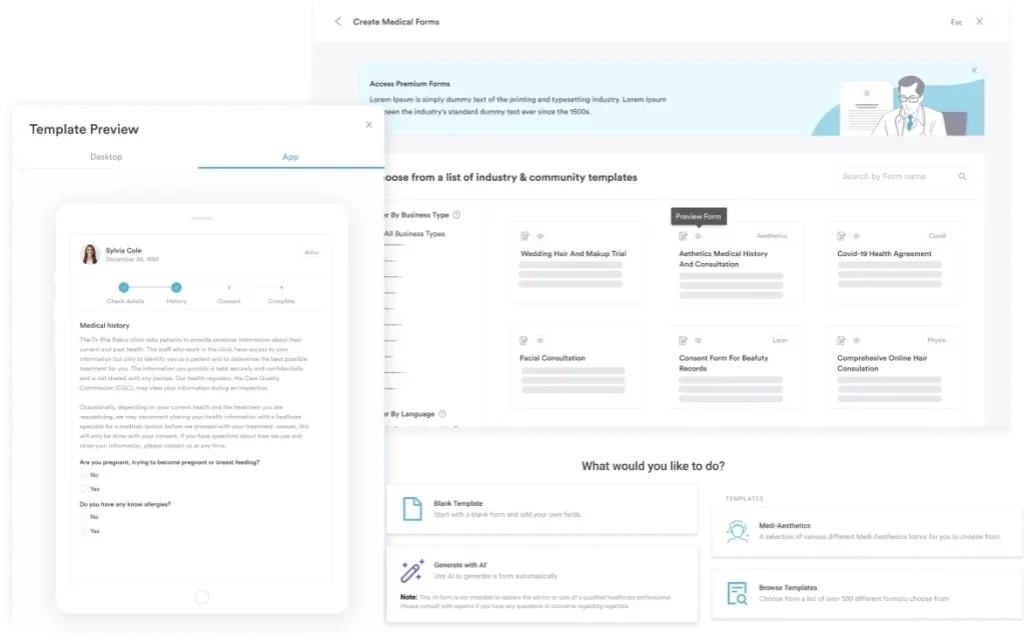
Practice management software like Pabau turns the worksheet into a digital form attached to the client’s record. You assign it after a session, and the client fills it in from their phone. The completed entry saves straight to their file, with no scanning step.
Automated reminders chase the entries that come back empty, so you are not the one sending follow-up messages. Every subscription includes the full feature set, so the forms, the client portal, and the reporting sit in one place.
The outcome is a homework loop you can audit at a glance. You open a client’s file before the session and see which entries came back, and what the ratings did.

Pabau’s digital forms and client portal let you assign the thought journal, chase completions automatically, and store every entry against the client’s file.

The worksheet is cheap to hand out and easy to under-use. Almost all of its value sits in the evidence-against column and the second emotion rating, so protect those two in every review.
Start with one client this week. Assign an entry after the session, read it before the next one, and write both ratings into the chart. Do that for a month and you will have more than an impression of progress to show them.
Book a demo to see how Pabau assigns the worksheet, chases the entries that come back empty, and files each one against the client’s record.

Clients naming anger when the feeling underneath is fear? Primary and secondary emotions helps them separate the two before they fill in the emotion column.
Depressive self-talk overpowering the evidence column? Strengths and qualities worksheet gives clients concrete material to draw on when nothing feels true.
Need a baseline before you assign homework? Mental status examination walks through what to record at assessment and how to word it.
Rumination keeping a client awake at night? Insomnia Severity Index scores the sleep problem so you can track it alongside mood.
Running the first appointment yourself? Psychiatry interview guide covers the structure and the questions worth asking early.
A thought journal is a structured CBT worksheet for tracking automatic negative thoughts, spotting cognitive distortions, and building more balanced perspectives. It runs five columns, from the situation and the automatic thought through to the evidence on both sides and a balanced thought.
Start with the situation, then write the automatic thought exactly as it arrived. Name the emotion and rate it from 0 to 100. List the evidence for and against, finish with a balanced thought, and re-rate the emotion to see the shift.
Any situation that triggered anxiety, sadness, or another distressing emotion. The useful entries are the ones where a specific automatic thought showed up, like “I will fail” or “Nobody likes me”. The more specific the situation, the more testable the thought.
Anxiety runs on catastrophic predictions, and predictions can be checked. The evidence-against column shows the feared outcome is less likely than it felt, which brings the intensity rating down.
They are closely related. A thought record is the formal seven-column clinical worksheet used in structured CBT, while a journal can be looser. Both follow the same evidence-testing logic, and the names are often used interchangeably.
Yes. Depression produces persistent negative thoughts about the self and the future, and the worksheet gives clients a way to test them. Pair it with behavioral activation, because doing something shifts mood faster than arguing with a thought.