Anja Dodevska

Hypomania test (HCL-32): Free printable screening PDF
What is a hypomania test used for in clinical practice? A hypomania test is a cl...

2
Last Updated: Oct 29, 2026
Free PDF 2 pages, print-ready Clinician-reviewed
DASES, the Drug Avoidance Self-Efficacy Scale, is a 16-item questionnaire that measures a person's confidence in avoiding drug or alcohol use. Each high-risk scenario, from a party to a lonely night at home, is rated from 1 (certainly no) to 7 (certainly yes). Treatment teams use it to set a documented baseline at intake and track that confidence over time. This page covers what the scale measures, how it differs from the similarly named Drug Abstinence Self-Efficacy Scale and how to use the template. It also points to a broader intake document, our psychiatric evaluation template.
A two-page DASES form with all 16 items from the 1995 scale, each rated 1 to 7 by circling an answer. It also includes fields for name, age, gender, date and total score.
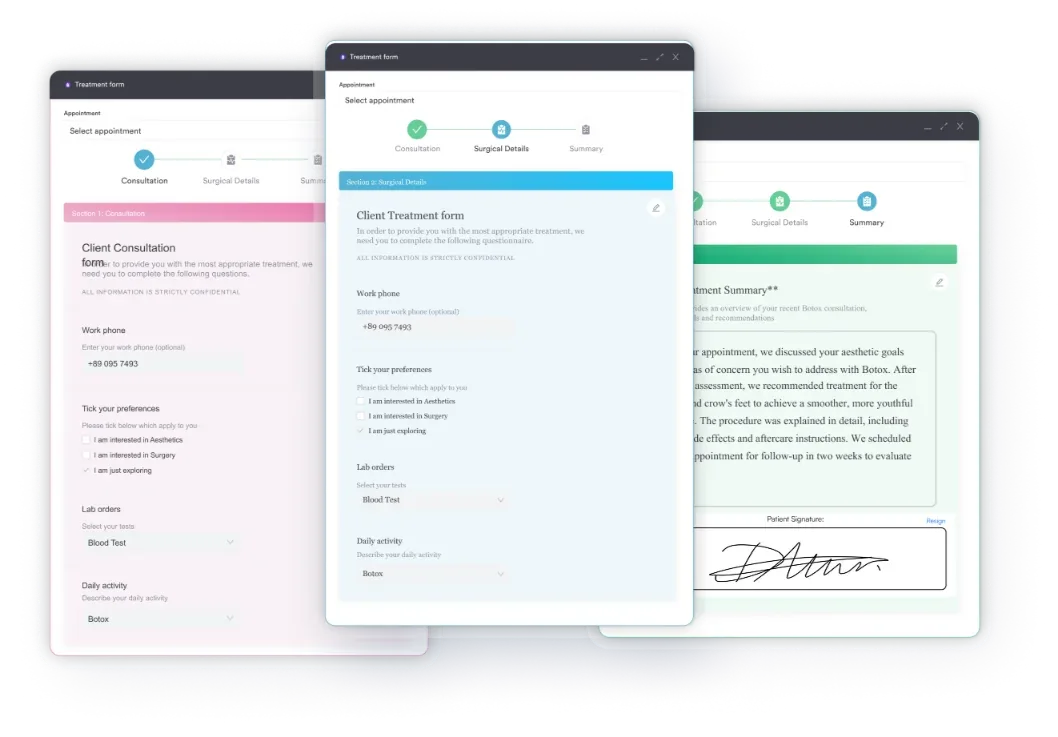
Start from scratch, or upload this PDF or any form you already use, and Pabau's AI Form rebuilds it with tick boxes, text fields and a signature. Attach it to the treatment once, and every patient gets it on time.
AI Form rebuilds the consent, history and aftercare forms you already use. You review each one, then publish.
Patients complete forms on their phone before they arrive, so the front desk stops retyping paper.
Every signed form is versioned and attached to the treatment record, ready when you need it.
Set how long a consent stays valid. Returning patients skip forms they have already signed.
Supports HIPAA and GDPR compliance AES-256 encryption 4.8 on G2 4.7 on Capterra Trusted by 4,000+ practices worldwide

DASES uses 16 high-risk scenarios to measure confidence in avoiding drug or alcohol use.
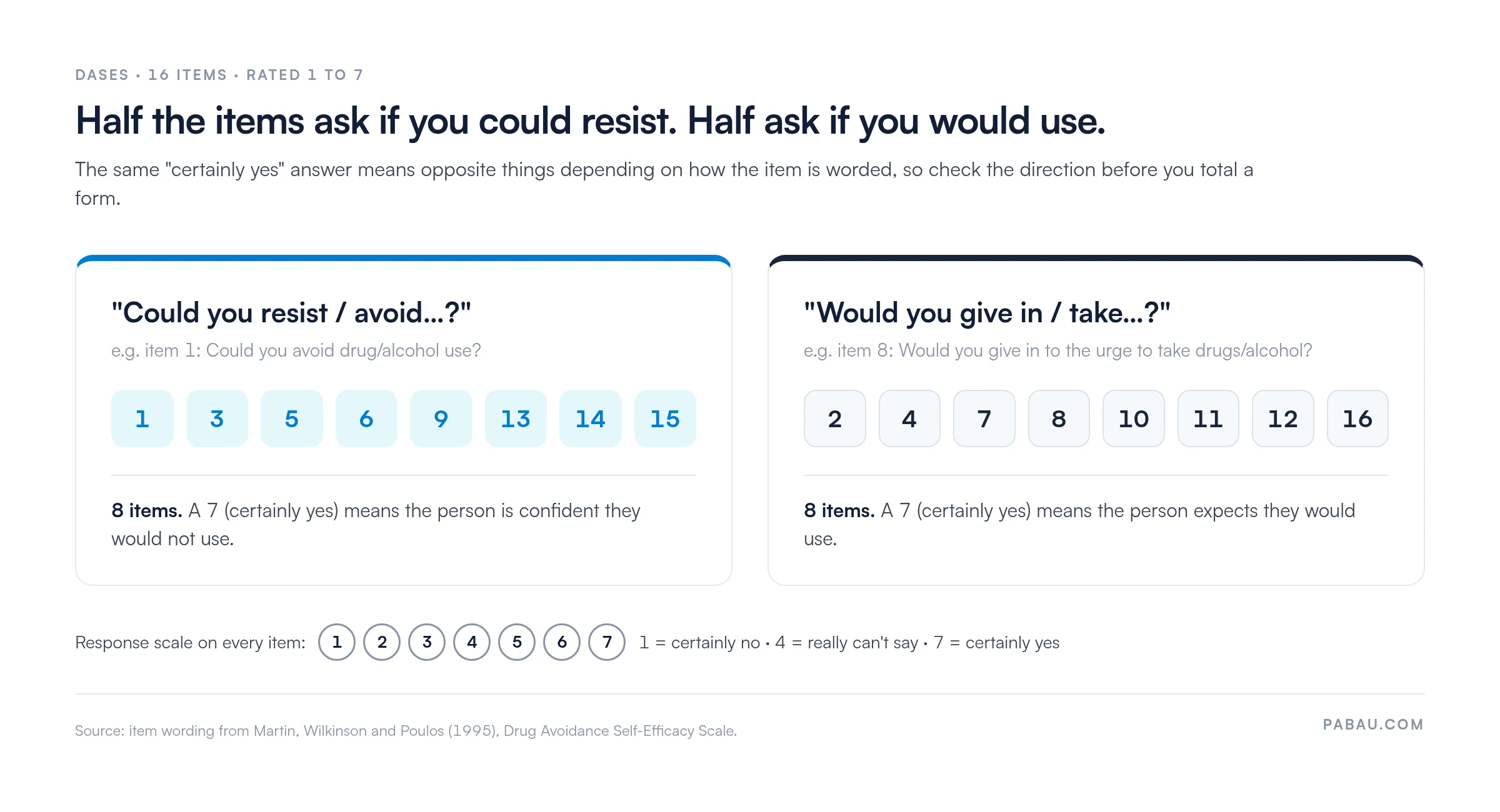
Eight items ask if the person could resist and eight ask if they would use, so check direction before totaling.
Confirm you have DASES, not the similarly named DASE, before use.
Take reliability and validity figures from the original 1995 paper.
Pabau, our practice management platform, keeps DASES results in the patient record beside treatment notes.
DASES stands for Drug Avoidance Self-Efficacy Scale, a 16-item questionnaire published by Martin, Wilkinson and Poulos in 1995. Self-efficacy here means a person’s belief that they can carry out a specific behavior, in this case avoiding drug or alcohol use.
Each item describes a high-risk scenario, such as a party, a fight with a partner or a sleepless night with drugs in the house. The person rates each one from 1 (certainly no) to 7 (certainly yes).
Relapse prevention is a recognized part of substance use treatment, with resources available from SAMHSA. Clinicians typically use DASES to set a baseline at intake, then revisit it at treatment planning and review points.
The scenarios draw on relapse prevention theory, which commonly groups high-risk situations into a few types:
In practice, a patient might say they can resist cravings at home but struggle at a friend’s party. The scale asks them to rate that confidence across situations, so the pattern shows up on paper rather than in anecdote.
Each situation type gives the team a concrete scenario to explore with the patient. That can make the scores easier to discuss in session.
Scoring rules come from the original scale developers, so use the published paper rather than a summary when you score a patient.
Read the question wording before you add anything up. Eight of the 16 items ask whether the person could resist or avoid use. The other eight ask whether they would give in, so a “certainly yes” there means they expect to use.
Do not build a shortcut scoring method from a template. Confirm each step against the source before results enter the record.
DASES is documented in the peer-reviewed literature, and the original publication is indexed in APA PsycNet, the database run by the American Psychological Association.
Reliability (consistency) and validity (accuracy) figures are specific to the original study and its samples. Quote them from the source itself, not from secondary summaries, because values can differ between studies.
When you cite the scale in a report, name the original authors and year, then link to the source so readers can check the figures.
DASES measures avoidance of drug use, while the Drug Abstinence Self-Efficacy Scale (DASE) measures staying abstinent. The names are close enough to cause mix-ups in busy practices.
Check the full title on every form and record before you file a result.
The template gives your team a standard DASES record to complete at intake and at review. Adapt the steps below to your service’s protocol.
Teams that collect paperwork digitally can send the template through digital intake forms so patients complete it before the session.
Keep the completed record with the session notes for that visit. A score on its own is hard to interpret at review, but a score next to the patient’s own words gives the team context.
A completed scale only helps if it reaches the notes your team reads at review. Record the score and the patient’s own words in the same entry, so the context travels with the number.
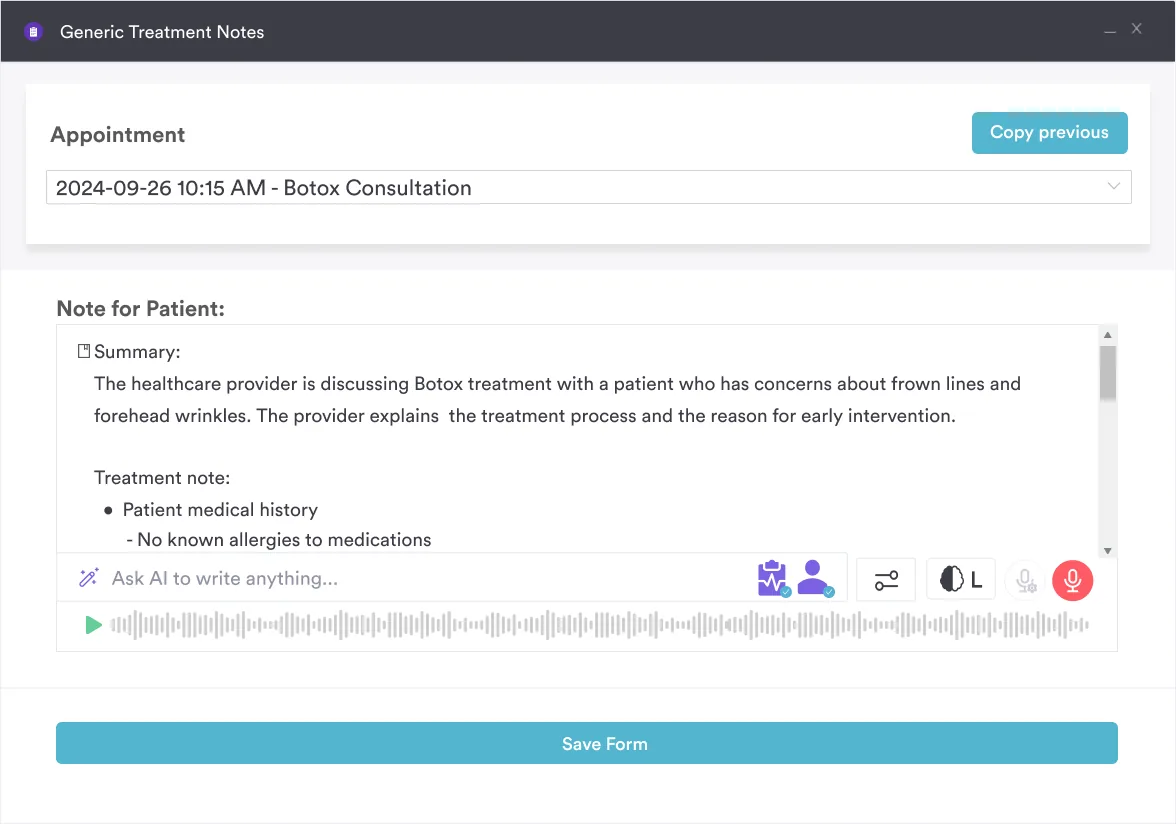
Pabau Scribe, our AI scribe, offers AI-assisted clinical documentation that drafts session notes. Clinicians still review and sign each entry.
DASES rarely works alone. Most teams pair it with intake interviews, risk screening, and a broader psychiatric evaluation. Our psychiatric evaluation template gives you a structured form for that wider assessment.
For a second self-efficacy measure, the coping self-efficacy scale rates confidence in coping with life challenges more broadly. A mental health EMR keeps those tools in one place, so changes across visits are easier to see.
Many teams still hand out a paper DASES form, total it by hand and scan it into a separate folder. At review, someone has to dig out the old form to compare scores.
Pabau sends the questionnaire as an intake form and saves each completed one to the patient’s record. Earlier scores, session notes and treatment plans sit in that same record, so a review starts with the history already on screen.
Practices that run therapy practice management in Pabau keep assessments, notes and appointments together. The next clinician can see how a patient’s confidence has moved without asking for the file.

Pabau keeps intake forms, assessment results and session notes in one patient record, so your team can review trends without switching systems.

DASES only earns its place when the same instrument is used the same way at every review. Mixing it up with the DASE, using an altered version or totaling items without checking their direction breaks that comparison.
Pick the version your protocol names, record each result with the patient’s words, and compare scores across visits rather than reading one in isolation. A drop between two reviews is worth raising in session before it shows up as a lapse.
Assessments are easier to compare when they live beside notes, which is what medical records management in Pabau is built for. Book a demo to see how DASES results, session notes and treatment plans fit in one patient record.

Building a plan around the high-risk situations? Relapse prevention plan worksheet turns the scenarios a patient struggles with into written coping steps.
Need a wider substance use assessment? Drug and alcohol evaluation gives you a structured form for use history and current risk.
Tracking how a lapse unfolds? Stages of relapse worksheet helps patients spot the emotional and mental warning signs before use.
Screening for compulsive patterns as well? Yale addiction scale covers a related self-report measure you can file alongside DASES.
Running a psychiatric practice with structured tools? Psychiatry EMR software covers how psychiatric teams manage assessments and notes.
DASES is the Drug Avoidance Self-Efficacy Scale, a questionnaire that measures a person’s confidence in avoiding drug use. Clinicians use it in substance use treatment and relapse prevention, and scores should be interpreted using the original scale guidance.
Yes, the scale is documented in the peer-reviewed literature, and the original publication is indexed in APA PsycNet. Reliability and validity figures should be taken from that original source rather than from secondary summaries.
No. DASES measures avoidance of drug use, while the Drug Abstinence Self-Efficacy Scale (DASE) is a separate instrument with a similar name. Confirm the full title before you use or record a result.
You can download the DASES template as a PDF from the download button in this article. Check that the form matches the instrument your protocol specifies before you use it with a patient.
No. The template is a record-keeping aid, and the original publication remains the reference for scoring and interpretation.