Head to toe assessment cheat sheet: Printable nursing guide
A head to toe assessment cheat sheet gives you one fixed order at the bedside, s...

2
Last Updated: Oct 23, 2026

A psychiatry interview is the primary clinical tool for gathering mental health history, assessing current symptoms, and reaching a diagnostic formulation.
Every psychiatry interview follows a structured sequence: chief complaint, HPI, past history, MSE, risk assessment, and social context.
Open-ended questions open the interview; closed-ended questions confirm specific symptoms, medication history, and safety concerns.
Pabau’s psychiatric documentation templates and digital forms reduce note-writing time so clinicians spend more of each session with the patient.
Psychiatric assessment rests on the conversation itself more than on any technology or rating scale. A well-conducted psychiatry interview gathers what a clinician needs to reach a diagnosis, plan treatment, and build the trust that keeps patients in care.
Every interview moves through the same domains, from the presenting problem to mental status, risk, and social context. This guide covers that sequence, the questions that suit each stage, and the documentation each one demands. It also shows how residency programs test the same reasoning, and links a free psychiatric evaluation template.
A psychiatry interview is the structured clinical conversation behind every psychiatric assessment. Unlike a standard medical history, it covers mood, cognition, perception, behavior, social context, and risk alongside physical symptoms. The goal is a diagnostic formulation, meaning a coherent account of who the patient is and what treatment fits.
Structure matters because unstructured interviews miss things. Structured and semi-structured formats produce more consistent diagnoses between clinicians, particularly for personality disorders and psychotic spectrum conditions. Working from a structure still leaves room to follow the patient. Research interviews apply the same idea, using an interview schedule for qualitative research with core questions and planned probes.
It fixes which domains you cover, so nothing gets skipped in a 30-minute initial assessment. Clinicians using psychiatry EMR software built for mental health documentation find it easier to capture and organize that material.
Most interviews follow this sequence, though the order shifts with the patient in front of you:
The HPI is where most of the diagnostic work happens. Open-ended questions come first, such as “Tell me more about what’s been going on.” Narrowing to symptom-specific probes afterward gives patients room to describe their experience in their own terms.
Family psychiatric history earns its place when it changes the differential. A first-degree relative with bipolar disorder raises the bar for prescribing an antidepressant alone. A clear hereditary pattern can also support a referral billed under HCPCS code S0265.
The mental status examination (MSE) is the one component clinicians observe rather than ask about. It documents current functioning across eight domains:
Insight and judgment are often added as a ninth domain. Insight refers to the patient’s awareness that they have a mental illness. Judgment refers to their capacity to make reasonable decisions about care, and both shape treatment planning.
Documenting the MSE the same way at every visit makes change visible over time. Pairing it with a psychiatric review of systems keeps symptom tracking comparable where severity fluctuates week to week.
The choice between open-ended and closed-ended questions changes what a patient tells you. Beginning with open questions and moving to closed ones as the interview progresses produces a fuller clinical picture than either approach used alone.
Open-ended questions for the HPI and social history:
Closed-ended questions for symptom confirmation and safety:
Pacing matters as much as the questions themselves. Jumping too quickly from open exploration to a closed symptom checklist can feel interrogative and shut down disclosure. Many psychiatrists use a funnel approach within each domain:
Standardized questionnaires can carry part of the load where a specific presentation is suspected, such as the CAT-Q test for camouflaged autistic traits. Brief screening encounters use a compressed version of the same funnel. A visit billed under HCPCS code H0002 covers the presenting problem, current risk, and a referral decision.
Risk assessment belongs in every psychiatry interview, not only when a patient presents in crisis. Asking directly about suicidal ideation does not increase suicide risk. Patients more often feel relief when a clinician raises the subject first.
A structured approach reduces the chance of an incomplete assessment. The Columbia Suicide Severity Rating Scale (C-SSRS) gives a validated, reproducible framework for grading suicidal ideation and behavior. Direct questioning of this kind sits at the center of NIMH suicide prevention guidance. A risk assessment in practice covers:
Recording the risk level without the reasoning behind it leaves the note half finished. For acute presentations, crisis intervention strategies turn those findings into an immediate care plan.
Document your risk formulation, not just the risk level. Writing ‘low risk’ on its own is insufficient. Note the factors behind the rating, such as protective factors, the absence of a plan or means, and an established therapeutic alliance. This protects the patient, and it protects you.
Therapeutic alliance is one of the strongest predictors of treatment outcome in psychiatric care, ahead of diagnosis or medication choice. It starts in the first few minutes of the interview, and specific behaviors build it faster than general warmth.
Behaviors that build alliance quickly:
Clinician burnout erodes alliance over time, and psychiatry carries a high emotional load. Practitioners who finish documentation right after each session, rather than at the end of the day, hold their attention better. Recognizing the early signs of therapist burnout protects the clinician and everyone on their caseload.
Cultural context shapes how symptoms are expressed, what language describes distress, and whether a patient trusts the encounter at all. It affects diagnostic accuracy directly, especially where distress presents somatically. The Cultural Formulation Interview, introduced in DSM-5, gives a structured way to gather culturally relevant information without stereotyping.
Key areas to address:
Working with an interpreter changes the pacing of the interview. Longer pauses, simpler phrasing, and explicit checks of understanding at each stage keep diagnostic quality intact.
The psychiatry residency interview tests a different skill set from the clinical interview. Here the candidate is the subject of assessment rather than the assessor. Programs evaluate clinical reasoning, self-awareness, and genuine motivation for the specialty. Preparation aimed at those three dimensions beats rote memorization of answers.
Common psychiatry residency interview questions include:
Programs look for clinical empathy alongside intellectual rigor. The strongest answers name a specific clinical scenario, the reasoning the candidate worked through, and an honest reflection on what they learned. Broad claims like “I’ve always been interested in mental health” land far weaker than a precise, personal story.
Programs also ask situational questions about risk assessment, boundary setting, and emotionally difficult cases. Knowing structured clinical note formats helps a candidate explain their documentation reasoning. That reasoning gets more scrutiny as telehealth and AI documentation tools reshape resident work.
Every psychiatry interview leaves a long documentation trail. A single session produces an MSE, a risk formulation, an HPI narrative, a medication review, and a treatment plan. Practices working from paper forms or a generic EHR often finish that writing after hours.
Pabau is practice management software built for medical and mental health practices. Its digital intake forms let a practice send structured questionnaires before the appointment, so the clinician starts the session with a baseline history on file.
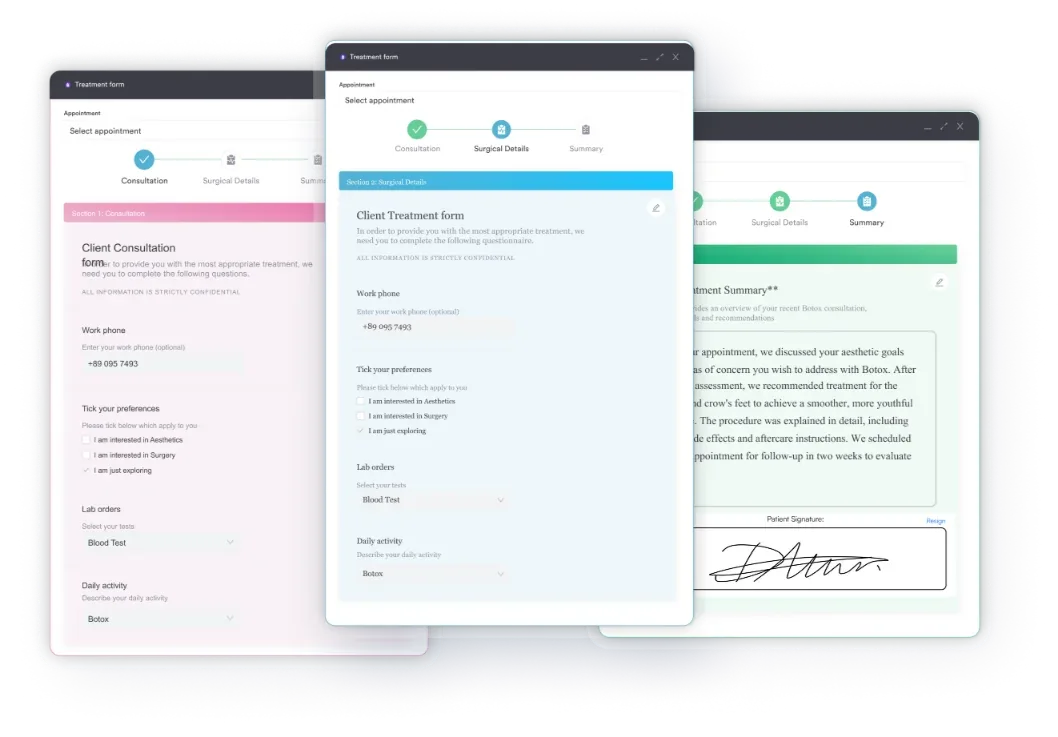
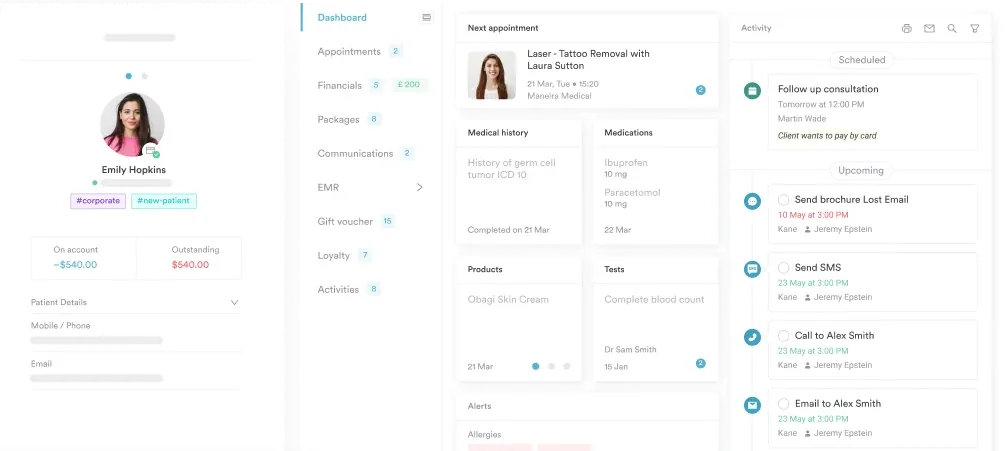
The client record holds the full longitudinal psychiatric history, including MSE fields, risk documentation, and treatment notes. The principles behind safer clinical notes apply directly to that record, from legible risk formulations to a clear audit trail.
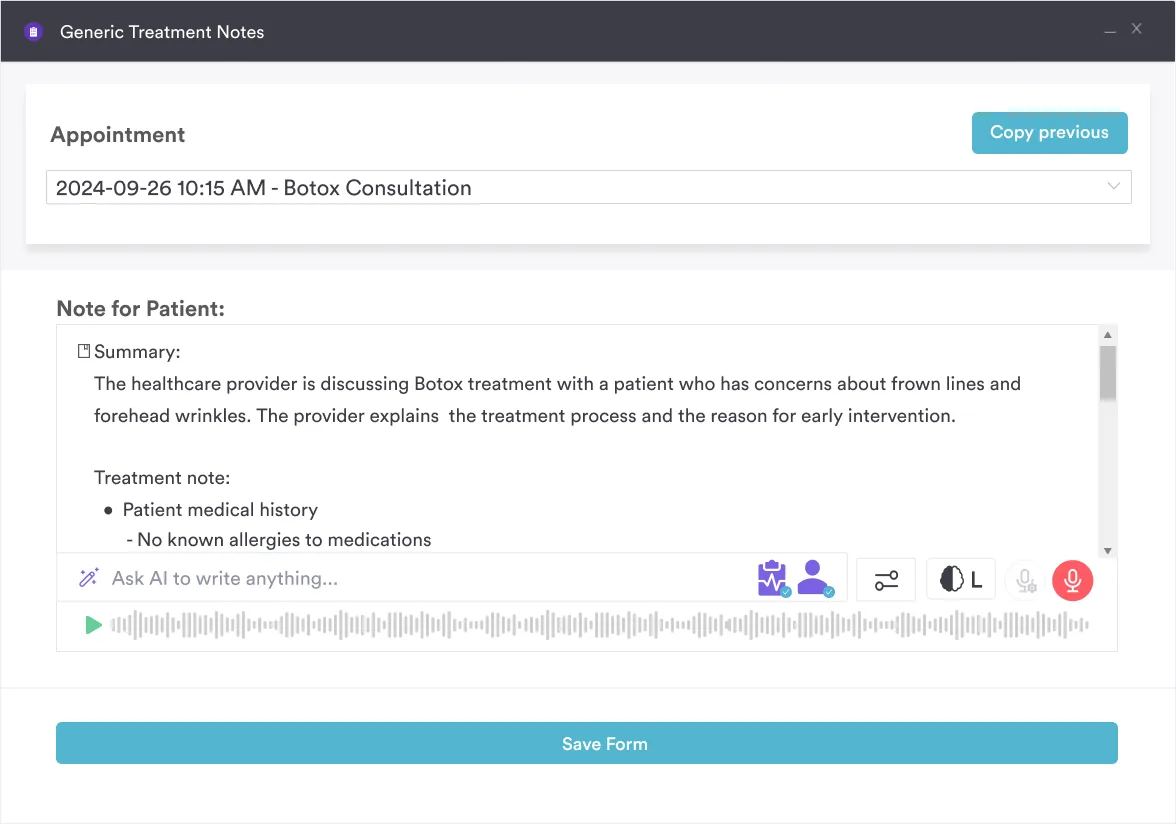
Pabau Scribe, our AI scribe, drafts the session note during or after the appointment, so the record is finished while the detail is fresh. That matters in psychiatry, where a complete note carries as much detail as the assessment itself. The measured effects of AI scribes on patient care include shorter turnaround and more eye contact in session.
Practices running mental health EMR workflows in Pabau also get structured consent forms, outcome measurement tracking, and automated appointment reminders in one platform.
Managing the client record across a psychiatric caseload, including long-term patients with complex histories, takes more than a generic notes field. Structured assessment templates carry information from the first interview through to every follow-up visit, so longitudinal tracking needs no manual reconstruction.

Pabau’s digital forms, assessment templates, and Pabau Scribe capture a complete record from every session. Clinicians spend their attention on the patient rather than the notes.

Interview quality decides how much of the care that follows will work. A formulation built on a thin history points the treatment plan in the wrong direction, and no rating scale later on will correct that.
Pick one part of the sequence to tighten first. Risk documentation is usually the place to start, since a thin note there carries the highest clinical and legal cost.
Pabau’s structured psychiatric templates, digital intake forms, and Pabau Scribe cut the administrative weight of each session, so the interview keeps your full attention. Book a demo to see how Pabau supports psychiatry practices end to end.

Screening a patient for uncertainty-related anxiety? Intolerance of Uncertainty Scale template is a 12-item scale with immediate scoring and cut-offs for anxiety screening and progress monitoring.
Need a symptom review to sit beside the MSE? Psychiatric review of systems gives a system-by-system checklist you can run at every visit.
Writing up the sessions that follow? Progress notes for psychotherapy covers what each note should record between one appointment and the next.
Taking a full social and developmental history? Adult biopsychosocial intake structures the psychosocial context that the formulation depends on.
Closing a course of treatment? Therapy termination letter shows how to document discharge and next steps without leaving the patient adrift.
A psychiatry interview is the structured clinical conversation used to assess a patient’s mental health. It covers the chief complaint, history of present illness, past psychiatric and medical history, substance use, family history, and social context. It also includes a mental status examination and a risk assessment, ending in a diagnostic formulation that guides treatment.
Psychiatrists begin with open-ended questions such as “What brought you in today?” to explore the presenting problem. Closed-ended questions follow, confirming specific symptoms, medication use, and safety concerns. The domains covered include mood and sleep, substance use, suicidal ideation, and the patient’s own explanation of their distress.
A mental status examination documents appearance, speech, mood, affect, thought process, thought content, perceptions, and cognition as observed during the interview. Insight and judgment are typically included as additional domains. The MSE is the clinician’s objective snapshot of the patient’s current mental state, distinct from the subjective history the patient provides.
Prepare by developing specific clinical stories that demonstrate your reasoning process, empathy, and self-awareness rather than generic statements about your interest in mental health. Review common questions around diagnostic uncertainty, risk management, and challenging patient interactions. Be ready to discuss recent developments in psychiatric treatment and training.
An initial psychiatric evaluation usually runs 60-90 minutes in outpatient settings. Brief interviews in primary care or emergency contexts may run 20-30 minutes. The length reflects how many domains the clinician has to cover. Follow-up visits are shorter, because the baseline history is already on file.
Open-ended questions such as “Tell me about what’s been happening” invite the patient to describe their experience in their own words. They suit the history of present illness and the social history. Closed-ended questions such as “Have you had thoughts of harming yourself?” elicit a specific factual answer. They confirm symptoms, assess safety, and gather medication history.