Nutrition intake form
A nutrition intake form is a structured questionnaire that records a patientR...

2
Last Updated: Oct 22, 2026

A diabetic food grocery list groups approved foods by category, so a patient can shop for stable blood sugar without decoding every label.
Non-starchy vegetables, berries, whole grains, lean proteins, and healthy fats make up the bulk of a diabetes-friendly cart.
Portion size decides most of the blood sugar response, so each category on the list carries its own one-serving measure.
Reading total carbohydrate rather than the sugars line is the skill that lets a patient shop without you.
Practice management software like Pabau shares the list through the patient portal and keeps every version on the client record.
A diabetic food grocery list sorts the store into three groups.
There is what to fill the cart with, what to measure, and what to leave on the shelf.
Non-starchy vegetables and lean protein go in without much counting. Whole grains, fruit, dairy, and fats come home in measured portions. Added sugars, refined carbs, and sugary drinks stay out.
This guide gives you the list by store section, plus the portion that counts as one serving in each category. It also gives you a label-reading script to teach at the visit. The printable template below is ready to hand to a patient.
The printable list covers approved foods by store section, one-serving portions for each category, a drinks list, and a label-reading checklist. Print it as it is, or add your practice letterhead before you share it with a patient.
Download templateA diabetic food grocery list is a shopping guide that groups food by category: vegetables, fruits, proteins, grains, dairy, fats, and drinks. Each category comes with the portion that keeps blood sugar steady, so the patient is not recalculating at every shelf.
A general grocery list treats all carbohydrates the same. This one prioritizes fiber, lean protein, and healthy fat, and keeps refined carbs and added sugars off the page.
For clinicians, the list doubles as an education tool and a documentation record. It joins the care plan and can be adapted to a patient’s preferences, restrictions, and food traditions.
The point of it is to cut decision fatigue in the store. Patients with diabetes meet contradictory advice online, and a list their clinician endorses gives them one reference that matches their treatment plan.
Non-starchy vegetables have little effect on blood sugar, because they carry few carbohydrates and plenty of fiber. The American Diabetes Association recommends filling half the plate with them at every meal.
Fresh and frozen work equally well. Canned is fine when it is packed in water rather than syrup or brine. Roasting or steaming keeps the nutrients without adding fat or sugar.
Fruit carries natural sugar, so portion size decides how much it moves blood glucose. Berries are the safest pick, thanks to their fiber and low glycemic load. Whole fruit beats juice, which has no fiber left to slow the sugar down.
Pairing fruit with protein or fat slows the sugar down. Berries with almonds, or an apple with an ounce of cheese, both do the job.
Lean protein does not raise blood glucose directly, and it holds off hunger between meals. Protein at every meal is what heads off the mid-afternoon crash that sends patients to the vending machine.
Aim for 25 to 30 grams of protein per meal. Cooking method matters as much as the cut, so bake, grill, or steam rather than fry.
Whole grains raise blood sugar more slowly than refined grains, because they keep the bran and germ. Portion is the whole game here. One serving is roughly 15 grams of total carbohydrate.
Pairing a grain with protein and fat flattens the response. Brown rice on its own hits harder than the same rice next to grilled salmon and olive oil.
Low-fat and unsweetened dairy brings calcium and protein without much effect on blood sugar. Plant-based alternatives work too, as long as they are unsweetened. Flavored versions carry a lot of added sugar.
Check the label and aim for under 5 grams of added sugar per serving.
Healthy fats steady blood sugar and support heart health. Favor monounsaturated and polyunsaturated fats, and keep saturated fat low.
Fat is the easiest category to overshoot, because the portions are small and nobody measures oil into a pan. Giving a patient the number, one teaspoon, lands better than telling them to go easy on the oil.
Drinks get overlooked, and they are the fastest route to a blood sugar spike. Water is the default answer.
Advise patients to reach for water first. A sugary drink adds carbohydrate without any of the fiber or protein that would slow it down.
Every category above has its own unit of measurement, which is what makes portion guidance hard to hold in your head at the shelf. The table below puts all eight in one place.
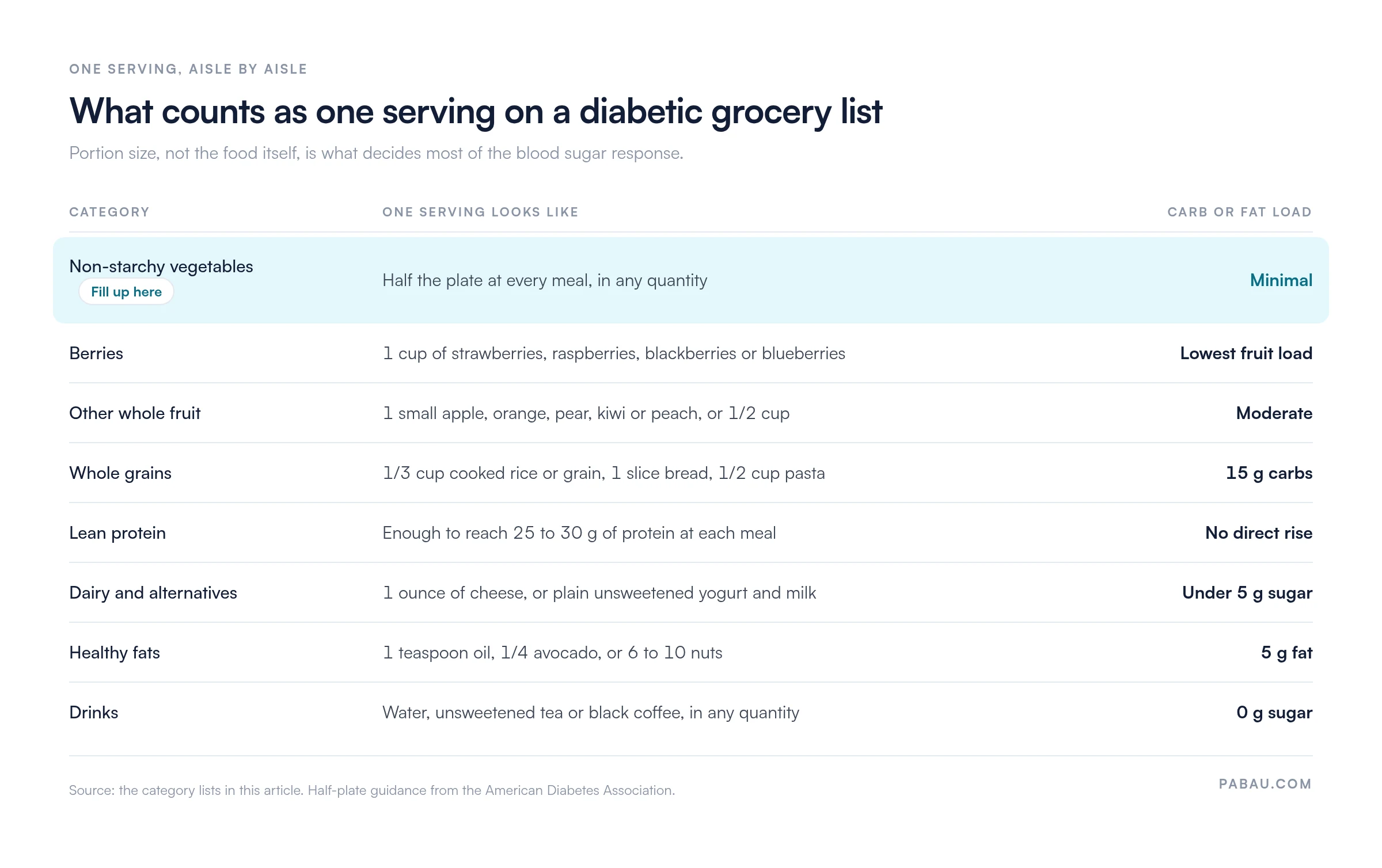
Eight numbers is a manageable amount to carry into a store. A patient who knows them can shop anywhere, including a store they have never set foot in.
Processed foods high in added sugar and refined carbohydrate drive the sharpest glucose spikes. They are also the main reason a week of good intentions comes apart.
A specific avoid list works better than a general instruction to cut back, because it takes the decision out of the store. The patient no longer has to judge each product on the spot.
Label reading is the skill that lets a patient shop without you. Total carbohydrate is the line that matters, because starch turns into glucose just as sugar does.
Every number on the panel refers to one serving, and a package often holds two or three. The FDA standardizes serving sizes, so they can be smaller than the amount a person eats in one sitting.
The Total Carbohydrate line covers sugars, starches, and fiber. Reading only the Sugars line misses the refined starch that raises glucose just as fast.
Net carbs are total carbohydrate minus fiber, and the approach is debated. NIDDK guidance recommends counting total carbs unless the patient’s doctor advises otherwise.
Added sugar hides under many names: cane juice, evaporated cane juice, honey, maple syrup, agave, dextrose, maltose, and high-fructose corn syrup. If sugar is the first or second ingredient, put the product back.
Send the patient home with a nutrition label worksheet and they can practice the four steps on their own pantry.
The template is built to walk a clinician and a patient through the same five steps in a single visit.

The template fits several roles across nutrition and primary care.
A weight-loss practice runs the same conversation dozens of times a week. Purpose-built software for weight-loss clinics keeps the counseling notes, the follow-up, and the outcome data against one client record.
Patients use the list at three points. A newly diagnosed patient needs the categories. A patient a year in needs a structured refresh. A prediabetic patient is shopping for prevention.
Gestational diabetes is the exception. Carbohydrate limits are stricter there, so check the protocol with an OB-registered dietitian before you hand this list over.
Fewer misunderstandings, better records. A standardized list cuts confusion and gives you a fixed reference at the follow-up visit. Pair it with a blood glucose log and you can see which swaps moved the readings and which made no difference.
Time back in the appointment. Handing over a validated resource beats explaining food categories out loud at every visit. That frees the appointment for the harder conversation about what is getting in the patient’s way.
A documented plan. Written dietary guidance shows what you advised and when, which is what a standard-of-care review looks for. A template with your letterhead and a signature field does that on its own.
Changes that stick. A written reference is still in the kitchen drawer weeks after the visit, once the conversation has faded. The list becomes part of the care plan rather than a one-off handout.
A standalone grocery list sits outside the record it belongs in. Practice management software like Pabau closes that distance. Its digital intake forms capture diet history, food preferences, and the constraints that shape adherence.
Cost, time, and family food traditions get recorded against the client record. The next clinician to see that patient reads them before the appointment starts.
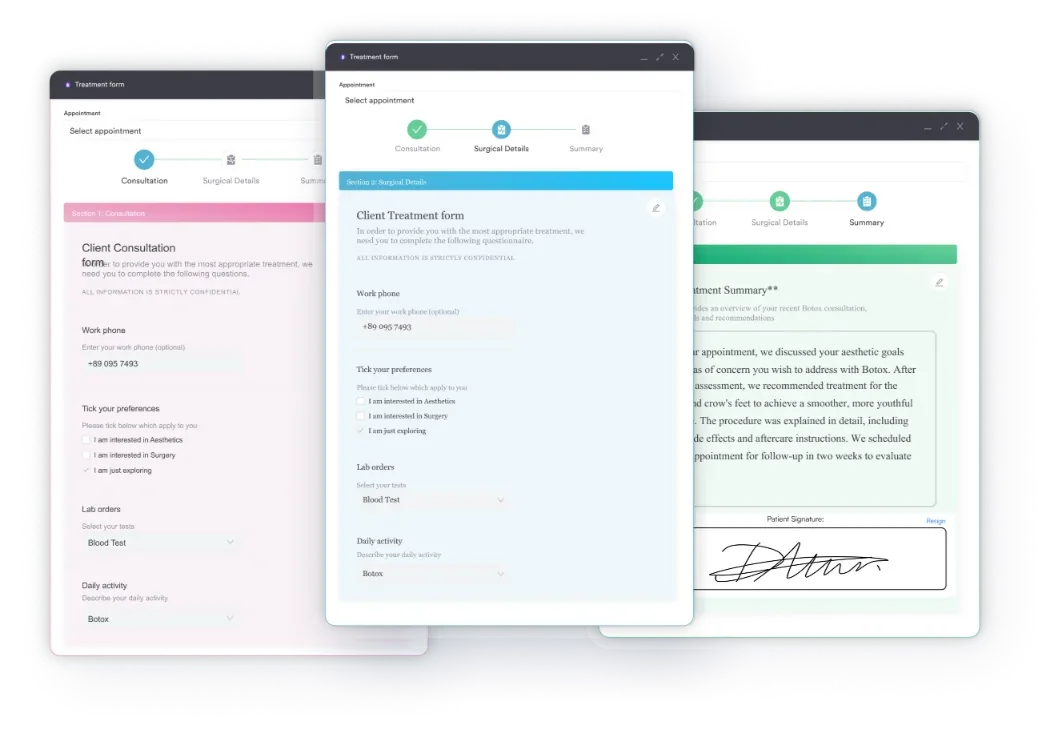
Through the patient portal you share the approved list, update it as the plan changes, and flag it for the next visit. Automated reminders can carry one line between appointments, such as a nudge to check labels for hidden sugar.

For group education sessions, the same forms track attendance, send the slides and the printable list to everyone who came, and schedule the individual follow-ups. Static education becomes a measurable program with a record behind it.

Pabau’s digital forms and patient portal let you share the grocery list, update it as the plan changes, and keep it on the client record. Nutrition counseling gets documented without a second system.

A grocery list is the cheapest intervention in diabetes care, and one of the few that follows the patient home. Writing it is the easy part. The harder part is making sure the patient still has it, and still understands it, three months later.
So treat it as a working document. Adapt the categories to what the patient already eats, teach the label steps in the room, and revisit the portions when the readings move. A list that gets edited at every visit is doing its job.
Then keep it somewhere the patient can find it. Book a demo to see how Pabau shares dietary resources through the patient portal and keeps every version on the client record.

Need a week of meals to go with the list? Low-carb diabetic diet plan turns the approved foods into structured days a patient can follow.
Tracking what the diet change does? A1c conversion chart translates a lab result into the average glucose a patient can picture.
Reconciling diet with medication? Diabetes medication list keeps doses and timings in one place, which matters when meals change.
Running a full diabetes review? Diabetic foot exam covers the screening that belongs in the same annual appointment.
Non-starchy vegetables have almost no carbohydrate, so leafy greens, broccoli, cucumber, peppers, and mushrooms can be eaten in large amounts. Protein and healthy fats do not raise blood glucose directly, though portions still matter for calories and blood lipids.
Yes. The free template at the top of this page is a ready-to-print PDF. You can add your practice letterhead, write in patient-specific portions, and share it on paper or through the patient portal.
Total carbohydrate includes sugars, starches, and fiber. Net carbs are total carbohydrate minus fiber. Most guidelines recommend counting total carbs, though some patients do well on net carbs under a dietitian’s supervision.
Yes, in measured portions. Brown rice, oats, quinoa, and whole wheat bread raise blood sugar more slowly than refined grains, and they carry fiber. One serving is roughly 15 grams of carbohydrate. Pair it with protein and fat to flatten the response.
Read the Total Carbohydrate line rather than the Sugars line. Then check the ingredient list for sugar under another name, such as honey, agave, evaporated cane juice, dextrose, or maltose. Skip a product with sugar as the first or second ingredient, and aim for under 5 grams of added sugar per serving.