Despina Petrushevska

Event booking form
What is an event booking form? An event booking form is a structured document th...

1
Last Updated: Nov 12, 2026
Free PDF 2 pages, print-ready Clinician-reviewed
A prediabetes diet food list is a practical set of foods that helps people with prediabetes keep blood sugar in a healthier range. It’s built mainly around non-starchy vegetables, lean proteins, whole grains, healthy fats and fiber-rich carbohydrates. This page covers foods to eat and limit, a sample 7-day meal plan and a grocery list. The free download is a fillable food checklist to hand to patients.
The American Diabetes Association defines prediabetes as fasting blood sugar levels of 100 to 125 mg/dL. An A1C of 5.7 to 6.4% also falls in the prediabetes range. Food choices are one of the most direct levers a patient controls at that stage.
A fillable patient checklist with space for health goals and medications, food groups to choose from, and foods to limit. It closes with brief portion and meal-timing tips.
Start from scratch, or upload this PDF or any form you already use, and Pabau's AI Form rebuilds it with tick boxes, text fields and a signature. Attach it to the treatment once, and every patient gets it on time.
AI Form rebuilds the consent, history and aftercare forms you already use. You review each one, then publish.
Patients complete forms on their phone before they arrive, so the front desk stops retyping paper.
Every signed form is versioned and attached to the treatment record, ready when you need it.
Set how long a consent stays valid. Returning patients skip forms they have already signed.
Supports HIPAA and GDPR compliance AES-256 encryption 4.8 on G2 4.7 on Capterra Trusted by 4,000+ practices worldwide

A prediabetes diet food list is a patient-friendly guide to foods that support steadier blood sugar.
Build most meals around non-starchy vegetables, lean protein, whole grains and healthy fats.
Limit sugary drinks, refined carbohydrates and ultra-processed foods.
The sample 7-day meal plan and grocery list are on this page, and the free download is a fillable food checklist.
Send the checklist through Pabau, the practice management platform we build, so the patient’s answers are stored in their patient record.
A prediabetes diet food list is a structured reference that sorts foods into groups to eat often, eat in moderation and avoid. It gives patients a concrete starting point, which is useful because general advice to “eat healthily” rarely changes day-to-day choices.
The American Diabetes Association recognizes nutrition therapy as a core part of prediabetes management, and a registered dietitian can individualize the approach. This template supports that conversation rather than replacing it.
Non-starchy vegetables, lean proteins, whole grains and healthy fats form the foundation of the list. Each group slows glucose absorption or supports insulin sensitivity.
Dietary fiber is a useful marker for choosing carbohydrates. Practices should frame portion size as general guidance, since needs vary by height, weight, activity and medication.
Sugary drinks, refined carbohydrates and ultra-processed foods are the most common items to limit with prediabetes. Sugar-sweetened beverages are strongly associated with diabetes risk in published meta-analyses. For patients cutting added sugar first, a printable sugar-free food list sorts the foods that carry none by food group.
The glycemic index ranks carbohydrate foods by how quickly they raise blood glucose, while glycemic load also accounts for portion size. Low glycemic foods are generally a better fit for prediabetes meals. The same principle shapes our PCOS meal plan, since insulin resistance is common in polycystic ovary syndrome.
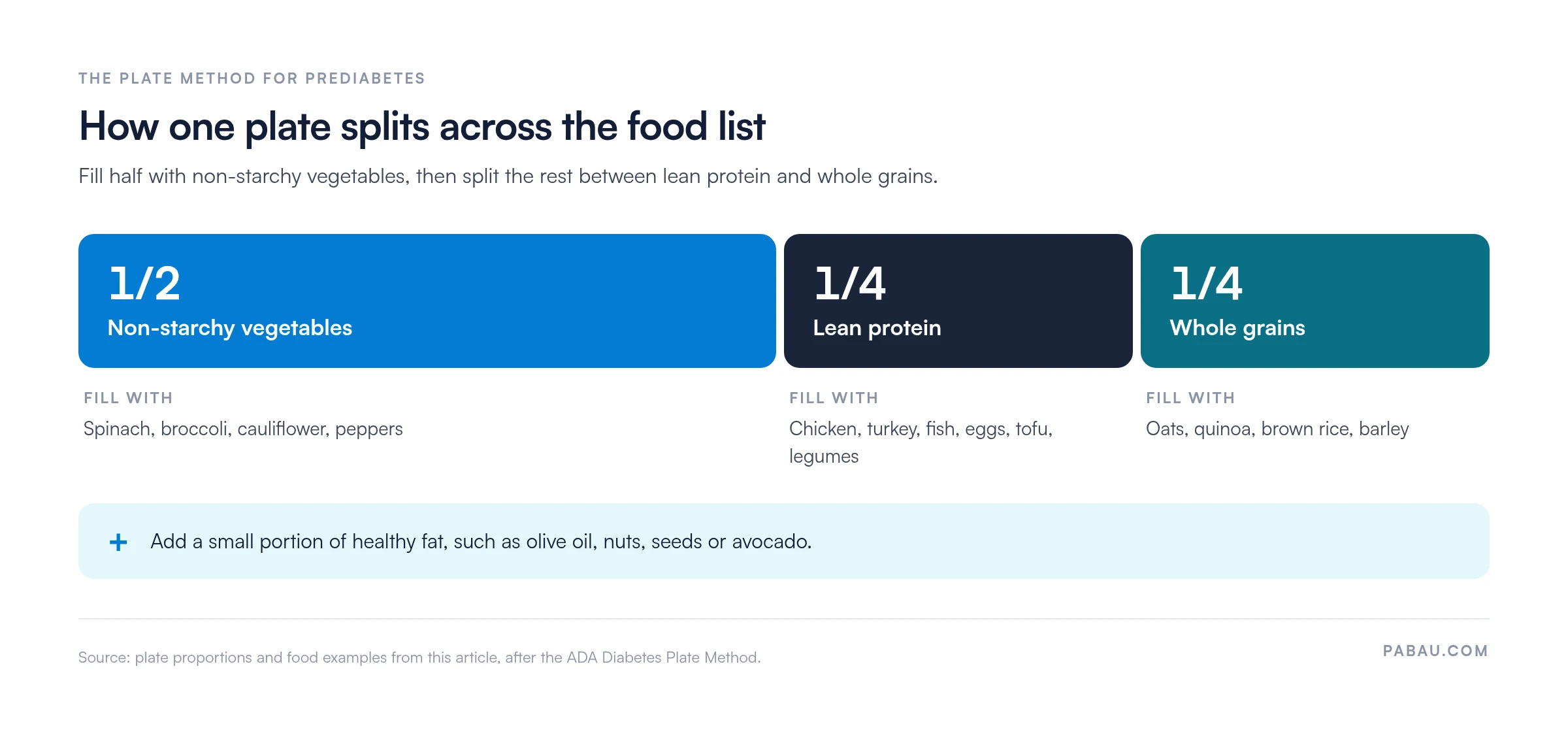
Portion size matters as much as food choice. A simple plate method, based on the American Diabetes Association’s Diabetes Plate Method, helps patients see proportions without weighing food.
The plate below maps those proportions onto the food groups from the list, so patients can build a meal from it at a glance.
Spacing meals across the day and avoiding large evening meals can help some patients manage glucose more evenly. Individual timing should be agreed with the care team. Patients who want exact amounts per food can use a portion size chart alongside the plate.
This sample week uses mainly foods from the list above. Adjust portions and timing with a registered dietitian or the patient’s prescribing clinician.
A grocery list turns the food groups into a weekly shop. Patients can save this page or copy the list into a notes app before they head to the store.
Patients who already have a type 2 diabetes diagnosis may be better served by a dedicated diabetic food grocery list.
The Mediterranean diet is one of the better-studied eating patterns for people at risk of type 2 diabetes. Its core principles map closely onto this food list: vegetables, legumes, whole grains, olive oil and fish.
Clinicians can present it as one option within the list rather than a separate diet, which tends to be easier for patients to follow. For patients who want daily menus, a Mediterranean diet plan adds that structure.
Clinicians can use this resource in five practical steps, starting at the point of diagnosis or a routine metabolic review.
Teams often store the completed checklist against the patient record so it can be reissued at each review.
This resource suits practices where prediabetes is part of routine care. Common settings include primary care practices, metabolic health and functional medicine practices, weight loss practices, and private practice physicians.
It also works for dietitians and nurse educators who want a shared starting handout before a longer nutrition session.
Diet sheets handed over on paper tend to leave the room and never come back, so the next review starts from memory. Pabau’s digital forms send the checklist before or after a visit, and the patient’s answers are stored in their patient record.
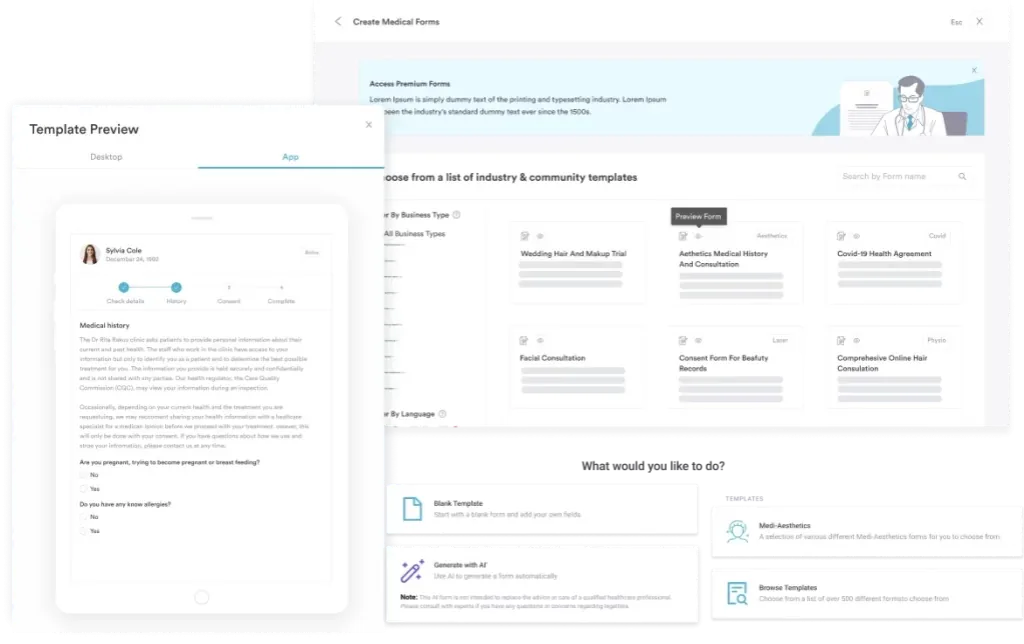
At the follow-up, the clinician opens the same record and sees the completed checklist next to the notes from the last visit. Appointment reminders bring the patient back for that review without the front desk chasing them by phone.
For practices running weight management and metabolic health programs, Pabau’s weight loss practice software keeps intake, booking, notes and payments in one system.

Send this food checklist through digital forms, keep the answers in the patient record and book the follow-up review in one place.

The food list works best as the opening of a conversation, not the whole plan. Agree one swap at the first visit, such as water instead of soda, and check it at the next appointment.
Small, agreed changes are easier to review than a full diet overhaul, and a repeat A1C test shows whether they’re working. The list is general information and doesn’t replace individualized advice from a healthcare provider or registered dietitian.
Book a demo to see how Pabau sends diet checklists to patients and keeps every follow-up review on record.

Patient already diagnosed with diabetes? Type 2 diabetes diet food list sorts foods for patients past the prediabetes range.
Planning ongoing diabetes care? Diabetes management plan gives you a structure for goals, medication and monitoring.
Tracking insulin resistance alongside diet? Insulin resistance levels chart helps you read the lab values behind a metabolic review.
Setting A1C targets with patients? A1C goals by age chart lays out targets you can discuss at each review.
Need a weekly structure for insulin resistance? Insulin resistance diet plan pairs foods to eat with a weekly planner.
A prediabetes diet food list is a structured guide sorting foods into eat often, eat in moderation and avoid groups. It helps patients make consistent food choices between appointments.
Diet can help blood sugar return to the normal range for some people, and the Diabetes Prevention Program showed meaningful risk reduction with lifestyle change. Outcomes vary, so results should be monitored with a clinician.
Sugary drinks, refined carbohydrates and ultra-processed foods are the most common items to limit. Swapping one of these for a whole-food alternative is usually an easier first step.
Yes, the Mediterranean eating pattern is supported by clinical trial evidence for reducing progression to type 2 diabetes. It fits well within a prediabetes diet food list.