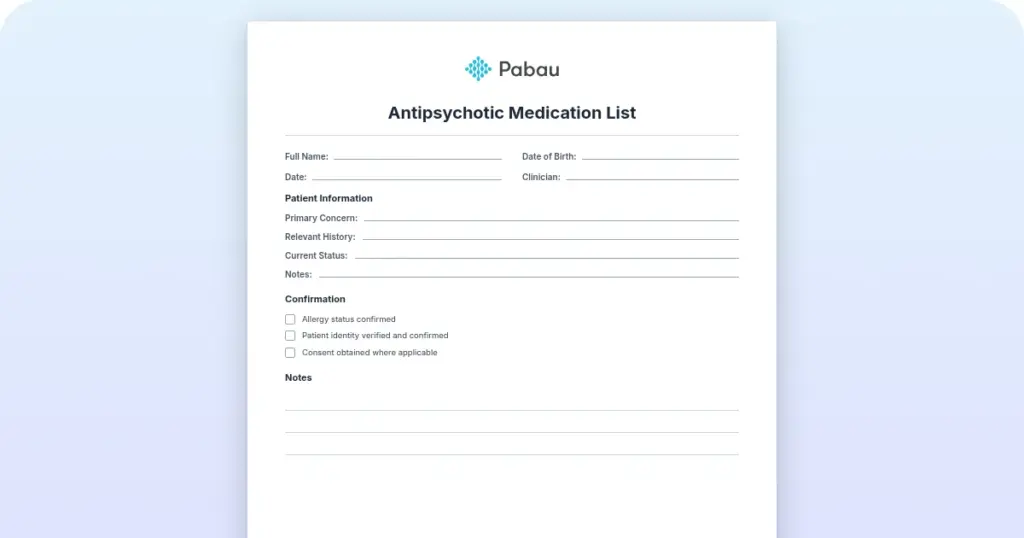
Antipsychotic medication list
An antipsychotic medication list is a structured reference that organizes psychi...

2
Last Updated: Oct 13, 2026

A self-harm assessment is a structured clinical evaluation of frequency, methods, triggers, and the function the behavior serves for that client.
Non-suicidal self-injury and suicidal ideation are different clinical pictures, so every assessment screens for both and records the difference.
A full assessment covers six domains: frequency and duration, methods and types, medical severity, triggers and antecedents, function and intent, and suicidal ideation.
Each domain drives a decision, from a medical referral to the choice of intervention and escalation to crisis care.
Practice management software like Pabau stores completed assessments in the client record and triggers follow-up tasks automatically.
Clear documentation supports HIPAA compliance, informs treatment planning, and shows what you did when risk escalated.
A structured form with sections for client details, frequency and duration, methods and body areas, triggers, function, medical severity, and the suicidal intent question. Print it for the session, or attach the completed form to the client’s record.
Download templateA self-harm assessment is a structured clinical evaluation of how, how often, and why a client injures themselves. This guide covers the six domains to work through, the question that opens each one, and the decision each answer feeds. The template above is free, and it follows the same six-domain order.
It is written for therapists, counselors, psychiatric nurses, and primary care providers. The focus is non-suicidal self-injury, known as NSSI, plus where suicide risk screening sits alongside it. We also cover where the finished form goes, since a mental health EMR keeps it beside the client’s notes and appointments.
A self-harm assessment is a systematic evaluation that gathers what a clinician needs to know about a client’s self-harming behavior. A screening questionnaire tells you whether the behavior is present. An assessment goes further, into a detailed exploration of frequency, methods, triggers, function, and medical consequences.
It also separates self-harm from suicidal behavior. Both involve injury, but non-suicidal self-injury carries no intent to die. It usually serves an emotion-regulation or coping function instead.
Clinicians use the assessment to gauge risk level and decide whether a higher level of care is warranted. The answers also point treatment at the function the behavior serves. The UK’s NICE NG225 self-harm guidance treats assessment as the foundation of safe intervention. Skip it and you are working without the safety indicators that should shape the plan.
Use the form at intake, or in the session where self-harm is first disclosed. Five steps take you from client details to a documented risk picture.
The form suits any clinician who assesses risk as part of their caseload:
Any practice seeing these clients benefits from one standard form rather than five clinician-specific habits. Consistency of that kind is a therapy practice management question as much as a clinical one.
Systematic risk evaluation. Working from a form means no domain gets skipped when a session runs short or a disclosure lands unexpectedly. Safety indicators are easy to miss when the conversation is led by whatever the client raises first.
Compliance and documentation. Completed assessments held in a client record system give you a dated audit trail. That trail is what demonstrates adherence to APA ethical guidelines and HIPAA documentation requirements, and it protects clinician and client alike.
Treatment planning precision. Knowing whether the behavior regulates emotion, punishes, or relieves dissociation points you at interventions with support for that function. DBT skills fit emotion regulation. Mentalization-Based Treatment fits interpersonal functions.
Reporting clarity. The completed form records risk level, medical severity, and whether the client meets duty-to-warn criteria in your jurisdiction. That record is what you rely on if the decision is ever questioned.
Every full assessment covers six connected domains. What matters about each one is the decision it drives. The table below pairs each domain with its opening question and the call the answer feeds.
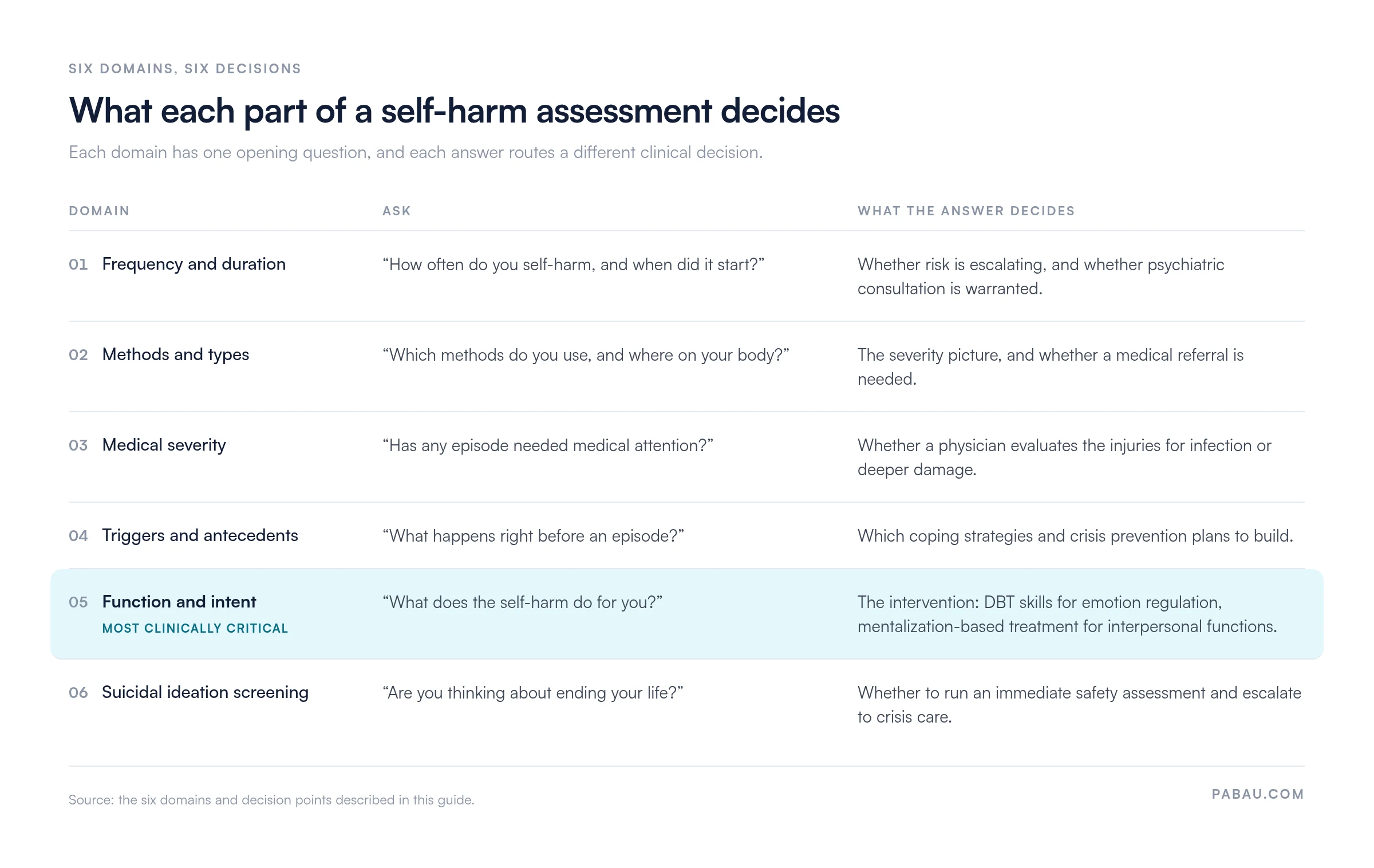
Ask how often the client self-harms, whether that is daily, weekly, monthly, or less often. Record how long each episode lasts and how the pattern has moved over time. Rising frequency, or a shift from episodic to chronic self-harm, signals rising risk and may warrant a higher level of care.
Document the specific method, whether that is cutting, scratching, hitting, burning, or hair-pulling. Record the body location too. Methods and locations together tell you how much of the behavior is visible to others, and how easily it can be hidden.
Ask whether any episode has needed medical attention, and record what that attention was. Deeper cuts, burns, and methods that carry infection risk sit at the higher end of severity. Those cases may need a physician to evaluate the injuries before therapy continues.
Ask what precedes an episode. Answers cluster around specific emotions, relationship conflict, dissociative episodes, academic or work stress, and trauma anniversaries. Naming the precipitants is what lets you and the client build coping steps and a crisis prevention plan for those moments.
This is the most clinically critical domain. Ask the client what the self-harm does for them. The common answers are emotion regulation, self-punishment, relief from dissociation, and communicating distress to others. Each one points at a different therapeutic target, which is why this answer shapes the treatment plan more than any other.
The function you identify is what the plan targets. Our self-harm treatment plan template turns that finding into SMART goals, DBT interventions, and a safety plan.
This step prevents the error of treating self-harm and suicide as the same clinical picture. Ask plainly whether the client is thinking about ending their life, or only about injuring themselves.
Document the distinction in their words. Per SAMHSA clinical guidance, NSSI usually carries no intent to die, but any suicidal ideation calls for immediate safety assessment.
Where ideation is present, safety planning starts in the same session rather than the next one. Our suicide safety plan gives you a form to complete with the client while they are still in the room.
The completed assessment is what informs the referral decision. Escalate to psychiatric evaluation, crisis services, or hospitalization when it shows any of the following:
Record the rationale for the referral and its outcome in your clinical notes, so the next clinician can see why the decision was made. If the client is in immediate danger, contact emergency services or your local crisis team first.
Flag a high-risk assessment in your case notes the same day, and book the urgent review before the client leaves. High risk here means daily self-harm, methods causing severe injury, suicidal ideation, or a medical emergency.
In most practices the completed assessment goes into a paper file, or gets scanned into a folder named after the client. The answers stop being usable at that point. Nobody can filter for the clients who reported daily episodes, and the next clinician has to read a PDF to find out what was asked.
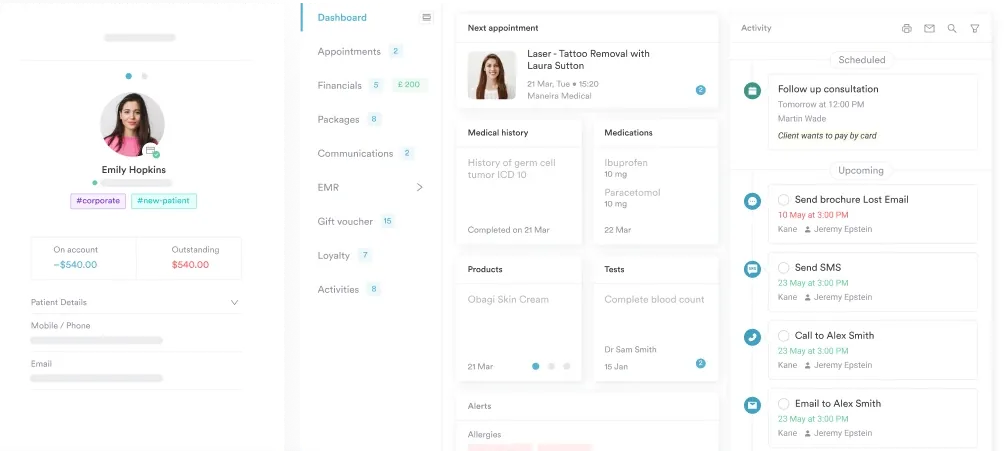
Pabau, an all-in-one practice management system, holds the same six domains as a digital form instead. You customize the fields to match how your practice asks the questions. The client’s answers save into their record, next to the treatment notes, appointment history, and any earlier assessment.
From there, automated workflows handle the follow-up you would otherwise carry in your head. A high-risk answer can create a review task, prompt a shorter gap before the next appointment, or update the care plan. So the escalation happens on schedule, even in a week where three clients disclose at once.

Customize the assessment form, attach completed answers to the client record, and let workflows trigger the follow-up review automatically.

What a structured assessment really buys you is decisiveness. Each answer commits you to a call you might otherwise defer. That could be a medical referral, a change of intervention, or a phone call to the crisis team.
So download the template, use it in the next session where self-harm comes up, and work the domains in order. Function is the domain to slow down on, because it is the one that changes what you do next.
The trade-off worth remembering is that a form only helps while it stays findable. Book a demo to see how Pabau keeps completed assessments in the client record and turns a high-risk answer into a scheduled review.

Working with a client who is not acutely at risk? Mental health safety plan covers warning signs, coping steps, and who to contact for support.
Want a response ready for the moment risk escalates? Crisis intervention strategies for clinicians covers what to do in the session itself.
Did the assessment point to emotion regulation? Distress tolerance skills worksheet gives the client something to reach for instead.
Building out your intake paperwork? Mental health intake form covers history, medications, and risk screening at the first session.
A self-harm assessment covers six core domains. The first three are frequency and duration of episodes, the specific methods used, and triggers and emotional context. The other three are the function the behavior serves, the medical severity of injuries, and screening for suicidal ideation.
Therapists use structured questions and observation to establish when, how often, and why the behavior happens. The goal is to identify the function it serves, whether that is emotion regulation, self-punishment, relief from dissociation, or communicating distress. Treatment then targets that underlying need.
Non-suicidal self-injury (NSSI) is deliberate self-injury without intent to die, and it usually serves an emotion-regulation or coping function. Suicidal ideation involves thoughts of ending one’s life. The two can co-occur, so both need assessing, but they lead to different treatment pathways.
Refer to crisis services, psychiatric evaluation, or hospitalization when the assessment shows acute risk. That includes daily or escalating self-harm, severe injuries needing medical intervention, and suicidal ideation with a plan. Contact your local crisis line or emergency services if the client is in immediate danger.
Documentation must meet HIPAA privacy and security standards. Mandatory reporting laws vary by jurisdiction. As a general rule you must report where the client is a minor, or where there is imminent risk of serious harm. Check duty-to-warn obligations with your state licensing board or legal counsel.
Yes. Primary care providers, family physicians, and nurse practitioners can use it at intake or when risk surfaces. Primary care should pair it with a clear referral pathway to mental health specialists or crisis services, since ongoing treatment sits outside the setting.