GLP-1 diet plan
A GLP-1 diet plan is a structured eating framework for patients taking semagluti...

2
Last Updated: Oct 13, 2026

A suicide safety plan is a collaborative, evidence-based tool that helps patients identify warning signs, coping strategies, support networks, and means-restriction steps during a suicidal crisis.
The Stanley-Brown Safety Planning Intervention (SPI) is the gold-standard six-step model shown in randomized trials to reduce suicidal ideation and hospitalization rates.
Safety plans differ fundamentally from no-suicide contracts: they empower patients through collaboration rather than imposing a coercive promise, and they are grounded in clinical evidence.
Practice management software like Pabau lets you store, version-control, and access safety plans within your clinical workflow — eliminating manual filing and maintaining an auditable record.
Suicide Safety Plan
A structured, collaborative tool helping patients identify warning signs, coping strategies, support contacts, and safety measures. Based on the evidence-based Stanley-Brown Safety Planning Intervention with space for clinician guidance notes and patient personalization.
Download templateA suicide safety plan is one of the most powerful tools a mental health clinician can offer a patient in crisis.
This guide walks you through the evidence-based framework, the six collaborative steps, and how to integrate the plan into your clinical practice — so every patient at risk has a personalized, written roadmap for managing suicidal thoughts and maintaining safety.
A suicide safety plan is a structured, written intervention co-developed between you and your patient to help them navigate a suicidal crisis. Unlike a no-suicide contract (which asks the patient to promise not to self-harm), a suicide safety plan is collaborative, patient-centered, and grounded in clinical evidence.
The patient generates the content in their own words — their warning signs, their coping strategies, their reasons for living — making the plan personal and actionable.
The Stanley-Brown Safety Planning Intervention (SPI), developed by Gregory Brown and Barbara Stanley, is the gold-standard model. Research published in peer-reviewed journals shows that safety planning reduces suicidal ideation, hospitalization, and attempt rates. It’s now a core component of the Zero Suicide Framework — an organizational system designed to reduce suicide deaths in healthcare settings. Assessment results kept on paper get filed and forgotten, so practice software for psychologists keeps them beside the notes.
Safety planning’s efficacy comes from its collaborative structure and specificity. When a patient co-creates their plan, they move from passive crisis responder to active crisis manager. The plan is not something imposed on them — it reflects their own coping strengths, their existing support network, and their reasons for living.
The Stanley-Brown suicide safety plan template follows a six-step sequence that moves from patient insight (recognizing warning signs) through personal resources (coping and support) to professional resources and environmental safety. Each step is completed collaboratively during your session.
Help the patient identify their early warning signs — the thoughts, images, moods, situations, and behaviors that signal a suicidal crisis is building. These are highly personal. One person’s warning sign might be social withdrawal; another’s might be insomnia or intrusive thoughts.
Ask: “What does it feel like in your body and mind just before you feel suicidal?” Document their exact words on the form.
These are strategies the patient can use alone, without contacting anyone, to reduce distress. Examples: grounding techniques (5-4-3-2-1 sensory method), physical exercise, listening to music, warm showers, creative activities.
The key is that these must be activities the patient has actually found helpful before — not generic suggestions pulled from a list. A CBT cheat sheet of grounding and cognitive techniques can help jog ideas if the patient draws a blank. Frame it: “What do you do when you’re stressed that helps you feel a bit better?” Use their answers.
People and settings the patient can reach out to for distraction — not necessarily to disclose suicidal thoughts, just to be around someone or engage in an activity. Examples: a friend’s house, a coffee shop, a gym class, a sports team, a family member.
These contacts don’t need to know the patient is suicidal; they’re just a way to step out of the crisis and into connection.
Trusted individuals the patient can contact and tell about their suicidal thoughts to receive direct help. This is different from Step 3. Here, the patient actively discloses. These are usually close family, partners, or close friends. Get explicit names and phone numbers. Ask: “Who do you trust to know you’re struggling and help you stay safe?”
List your name and phone number, your practice’s crisis protocol, the 988 Suicide and Crisis Lifeline (call or text 988), emergency services (911 in the US), and your local crisis service. Include their therapist’s emergency number if applicable. Format: name, number, when available. Have the patient write it in themselves if possible so they own it.
Lethal means counselling: work collaboratively to identify and reduce access to means of self-harm. This might include removing or securing firearms, storing medications safely, limiting access to alcohol, or enlisting a trusted person to hold medications.
Document the specific steps agreed on. Frame this as collaborative risk reduction, not confiscation. Always explain the reasoning — impulsive access to lethal means dramatically increases risk during a crisis moment.
The downloadable template below adds one field beyond these six core steps: a space to record the patient’s reasons for living. This isn’t part of the original Stanley-Brown model, but it gives the patient a concrete, personal anchor — the people, goals, or commitments that matter most to them — to reference when a crisis feels overwhelming.
A no-suicide contract (or “safety contract”) asks the patient to promise they won’t harm themselves. No-suicide contracts are not evidence-based and can actually create false reassurance for the clinician. A safety plan is fundamentally different: it’s a collaborative tool that empowers the patient to manage their own crisis, not a coercive promise that shifts responsibility onto them.
Effective safety planning requires structure, patience, and authentic collaboration. Here’s how to guide a session.
A safety plan is only effective if it’s accessible and reviewed regularly, but in many practices it gets printed, filed in a chart, and never looked at again. Store the completed safety plan in the patient’s client record alongside their session notes, risk assessments, and treatment plans. This means:
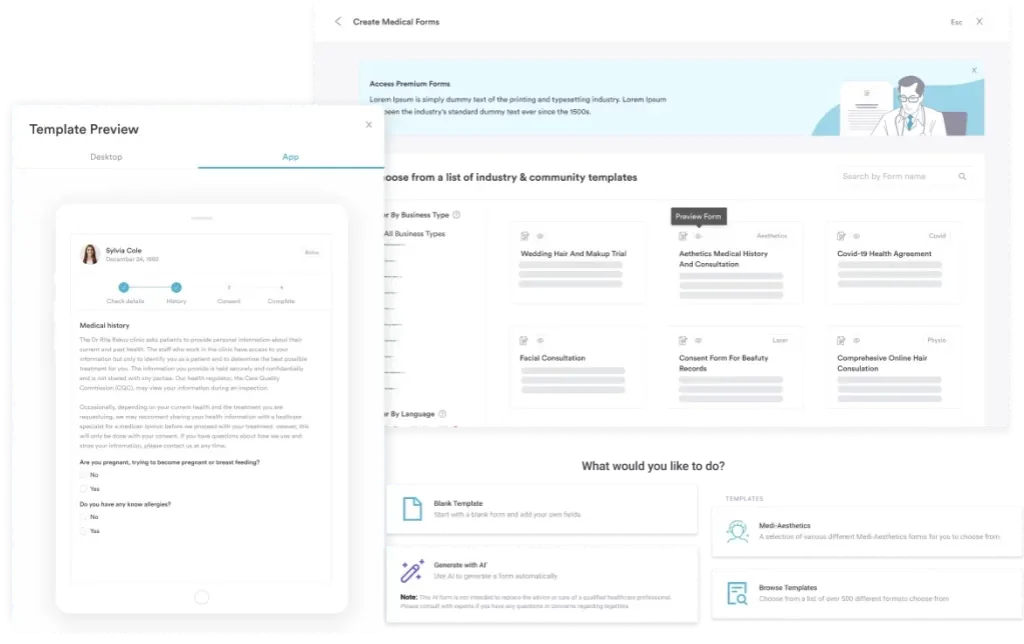

Integrated digital forms, client records, and automated follow-up reminders mean your safety plans are never buried in filing cabinets — they’re active tools your whole team uses to keep patients safe.

The suicide safety plan template provided above is based on the Stanley-Brown SPI model. It includes the six core Stanley-Brown steps plus a space to record reasons for living, along with room for patient-generated content and clinical guidance notes.
You can print it, fill it out by hand in session, and give the patient a copy. Or complete it digitally through your practice’s capture forms, which automatically store it in the patient’s record and send them a copy via email.
Customize the template to your practice: add your practice name, emergency contact details, and crisis resources specific to your region. Some practices create population-specific variants (adolescent, perinatal, older adult).
Store the completed plan in your practice management system. The safety plan contains sensitive risk and contact information; treat it as confidential clinical documentation.

Need de-escalation techniques for a crisis? crisis intervention techniques cover de-escalation methods for managing mental health emergencies safely while building client trust.
Assessing a younger client’s behavior instead? Oppositional Defiant Disorder checklist gives a systematic framework for evaluating and documenting ODD symptoms in children and adolescents.
Want a validated way to see which coping strategies a patient already relies on? The Brief COPE Inventory gives you a structured, evidence-based scoring method to identify a patient’s existing coping style before you build Step 2 of the safety plan.
A suicide safety plan is one of your most powerful clinical tools. By collaboratively developing a personalized, written plan that captures the patient’s own warning signs, coping strategies, and support network, you’re not just reducing their risk — you’re empowering them to manage their own crisis.
The Stanley-Brown Safety Planning Intervention has decades of evidence backing its efficacy. Use the template above, integrate it into your practice workflow with digital forms and client records, and review it at every session.
Your patients will carry that plan with them, and it will guide them toward safety when they need it most.
Ready to build a suicide prevention workflow that works? See how Pabau integrates safety planning, risk documentation, and crisis follow-up into a unified clinical system.
A suicide safety plan is a written tool a clinician and patient build together. It lists warning signs, coping strategies, support contacts, and means-restriction steps for a suicidal crisis, grounded in the evidence-based Stanley-Brown Safety Planning Intervention model.
Frame it as a practical self-management tool. Try: “Let’s put your coping strategies and support network on one page, so you have a roadmap if you’re ever in crisis.” Most patients find this empowering, not frightening.
Review it at each clinical session, or at least every 3-6 months. Revisit sooner if the patient’s risk, support network, or coping strategies change. Update the plan collaboratively each time.
It’s clinical documentation showing you took a structured, evidence-based approach to suicide risk, which demonstrates duty of care. It is not a liability shield, though. Pair it with informed consent, supervision, and crisis protocols.
A no-suicide contract is a coercive promise with no evidence base. A safety plan is collaborative, patient-centered, and research shows it reduces suicidal ideation and hospitalization, treating the patient as an active participant rather than a passive promise-keeper.
Yes. They help any patient with a history of suicidal ideation, recurring suicidal thoughts, or significant risk factors. Building one during a stable period means the patient already knows their coping strategies and support network before a crisis hits.