Positive self-talk worksheet
A positive self-talk worksheet is a structured therapy tool for catching a negat...

1
Last Updated: Oct 13, 2026

A medical release form is a legal document authorizing a healthcare provider to disclose a patient’s protected health information (PHI) without liability.
HIPAA requires six core elements in a valid authorization: A specific description of the information to be disclosed, who is authorized to disclose it, who may receive it, the purpose of the disclosure, an expiration date or event, and the signature and date of the individual (or their representative).
For minors, a parent or legal guardian must authorize release of records, with exceptions when the minor has consented to their own treatment (depending on state law and treatment type).
Practice management software like Pabau uses digital forms and e-signature tools to streamline medical release form collection, storage, and compliance audits for busy practices.
A ready-to-use template for minor patients, covering parent/guardian treatment authorization, emergency contact details, and a signature block authorizing release of the child’s records.
Download templateEvery time a patient’s health information leaves your practice for an insurer, a specialist, or a school, federal law requires a signed authorization first. A medical release form is what makes that transfer legal, and getting the wording right protects your practice as much as the patient.
This guide covers the six elements HIPAA requires, how to handle minors and state-specific rules, and where electronic signatures fit in.
A medical release form is a legal document that authorizes a healthcare provider to disclose protected health information (PHI) without legal liability. Under HIPAA, covered entities cannot share patient records or clinical information without explicit written authorization from the patient, guardian, or authorized representative.
This form ensures that information sharing is documented, traceable, and compliant with federal privacy regulations. It protects patients, who keep control over their information, and practices, which gain documented consent for disclosure.
A medical release form differs from a consent form in a critical way: Consent forms authorize treatment itself, while release forms authorize information sharing about treatment already provided or planned. Many practices need both documents: one for treatment authorization and another for records disclosure.
Practices that offer elective treatments also keep a third form. A liability waiver records a patient accepting a treatment’s known risks, rather than permission to share their records.
The free template above covers a minor’s records only. Adult patients typically need a standalone authorization for release instead.
Practices require a medical release form in these scenarios:
The key principle: Anytime PHI leaves your practice to a recipient not directly involved in the patient’s care, you need a signed medical release form on file.
HIPAA regulation 45 CFR §164.508(c)(1) mandates six core elements for a valid authorization. Any form missing these risks being rejected by recipients or triggering compliance violations:
A form lacking any of these six elements is not HIPAA-compliant and recipients may refuse it. It’s also worth noting that patient identification (full legal name, date of birth, and medical record number) isn’t one of the six regulatory core elements, but nearly every practice includes it anyway.
Recipients need it to match the release to the correct chart.

Knowing how practice management software works helps you decide which forms to digitize first.
Use this workflow when collecting release forms in your practice:
Common mistake: Accepting an unsigned or incomplete form, then releasing records anyway. This exposes your practice to HIPAA violations and potential OCR (Office for Civil Rights) enforcement. Require completion of all fields before processing any release.
When the patient is under 18, guardianship and state law determine who can authorize release. The basic rule: A parent or legal guardian must sign the form. However, exceptions exist when a minor is legally authorized to consent to their own treatment.
Always verify your state’s minor consent laws before releasing pediatric records. Make state-specific rules part of your onboarding checklist.
Yes, electronic signatures (e-signatures) are valid on HIPAA authorization forms under the ESIGN Act and Uniform Electronic Transactions Act (UETA). Digital consent and form tools that capture e-signatures are fully compliant when they meet these requirements: The e-signature must authenticate the signer’s identity, occur with intentional conduct, and be attributable to the signer.
Key caveat: A small number of states have specific rules for medical records releases, and a few federal programs (Veterans Administration, certain military healthcare) may still require wet signatures only. Before migrating to fully digital releases, verify your state’s specific rules and your payer or program requirements.
State law often imposes stricter rules than HIPAA. Sensitive treatment areas require extra caution:
If your practice treats patients across multiple states, maintain a state variation matrix in your compliance management system so staff know which form variant to use in each jurisdiction. The same consistency matters for other intake documents, like a medical review of systems template, that vary between departments.
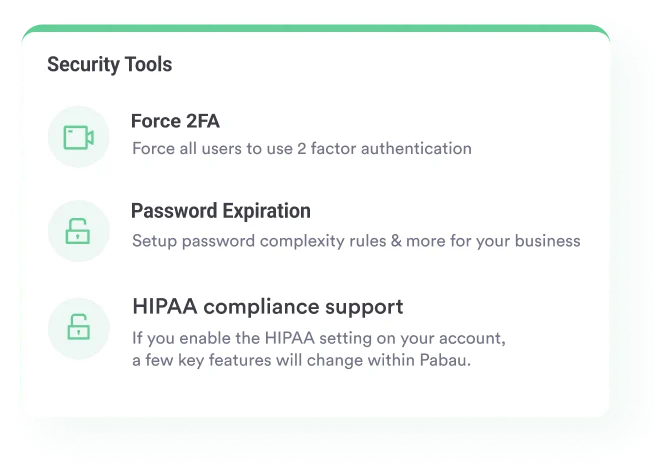
Paper forms get lost, signatures fade, and compliance audits become nightmares. Pabau’s digital forms and e-signature tools solve this.
You can create a template medical release form once, distribute it digitally to patients at check-in or via patient portal, capture e-signatures automatically, and maintain a searchable, time-stamped audit trail. When HIPAA auditors request proof of authorization, you have it in seconds instead of scrambling through filing cabinets.
Workflow example: A patient books an appointment through your practice’s online booking. During intake, they receive a digital medical release form tailored to your state’s requirements (mental health, substance abuse, standard medical).
They sign electronically on their phone or computer. Your billing team can flag it as required for insurance submission, and compliance staff can generate a release-form audit report for OCR or state inspections with a single click.
A medical release form is non-negotiable in healthcare. Without it, you cannot legally share patient information to insurers, specialists, employers, or legal teams. The six HIPAA-mandated elements are straightforward, but the details matter: State-specific rules for sensitive care, minor guardian requirements, e-signature validity, and expiration logic all need documentation.
The easiest way to stay compliant is to automate collection using digital forms, so every release is captured, signed, dated, and stored in one searchable audit trail. This article provided a free template and a step-by-step guide. Book a demo to see how Pabau streamlines release form management and compliance reporting for your practice.

Charting a patient with kidney stones? Kidney stones care plan covers NANDA diagnoses, evidence-based interventions, and discharge planning for nephrolithiasis.
Charting a burn on a pediatric patient? Lund and Browder chart scores burn size by age, from a newborn’s head down to an adult’s proportions.
Justifying a treatment to an insurer? Medical necessity letter lays out the diagnosis, ICD-10 code, and clinical justification an insurer needs.
A medical release form is a legal document authorizing a healthcare provider to disclose a patient’s protected health information (PHI) to a named recipient for a specified purpose. HIPAA requires it before any information sharing outside direct patient care.
Six core elements are mandatory: A specific description of the information to be disclosed, who is authorized to disclose it, who may receive it, the purpose of the disclosure, an expiration date or event, and the signature and date of the individual (or their representative). Patient identification (name, DOB) isn’t one of the six regulatory elements, but most forms include it anyway to match the release to the correct chart. Omit any of the six and the form may be rejected or deemed non-compliant.
HIPAA does not set a duration. You and the patient decide the expiration. Most practices use one year from date of signing or “upon discharge from care.” Check your payer or recipient’s requirements. Some request releases renewed every 30 or 90 days.
Yes, electronic signatures are valid under HIPAA and the ESIGN Act, provided the e-signature tool authenticates identity and maintains an audit trail. Some states and federal programs require wet signatures for specific sensitive care (HIV, substance abuse), so verify your jurisdiction.
Yes, a parent or legal guardian must typically authorize release of a minor’s records. Exceptions: Mature minors in some states can authorize release of mental health, substance abuse, or sexual health records without parental consent. Emancipated minors can sign their own release.
No. A consent form authorizes treatment. A release form authorizes information sharing. You need both: Consent to treat the patient, and release to share records about that treatment to third parties.