Antipsychotic medication list
An antipsychotic medication list is a structured reference that organizes psychi...

2
Last Updated: Oct 13, 2026

The Meaning in Life Questionnaire (MLQ) is a 10-item self-report scale that measures presence of meaning and search for meaning.
Presence uses items 1, 4, 5, 6 and 9, while search uses items 2, 3, 7, 8 and 10.
Item 9 is the only reverse-scored item, so subtract the client’s rating from 8 before you add it in.
Score the two subscales separately, because the MLQ has no valid combined total.
Reliability holds up well, with published subscale alphas between 0.82 and 0.89.
This one-page PDF holds all 10 MLQ statements, the 7-point rating scale, and blank lines for the two subscale scores. Print it for the room, or send it out before the session.
Download templateClients rarely open a session by saying their life feels empty. It comes out sideways instead, in talk about drift, boredom, or a career that stopped fitting years ago.
The Meaning in Life Questionnaire (MLQ) turns that vague feeling into two numbers. One says how much purpose a client already feels. The other says how hard they are still looking for it. That pairing carries more clinical information than either number alone, and it is also where scoring goes wrong most often.
The MLQ measures two separate things across 10 self-report items. Presence of meaning covers how much a person already experiences life as purposeful. Search for meaning covers how actively they are hunting for that purpose.
Michael Steger, Patricia Frazier and Matthew Kaler built the scale at the University of Minnesota. Shigehiro Oishi, then at the University of Virginia, was the fourth author. Their 2006 validation paper ran in the Journal of Counseling Psychology.
You will often see the MLQ credited to the University of Pennsylvania instead. Its Positive Psychology Center hosts a free copy of the scale, which is where the mix-up starts.
Clients rate each statement from 1, absolutely untrue, to 7, absolutely true. Most finish in three to five minutes. There is no license fee and no training requirement, so you can put it in front of someone this week.
The two-part design is what makes the scale worth the five minutes. Presence tracks closely with life satisfaction, resilience and mental health. Search on its own often points to existential distress that deserves proper time in the room.
Budget five minutes end to end. The form takes about three minutes for most clients, and scoring takes another two once you know the item groupings.
Run through this short checklist first. It takes seconds and it saves you from a score you cannot use.
Write the date on the form as well. Meaning scores move with life events, so an undated score is almost impossible to compare later.
If you already send a new patient questionnaire before a first appointment, the MLQ slots in beside it.
One rule catches people out. The MLQ has no valid total score, so never add the subscales together. If your printed copy carries a total line, leave it blank.
Five mistakes cause most of the bad MLQ scores that end up in notes.
The interleaving trips up nearly everyone who scores from memory. Keep the item numbers in front of you until the groupings stick.
Read presence first, then read search against it. The bands below are common working ranges, not validated cut-offs. The MLQ has never published an official clinical threshold.
The combination tells you more than either row on its own. High presence with high search usually reads as healthy growth. High search with low presence points to distress, and that is the pattern worth acting on.
When presence sits low, naming what the client cares about tends to help before anything else. A life values inventory turns a vague sense of drift into a short list of priorities you can work from.
Choosing an approach is the next question. A counseling theories chart shows where logotherapy and existential therapy sit next to the models you already use.
Above all, watch the trend. One reading describes a moment, and three readings across a course of therapy describe a direction.
Many practices log scores like these in measurements tracking software, so progress charts update the moment a reassessment is saved.
Anyone whose work touches purpose, direction or motivation. The scale suits adults and adolescents from about age 12, since the adolescent validation work sampled 12 to 18 year olds.
Psychiatrists often attach it to a psychiatric evaluation template. That way the meaning question does not disappear behind a symptom checklist.
The scale performs consistently across gender, age and cultural groups. Even so, every score needs its context. Software built for therapy practices makes that easier, because the number sits beside the notes that explain it.
A number you can compare. Purpose comes up in most therapy conversations and almost never gets recorded in a form you can look back on.
Movement you can show. Administer at baseline, mid-treatment and discharge, and the presence line either climbs or it stays flat. Both answers are useful.
A way into a hard conversation. A low presence score gives you a neutral opening, which beats asking a struggling client whether life feels worth it.
Evidence behind the claim. Peer-reviewed validation gives your treatment summaries something firmer than an impression. Feeding scores into AI-drafted clinical notes keeps that evidence in the record without extra typing.
No cost and no gatekeeping. There is nothing to license and nothing to buy, which is rare for a scale with this much research behind it. That is partly why psychology practice software so often ships outcome fields ready for measures like this one.
Reliable enough for clinical use, on the evidence from the original study and the replications that followed it.
That negative correlation is the part worth pausing on. People who already feel settled in their purpose tend to search less, which is exactly what a two-factor model predicts.
These figures hold across US and international samples, and across ages from adolescence into later life. They also hold in clinical and non-clinical groups.
Check whether your practice software stores MLQ results in structured fields instead of free text. Outcome measurement tools that score questionnaires for you remove the arithmetic. They also chart presence and search across a whole caseload.
Most practices score the MLQ on paper and then retype the two numbers into a session note. Six months later, nobody can find the baseline.
Practice management software like Pabau keeps the completed form and its scores in the same client record. Every submission stays attached to the client, so the history builds itself as you go.
You can also send the questionnaire out through the client portal before the appointment. The client answers at home, and you start the session with the score already in front of you.
That history is what you bring to supervision or attach to a treatment review. It is also what goes into a letter when a client moves on to another clinician.
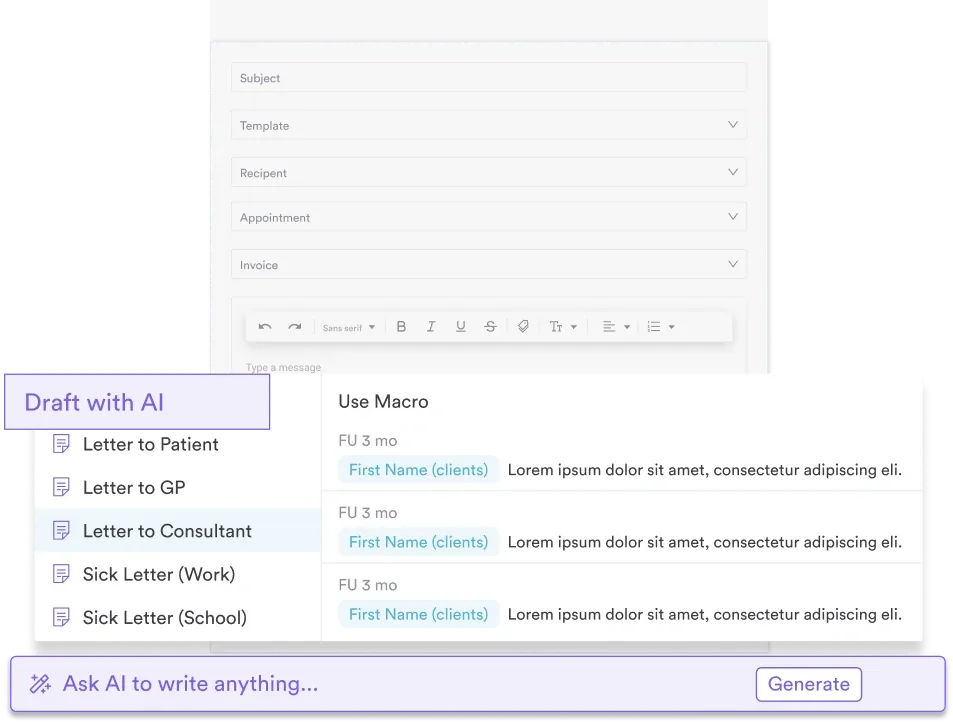

Pabau stores completed questionnaires, subscale scores and session notes in one client record. You can see how presence and search move across a course of therapy, without keeping a separate spreadsheet.

The MLQ earns its five minutes because it asks what most intake forms skip. Does this client feel their life is going anywhere?
So use it more than once. A single reading tells you where someone stands today. The second reading tells you whether the work you are doing together has moved them.
Keep the scoring honest, keep the two subscales apart, and the trend will do the rest. Book a demo to see how Pabau stores assessment scores next to session notes, so you can show progress without digging through paper.

Need another brief scored measure? Clinical anger scale gives you a short self-report you can score in the same session.
Tracking change between appointments? DBT diary card gives clients a daily record that sits neatly beside outcome scores.
Working with a low presence score? Negative self-talk worksheet offers a structured exercise for the thinking underneath it.
Looking for a follow-up exercise? Self-esteem worksheet for adults pairs well with meaning work in longer-term therapy.
Seeing anxiety alongside the drift? Panic disorder treatment covers the options when symptoms sit on top of a low presence score.
Validation work with young people covers ages 12 to 18, so 12 is the sensible floor. Below that, the wording gets abstract quickly. For younger children, pick an age-appropriate measure and keep the conversation about meaning informal.
Take a baseline, then repeat roughly every six to eight sessions, then again at discharge. Meaning shifts slowly, so weekly readings mostly capture mood. Leave enough time between administrations for the work to have done something.
It depends on the presence score sitting next to it. Low search with high presence usually describes a settled client. Low search with low presence can signal withdrawal or avoidance, and that is worth asking about.
The Purpose in Life Test runs to 20 items and returns one overall score. The MLQ uses 10 items and splits the result into presence and search. That split is why most current research reaches for the MLQ.
Yes, and many clinicians prefer it that way. Answering at home feels more private, which tends to produce franker ratings. Send it a day or two ahead so the answers still reflect the current week.