GLP-1 diet plan
A GLP-1 diet plan is a structured eating framework for patients taking semagluti...

2
Last Updated: Oct 13, 2026

The Jefferson Scale of Empathy is copyrighted by Thomas Jefferson University, so no website can legally hand you the 20 items.
Licensing runs from $1,000 a year for a small batch of paper forms up to $5,500 for an online license.
Three versions exist: JSE-HP for practicing health professionals, JSE-S for medical students, and JSE-HPS for all other health professions students.
Scoring reverses exactly 10 of the 20 items, and the remaining 10 are scored as answered.
A total means something only next to norms for your own population, version, and gender, never against a fixed universal cutoff.
The JSE is copyrighted, and Thomas Jefferson University licenses it for an annual fee. We cannot publish the item text here. Request the version you need, current pricing, and written permission from Jefferson’s research center at [email protected].
Request the scale from JeffersonEmpathy is one of the few clinical qualities training programs genuinely try to measure. The Jefferson Scale of Empathy is the instrument most of them reach for. It is a 20-item self-report measure of empathy in patient care, and investigators in 91 countries have used it. Splitting scheduling and records across two tools creates a practice management job nobody owns.
Permission is the catch. The JSE is copyrighted and licensed for an annual fee. Jefferson also bars licensees from posting the items on a public page. So any site offering a free JSE download is handing out property that belongs to someone else.
Plenty of the useful work still happens before you pay anything. Which version you need, how scoring works, and what a total can carry all depend on who you are assessing.
The JSE is a 20-item questionnaire answered on a 7-point Likert scale. Totals run from 20 to 140, and a higher total reflects more empathy-oriented attitudes.
The scale targets empathy as it shows up in clinical work. That means understanding what a patient is going through, then saying it back in words the patient recognizes.
Jefferson treats feeling what the patient feels as a separate construct. That is why several items are worded against empathy and then reversed at scoring.
One caveat belongs up front. The JSE captures self-reported attitudes, not observed behavior. A high total tells you a respondent endorses empathy-centered statements. It does not confirm that patients experienced them. Measuring behavior takes a different instrument, which is why nursing programs sign students off on a hands-on skills checklist.
Jefferson publishes three versions, and who answers decides which one you order. The content is nearly identical across all three, with wording adjusted so the frame of reference matches the respondent.
Two version mix-ups are common enough to name. There is no JSE-O for other occupations, so treat any reference to one as an error. Nursing students belong on the JSE-HPS, not the JSE-S.
Choosing wrong costs you comparability. Published norms are tied to a specific version and population. A total collected on the wrong form has nothing credible to sit beside. With the version settled, the next question is budget.
Licensing is priced per institution, per year, and the fee depends on the version and how you administer it. The figures below come from Jefferson’s own 2024-25 JSE order form.
Paper pricing steps up with quantity between those two ends, and orders above 400 forms are quoted on request. Rates also change between academic years, so confirm the current figures with Jefferson before you set a budget.
Yes, on the license tier that covers administration through other survey software. Jefferson attaches conditions. The items must appear unchanged and in their original order. The hosting page has to be secure, closed to the public, and open by invitation only.
That rules out a public download for everyone, licensee or not. A form sitting behind a staff login can be a legitimate home for a licensed copy. Confirm the arrangement with Jefferson in writing before you build it.
Once permission is in hand. Every respondent then sees the same items in the same order, with no photocopier in the loop.
Each of the 20 items is answered on a 7-point scale. Exactly 10 of them are reversed before you add anything up. Getting that list of 10 right is the whole job.
Record the total with the date and the version used, whether that was HP, S, or HPS. The same clinical documentation habits apply here, because a total without its version cannot be compared to anything later.
There is no universal JSE cutoff. Published norms differ by population, version, and gender, so a total carries meaning only beside a reference group that resembles yours.
The cutoffs above isolate roughly the bottom and top 7% of each group, and the authors call them tentative. Carrying them over to practicing clinicians, nursing students, or a non-US sample would stretch them past the data.
Notice how narrow the spread is. Both student samples average in the mid-110s out of a possible 140. A neat one-third split of the 20 to 140 range would file almost every respondent under high empathy. You will not find such a split in the literature.
Reported Cronbach’s alpha for the JSE sits around 0.82. The items therefore hang together closely enough to be summed. That does not make them one thing.
Factor analysis of a national sample of 6,009 osteopathic medical students found three correlated factors rather than one. Perspective taking accounted for 10 items, compassionate care for 6, and walking in the patient’s shoes for 2.
That has a practical consequence. Two respondents can reach the same total from different profiles, so an unchanged total can hide movement inside a factor. When you evaluate a communication curriculum, the factor pattern often matters more than the headline number.
Higher JSE scores track alongside patient-centered attitudes and communication skill. Jefferson has also released translations in 62 languages and dialects, and recommends rechecking the psychometrics on your own sample.
The JSE was built as a research and program-evaluation instrument, and that is where it holds up best.
Two uses are worth avoiding. High-stakes selection is not supported by tentative cutoffs drawn from small reference samples. An individual score also has no place in a performance review, because self-report invites the answer the respondent thinks is wanted.
Wherever the results end up, store them somewhere they can be read again. A client record system keeps assessment results, notes, and dates on one timeline instead of in a spreadsheet nobody reopens.
Almost every problem with JSE data starts before a single respondent answers. Six things are worth settling first.
One mistake costs more than the rest. Teams collect the data first, then hunt for a comparison group that fits it. Norms are published for specific populations, so choose yours before anyone opens the survey.
A JSE total tells you what your clinicians believe about empathy. It says nothing about what your patients experienced last Tuesday. In many practices the survey lives in a spreadsheet while the patient record lives somewhere else.
Digital forms collect post-visit feedback without anyone chasing a paper copy. Pabau’s measurements and tracking tools score repeat questionnaires and chart the results per client.
Results land in the client record alongside notes and appointments. Your empathy work gets an outcome measure that does not come from staff self-report.
Jefferson licenses a patient-facing counterpart too. The Jefferson Scale of Patient Perception of Physician Empathy appears on the same order form, inside a $1,000 unlimited annual license. It is short enough to run as a routine patient portal follow-up.
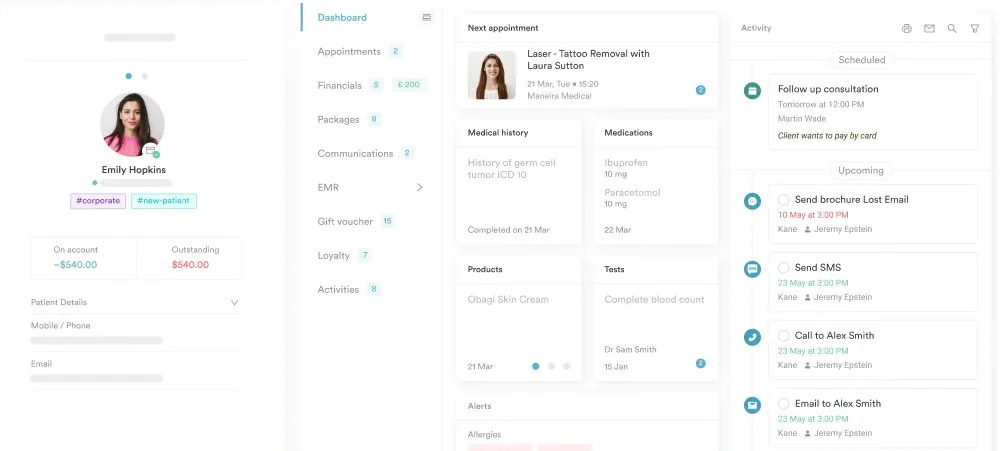

Pabau’s digital forms, questionnaire scoring, and client records collect patient-reported feedback in one place. See whether an empathy initiative changed what your patients report.

The JSE earns its reputation, and it is not free. Budget for the license, then pick the version that matches your respondents. Reverse the right 10 items, and compare totals only against a reference group that resembles yours.
Anyone offering the item text for nothing has skipped the step Jefferson requires. Using that copy puts your program on the wrong side of a copyright, and one email avoids it. Write to [email protected] instead.
Measuring attitudes is only half the work. Book a demo to see how Pabau collects patient-reported feedback and tracks it visit by visit. Your empathy work then shows up in the record.

Need to document a performance conversation? Employee counseling form gives you a dated record of the issue, the requested change, and the employee’s response.
Ready to score how someone leads? Leadership assessment template rates 20 leadership statements across decision-making, team skills, strategic thinking, and emotional intelligence.
Need a plan when performance dips? Performance improvement plan template covers the performance concern, SMART goals, timeline milestones, and manager check-ins.
Want clarity on your own purpose? Personal mission statement worksheet gives five steps to write a mission statement you can use for hiring and pricing decisions.
Worried empathy scores are slipping? burnout causes and warning signs covers the CDC finding that 46% of health workers felt burned out in 2022, up from 32%.
Mohammadreza Hojat and colleagues at Thomas Jefferson University built it, and the first psychometric paper appeared in 2001. Back then it was called the Jefferson Scale of Physician Empathy. Later versions widened it to students and to other health professions.
For research you plan to publish, yes. Your review board or ethics committee assesses the study, and the Jefferson license is separate from that approval. Routine program evaluation is often exempt, so ask your board early.
The scale asks about empathy in patient care, so it suits people who treat patients. Receptionists and administrators can answer the items, but their totals sit outside every published norm sample. Read those results as internal feedback only.
Yes, and most programs do. Anonymity reduces the pull toward the answer people think you want. If you plan to repeat the survey, give each respondent a private code so the two rounds can be matched.
Only when the version, the profession, and the country all match. Empathy totals shift across cultures and training stages, so a mismatched comparison tells you little. Your own year-on-year figures are usually the better benchmark.