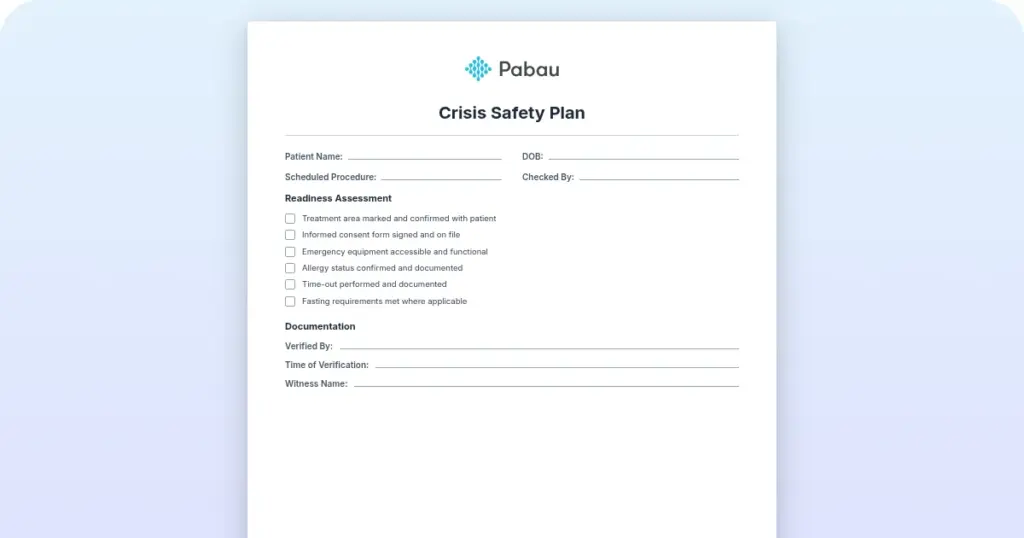
Crisis safety plan template
A crisis safety plan is a short, personalized written plan that a patient and cl...

2
Last Updated: Oct 19, 2026

Core beliefs are the deepest layer of the CBT cognitive model. They are fixed assumptions about self, others, and the world.
Aaron Beck grouped them into three categories: helplessness, unlovability, and worthlessness.
The downward arrow technique surfaces a core belief from an ordinary automatic thought in a few questions.
The worksheet moves a client from naming the belief to disputing it, then to a behavioral experiment.
Rate conviction in the belief from 0 to 100 at every review, so progress is measurable.
A printable form with space to name the belief, list the evidence against it, and write a balanced replacement. The second page plans a behavioral experiment and records the outcome.
Download templateA core belief worksheet is a one-page CBT tool that helps a client name a fixed belief about themselves and test it against evidence. Download it above, then use the walkthrough below in your next session.
Core beliefs sit underneath automatic thoughts. They are absolute statements such as “I am incompetent” or “People cannot be trusted.” Most clients have never said them out loud.
The worksheet is a staple in CBT-focused therapy practices. It turns an abstract idea into something the client can write down and argue with.
It is a structured form that takes a client from one belief to the evidence on both sides of it. The version on this page has two parts. The first names the belief and disputes it. The second turns the replacement into a behavioral experiment.
The form does two jobs at once. It teaches the cognitive model, because the client can see where a belief sits relative to a passing thought. It also tracks progress, because you keep the same sheet as the belief loosens.
Most therapists complete it alongside the client rather than sending it home cold. The first pass works better as a conversation with a pen in hand.
Core beliefs are the deepest layer of the CBT cognitive model. They are global and absolute, usually phrased as “I am…”, “People are…”, or “The world is…”. Unlike automatic thoughts, they feel like facts rather than opinions.
According to the Beck Institute, core beliefs form early, often before age 10. They come from repeated experience. Parental criticism, peer rejection, loss, and cultural messaging all leave a mark.
A child who is criticized often may land on “I am incompetent”. A child who is left out may land on “I am unlovable”. A child who loses a parent may land on “The world is dangerous”.
Once a belief is set, it works like a lens. A small mistake at work confirms “I am worthless” instead of being filed as an ordinary slip. That filtering is what keeps depression and anxiety supplied with evidence.
Aaron Beck grouped core beliefs into three families. Each one points to a different emotional outcome, which is useful when you are deciding where to start.
Knowing the family helps you predict the behavior. Helplessness beliefs drive avoidance. Unlovability beliefs drive testing and sabotage in relationships. Worthlessness beliefs often show up as poor patient compliance, because the client does not believe they deserve to get better.
Clients rarely arrive with the wording ready. Having a list to hand speeds up recognition, and it gives a stuck client something to react to.
Clients usually hold several at once, and the beliefs feed each other. “I am incompetent” drives withdrawal, and the isolation that follows then proves “I am unlovable”. A negative emotions list helps a client who can name the feeling but not the belief.
Restructuring works by building a competing belief that new evidence can attach to. The old belief fades as the new one gathers support. These are the destinations clients tend to work toward.
Aim for believable rather than glowing. A client who scores “I am worthless” at 90 will not accept “I am valuable” on Tuesday. “I have done some things well” is a target they can reach this week.
Three techniques do most of the work. Each one runs well with the worksheet open on the table between you.
The downward arrow is the fastest route. Start from a surface thought and keep asking what it would mean about the client if it were true. Stop when the answers stop changing.
Example. The client says their boss skipped over their project. What does that mean? Their work is not good. And if the work is not good? Then they are incompetent. And if they are incompetent? Then they will never succeed at anything.
“I will never succeed at anything” is close to the core belief, though not quite there. Keep going until the client lands on an absolute statement about who they are.
A thought record worksheet logs situations, thoughts, and feelings between sessions. Read several entries together and the theme usually shows itself. Repeated lines like “I will be rejected” point straight at the belief underneath.
Some clients can say it outright. Ask what they believe is true about themselves as a person. Or ask what story they tell themselves on their worst day.
Belief change runs on three moves, repeated over months rather than weeks.
Weigh the evidence. Ask for everything that supports the belief, then everything that contradicts it. Clients routinely file the contradicting evidence as luck or an exception. Putting both columns side by side is what makes that visible.
Find another reading. Take a situation the client filtered through the belief and ask what else could explain it. An unanswered text is proof of being unlovable, or it is proof that someone was busy. A cognitive distortions worksheet helps here, because it names the filter doing the damage.
Test it in the world. Design a small task where the new belief would predict a different outcome, then review what happened. One success proves nothing on its own. A run of them starts to move the rating the client gives you.
Introducing the form takes about 10 minutes. Explain the cognitive model first, then work the fields in order.
Step 1: name the belief you want to challenge. Write it in the client’s own words, not a tidied clinical version. If they stall, read out three or four examples and ask which one stings. An emotional check-in worksheet from an earlier session often supplies the raw material.
Step 2: list the evidence that disputes it. The form asks for evidence against the belief being true at all times. That wording matters, because “always” is the part of a core belief that usually breaks first.
Step 3: write a balanced core belief. This is the replacement, and it has to be one the client can defend today. Something they rate at 40 out of 100 is more useful than something they rate at 5.
Step 4: pick a belief to test and design the task. The second page sets up a behavioral experiment. Agree on the task, then write down what the client predicts will happen.
Step 5: record the outcome and the conclusion. At the next appointment, compare the prediction against what happened. Attach the completed sheet to the session note so the two can be read together. Software with proper client record management keeps that pairing intact without a scanner.
Ask the client to rate how strongly they hold the belief, from 0 to 100, every time you open the sheet. Record the number and the date next to it.
The rating does two things. It gives you a progress measure that does not depend on how the session felt. It also stops the client dismissing change, because a drop from 95 to 70 is hard to argue with.
Expect the number to move slowly and unevenly. A rating that jumps 40 points in two weeks usually means the client is reporting what they think you want. Treat the worksheet as patient education as well as measurement, and the ratings tend to get more honest.
Three problems come up often enough to be worth naming before you start.
The third is the most common, and the easiest to solve. Keeping the sheet in the client record rather than a filing cabinet also supports safer clinical notes. The reasoning behind the plan stays documented.
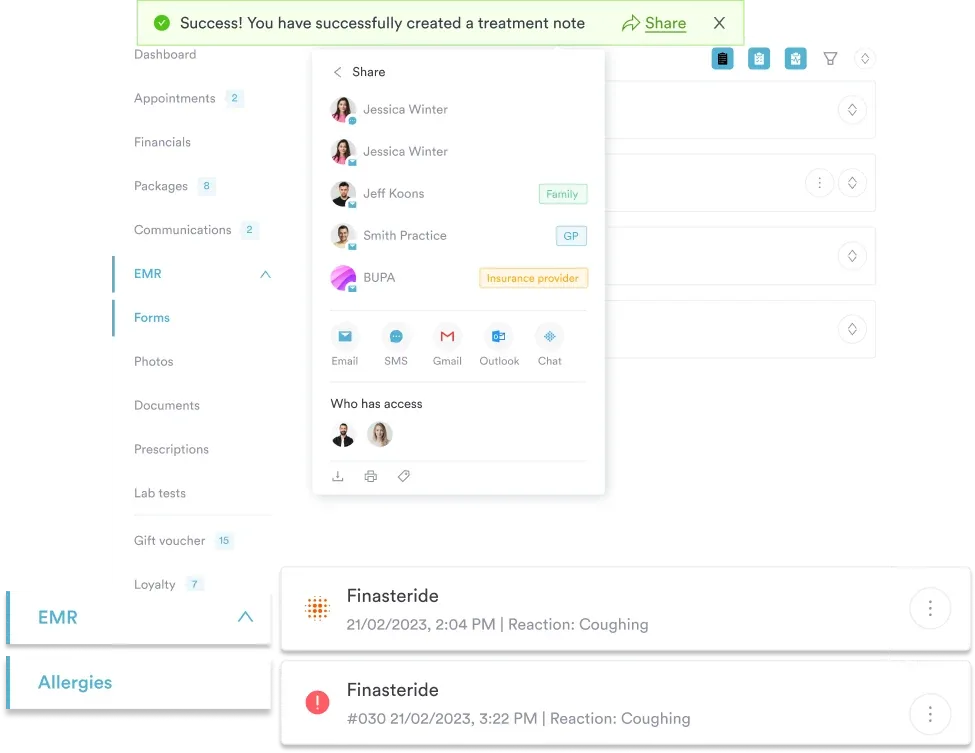
Most practices still handle this on paper. The worksheet gets printed, filled in, and then scanned or filed. The session note it belongs with lives somewhere else entirely.
Practice management software like Pabau replaces that with digital intake forms and client records in one place. You attach the completed worksheet to the appointment it came from, so the belief, the rating, and the note stay together. Next session, the history is already on screen.
For mental health practices, that continuity does most of the work. You can pull up beliefs recorded months ago while you write clinical notes or review a treatment plan.
The same record supports crisis intervention strategies. A client’s worst beliefs are the ones most likely to surface in a crisis, so having them written down saves you guessing.

Pabau stores completed worksheets against the appointment they came from, so ratings and session notes stay together. Your next session starts with the full history already on screen.

The worksheet earns its place because it forces a vague feeling into a written sentence the client can argue with. That is the whole mechanism.
The trade-off is time. Belief work runs over months, and one well-run session will not shift a rating far. What you get in exchange is change that holds after therapy ends.
Print the sheet, run one client through it this week, and record the first conviction rating. Book a demo to see how Pabau keeps those worksheets and ratings in the client record between sessions.

Need somewhere to log the thoughts underneath? Thought record worksheet gives clients a place to capture situations, thoughts, and feelings between sessions.
Want to tackle the thinking styles first? Cognitive distortions worksheet names the patterns that keep a negative belief supplied with evidence.
Writing the session up afterwards? Progress notes for psychotherapy shows how to record belief work without turning the note into a transcript.
Client in acute distress? Mental health safety plan covers what to put in place before belief work can safely resume.
Tracking behavior between appointments? Behavioral observation checklist records what a client does, not only what they remember to report.
Automatic thoughts are quick, surface-level reactions that come and go all day. Examples include “I made a mistake” or “Nobody likes me”. Core beliefs sit underneath and stay put, such as “I am incompetent”. A situation triggers the thought, and the belief decides how that situation gets read. One belief can generate hundreds of thoughts.
It takes longer than symptom relief does. A standard course of CBT runs roughly 6 to 20 sessions, and that is usually enough to shift automatic thoughts. Core beliefs formed over decades often need more than one course, with continued evidence-gathering and behavioral testing in between. Conviction ratings are the practical measure of progress. Expect a slow drop across months rather than a clean before-and-after.
Yes, and most clients do. The beliefs usually cluster in one or two of Beck’s three categories. A client might hold both “I am incompetent” and “I am unlovable”, and each one supplies evidence for the other. Work one belief at a time on the sheet. Start with whichever causes the most disruption day to day.
It works best with adolescents and adults who can put an abstract belief into words. Younger children usually need something more concrete and behavioral. Clients in acute crisis or heavy dissociation need grounding before belief work starts. Low literacy is not a barrier, because you can complete the sheet verbally and transcribe it. Adapt the wording to the client’s culture, since beliefs about self and family duty vary widely.
Introduce it early, then return to it every four to eight weeks. Some therapists open a fresh sheet for each belief they target. Others keep one sheet running and add evidence to it as the work goes on. Either way, take a new conviction rating at every review, because that is what shows whether anything is moving.