Trauma response test: Free template for clinicians
A trauma response test is a structured screening questionnaire that helps clinic...

7
Last Updated: Oct 15, 2026

An emotional check-in worksheet gives a client a structured way to name how they feel and what shaped that feeling.
The free PDF has six fields covering mood, triggers, session focus, the past week, next-session goals, and open notes.
Clients pick a mood from a short checklist and answer in their own words, so there is no numeric scoring to explain.
Therapists, counselors, school staff, and self-directed adults use it to open a session or track feelings between appointments.
Practice management software like Pabau can send the worksheet digitally and file every answer in the client record.
Inside you get a mood checklist, a trigger question, and prompts covering the last session, the past week, and the next one. A free-text notes area closes the page.
Download templateAn emotional check-in worksheet is a one-page form that asks how someone feels right now, and what sat behind that feeling. Our free version keeps it deliberately plain. The client picks a mood from a short checklist, answers four written prompts, and adds anything else worth knowing.
That plainness is the point. Forms with rating scales and body maps look thorough, but they can stall a client who is already overwhelmed. This one takes two minutes at the start of a session. It gives therapists and mental health practitioners something concrete to open with.
An emotional check-in worksheet is a short, structured form for recording how a client feels at a single point in time. It sits between a casual “how are you?” and a full clinical assessment.
Most of the value comes from repetition. When a client answers the same six questions each week, patterns surface that neither of you would recall from memory. Therapists and counselors use those patterns for treatment planning and for progress notes that say something specific.
It is a conversation starter, not a diagnostic instrument. Nothing on the page is scored, and no cut-off tells you a client is unwell. For clients who want reading to go alongside it, the National Institute of Mental Health (NIMH) publishes free guidance on caring for your mental health.
The PDF is one page with six fields, in this order.
There is no one to ten intensity scale on this form, no body map, and no list of coping strategies to tick. That trade is deliberate.
For a day-by-day record across a month, a daily mood chart does that job better. If you need intensity scores or a coping plan, run a validated measure alongside the check-in and let this page do the warm-up.
The same page works across clinical, school, and personal settings, because it asks for words rather than scores.
Adults usually complete the worksheet alone, either the morning of a session or at the end of a hard day. The written prompts suit anyone comfortable putting feelings into sentences.
Two prompts do the heavy lifting for adults in ongoing therapy. One asks what the last session focused on. The other asks what the next one should cover. Together they ask the client to hold the thread between appointments, which is where much of the work happens.
If a client fills one in weekly, ask them to bring the whole set rather than the latest page. Six weeks of completed forms read side by side tell you far more than a single sheet does.
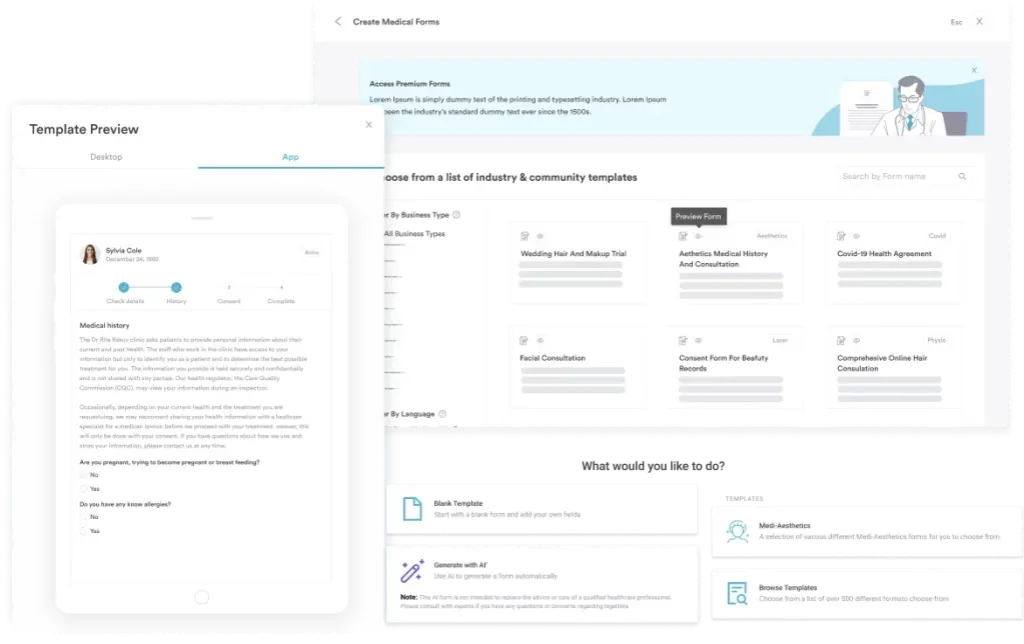
This worksheet is written for readers, so younger children need it adapted rather than handed over. The mood checklist works well read aloud, with the child pointing at the word that fits.
Teenagers usually manage the written prompts unaided, though they tend to skip the past-week question. Ask them to answer that one in the room with you. Regular classroom check-ins also give students the language to say what is wrong before behavior escalates.
Five steps turn a printed page into something that shapes the hour.
How often to use it is a clinical judgment call. Weekly suits most talking therapy. Daily use tends to flatten out, because the answers start repeating and the client stops reading the questions.
Check-ins work best when they are predictable. Four moments cover most of what practices need.
One caution is worth stating. A check-in is not a crisis tool, and a mood checklist will not tell you whether someone is safe. For clients in crisis, a mental health safety plan is the document you want.
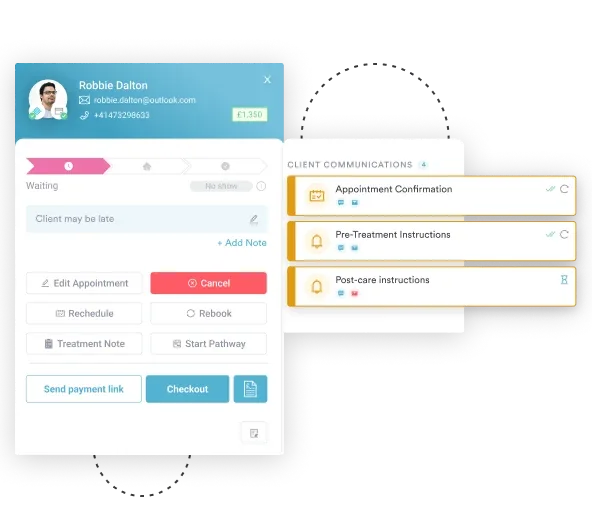
Paper check-ins work fine until you need to find one. Practice management software like Pabau keeps the form and its answers in the same client record as the appointment, the notes, and the consents.
You can rebuild the six fields as a digital form and send it with the appointment confirmation. Clients complete it on their phone through the secure client portal, and the answers land in their record before you sit down together.
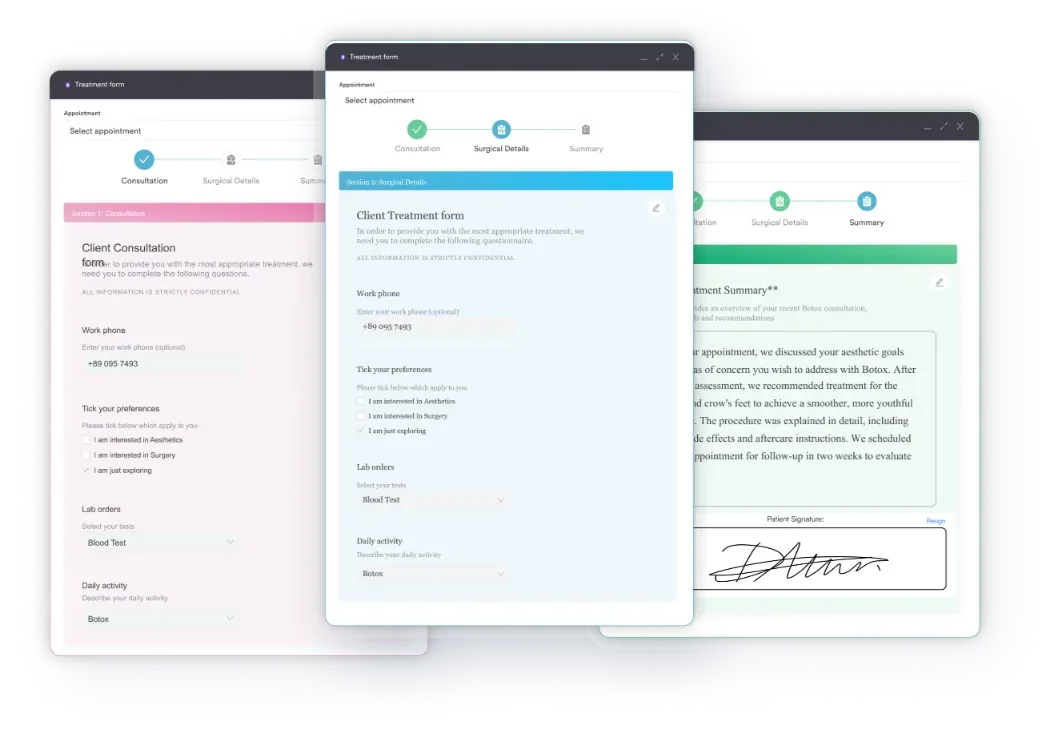
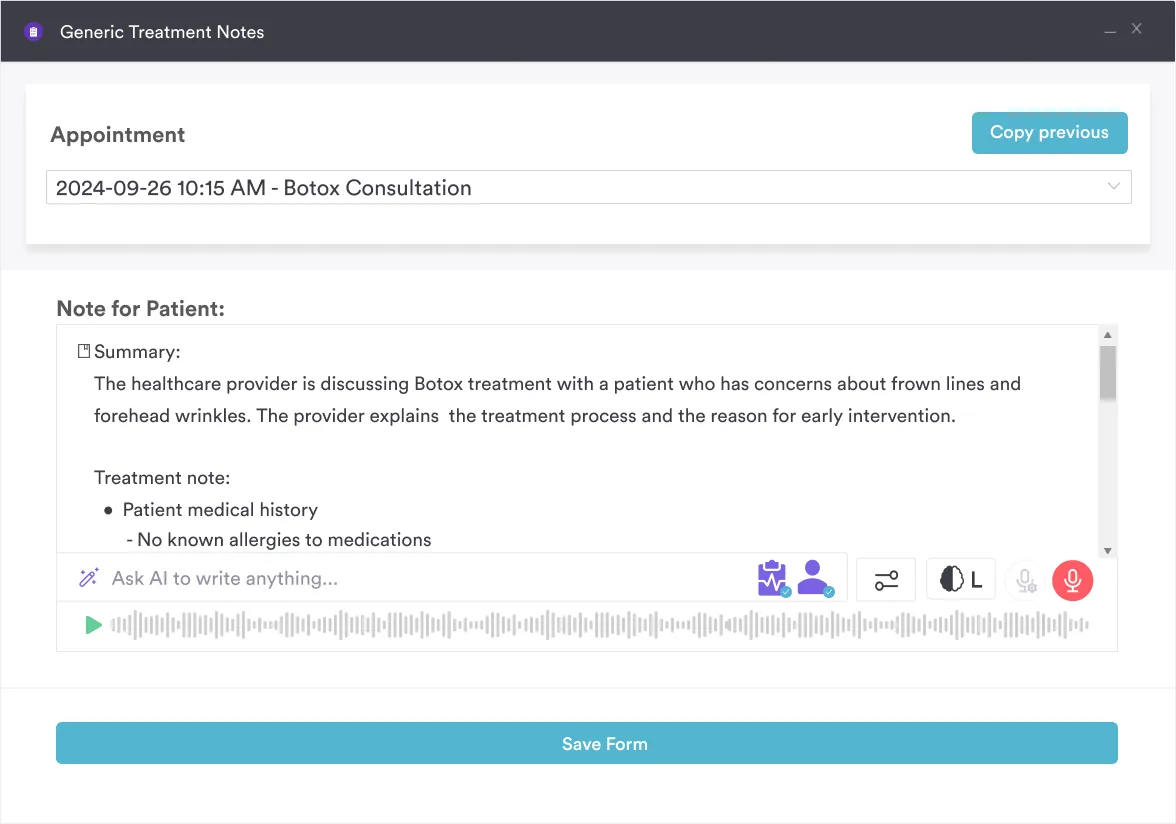
Automated reminders go out while a form is still outstanding, so nobody chases them by hand. Pabau Scribe, our AI scribe, then drafts the session note from your dictation, with the check-in already filed beside it.
Every Pabau subscription includes every feature. A mental health practice gets digital forms, the client portal, and reminders as standard, not as an upgrade to buy later.

Pabau sends the worksheet ahead of the appointment, chases the ones still outstanding, and files each answer against the client record. Your notes stay current without extra admin after every session.

This worksheet earns its place because it is small. Six fields, two minutes, and nothing to score. That is a form a client will still be filling in eight weeks from now.
Treat it as the opening move. Anything that needs intensity ratings, a body map, or a written coping plan belongs in a separate tool you run alongside it.
Print it, or rebuild it as a digital form your clients complete before they arrive. Book a demo to see how Pabau collects check-ins and files them in the client record for you.

Want the thought sitting under the feeling? Thought journal walks a client from situation to thought to outcome.
Client reaching for the same three feeling words? Negative emotions list gives them a wider vocabulary to pick from.
Working with someone who opens up around music? Music therapy worksheet turns listening into a structured reflection.
Client naming anger when the feeling underneath is hurt? Primary and secondary emotions worksheet separates the two in session.
Writing up the session afterward? Therapy progress notes cheat sheet gives you the phrasing for each note format.
An emotional check-in worksheet is a one-page form that records how someone feels at a single moment and what sat behind that feeling. Our free version asks the client to pick a mood from a checklist. Short prompts then cover triggers, the last session, the past week, and the next one.
The PDF has six fields. A mood checklist with eight options comes first, then a question about what triggered those emotions today. A third prompt asks which emotions the last therapy session covered. After that, a line for how the past week has felt, a line for what to focus on next, and an additional notes area.
No. There is no numeric rating scale, no body map, and no coping-strategy checklist on this form. Clients describe the mood in their own words instead. If you need intensity scores, pair the check-in with a validated measure and use both together.
Weekly suits most talking therapy, either as homework or as the first few minutes of a session. Daily use tends to flatten out, because the answers repeat and the client stops reading the questions. Match the frequency to the treatment goal rather than to a fixed rule.
It works for children with adult support, since the prompts are written rather than visual. Read the mood checklist aloud and let the child point at or color the word that fits. Pairing the sheet with a feelings face chart helps younger children who lack the vocabulary.
A mood tracker logs a rating over time and shows you a trend line. This check-in asks what happened, what the last session covered, and what the client wants to work on next. One measures, the other opens a conversation you can build a session around.
Most clients manage it, but effectiveness depends on age, literacy, and what they are presenting with. Clients with severe dissociation or psychotic symptoms may need grounding first, or a trauma-informed adaptation. It is also not a crisis tool, so use a safety plan where risk is the concern.