

CCSD code G5100: Bypass of duodenum billing guide
CCSD code G5100 bills a bypass that leaves the duodenum in place CCSD code G5100...

Last Updated: Oct 16, 2026
T2024 is the HCPCS Level II code for service assessment/plan of care development, waiver.
Most billing errors on T2024 claims stem from three sources: insufficient documentation of the assessment itself, missing waiver authorization references, and confusion with adjacent T-series codes such as T2025 and T2026.
Let Pabau's smart automation suggest the right codes, reduce claim denials, and keep your practice compliant—effortlessly.
Automate repetitive tasks and focus on what matters most—your patients.
Reduce coding errors and ensure compliance with the latest regulations.
Clean claims, fewer denials, and faster reimbursements.
Powerful insights and reporting to help your practice thrive.
HIPAA compliant SOC 2 certified GDPR-compliant Trusted by 4,000+ clinics worldwide

HCPCS code T2024 is a Medicaid-only T-series code: Medicare does not cover it and there is no national fee schedule.
The code covers two bundled activities: conducting a service assessment and developing a plan of care, both under a Medicaid waiver program.
Documentation must explicitly reference the waiver program authorization, the assessment performed, and the care plan produced – missing any element is a common denial trigger.
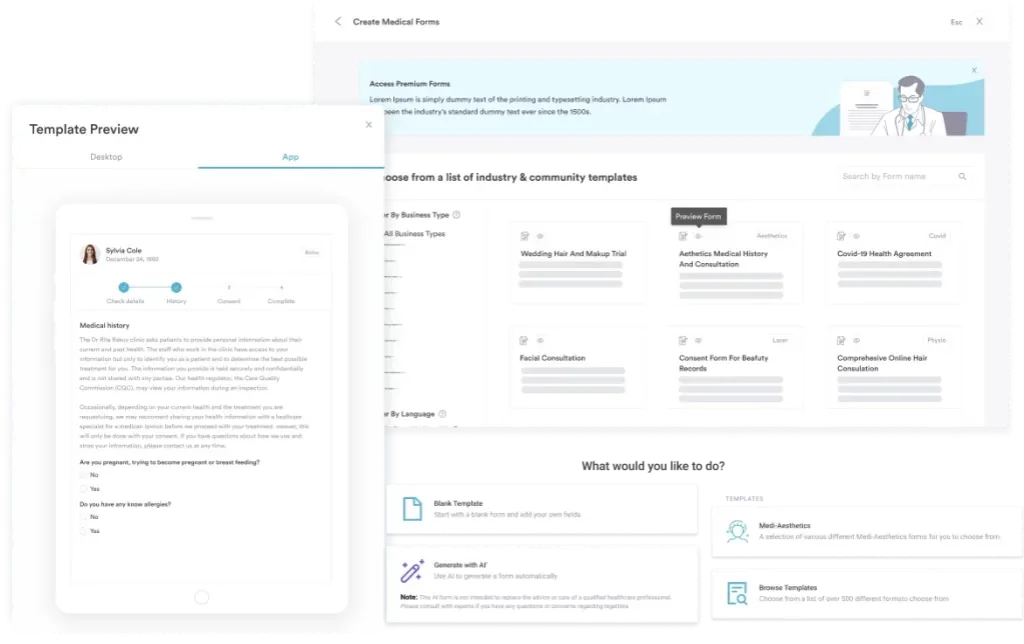
Pabau’s claims management software and digital forms can structure HCBS waiver documentation to support accurate T2024 billing.
HCPCS code T2024 is a Level II Healthcare Common Procedure Coding System code that describes service assessment and plan of care development performed under a Medicaid home and community-based services (HCBS) waiver program. It belongs to the T-code series, which the Centers for Medicare and Medicaid Services (CMS) designates as State-defined Medicaid services. T-codes do not appear on the Medicare Physician Fee Schedule and carry no national reimbursement rate.
The official CMS descriptor is: Service assessment/plan of care development, waiver.
T2024 covers two bundled clinical and administrative activities, both of which must occur under an authorized Medicaid waiver program to support a valid claim.
Both components are required for the code to apply. Billing T2024 for a standalone assessment without a documented care plan development activity – or vice versa – exposes the claim to denial. The waiver context is equally non-negotiable: T2024 cannot be billed for assessments or care planning performed outside a Medicaid HCBS waiver authorization.
The most common waiver program associated with T2024 is the federal 1915(c) HCBS waiver, which allows states to offer home and community-based alternatives to institutional care. Some states also use T2024 under 1915(i) state plan amendments or 1115 demonstration waivers, but coverage under those program types varies by state Medicaid plan. Confirm program-specific coverage with the relevant state Medicaid agency before billing.
Eligible provider types are state-determined, not federally uniform. Generally, state Medicaid agencies authorize the following provider categories to bill T2024 for community mental health and other HCBS waiver participants:
Medicare does not reimburse T2024 under any circumstance. Do not submit T2024 to Medicare – it will be rejected as a non-covered code. Dual-eligible beneficiaries receiving HCBS services must have T2024 billed to Medicaid only.
Provider enrollment requirements differ by state. A provider type eligible to bill T2024 in one state may not be enrolled to do so in another. Verify enrollment status and billing privileges directly with the state Medicaid agency before submitting claims.
Complete documentation is where most T2024 claims fail. State Medicaid auditors review T2024 claims closely because the services are administrative in nature and easier to overbill than direct-care codes. Supporting medical billing compliance for this code requires a record that confirms every element of the service actually took place.
Required documentation elements generally include:
Using digital forms for care plans and assessments reduces transcription errors and ensures all required fields are captured before a claim is generated. Paper-based workflows frequently produce incomplete records because there is no system prompt to flag missing elements at the point of service. Compliance management tools can enforce documentation checklists so incomplete records are caught before billing, not during an audit.
T2024 reimbursement rates are state-determined. There is no Medicare Physician Fee Schedule rate and no uniform national rate for this code. Each state Medicaid program sets its own payment amount, which may be updated annually, biennially, or on a different schedule depending on the state’s Medicaid rate-setting cycle.
The CMS Physician Fee Schedule lookup tool will not return a rate for T2024 – this is expected. Rate inquiries must go directly to the state Medicaid agency or the state’s Medicaid managed care organization if services are delivered through a managed care plan.
For a searchable HCPCS code lookup, the AAPC HCPCS code directory and the PGM Billing HCPCS lookup tool both reference current CMS Level II data and can confirm code status and descriptor. Neither will show state-specific rates – those require direct contact with your state’s Medicaid program. Using superbill documentation that captures the correct T2024 unit definition as defined by your state reduces rework when reconciling payments against expected rates.
Pure code-lookup references list T2024’s descriptor and classification but rarely cover the billing mechanics where claims actually fail. Understanding medical billing fundamentals specific to waiver codes is what separates consistently paid T2024 claims from a chronic denial backlog.
Proactive denial management workflows catch these patterns before they become systematic. Tracking T2024 denial reasons by payer and service date reveals whether errors are concentrated at intake (missing authorization), at billing (wrong units), or at the state level (payer-specific edits). Submitting a clean claim the first time is always faster than managing a denial queue.
Audit your T2024 claims quarterly by pulling denial reason codes from your clearinghouse or state Medicaid portal. If the same denial reason appears on three or more claims in a quarter, it signals a workflow gap – not a one-off error. Fix the root cause in your documentation or billing process before the next filing cycle.
T2024 sits within a family of T-series codes covering HCBS waiver services. Selecting the wrong adjacent code is a consistent billing error because the descriptors are similar and state coverage rules vary. The table below maps the most closely related codes.
T2025 is the most frequent substitution error. Because its descriptor is broad (“not otherwise specified”), billers sometimes default to T2025 when T2024 applies more precisely. Using T2025 for a discrete assessment-plus-plan-development event is technically incorrect and may trigger a request for documentation that does not match T2025’s expected service type. Verify each code against your state’s waiver billing manual before submitting.
Some waiver services bill their assessment under the service code itself. Minnesota, for example, authorizes the evaluation behind a vehicle modification under HCPCS T2039 with a UD modifier, not on a separate assessment claim.

Pabau helps home and community-based services providers capture compliant care plan documentation and manage billing workflows in one place – reducing T2024 claim errors before they reach your denial queue.

Code reference tools give you the descriptor and classification. They do not help you produce the documentation that makes a T2024 claim defensible, or flag when a care plan record is incomplete before the claim goes out. That gap between knowing what documentation is required and actually generating it consistently is where HCBS providers lose money.
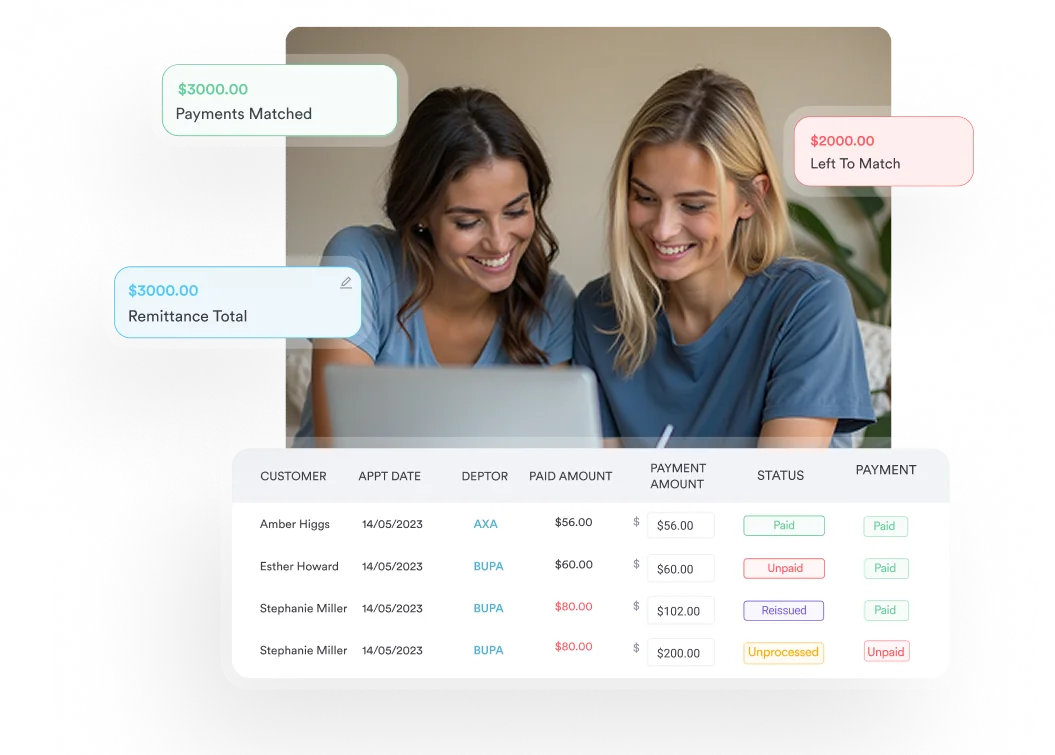
Pabau’s claims management software integrates with the clinical workflow so the assessment and care plan documentation lives in the same system as the billing record. When a T2024 event is ready to bill, the supporting documentation is already attached rather than stored separately and retrieved at audit time. Revenue cycle management works best when documentation and billing are connected rather than running in parallel on different platforms.
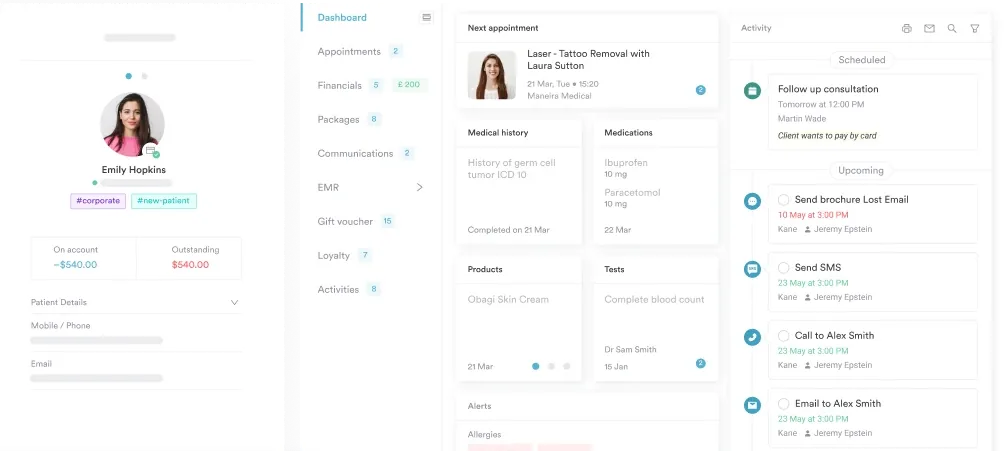
Structured client records in Pabau capture the waiver program enrollment reference, the assessment date, the care plan elements, and the provider credentials in a single record. This removes the manual assembly step that produces most documentation denials. For practices managing multiple waiver participants across different state programs, having a consistent record structure also makes it easier to respond to state audits with minimal administrative burden.
HCPCS code T2024 is a Medicaid-only billing code for a tightly defined service event: a needs assessment and individualized care plan developed together under an authorized HCBS waiver. No national rate exists. No Medicare coverage applies. Most denials trace back to incomplete documentation, wrong unit definitions, or the wrong T-series code selected for the service actually provided.
Pabau’s care plan documentation tools and integrated billing workflows help HCBS providers capture what state Medicaid auditors look for before the claim is submitted, not after. To see how Pabau handles waiver billing documentation end to end, book a demo with the team.

Need a framework for managing billing compliance across waiver programs? Medical billing compliance covers the documentation and audit-readiness practices that apply across Medicaid billing types.
Want to understand how denial patterns reveal workflow gaps? Denial management in healthcare walks through how to track, categorize, and resolve claim denials systematically.
Looking for a broader overview of Medicaid billing processes? Revenue cycle management explains how each stage from eligibility through payment posting connects.
HCPCS code T2024 is a Level II Medicaid billing code for service assessment and plan of care development performed under a Medicaid home and community-based services (HCBS) waiver program. It covers both the needs assessment and the individualized care plan developed from that assessment as a single billable event. Medicare does not cover this code.
No. T2024 is a T-series HCPCS code, and T-codes are State-defined Medicaid services not covered by Medicare. Submitting T2024 to Medicare will result in rejection as a non-covered code. For dual-eligible beneficiaries, bill T2024 to Medicaid only.
There is no national reimbursement rate for T2024. Rates are set by each state Medicaid agency and vary by state, waiver program, and service delivery model (fee-for-service vs. managed care). Contact your state Medicaid agency or the applicable managed care organization directly for current payment rates.
Required documentation includes the completed service assessment, the care plan developed from that assessment, the waiver program authorization reference for the participant, the billing provider’s credentials, the date(s) of service, and the patient’s Medicaid identifiers. State-specific requirements may add additional elements – verify with your state’s waiver billing manual.
T2024 describes a specific, bundled event: a service assessment combined with care plan development under a waiver. T2025 is a catch-all code for waiver services not otherwise specified, billed per 15-minute increment. T2024 should be used when both the assessment and plan development occur together as a discrete event; T2025 is for ongoing or undefined waiver services that do not fit a more specific descriptor.
T2024 is most commonly associated with federal 1915(c) HCBS waivers, which allow states to provide home and community-based alternatives to institutional care. Some states also apply it under 1915(i) state plan amendments or 1115 demonstration waivers. Coverage under each program type is state-specific – verify applicability with your state Medicaid agency before billing.



