

CCSD code G5100: Bypass of duodenum billing guide
CCSD code G5100 bills a bypass that leaves the duodenum in place CCSD code G5100...

Last Updated: Oct 16, 2026
T2001 is the HCPCS Level II code for non-emergency transportation; patient attendant/escort. It covers the attendant or escort who accompanies a Medicaid patient to a medical appointment, rather than the vehicle trip.
Each state Medicaid program sets its own billing unit, modifier rules, and supporting diagnosis requirements for T2001. Those three details drive most denials.
Let Pabau's smart automation suggest the right codes, reduce claim denials, and keep your practice compliant—effortlessly.
Automate repetitive tasks and focus on what matters most—your patients.
Reduce coding errors and ensure compliance with the latest regulations.
Clean claims, fewer denials, and faster reimbursements.
Powerful insights and reporting to help your practice thrive.
HIPAA compliant SOC 2 certified GDPR-compliant Trusted by 4,000+ clinics worldwide

HCPCS code T2001 covers the patient attendant or escort on a non-emergency medical trip, not the vehicle transport itself.
Medicare Part B does not reimburse T2001, so the paying program is state Medicaid or a Medicaid managed care plan.
Each state Medicaid agency sets the billing unit and the rate, because no national CMS fee schedule rate exists for T2001.
Missing modifiers and unsupported ICD-10 diagnosis codes cause most T2001 denials, followed closely by incomplete trip logs.
Claims management software like Pabau applies modifiers, checks eligibility, and flags missing trip documentation before submission.
HCPCS code T2001 is an HCPCS Level II code maintained by the Centers for Medicare and Medicaid Services (CMS). It covers non-emergency transportation where a patient attendant or escort accompanies the patient. The code sits in the Transportation Services section of HCPCS Level II and is billed to state Medicaid programs, not to Medicare Part B.
T2001 captures the attendant or escort component of a trip, not the vehicle transport itself. The attendant must accompany the patient for the whole journey. Coders often confuse T2001 with T2002, because both sit in the same code range. T2002 pays for the transportation itself on a per diem basis, while T2001 pays only for the attendant.
T2001 is a Medicaid benefit. Medicare Part B does not separately reimburse non-emergency medical transportation (NEMT) as a standard covered service. Knowing which program pays prevents a wasted submission and the non-covered service denial that follows it.
Running insurance eligibility verification before every trip confirms the patient’s Medicaid enrollment and managed care plan coverage.
For dual-eligible patients, Medicaid remains the payer of record for NEMT services including T2001. Always verify the patient’s primary and secondary coverage before submitting a claim. Recording which program covers which service keeps the claim history defensible in an audit.
No national CMS fee schedule rate exists for T2001. Reimbursement is set at state level by each Medicaid agency. Rates vary widely with the state’s transport broker model, the program type, and the unit definition.
Use the CMS Physician Fee Schedule lookup to confirm that no federal rate applies. Then check your state Medicaid portal for the rate you can bill.
Always retrieve the current-year rate from your state Medicaid provider portal or your managed care organization’s fee schedule before billing. Rates are updated on state-specific cycles that may not align with the federal fiscal year.
Billing T2001 correctly turns on three decisions made before the claim goes out. You need the unit definition your state uses, the right modifiers, and confirmation that prior authorization was obtained. Getting any one of them wrong produces a denial or a request for more documentation.
State Medicaid programs define T2001 billing units in one of two ways: per trip (typically one-way) or per mile. The unit definition is set in the state’s NEMT provider manual and is non-negotiable.
Billing per mile when your state expects per-trip units is a common denial trigger. Verify the unit definition before the first claim submission to any new state or MCO.
Modifiers give the claim the context that justifies the attendant service and routes it correctly. The AAPC HCPCS code database lists modifier requirements alongside T-codes. Check your state Medicaid manual for which modifiers are mandatory and which are optional. Applying an unsupported modifier causes as much trouble as omitting a required one.
Modifier requirements differ by state and by managed care organization within the same state. Confirm the rules with your Medicaid provider relations representative. A modifier accepted in one state may be rejected in another.
Every T2001 claim needs at least one supporting ICD-10 diagnosis code that establishes medical necessity for the trip. The diagnosis must describe the condition that makes the transportation necessary, and it must match the treating provider’s orders. A mismatch between the transport claim and the appointment claim is a fast path to denial.
The codes above are common pairings rather than an exhaustive list. The diagnosis code on a T2001 claim must reflect the patient’s documented condition, as recorded in the ordering provider’s clinical notes. Never pick a diagnosis because it looks like it supports the trip. Confirm it against the medical record first.
Missing documentation is the most avoidable cause of T2001 denials. State Medicaid programs expect a defined set of supporting records at or before claim adjudication. Capturing those records per trip, in a structured format, keeps a retrospective audit short.
Store trip-level documentation in a retrievable format for the length of your state’s audit lookback period. That window commonly runs three to five years. Timestamped digital forms keep those records searchable, so nobody has to rebuild a trip from paper.
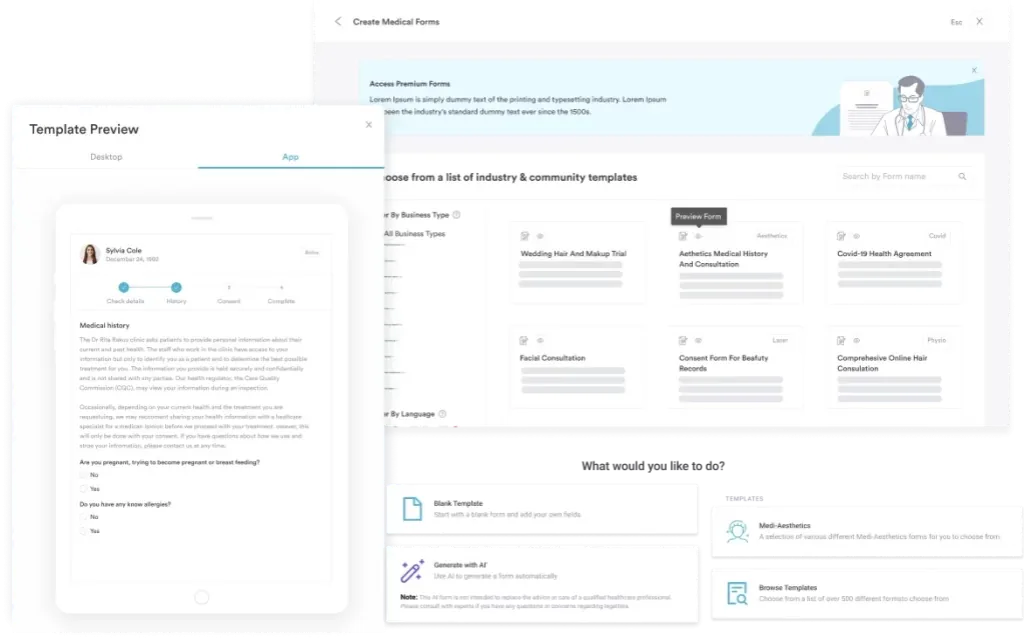
Run a documentation pre-check before each T2001 billing cycle. Confirm the physician order is dated before the trip. Check that the trip log shows departure and arrival times. Make sure the attendant’s credentials are current. Match the ICD-10 codes on the transport claim to those on the appointment claim. Catching a missing document before submission costs seconds, while correcting a denied claim costs hours.
T2001 sits in a short range of transportation HCPCS T-codes, and each one covers a different part of the service. Picking the wrong one is a common error, especially confusing T2001 (the attendant) with T2002 (per diem transportation) or T2003 (encounter/trip).
The NLM HCPCS Level II lookup carries current descriptions to check before submission. The lookup below runs the same range the other way round, from what you are billing to the code that covers it.
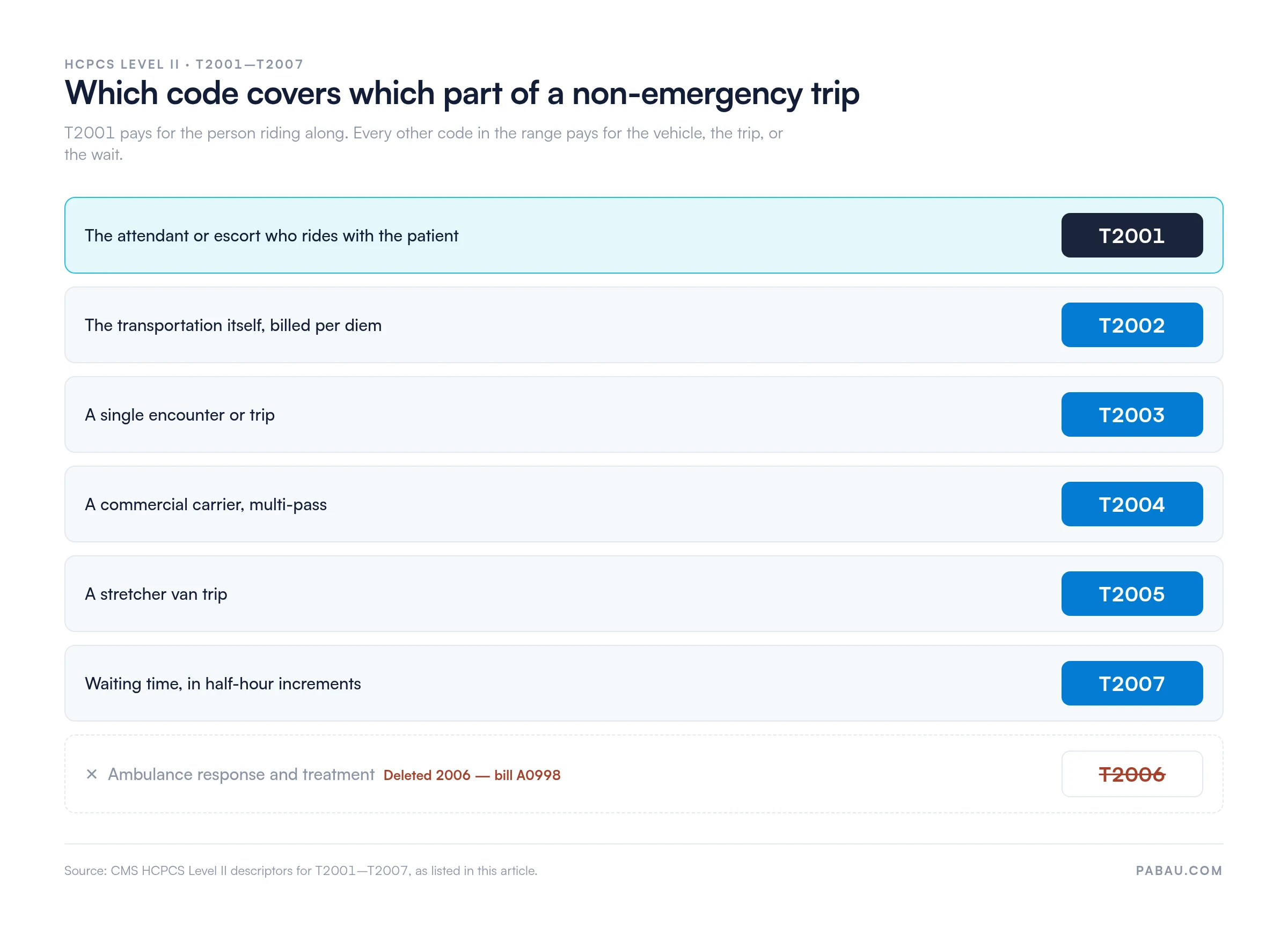
T2001 is the only code in the range that pays for the attendant or escort. The other active codes pay for the vehicle, the trip, or the waiting time. Adapting the patient’s own vehicle instead of paying for a ride bills outside this range, under HCPCS code T2039.
A pass covering multiple rides on a commercial carrier bills under HCPCS code T2004, not as an attendant line.
A single NEMT claim may carry T2001 alongside a transport code where state Medicaid policy allows separate billing. If the vehicle waits on site during the appointment, that wait bills under HCPCS code T2007 in half-hour increments. A residential waiver per diem such as HCPCS code T2033 never bundles non-emergency transportation.
T2001 denials cluster around five predictable mistakes, and a pre-submission review catches all of them. The denial codes a payer returns name which mistake was made, so read them before reworking the claim.
Tracking denial patterns across T2001 claims over 90 days shows which of the five errors your program repeats most. That reading points staff training at one specific step instead of the whole process.
NEMT billing is repetitive, state-specific, and documentation-heavy. Each trip produces a small claim with a narrow margin for error and its own document set. Errors accumulate when that work is done by hand at volume.
Practice management software like Pabau handles the parts that repeat. Its automated claims management runs eligibility checks, builds claims with modifier support, and flags missing documents before submission.
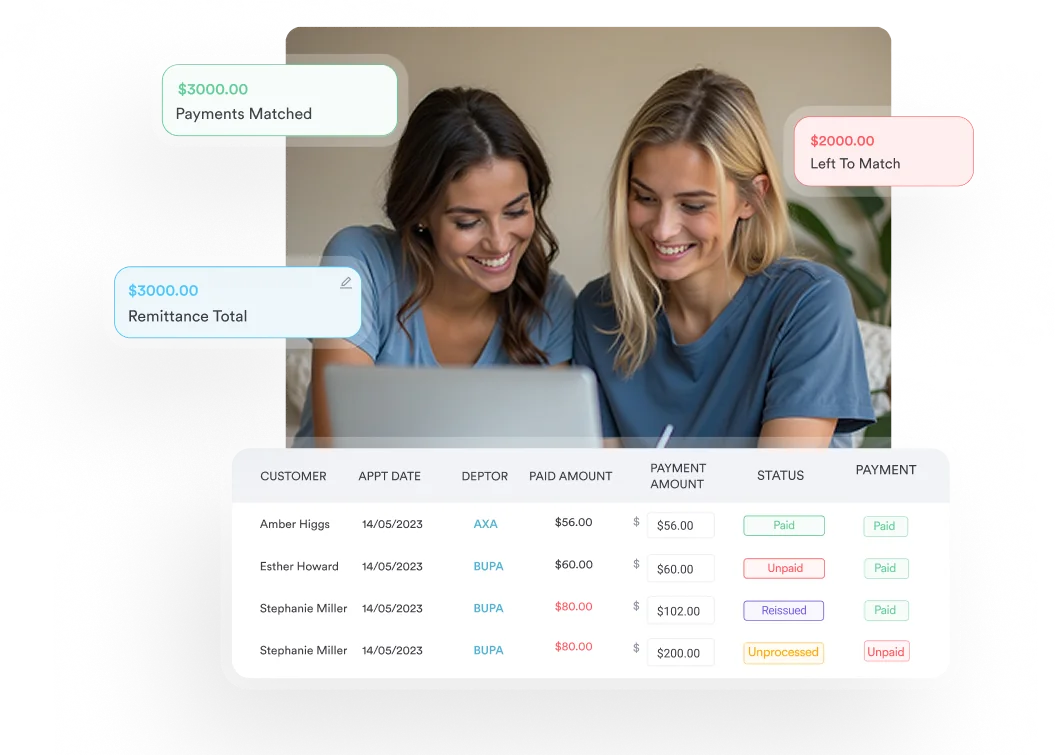
The platform validates claims against payer edits through clearinghouse infrastructure before they reach Medicaid adjudication, which lowers first-pass denial rates. Electronic remittance advice is processed in the same system, so denial reason codes return to the workflow instead of a separate inbox.
For a provider filing dozens of T2001 claims a week, that loop between submission, adjudication, and correction shortens the revenue cycle.
Build a reusable T2001 claim template in your claims management system. Pre-populate your most common Medicaid payer, the state’s billing unit, and the modifiers it requires. Use it as the starting point for every trip claim. The template removes the per-claim decisions where unit and modifier errors start.

Pabau’s claims management software applies modifiers, flags missing documentation before submission, and tracks claim status across Medicaid payers. Your NEMT claims get paid faster, with fewer denials.

T2001 claims fail for a short list of reasons. The usual four are the wrong unit, a missing modifier, an incomplete trip log, and an undocumented diagnosis. None of them is a hard coding problem. Each one is a step someone skipped under time pressure, and a pre-submission check catches all four.
The providers who stop reworking T2001 denials are the ones who moved the checking upstream, into the trip record itself. That costs a few seconds per trip and returns hours of rework. Book a demo to see how Pabau handles Medicaid and NEMT billing end to end.

Need a foundation for clean claim submission? Clean claim submission best practices outlines the pre-submission steps that reduce first-pass denial rates across Medicaid and commercial payers.
Want to understand how remittance data improves billing accuracy? Electronic remittance advice guide explains how ERA files feed denial reason codes back into your billing workflow for faster correction.
Looking to reduce billing compliance risk? Superbill documentation guide covers how accurate superbill creation supports downstream claim accuracy and audit readiness.
HCPCS code T2001 covers non-emergency transportation where a patient attendant or escort accompanies the patient to a medical appointment. It captures the attendant or escort service specifically, not the vehicle trip itself, and is billed under state Medicaid programs.
T2001 is covered only by Medicaid. Medicare Part B does not reimburse non-emergency medical transportation as a standard benefit. Some Medicare Advantage plans offer supplemental NEMT benefits, but T2001 as an HCPCS T-code is not payable under the Medicare Physician Fee Schedule.
The billing unit depends on your state Medicaid program’s definition. Some states reimburse T2001 per trip, one-way or round-trip, while others pay per mile. Confirm the unit definition in your state’s current NEMT provider manual or fee schedule before submitting a claim.
Common modifiers used with T2001 include HA for a child or adolescent program and HB for an adult program. SE marks a state-defined exception, and U1-U9 are payer-defined state-specific modifiers. Modifier requirements vary by state and by managed care organization. Always verify them against your state’s Medicaid provider manual.
Required documentation typically includes a dated physician order and a completed trip log with departure and arrival times. You also need attendant credential records, prior authorization where your program requires it, and matching ICD-10 diagnosis codes. Requirements vary by state Medicaid program.
T2001 pays for the patient attendant or escort who accompanies the patient. T2002 pays for the non-emergency transportation itself, billed per diem, and does not cover the attendant. One trip may generate both codes where state policy allows each component to be billed separately.



