

HCPCS code E0198: Water pressure pad billing guide
HCPCS code E0198 is a water pad for a standard mattress HCPCS code E0198 is the ...

Last Updated: Oct 13, 2026
J9035 is the HCPCS Level II code for injection, bevacizumab, 10 mg.
In short, this reference covers the official descriptor, unit calculation, Medicare reimbursement methodology, covered ICD-10 diagnosis codes, biosimilar code distinctions, place of service rules, and documentation requirements for a clean J9035 claim. Rates change quarterly - always verify current figures against the CMS ASP Drug Pricing Files before submitting.
Let Pabau's smart automation suggest the right codes, reduce claim denials, and keep your practice compliant—effortlessly.
Automate repetitive tasks and focus on what matters most—your patients.
Reduce coding errors and ensure compliance with the latest regulations.
Clean claims, fewer denials, and faster reimbursements.
Powerful insights and reporting to help your practice thrive.
HIPAA compliant SOC 2 certified GDPR-compliant Trusted by 4,000+ clinics worldwide

HCPCS Code J9035 describes bevacizumab (Avastin), billed per 10 mg administered – divide the total dose in mg by 10 to get your unit count.
Medicare reimburses J9035 at ASP plus 6% in physician office settings; rates update quarterly and must be verified against current CMS ASP pricing files.
Billing the wrong number of units is the most common audit trigger for J9035 – always document the exact milligrams administered, not the vial size.
Practice management software like Pabau centralizes the dose, diagnosis, and prior-authorization documentation that supports accurate J9035 billing.
HCPCS Code J9035 is the Level II code assigned by CMS to bevacizumab, the VEGF-inhibiting monoclonal antibody marketed as Avastin by Genentech/Roche. The official descriptor reads: Injection, bevacizumab, 10 mg. In addition, this is a chemotherapy J-code in the antineoplastic drug category, billed per 10 mg of drug administered by intravenous infusion.
Other antineoplastic drugs follow the same per-10-mg billing convention.
According to the CMS HCPCS Level II overview, J-codes in the antineoplastic category apply to drugs administered by a healthcare professional in a clinical setting. J9035 covers both the reference product (Avastin) and, in certain CMS determinations, biosimilar bevacizumab products – though biosimilars increasingly carry their own Q-codes. See the biosimilars section below for current code assignments.
The per-10-mg billing unit is where most J9035 claim errors originate. Bevacizumab vials come in 100 mg/4 mL and 400 mg/16 mL concentrations. Billing staff who enter the vial count rather than calculating actual milligrams administered will consistently overbill, which is an audit red flag. Instead, the correct formula is simple: units billed = total mg administered divided by 10.
Round to the nearest whole unit when the administered dose produces a fraction. CMS billing policy for Part B drugs does not allow billing for partial units. Ultimately, always base the unit count on the dose actually administered, documented in the infusion record, not the amount prepared or ordered.
In addition. When bevacizumab is delivered through a central venous catheter, bill the catheter supply separately under C1722 rather than folding it into the drug charge.
Document the exact milligrams administered in the infusion record before the claim is built. If waste occurs because the calculated dose does not use a full vial, bill the wasted amount on a separate line with modifier JW. If there is no waste, modifier JZ is mandatory on every applicable single-dose-container claim – report it even when the full vial was administered.
Medicare Part B covers J9035 for FDA-approved oncology indications and for off-label uses recognized by CMS-approved compendia. In addition, coverage is governed by CMS billing article A52370 and applicable Local Coverage Determinations (LCDs) from your Medicare Administrative Contractor (MAC).
Off-label coverage requires documentation that the indication is listed in a CMS-recognized compendium such as the NCCN Guidelines or the AMA Drug Evaluations. Understanding who can administer IV infusions is also relevant to coverage determination, as place of administration affects which benefit category applies.
FDA-approved indications for bevacizumab (Avastin) include:
Colorectal cancer, the most common bevacizumab indication.
For example, off-label coverage for wet age-related macular degeneration (AMD) via intravitreal injection may be available under certain MAC jurisdictions and compendium support. Verify with your specific MAC before billing off-label indications, as prior authorization requirements and coverage criteria vary by jurisdiction.
Prior authorization turns on the diagnosis a payer sees, and that rule reaches far beyond oncology. An orthopedic claim carrying S82.022J meets the same medical-necessity test.
A weight loss clinic platform keeps GLP-1 dosing, stock, and follow-ups aligned across the whole program.
Every J9035 claim requires an ICD-10-CM diagnosis code that supports medical necessity, as required by CMS billing article A52370. In other words, the diagnosis code must reflect the condition being treated, not the drug administered. The table below lists the primary ICD-10-CM codes that support coverage for bevacizumab infusion across major cancer types.
This table reflects commonly accepted ICD-10-CM codes. However, always verify against your MAC’s current LCD and the CMS Medicare Coverage Database before submitting claims. The most specific code available must be used – unspecified codes invite additional scrutiny.
Specificity on the diagnosis line matters as much as the NDC you report beside the drug. Laterality is part of that detail, which is why a code such as S77.21XA names the side treated.
Similarly, practices billing for the gynecologic indications – cervical, ovarian.
Medicare reimburses J9035 using the Average Sales Price (ASP) methodology. In particular, the standard payment for physician office settings is ASP plus 6%. By contrast, hospital outpatient department (HOPD) reimbursement follows the Outpatient Prospective Payment System (OPPS) and is typically lower on a per-unit basis. The 6% add-on covers storage, handling, and administration overhead in the physician office setting. Batch submissions group many claims into one claim file, and one malformed record can hold up the batch.
ASP rates update every quarter, and the dollar figure per 10 mg changes with each quarterly CMS release – always confirm the current rate before submitting claims. In contrast, commercial payer rates for J9035 vary significantly by payer and contract and are not governed by the ASP methodology.
The place of service (POS) code on a J9035 claim directly affects payment rate. For example, mismatched POS codes – billing POS 11 for a service performed at a hospital outpatient facility – are a common reason for post-payment adjustments.
Therefore, practices operating across multiple settings (office, infusion suite, hospital) should verify which POS applies to each administration. Those running a mobile infusion service should review considerations for running a mobile IV therapy business to understand setting-specific billing implications.
Hospital outpatient claims use the UB-04 form with bill type 13X. Conversely, physician office claims use the CMS-1500. The claim form type must match the billing entity and the setting where the service was actually performed.
Setting drives payment on every claim type, not just drug claims. A sequela visit coded S80.01XS faces the same place-of-service test.
In addition, several FDA-approved bevacizumab biosimilars are available in the US market. Each one carries its own dedicated HCPCS Q-code rather than sharing J9035, so billing the reference product code for a biosimilar will trigger a denial. Confirm the correct code for each biosimilar before every claim cycle.
Notably, for bevacizumab specifically, none of the FDA-approved biosimilars share J9035 – each has carried its own Q-code since the effective date CMS assigned at launch. The AAPC HCPCS code lookup confirms current code assignments, and the quarterly CMS ASP drug pricing file lists the payment rate for each Q-code.
Choosing between a reference product and its biosimilar rewards the same care as choosing between neighboring diagnosis codes. A specific option such as S82.013B leaves the payer nothing to infer.
Documentation for a J9035 claim must support medical necessity, confirm the dose administered, and link the treatment to a covered diagnosis. In fact, incomplete documentation is the primary driver of post-payment audits for high-cost oncology drugs.
Practices benefit from using digital clinical documentation forms to capture infusion data at the point of care rather than reconstructing it after the fact.
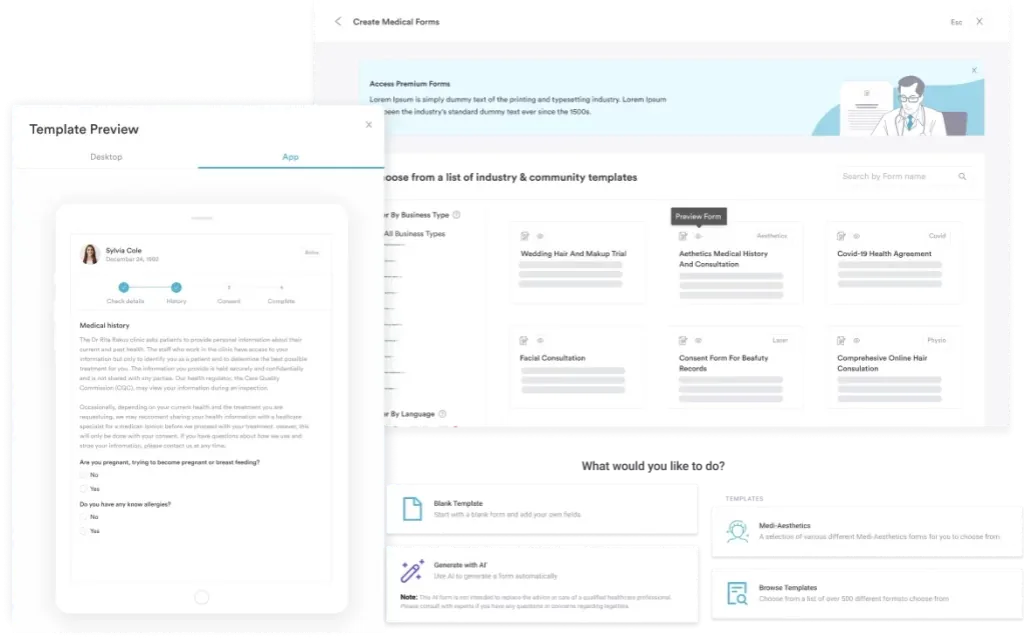
Required documentation for a clean J9035 claim includes:
Good medical practice compliance workflows build documentation capture into the clinical workflow rather than treating it as a billing afterthought. In particular, auditors reviewing J9035 claims look first at whether the dose in the infusion record matches the units billed on the claim.
JW and JZ reporting depends on a note recording discarded volume at the time of administration. Encounter type carries the same weight when a follow-up visit is billed under S78.112D.
In general, clean J9035 claims follow a predictable sequence. Errors cluster around three failure points: wrong units, wrong POS, and missing or mismatched diagnosis codes. Staff with experience launching an IV infusion practice know that billing accuracy for high-cost drugs requires both system support and staff training.
Wrong units and wrong characters produce the same denial letter. Orthopedic billers hit it when a healing status like S79.001G is entered from memory rather than the note.
The most common errors that trigger J9035 denials or audits are:

Pabau helps infusion practices capture administered doses and diagnosis details at the point of care, so billing staff have everything they need to build accurate HCPCS claims. See how Pabau keeps J9035 documentation audit-ready.

Billing J9035 accurately at volume requires more than staff training. Instead, high-cost drug claims need a system that captures the administered dose in the clinical record and carries it through to the claim without manual re-entry.
Re-keying milligram figures from paper infusion sheets into a billing platform is a consistent source of unit errors. Oncology and infusion practices using IV therapy practice management platforms designed for drug administration workflows reduce this risk by connecting the clinical record to the claim at the source.
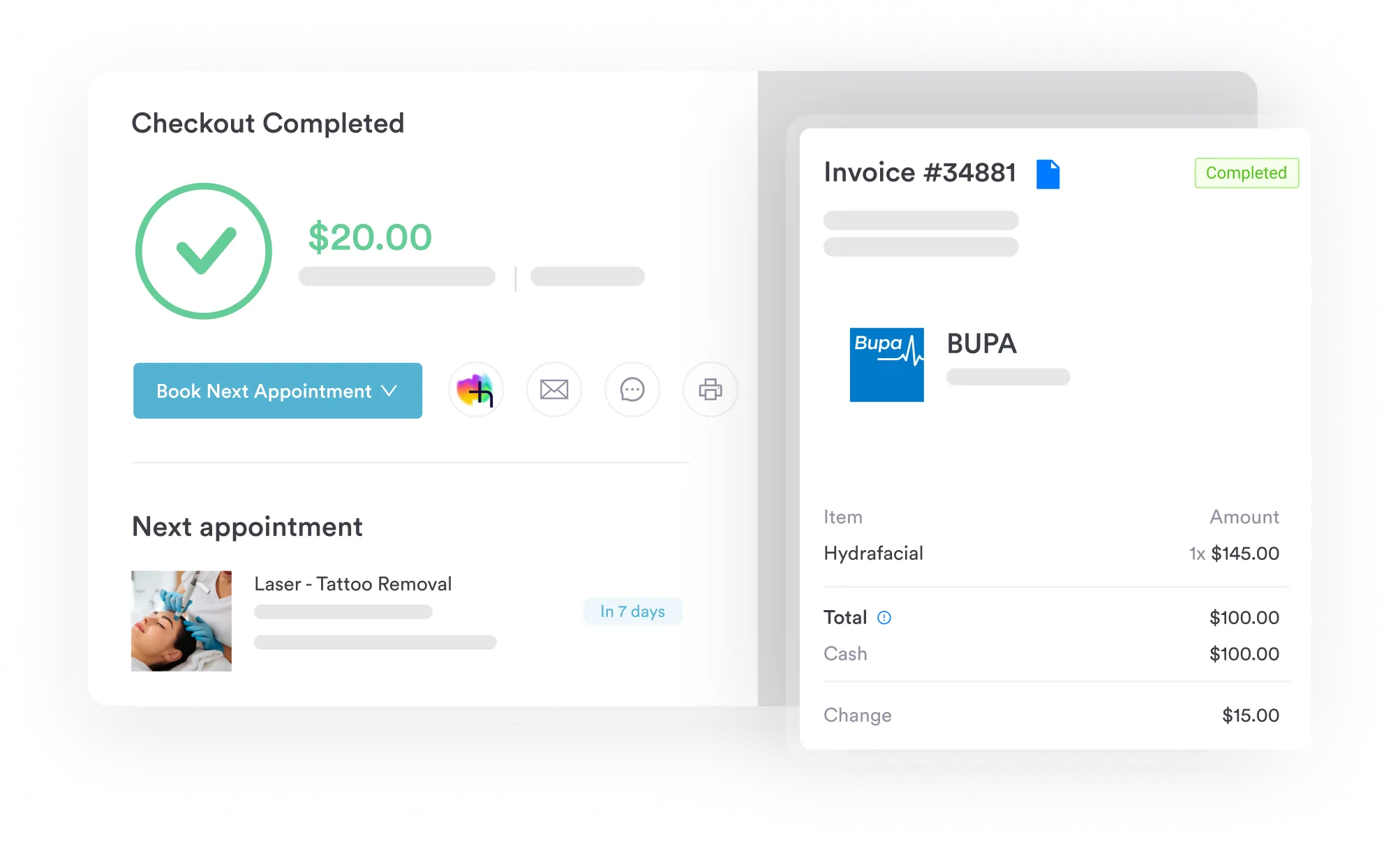
Pabau centralizes the documentation that supports accurate J9035 billing: the milligrams administered, the diagnosis code tied to the treatment plan, and any prior-authorization records. Staff can pull the infusion record straight from the patient’s chart instead of reconstructing it after the fact, which cuts the documentation gaps that lead to post-payment audits.
Practices managing EMR software for IV therapy clinics at scale see the biggest benefit when clinical documentation and billing prep run through the same platform rather than separate systems.
Run a monthly audit of your J9035 claims by comparing the units billed against the milligrams documented in infusion records. A pattern of discrepancy almost always traces to a specific staff member or workflow step. Catching it internally is far less costly than a RAC audit finding the same pattern first.
Ultimately, J9035 claims are high-value and closely reviewed. The unit calculation error (vials billed instead of milligrams administered) remains the single most common audit trigger, and it is entirely preventable with a clinical workflow that captures the administered dose before the claim is built.
Pabau keeps drug administration documentation connected to the diagnosis and dosing details billing staff need, so the units on the claim reflect what the infusion record shows. For oncology and infusion practices ready to tighten their J9035 billing accuracy, that starts with a documentation workflow built around the point of care.

Coding a lasting effect from an old hip injury? ICD-10 code S70.259S codes a late effect of a prior superficial foreign body injury to the hip.
Coding a follow-up visit for a hip puncture wound? ICD-10 code S71.031D covers a right hip puncture wound at a subsequent encounter, such as a wound check.
Coding a femur fracture that failed to heal? ICD-10 code S72.309N covers an unspecified femoral shaft fracture that has failed to unite.
HCPCS Code J9035 bills for bevacizumab (Avastin), a VEGF-inhibiting monoclonal antibody used to treat cancers including metastatic colorectal, non-small cell lung, glioblastoma, renal cell, and gynecologic malignancies. In addition, it is billed per 10 mg by IV infusion.
Bill one unit of J9035 per 10 mg of bevacizumab administered: divide total milligrams by 10 and round to the nearest whole number. Bill only the administered amount, never vial size or prepared dose.
Medicare reimburses J9035 at ASP plus 6% in physician office settings, updated quarterly. The per-unit amount changes with each CMS quarterly ASP release, so check the current ASP file before billing.
The ICD-10-CM code must reflect the patient’s confirmed malignancy. Common codes include C18.x-C20 (colorectal), C34.1x-C34.9x (non-small cell lung), C71.x (glioblastoma), C64.x (renal cell), and C53.x (cervical). Use the most specific code and verify against your MAC’s LCD.
J9035 is the reference-product code for Avastin (Genentech/Roche). FDA-approved biosimilars each carry their own Q-code and never bill under J9035: Mvasi (bevacizumab-awwb) Q5107, Zirabev (bevacizumab-bvzr) Q5118, Vegzelma (bevacizumab-adcd) Q5129, and Alymsys (bevacizumab-maly) Q5126.
The bevacizumab J code is J9035 – the HCPCS Level II code to bill Medicare and commercial payers for intravenous bevacizumab (Avastin), per 10 mg administered, in the antineoplastic chemotherapy J-code category.
Yes. J9035 can be billed in physician office (POS 11) and outpatient hospital (POS 22) settings. However, reimbursement differs: physician office uses ASP plus 6%, hospital outpatient falls under the Outpatient Prospective Payment System (OPPS).



