ICD-10 code S61.201A: Open wound of left index finger without nail damage
ICD-10 code S61.201A covers a left index finger wound of unstated type ICD-10 co...

Last Updated: Oct 16, 2026
Billable Code Specific Code
S72.309N is the billable ICD-10-CM code for unspecified fracture of shaft of unspecified femur, subsequent encounter for open fracture type IIIA, IIIB, or IIIC with nonunion.
It is a billable ICD-10-CM code for fiscal year 2026 and is accepted on the CMS-1500 claim form. The table below shows the core attributes at a glance.
Let Pabau's smart automation suggest the right codes, reduce claim denials, and keep your practice compliant—effortlessly.
Automate repetitive tasks and focus on what matters most—your patients.
Reduce coding errors and ensure compliance with the latest regulations.
Clean claims, fewer denials, and faster reimbursements.
Powerful insights and reporting to help your practice thrive.
HIPAA compliant SOC 2 certified GDPR-compliant Trusted by 4,000+ clinics worldwide

S72.309N describes an unspecified fracture of the femoral shaft at a subsequent encounter, with an open type IIIA, IIIB, or IIIC nonunion.
The 7th character N means open type IIIA, IIIB, or IIIC with nonunion, which separates it from K, M, and the malunion suffixes.
Code laterality as unspecified only when no document in the record names the right or left femur.
Nonunion must be confirmed by the treating surgeon at the current visit, not carried forward from an earlier note.
Practice management software like Pabau helps orthopedic practices capture that detail and track subsequent-encounter claims across the care episode.
Every segment of ICD-10 code S72.309N carries distinct clinical meaning. Read the code from left to right and each component tells you what the documentation has to show.
The word “unspecified” appears twice in the description, and it refers to two different missing details. First, the fracture morphology is not specified, so the report does not distinguish displaced from nondisplaced or transverse from comminuted. Second, the side is not specified, so neither the right nor the left femur is documented. Payment posting from a remittance file is faster than manual entry and keeps the adjustment reasons attached. The billing cycle for one claim can run weeks, and most of that time is spent waiting on a payer.
Both reflect what the record failed to capture, not a deliberate clinical choice. Nonunion itself means the fracture has not healed within the expected timeframe and shows no radiographic sign of progressive healing.
For billing, the surgeon’s notes must state nonunion, or radiology must confirm absent bridging callus. Without that confirmation, S72.309N carries a medical necessity risk. Practices running orthopedic claims management workflows can catch a missing nonunion statement before the claim goes out.
ICD-10-CM requires a 7th character on every fracture code to capture the encounter type and the healing status. For S72.309, there are 16 valid options. The extension table below is worth keeping within reach for any femoral fracture claim.
The 7th character is not optional. Submitting S72.309 without one produces an invalid code that will be rejected at adjudication. According to CMS ICD-10-CM coding guidelines, the character reflects the encounter type and healing status at this visit, not at the original injury.
Suffix S sits apart from the rest, because a sequela code describes a residual condition rather than the fracture itself, as in S72.124S. Coders who manage physical therapy EMR workflows should build encounter-type verification into the post-visit documentation review.
The Gustilo-Anderson classification decides which 7th character applies to an open fracture. Developed in 1976 and refined in 1984, it grades open fractures by wound size, contamination, and soft tissue damage. The N suffix applies only to types IIIA, IIIB, and IIIC.
Types IIIA, IIIB, and IIIC share one suffix group, because ICD-10-CM does not subdivide them at the 7th character. The operative report still has to name the subtype for clinical accuracy. Coders, though, do not need to separate IIIA from IIIB or IIIC when they pick the character.
Trauma and revision surgery is where sports medicine practices meet Gustilo documentation most often.
Knowing where S72.309N sits in the ICD-10-CM tree makes the S72 category easier to navigate. It also shows you when a more specific code is available. The full hierarchy is:
S72.30 is the parent for unspecified laterality. S72.301 covers the right femur shaft and S72.302 covers the left. Where laterality is documented in the clinical record, the laterality-specific code is the required choice.
The neck of the femur has its own branch of the tree, so a midcervical fracture takes a code such as S72.036E instead. The CMS ICD code lists confirm S72.309N as a billable code accepted for claim submission.
Most coding errors in this group happen at the choice between S72.309N and the codes next to it. Three documented elements decide it: Laterality, open fracture classification, and healing status. The decision table below maps each variable to the correct code.
The most common substitution error is reaching for S72.309N when the operative report clearly states right or left femur. Laterality documented anywhere in the encounter record requires the laterality-specific code, including the radiology report, the pre-op H&P, and the anesthesia note.
Malunion works the same way in other bones, where a code such as S49.109P marks bone that healed in a poor position. Coders working in client record systems should cross-reference every encounter document before defaulting to unspecified.
The AAPC Codify ICD-10-CM lookup shows the whole S72.30x group side by side.
The ICD-10-CM Official Guidelines for Coding and Reporting treat any encounter after active fracture treatment as a subsequent encounter. Routine follow-up, rehabilitation, and complication management all qualify, once the surgical or emergency treatment is complete.
Nonunion carries a specific clinical definition. Healing has ceased without complete bony union, usually confirmed by imaging that shows no progressive callus formation. The comparison point is the healing time expected for that fracture type and site.
The surgeon’s documentation has to support the finding. Using the N suffix without a documented nonunion is an unsupported claim, and it may trigger a payer audit. Practices with compliance management workflows can build nonunion prompts into their orthopedic encounter templates.
For the harder sequencing questions, the American Hospital Association Coding Clinic is the official interpretive resource for ICD-10-CM, fracture nonunion included.
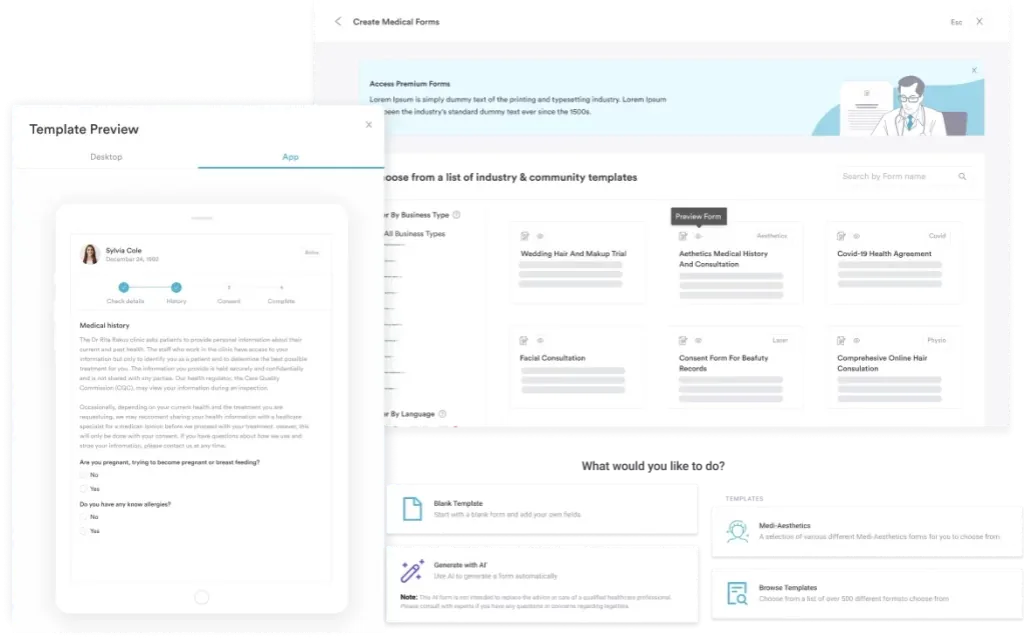
Practices using Pabau’s digital forms can build a subsequent-encounter form that captures laterality, Gustilo type, and healing status as discrete fields. That leaves less room for a thin note to push the coder toward an unspecified code.
Four documentation elements must be present in the encounter record to support S72.309N. If any one of them is missing, a more defensible code exists. Treat the four as a pre-submission checklist.
Practices that use structured capture forms for subsequent fracture encounters can prompt the provider to answer all four points before the note is signed. The return-to-running protocol is a parallel example of structured musculoskeletal documentation.
In most orthopedic practices, the missing detail surfaces after the denial. The claim goes out with an unspecified code, the payer asks for the operative note, and someone spends an afternoon pulling records from three places.
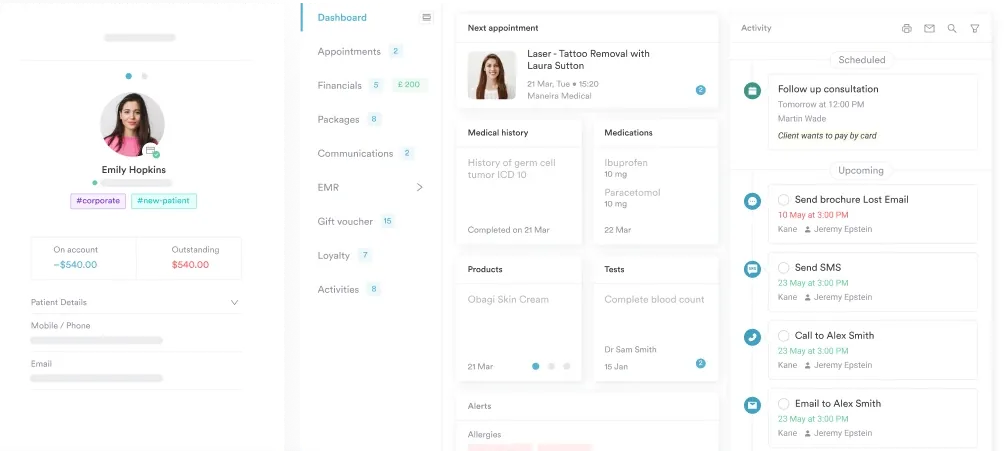
Pabau keeps the whole episode in one client record. The initial operative report, the imaging, and every follow-up note sit against the same client. A coder can check laterality and Gustilo type without leaving the chart. Custom forms make nonunion confirmation a required field instead of a line buried in free text.
Claims then leave with the specificity the record supports, and the practice can see which subsequent-encounter claims are still unpaid. Every Pabau subscription includes the documentation, scheduling, and claims tools, so none of this sits behind a higher tier.

Pabau helps musculoskeletal and orthopedic practices capture the clinical detail coders need at every subsequent encounter, reducing unspecified code usage and improving claims accuracy.

S72.309N is a legitimate code, and it is also the code you land on when the record ran short of detail. Each time you reach for it, ask one question. Is the side genuinely absent from the chart, or only from the note in front of you?
The trade-off is worth naming. A query to the surgeon costs a day. A laterality-specific code that survives an audit is worth a good deal more than that day. Practices that fix the documentation at the point of care never have to weigh the two.
Book a demo to see how Pabau captures laterality, Gustilo type, and nonunion confirmation at every subsequent encounter.

Billing an injection at the same visit? CPT code 20550 covers tendon sheath injections, with the documentation and modifier detail payers look for.
Coding a residual condition rather than an active fracture? S43.121S shows how the sequela suffix works on a shoulder injury.
Need the soft tissue side of a musculoskeletal claim? S46.191A walks through muscle and tendon injury coding at an initial encounter.
Billing a follow-up that never becomes a visit? CPT code 99421 sets out the time and documentation rules for online digital care.
Handing a patient something they can claim on? Free superbill template comes with a filled-in example you can copy for your own practice.
S72.309N is a billable ICD-10-CM code for an unspecified fracture of the shaft of an unspecified femur. It applies at a subsequent encounter, where an open Gustilo type IIIA, IIIB, or IIIC fracture has gone on to nonunion. All three elements must be documented to support the code.
The 7th character N marks a subsequent encounter for an open Gustilo type IIIA, IIIB, or IIIC fracture that has developed nonunion. It is distinct from K, which is a closed fracture with nonunion, and from M, which is open type I or II with nonunion. The malunion equivalents are P, Q, and R.
Nonunion means the fracture has stopped healing without complete bony union. Malunion means it healed, but in an abnormal position. In ICD-10-CM, nonunion takes 7th character K, M, or N depending on fracture type. Malunion takes P, Q, or R instead. Confusing the two leads to the wrong code and a likely denial.
Laterality is coded as unspecified only when nothing in the encounter record names the right or left femur. That includes the operative report, radiology, the H&P, and the anesthesia note. If the side appears anywhere, use S72.301N for the right femur or S72.302N for the left. Choosing unspecified to simplify coding is a compliance violation.
Yes. S72.309N is a billable, specific ICD-10-CM code for fiscal year 2026, and it is accepted on the CMS-1500 claim form. The CMS ICD-10-CM tabular list is the source to check if a payer questions it.
The siblings run from S72.309A through S72.309S, one for each valid 7th character. The closest laterality siblings are S72.301N for the right femur shaft and S72.302N for the left. The two most often confused with N are S72.309K and S72.309R.