

HCPCS code E0198: Water pressure pad billing guide
HCPCS code E0198 is a water pad for a standard mattress HCPCS code E0198 is the ...

Last Updated: Oct 13, 2026
J0290 is the HCPCS Level II code for injection, ampicillin sodium, 500 mg.
Medicare pays J0290 under the Part B average sales price (ASP) methodology, which CMS updates every quarter. Commercial payers set their own contracted rates for the same code.
Let Pabau's smart automation suggest the right codes, reduce claim denials, and keep your practice compliant—effortlessly.
Automate repetitive tasks and focus on what matters most—your patients.
Reduce coding errors and ensure compliance with the latest regulations.
Clean claims, fewer denials, and faster reimbursements.
Powerful insights and reporting to help your practice thrive.
HIPAA compliant SOC 2 certified GDPR-compliant Trusted by 4,000+ clinics worldwide

HCPCS Code J0290 covers an injection of ampicillin sodium, 500 mg, and is billed to Medicare Part B and most commercial payers.
One billing unit equals 500 mg. A 1 g dose is billed as 2 units and a 2 g dose as 4 units.
Medicare pays J0290 under the average sales price (ASP) methodology, which CMS updates every quarter. Rates vary by locality and by payer.
The J-codes either side of J0290 are not ampicillin. J0280 is aminophylline, J0285 is amphotericin B, and J0300 is amobarbital.
Practice management software like Pabau maps drug administration records to HCPCS J-codes, so unit counts and NDC data reach the claim without manual re-entry.
HCPCS Code J0290 is a Level II code in the J-series of drug injection codes, maintained by CMS. It describes a single injection of ampicillin sodium, 500 mg, given parenterally. Providers bill it to Medicare Part B and most commercial payers when they purchase and administer the drug under the buy-and-bill model.
J-codes like J0290 are Level II HCPCS codes used for drugs and biologicals given in outpatient or physician-office settings. They sit outside the CPT code set, and CMS updates them annually. For a wider view of the series, AAPC’s HCPCS lookup gives searchable access to every J-code.
Ampicillin sodium is a broad-spectrum beta-lactam antibiotic in the penicillin family. It inhibits bacterial cell wall synthesis and covers both gram-positive and gram-negative organisms. Clinicians give it parenterally when an infection needs rapid systemic coverage, including respiratory and urinary tract infections, meningitis, and bacteremia.
For billing, the amount administered is what matters. J0290 is billed per 500 mg given, whatever vial size the practice stocks. The code appears in IV therapy and infusion settings, hospital outpatient departments, and physician offices. Refer to the FDA prescribing information for clinical indications. This guide covers the billing mechanics.
Correct billing for J0290 starts with unit calculation. CMS defines one billing unit as 500 mg of ampicillin sodium. The units on the claim reflect the dose administered, not the number of vials opened. Most denials on this code trace back to unit count errors or a missing modifier.
Before submitting, confirm your practice’s procedure code fee schedule expectations. Check whether the payer requires prior authorization for outpatient antibiotic infusions, since some commercial plans add documentation requirements beyond Medicare’s rules.
One unit of J0290 equals 500 mg of ampicillin sodium administered. Divide the total dose in milligrams by 500 to get the unit count. The table below covers the doses that come up most often.
Doses that do not divide evenly into 500 mg increments are rounded to the nearest whole unit, because J-codes do not support partial units. Record the exact dose administered in the clinical note so the billed unit count holds up in a payer audit. Structured patient record documentation keeps the dose, route, and time in one place.
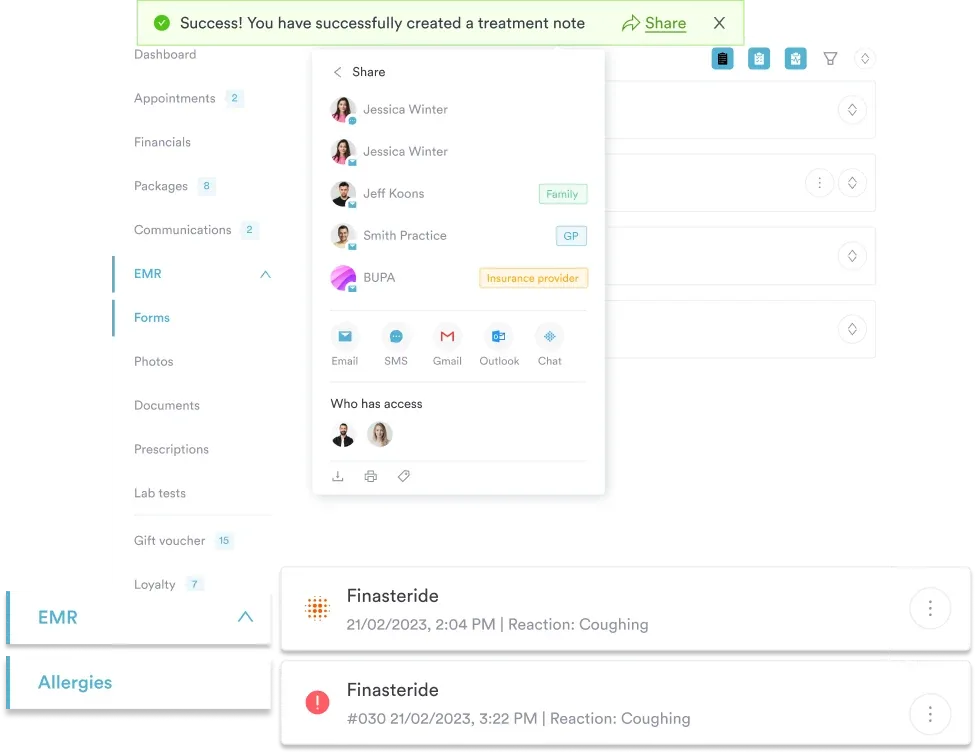
Modifiers tell the payer how the drug was given and whether any of the vial was discarded. The table below covers the modifiers that appear most often on J0290 claims. Verify requirements with each payer, since commercial policies differ from Medicare.
JW and JZ are the pair most often missed. Medicare expects one or the other on claims for drugs supplied in single-dose containers, so a J0290 line with neither can be returned unprocessed.
Medicare pays J0290 under the Part B drug methodology, based on average sales price. CMS updates ASP rates quarterly, so the allowable amount changes four times a year. Use the CMS Physician Fee Schedule lookup to confirm the current rate for your locality.
Commercial rates for J0290 are negotiated separately and can sit above or below the Medicare allowable. Verify contracted rates in your payer agreements rather than assuming parity with Medicare.
For most Part B drug codes, CMS pays ASP plus 6%. The practice buys ampicillin sodium at market cost, administers it, then bills J0290. The payment covers the drug cost and a small dispensing margin.
Primary care practices and infusion suites both carry that acquisition cost until the claim is paid. The buy-and-bill workflow below is worth running the same way every time:
Because ASP+6% ties payment to quarterly pricing updates, practices working from a static fee schedule risk billing at outdated rates.
Tracking acquisition costs against current ASP figures protects the margin on buy-and-bill drugs. A drug inventory management system that connects purchase cost to billing records cuts the reconciliation work.
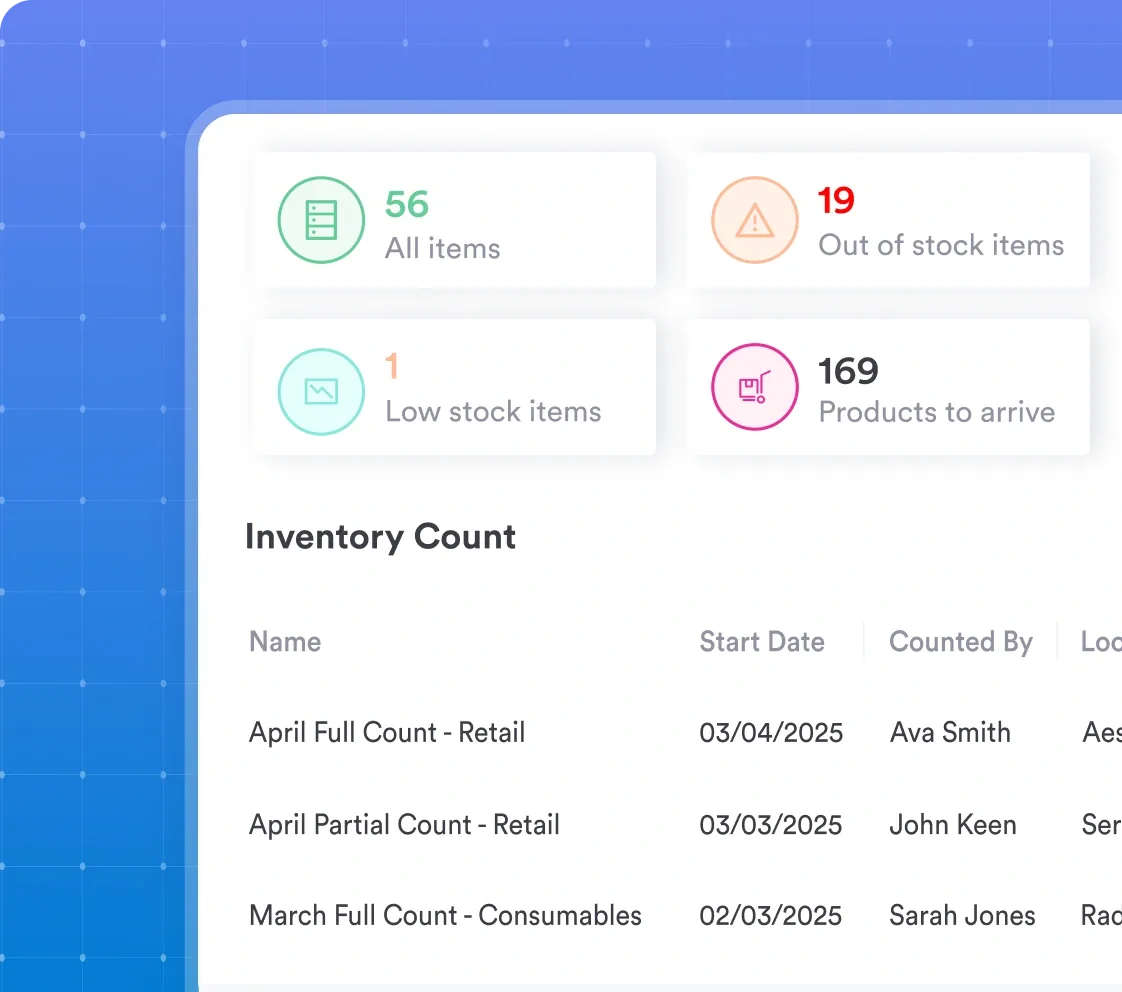
Audit your J0290 claims quarterly to coincide with CMS ASP updates. Pull every claim submitted in the prior quarter and compare the billed unit counts against the matching clinical notes. A unit count mismatch in even 5% of claims adds up to a material revenue shortfall over a full billing year.
CMS requires an NDC on claims for separately payable Part B drugs, including J0290. The NDC identifies the manufacturer and package size of the ampicillin sodium administered. A missing NDC, or one that does not match the product given, is a common reason for rejection.
NDC numbers are 11 digits in the format XXXXX-XXXX-XX, covering labeler, product, and package. Manufacturers make ampicillin sodium 500 mg vials under different NDCs, so the number reported has to match the product purchased. Cross-reference the CMS ASP pricing files before submission.
NDC values for ampicillin sodium 500 mg vials vary by manufacturer and lot. The table above describes the reporting structure CMS requires, not the values themselves. Confirm those against the current crosswalk file and against the product your practice actually bought.
Every J0290 claim needs at least one ICD-10-CM diagnosis code that supports medical necessity for ampicillin sodium. Payers read the diagnosis code to confirm the drug suits the stated condition. The table below lists the pairings that come up most often, and the code you use must match what the record documents.
Susceptibility matters here as much as the code list does. Organisms with intrinsic resistance to ampicillin, such as Pseudomonas aeruginosa, do not support medical necessity for J0290. Pairing one with the code invites a post-payment review. Diagnosis selection follows the documented condition, not whichever code is most likely to clear a payer edit. The denial code on the remittance names the reason, and grouping by that reason turns rework into prevention.
J0290 sits in a cluster of antibiotic injection codes that are easy to confuse. Picking the wrong one, especially where the dose or formulation differs, creates a coding error and possible overpayment liability. Use the table below to confirm J0290 is the right code before you submit.
Two of these define the unit differently, which is where the arithmetic breaks. J0295 is billed per 1.5 g of the combination product, and J2540 is billed in units of drug activity. J0690 shares the same 500 mg unit size as J0290, so the calculation carries straight over.
The codes immediately either side of J0290 are often assumed to be smaller or larger ampicillin doses. None of them contain ampicillin:
Ampicillin sodium has no lower-dose J-code. Every dose is billed through J0290 in 500 mg units, and the sulbactam combination carries its own code in J0295. Any billing sheet that lists J0280 or J0285 as an ampicillin strength needs correcting at source.
Never bill ampicillin sodium 500 mg under J3490. Unclassified codes bring extra documentation requirements and slow processing, and a specific code already exists. Other single-drug injection codes define the unit by drug amount in the same way, including J0745 and J0745 and J2597.
Most J0290 errors start where the clinical record and the billing system sit apart. A nurse documents “ampicillin 2 g IV” in one place, and a biller retypes it as a code and unit count somewhere else. The dose recorded in grams becomes two units instead of four, or the NDC never reaches the claim line.
Practice management software like Pabau closes that handoff. Pabau’s claims management software connects the treatment note to the billing layer. A documented dose maps to the matching HCPCS J-code, with the unit count already worked out. Billers review the claim rather than rekey it.
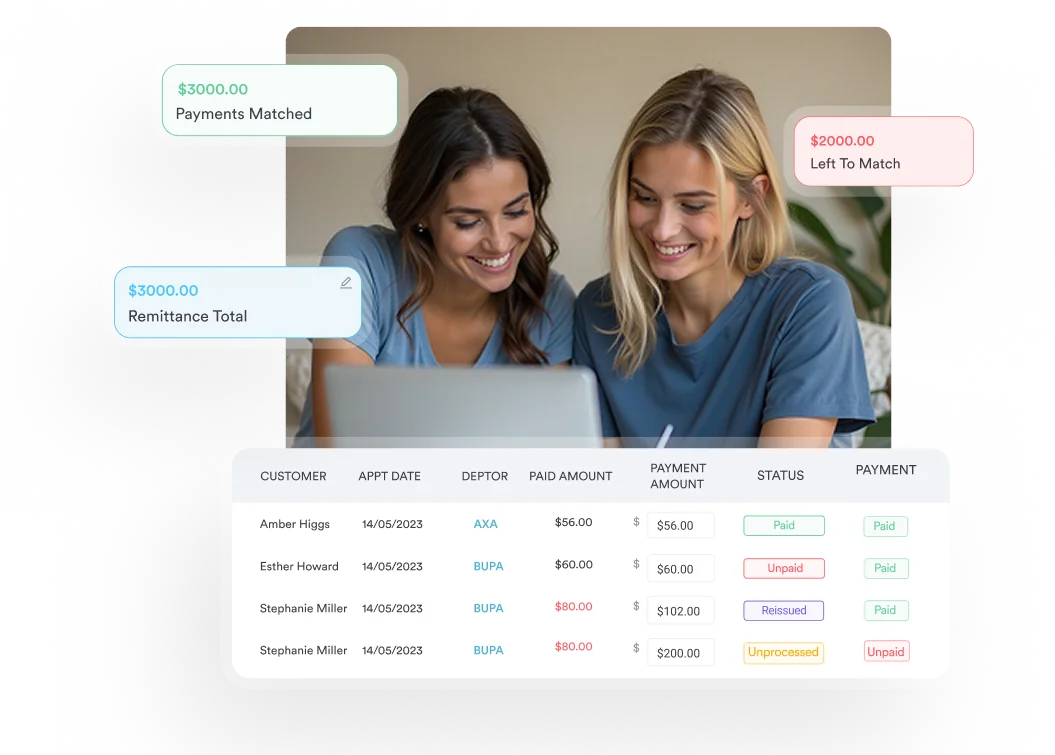
For practices running infusion services, Pabau covers IV drug administration workflows end to end. Scheduling, clinical documentation, NDC capture, and claim preparation all sit in one system, which removes the handoffs where J0290 denials begin.
Pabau also tracks inventory against administration records, so the cost of each ampicillin vial is tied to the claim line that bills it. Quarterly ASP reconciliation becomes a report you run rather than a figure you estimate. Practices billing several J-codes get that structure across the whole portfolio.

Pabau connects drug administration records to HCPCS J-code billing, so unit counts and NDC data flow from the clinical note to the claim. That means less manual re-entry and fewer denials.

Unit count and NDC accuracy decide whether a J0290 claim gets paid. Both are settled long before the claim is built, in how the dose was documented and how the vial was tracked.
Write the dose-to-unit conversion into your billing policy, and carry the NDC from the receiving shelf to the claim line without a manual retype. Practices that do both spend their denial time on genuinely contested claims instead of arithmetic.
If injectable drug billing is a regular part of your week, integrated practice management takes out the steps between administration and submission. Book a demo to see how the workflow handles J-code claims.

Coding a named choroidal condition without its own code? ICD-10 code H31.8 covers named choroidal conditions, such as choroidal folds and uveal effusion syndrome, that have no dedicated code.
Coding an unspecified choroid disorder? ICD-10 code H31.9 identifies an unspecified disorder of the choroid, the vascular layer between the retina and the sclera.
Coding a chorioretinal complication from a systemic disease? ICD-10 code H32 is the manifestation code used when a systemic disease produces chorioretinal complications, plus its sequencing rules.
Coding an unspecified retinal vascular occlusion? ICD-10 code H34.9 applies when a retinal vascular occlusion is confirmed but the vessel type isn’t documented.
HCPCS Code J0290 is a Level II J-code for an injection of ampicillin sodium, 500 mg. Providers bill it to Medicare Part B and to commercial payers. It applies when a provider purchases and administers the drug under the buy-and-bill model, typically in a physician office, infusion suite, or hospital outpatient setting.
Bill 2 units of J0290 for a 1 g (1,000 mg) dose of ampicillin sodium. One billing unit equals 500 mg, so divide the total dose in milligrams by 500 to get the unit count. A 2 g dose is 4 units and a 3 g dose is 6 units.
Medicare pays J0290 under the average sales price (ASP) methodology, typically at ASP plus 6%. CMS updates ASP rates quarterly, so the allowable amount changes four times a year. Use the CMS Physician Fee Schedule lookup with the current quarter’s data to find the rate for your locality.
No. J0280 is injection, aminophylline, up to 250 mg, and it holds no ampicillin at all. J0285 is amphotericin B and J0300 is amobarbital. Ampicillin sodium has no lower-dose J-code, so every dose is billed through J0290 in 500 mg units.
Common ICD-10 pairings with J0290 include A41.9 (sepsis, unspecified organism), G00.9 (bacterial meningitis), N10 (acute pyelonephritis), and L03.90 (cellulitis, unspecified). The diagnosis must reflect the documented clinical condition and support medical necessity for parenteral ampicillin.
Modifier requirements vary by payer. Medicare and many commercial payers expect modifier JA when ampicillin is given intravenously. Modifier 59 applies when J0290 is billed alongside another drug administration code on the same date. Single-dose vial claims also carry JW or JZ to report discarded drug.
There is no single NDC for J0290, because several manufacturers produce ampicillin sodium 500 mg vials under different NDC numbers. The NDC reported on the claim must match the product purchased. Check the drug label or packing slip against the current CMS NDC-to-HCPCS crosswalk file.
The ASP for J0290 is updated quarterly by CMS and varies by quarter and locality. Because the pricing changes every 90 days, there is no fixed rate to quote here. Download the current CMS ASP drug pricing file to find the exact ASP and the ASP+6% payment rate.
Under buy-and-bill, the practice purchases ampicillin sodium from a wholesaler, administers it to the patient, then bills Medicare or the commercial payer using J0290. Medicare pays at ASP+6%, covering the drug cost and a dispensing margin. Document the dose, route, NDC, and date before submitting.



