

HCPCS code E0198: Water pressure pad billing guide
HCPCS code E0198 is a water pad for a standard mattress HCPCS code E0198 is the ...

Last Updated: Oct 13, 2026
H0040 is the HCPCS Level II code for assertive community treatment program, per diem. It covers one calendar day of assertive community treatment (ACT) from a state-certified team, including psychiatric care, case management, crisis support, and community integration.
The code serves adults with serious mental illness, and state Medicaid agencies and Medicaid managed care plans are its main payers. Room and board is excluded. H0040 is often confused with H0035, which covers mental health partial hospitalization in a clinic or hospital setting.
Let Pabau's smart automation suggest the right codes, reduce claim denials, and keep your practice compliant—effortlessly.
Automate repetitive tasks and focus on what matters most—your patients.
Reduce coding errors and ensure compliance with the latest regulations.
Clean claims, fewer denials, and faster reimbursements.
Powerful insights and reporting to help your practice thrive.
HIPAA compliant SOC 2 certified GDPR-compliant Trusted by 4,000+ clinics worldwide

H0040 is a per-diem HCPCS Level II code for assertive community treatment (ACT) programs, and one unit equals one calendar day of ACT services.
Room and board is excluded from H0040 and may only be billed separately where the state plan allows it.
Missing prior authorization, incomplete daily service logs and incorrect modifiers are three of the most common reasons H0040 claims are denied.
Pabau, the practice management platform we build, offers claims management and digital documentation tools that help behavioral health providers keep per-diem documentation complete.
HCPCS code H0040 carries the official descriptor Assertive community treatment program, per diem.
It sits in the H-series of HCPCS Level II codes, which the Centers for Medicare and Medicaid Services (CMS) maintains. H-codes cover behavioral health and substance abuse treatment services, and state Medicaid agencies are their main users.
ACT programs serve adults with serious mental illness who need intensive, community-based support that falls short of inpatient care. A qualifying ACT team typically includes a psychiatrist or psychiatric nurse practitioner, case managers, nurses, vocational rehabilitation specialists, and peer support workers. Services are delivered in community settings rather than clinic offices.
The per-diem structure means the code bundles all ACT services delivered on a given day into a single billable unit. Knowing what falls inside and outside that bundle is critical for compliance.
Overbilling room and board within H0040 is one of the more common audit findings for ACT programs. State Medicaid auditors cross-reference residential cost reports against H0040 claims to identify improper bundling.
H0035 is the code coders most often confuse with H0040. Both serve adults with serious mental illness, but the service model and billing structure differ significantly.
The distinction between H0040 and H0035 hinges on ACT program certification. To bill H0040, the provider must operate a state-certified ACT program that meets SAMHSA fidelity standards. H0035 partial hospitalization programs don’t carry the same certification requirement. Billing H0040 without certified ACT status is a compliance violation as well as a coding error.
H0040 claims are per-diem claims, so every billed day must be supported by a service record for that specific date. Payers audit ACT programs by pulling daily logs and matching them against submitted claim dates. A billed date with no matching log is denied, or recovered later in an audit.
The checklist below shows what has to be true for a single billed day to pay.
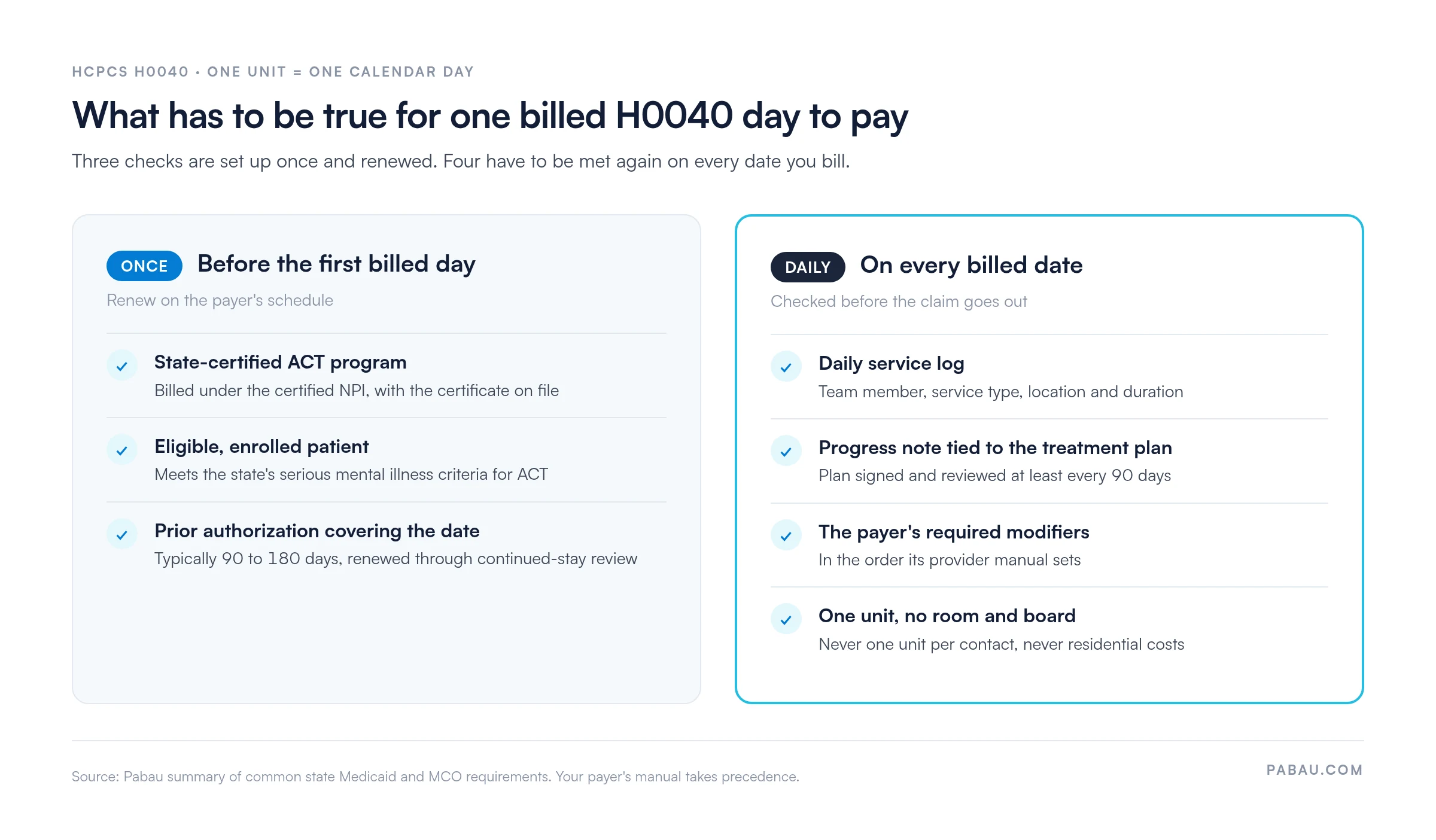
Required documentation for each billed day typically includes the following elements, though state Medicaid plans may add requirements:
Structured daily note templates make it harder for staff to skip a required field. Missing or vague service logs that can’t support the per-diem unit are among the most frequent audit findings for ACT programs.
H0040 is primarily a Medicaid code. Medicare publishes no national rate for it, so don’t assume a Medicare or Medicare Advantage plan will pay without checking its coverage policy.
Prior authorization requirements vary by state and managed care organization. As a general pattern:
Point32Health issued a billing update for PACT services effective December 2025, a sign of how ACT policy keeps shifting payer by payer. Always verify current authorization requirements directly with the payer before submitting a batch of H0040 claims. A written prior authorization process keeps renewal dates from slipping between continued-stay reviews.
H0040 reimbursement rates vary by state Medicaid plan, MCO contract, and calendar year. There’s no single national rate, and Medicare doesn’t publish one for H0040. State Medicaid agencies set base per-diem rates, and MCOs may negotiate different rates under their contracts with ACT providers.
To find current rates, use these sources:
State per-diem rates for H0040 reflect the bundled nature of the code. They cover staff salaries, psychiatric oversight, and community services, but not room and board. Because ACT programs are cost-intensive, some states pay enhanced per-diem rates tied to ACT fidelity scores. Review your state’s behavioral health rate schedule each year, since rates typically update on the state fiscal year.
For a broader foundation on how reimbursement works in behavioral health, medical billing fundamentals walk through the claim lifecycle from submission to remittance.
Modifier requirements for H0040 differ by payer. Some state Medicaid plans and MCOs require one or more modifiers on every H0040 claim. A wrong or missing modifier often gets the claim rejected outright. A rejected claim never reaches adjudication, so it has to be corrected and resubmitted.
Modifier stacking rules, meaning how many modifiers can appear on one claim line and in what order, are payer-specific. Always consult the MCO or state Medicaid provider manual before stacking modifiers on H0040. The AAPC HCPCS code reference lists standard modifier definitions, but payer-specific applicability overrides the generic definition.
The per-diem structure makes every claim date a potential audit point. The table below pairs each common denial reason with the step that prevents it. A wider denial management process catches the claims that still come back.
Run a weekly pre-submission audit on H0040 claim batches. Pull the daily service log for each billed date and confirm it names the service, the team member, the location, and the duration. Hold any claim missing one of those four fields until the documentation is corrected. Fixing a log before submission takes far less staff time than amending a claim afterward.
The following workflow applies to standard Medicaid and MCO billing for H0040. Payer-specific variations apply and should override any step below when they conflict.
ACT programs with large caseloads benefit from claims management software that tracks every per-diem claim from submission to payment. Building per-diem claims by hand at scale is a steady source of unit errors.
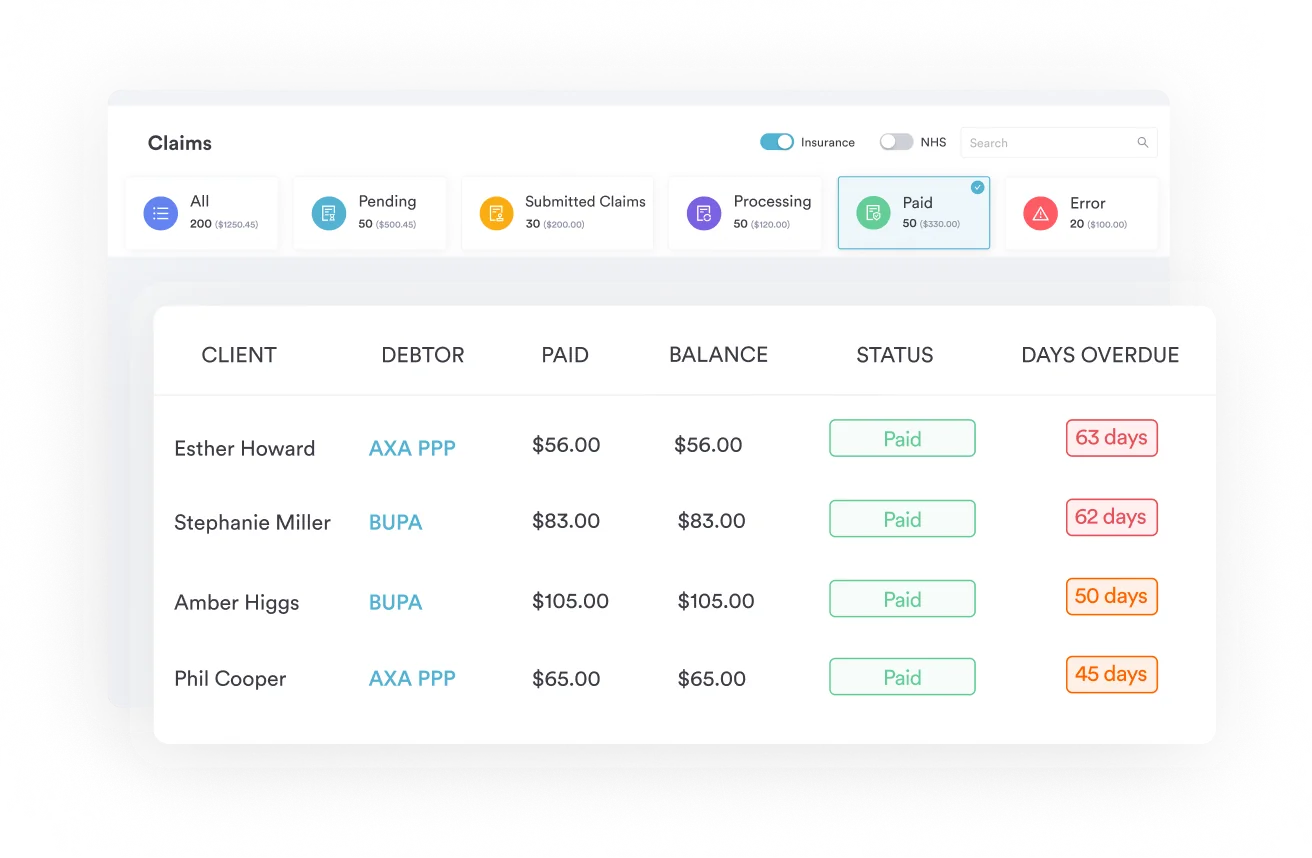
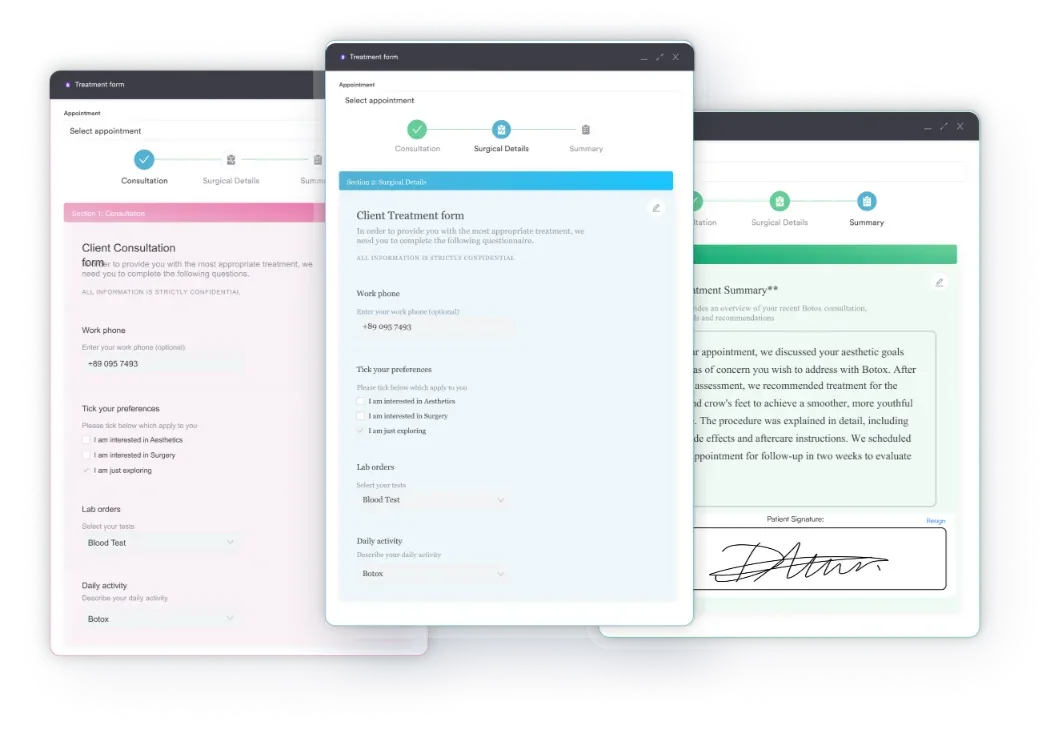
ACT teams deliver care out in the community, and every billed day still needs a record behind it. When notes live on paper or in separate tools, matching logs to claim dates becomes a weekly reconciliation job.
Pabau keeps structured notes, digital forms, and claims tracking in one system. Your team can build a daily service log template with fields for the team member, service type, location, and duration. Each note is stored in the patient record alongside the treatment plan.
That turns the weekly pre-submission audit into a review of one system instead of three. Your billing team can check each claim date against its log before the claim goes out.

Pabau brings structured service notes, digital forms, and claims tracking together, so every H0040 claim date has a record behind it.

Get the per-diem mechanics right before you chase a better rate. One unit per calendar day, a service log for every billed date, and an authorization covering it will head off the denials covered above.
The trade-off is effort up front. Same-day logs and weekly pre-submission audits take staff time, but they cost less than reworking a denied billing period later.
If your team still reconciles logs and claims across separate tools, fix that first. Book a demo to see how Pabau keeps ACT service notes and claims tracking in one system.

Need to understand behavioral health claims workflows? Revenue cycle management in healthcare covers how to structure billing operations for complex, recurring programs.
Billing other community mental health services? HCPCS code H0036 explains how community psychiatric supportive treatment is billed.
Running a community support program alongside ACT? HCPCS code H2015 covers billing for comprehensive community support services.
Want H0040 claims accepted on the first pass? What is a clean claim breaks down what a claim needs to clear payer edits.
HCPCS code H0040 is a Level II HCPCS code for an assertive community treatment program, billed per diem. It covers the full bundle of ACT services delivered on a calendar day, including psychiatric support, case management, community integration, and crisis coordination. State-certified ACT programs bill it mainly to state Medicaid plans and Medicaid managed care organizations.
Common program modifiers include HA (child/adolescent program), HB (adult program, non-geriatric), HE (mental health program), and HH (integrated mental health and substance abuse). Credential modifiers HN, HO, and HP identify staff education levels. Required modifiers vary by payer, so check the state Medicaid or MCO provider manual before adding modifiers to H0040 claims.
Yes, in most state Medicaid plans and managed care organizations, H0040 requires prior authorization before the first billed day. Authorization typically covers a defined period (90 to 180 days) and must be renewed with continued-stay documentation. Commercial plan requirements vary, so verify each payer’s policy independently.
No. Room and board is explicitly excluded from H0040. Where the state Medicaid plan allows room and board to be billed separately, it goes on its own claim line under the correct state-specific code. Bundling room and board into H0040 is an overbilling error and a common audit finding.
H0040 covers a state-certified assertive community treatment program serving adults with serious mental illness in the community, billed per diem. H0035 covers mental health partial hospitalization, treatment, less than 24 hours, typically in a clinic or hospital setting. The key difference is ACT program certification. Billing H0040 without certified program status is a compliance violation as well as a coding error.
Three of the most common H0040 denial triggers are missing prior authorization, incomplete daily service logs, and incorrect or missing modifiers. Next come billing several units per day instead of one, and bundling room and board into the H0040 claim. Each has a straightforward prevention step: verify PA, audit documentation before submission, and configure billing units correctly.



