CPT code 88363: Archival tissue selection for molecular analysis
CPT code 88363 covers a pathologist’s examination and selection of archive...

Last Updated: Nov 10, 2026
94070 is the CPT code for a bronchospasm provocation evaluation, multiple spirometric determinations as in 94010, with administered agents (eg, antigen[s], cold air, methacholine). It covers the serial spirometry recorded around the challenge to measure airway hyperresponsiveness.
Pulmonologists use it to confirm or rule out asthma, cough-variant asthma and exercise-induced bronchospasm when baseline spirometry is inconclusive. Spirometry within the protocol (94010) is bundled into it, and the agent's administration is reported separately with 95070 or 95071.
Let Pabau's smart automation suggest the right codes, reduce claim denials, and keep your practice compliant—effortlessly.
Automate repetitive tasks and focus on what matters most—your patients.
Reduce coding errors and ensure compliance with the latest regulations.
Clean claims, fewer denials, and faster reimbursements.
Powerful insights and reporting to help your practice thrive.
HIPAA compliant SOC 2 certified GDPR-compliant Trusted by 4,000+ clinics worldwide

CPT code 94070 covers a bronchospasm provocation evaluation, with multiple spirometric determinations recorded around an administered challenge agent.
Spirometry performed within the protocol (94010) is bundled into 94070. A 94060 bronchodilator study is normally bundled too, unless it is a distinct, documented service.
Administration of the provoking agent is reported separately with 95070 or 95071, not inside the 94070 payment.
Documentation must show the agent and dose, results at each measurement interval, and a signed physician interpretation.
Pabau sends US claims through Claim.MD and warns staff when a prior authorization is missing from the patient’s case.
CPT code 94070 reports a bronchospasm provocation evaluation, the challenge test used to confirm or rule out airway hyperresponsiveness.
The official AMA CPT code set descriptor reads: “Bronchospasm provocation evaluation, multiple spirometric determinations as in 94010, with administered agents (eg, antigen[s], cold air, methacholine).” Three words carry the most billing weight: “multiple spirometric determinations.” The code covers the full serial evaluation across several time intervals, not a single post-challenge measurement.
The technician records baseline spirometry, the provoking agent is given in a controlled setting, and FEV1 and FVC are measured at set intervals.
Measurements typically repeat every 3 to 5 minutes until a significant response occurs or the protocol ends. 94070 covers that serial spirometry and its monitoring as one unit. Administering the agent is reported separately, with 95070 for methacholine or histamine and 95071 for antigens or gases.
Bundling decides whether a 94070 claim pays cleanly. The serial measurements belong to 94070, so the individual 94010 readings taken during the protocol never go on the claim. The agent, the baseline study and a split interpretation each follow their own rule, as the chart below shows.
CPT 94070 claim lines
What goes on a bronchospasm provocation claim
94070 pays for the serial spirometry. The challenge agent, the baseline study and the interpretation split each follow a separate rule.
94070CPT
Serial spirometry before and after the challengeMultiple spirometric determinations as in 94010
Bill itThe core service, one unit per evaluation
95070 / 95071CPT
Administering the provoking agent95070 methacholine or histamine, 95071 antigens or gases
Report separatelyNot part of the 94070 descriptor
94010CPT
Spirometry performed within the protocolThe individual measurements of the challenge
BundledNever billed alongside 94070
94060CPT
Pre- and post-bronchodilator studyBronchodilation responsiveness
Normally bundledOnly as a distinct service, with a modifier
TC / 26Modifiers
Technical and professional componentsFacility runs the test, physician group interprets
Split billing onlyOtherwise bill 94070 globally, with no modifier
How each code is reported alongside 94070. Source: AMA CPT code set descriptors and NCCI bundling as described in this guide. Check current NCCI tables and your payer’s policy.
Included in the 94070 payment:
Reported separately:
Normally bundled, payer-dependent:
If the physician needs a bronchodilator response test on a different encounter, bill 94060 on its own claim. On the same date, keep the documentation that shows why it was a separate service.
Never separately billable:
Incomplete documentation is a frequent reason 94070 claims are denied or recouped on audit. The medical record should contain each of the following before the claim goes out.
Run a documentation checklist before submitting any 94070 claim. Flag the claim for internal review if the measurement log shows fewer than three FEV1 recordings. Single-interval or dual-interval records rarely survive a payer audit.
Pairing CPT code 94070 with an unsupported ICD-10 code is the fastest way to trigger a medical necessity denial. Many payer policies for pulmonary function testing carry an approved diagnosis list, and claims with a code outside it are denied on the first pass.
Always cross-reference against the applicable Medicare Administrative Contractor (MAC) LCD for pulmonary function testing. The diagnosis code list varies by region, and a code one MAC accepts may trigger a denial with another. A payer grid that maps each ICD-10 code to the payers and MACs accepting it for 94070 keeps that check quick.
CPT code 94070 carries separate facility and non-facility payment rates under the Medicare Physician Fee Schedule (MPFS). Non-facility rates apply when the procedure is performed in a physician’s office. Facility rates apply in a hospital outpatient department or ambulatory surgical center. Verify current-year figures using the CMS Physician Fee Schedule lookup tool, as rates update each January 1.
For the RVU breakdown by work, practice expense, and malpractice, the FastRVU 2026 lookup tool shows current MPFS values without a CMS data file download.
Commercial payer rates for 94070 vary widely. Some contracts pay at or above Medicare, while others discount the Medicare rate or use a separate fee schedule. Pabau, the practice management platform we build, submits US claims through Claim.MD, a clearinghouse that connects to thousands of US payers. Eligibility checks with supported payers let staff confirm coverage before the patient arrives for the challenge test.
Split billing applies when different entities perform the technical and professional components. In that scenario:
Accurate revenue cycle management for split-billed pulmonary function tests depends on the facility billing team and the physician practice agreeing who bills which component. When that agreement breaks down, the same test gets billed twice or not at all.
Medicare does not require prior authorization for CPT code 94070. Medicare Advantage plans and commercial managed-care payers often do, as part of utilization management for diagnostic pulmonary tests.
When a commercial payer requires authorization, the request typically includes:
Thorough insurance eligibility verification at scheduling should include a check of whether the plan requires authorization for PFT codes.
A missing or expired authorization is a common reason 94070 claims are denied. Track each authorization’s expiry date against the test date, especially when the test is booked more than two weeks after the authorization was issued.
Denial patterns for 94070 are consistent enough to catch most of them before submission. The leading causes, based on NCCI edit policy and payer LCD criteria, are:
Pabau’s claims management software keeps the claim, its authorization and its remittance in one record, so these checks happen before submission. For structured denial management workflows, track 94070 denial reasons monthly and build payer-specific pre-submission checks for the top three.
A systematic billing workflow for 94070 prevents the most predictable denials. Use these steps in sequence.
Create a 94070-specific superbill template with a checkbox for each required documentation element: provoking agent, measurement intervals, physician supervision note, and signed interpretation. If a checkbox is empty at sign-off, the claim waits until it is filled.
Many pulmonology practices assemble a 94070 claim from a spirometry printout, a separate authorization log and a clearinghouse portal. Each hand-off is a chance to lose the auth number or send the claim before the interpretation is signed.
In Pabau, the authorization sits on the patient’s case with its dates and sessions, and staff see a warning when one is missing. Claims go out as CMS-1500/837P files through Claim.MD, after an eligibility check with supported payers.
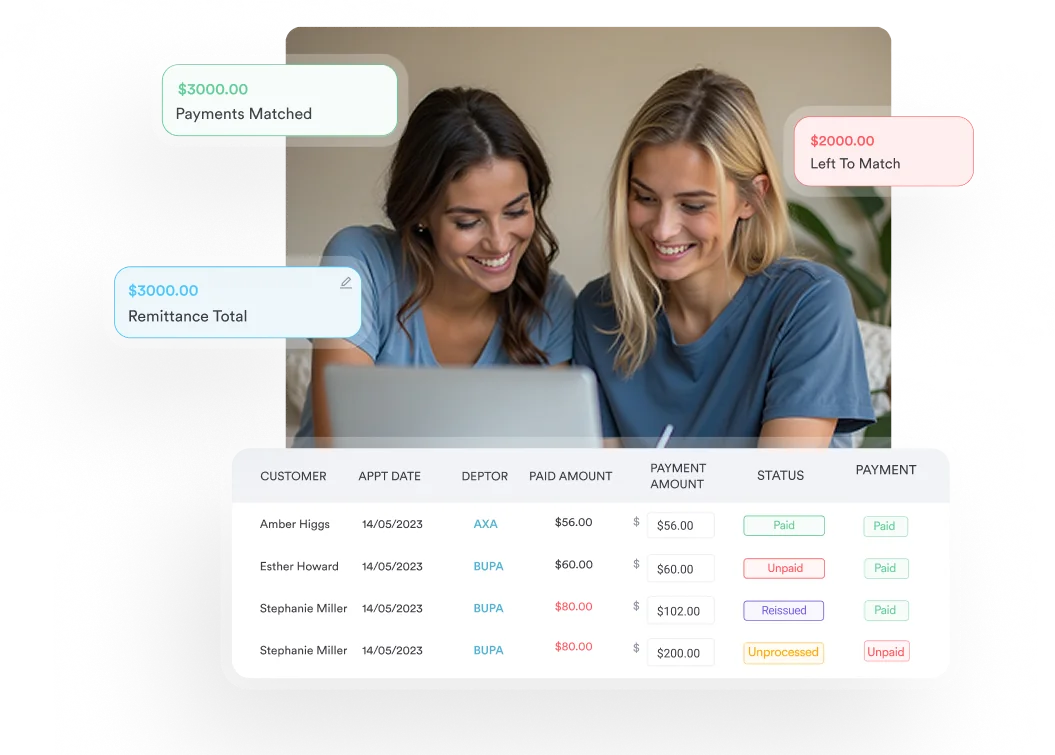
ERA remittances post back against each claim, so a denied or underpaid 94070 line surfaces without a manual portal check. The result is fewer claims returned for a missing authorization, and faster appeals for the ones that are.

Pabau sends CMS-1500/837P claims through Claim.MD, runs eligibility checks with supported payers, and posts ERA remittances. Your team spends less time on 94070 rework.

Treat 94070 as one line in a small claim set, not a standalone code. The serial spirometry, the agent administration and any split interpretation each need their own decision before submission.
The trade-off worth remembering is time at the front end against rework at the back. Five minutes confirming the authorization, the interval log and the signed interpretation costs less than one appeal. Practices that build those checks into scheduling and sign-off send clean claims the first time.
Book a demo to see how Pabau tracks authorizations and sends pulmonary function test claims through Claim.MD.

Need to understand how clearinghouses process your PFT claims? Claim.MD clearinghouse guide explains how electronic claim routing, edits, and ERA processing work for outpatient diagnostic billing.
Confused by denial remark codes on your 94070 remittances? Electronic remittance advice explained breaks down how to read ERA files and map CARC/RARC codes to actionable fixes.
Looking for a framework to systematically reduce your claim rejection rate? Medical billing compliance guide covers documentation standards, audit triggers, and payer policy alignment for diagnostic procedure codes.
CPT code 94070 is the code for a bronchospasm provocation evaluation, with multiple spirometric determinations recorded around an administered agent. Typical agents are methacholine, cold air and antigens. It is used to confirm or rule out asthma, cough-variant asthma or exercise-induced bronchospasm when standard spirometry is inconclusive.
CPT 94070 measures how the airways react to a provoking agent, while CPT 94060 measures how they respond to a bronchodilator. The two codes test opposite directions of airway response. NCCI edits normally bundle 94060 into 94070, so report it only as a distinct, documented service with a modifier. CPT 94010 spirometry is bundled into 94070 and is never billed separately on the same date.
CPT 94070 is a diagnostic test, so Medicare applies the supervision level set by its MPFS supervision indicator. Check the current indicator and your MAC’s policy before you bill, because the required level decides who must be on site. Document the supervising physician and their availability in the medical record, whatever level applies.
The most common denial reasons are billing 94010 on the same date, a record with only one FEV1 value, and undocumented supervision. Others are a diagnosis code missing from the payer’s covered list, and a missing or expired prior authorization on a commercial or Medicare Advantage plan.
Common ICD-10 codes paired with CPT code 94070 are J45.20 and J45.30 (mild intermittent and mild persistent asthma), R05.9 (cough) and R06.2 (wheezing). For chemical exposure, J68.3 covers acute and subacute conditions and J68.4 covers chronic ones. Always verify the approved diagnosis list against the applicable MAC LCD or commercial payer policy before submitting.
No. CPT 94010 is bundled into CPT 94070 under NCCI edits, so billing both on the same date of service gets the 94010 line denied. A 94060 bronchodilator study is normally bundled as well. Report it only when it is a distinct, documented service, with a modifier the payer accepts.
Traditional Medicare does not require prior authorization for CPT code 94070, but Medicare Advantage and many commercial managed-care plans do. Verify authorization requirements at the time of scheduling. A missing or expired authorization number is a common reason these claims are denied.