CCSD code G5100: Bypass of duodenum billing guide
CCSD code G5100 bills a bypass that leaves the duodenum in place CCSD code G5100...

Last Updated: Oct 16, 2026

CPT code 64718 describes neuroplasty and/or transposition of the ulnar nerve at the elbow, used primarily for cubital tunnel syndrome surgery.
Medicare’s 90-day global surgery period applies; post-op visits within that window are bundled into the surgical fee and cannot be billed separately.
Missing the laterality modifier (LT or RT) is the top denial trigger for this code; always append it to every claim.
Pabau’s claims management software embeds CPT and ICD-10 catalogues directly in the billing workflow, reducing transcription errors for complex surgical codes like 64718.
Official long descriptor (AMA): Neuroplasty and/or transposition; ulnar nerve at elbow. According to the AMA CPT code set, this code sits within the Nervous System surgery section and covers both simple neurolysis (freeing the nerve from adhesions) and formal transposition (physically moving the nerve to a new anatomical position). A single code covers both surgical approaches, so the technique alone does not determine which code applies. What matters is the anatomical site: the ulnar nerve, at the elbow.
The code applies to open surgical approaches only. Endoscopic cubital tunnel release does not have a dedicated CPT code as of the current AMA CPT manual; practices performing endoscopic approaches should consult with their MAC or coding advisor before defaulting to 64718 or filing an unlisted nerve code. See the peripheral nerve procedure codes reference for broader context on the neuroplasty code family.
Cubital tunnel syndrome is the second most common peripheral nerve entrapment after carpal tunnel syndrome. It arises when the ulnar nerve is compressed or stretched at the medial elbow, producing sensory loss, paresthesia in the ring and small fingers, and, in advanced cases, intrinsic muscle weakness and clawing. Conservative treatment (activity modification, night splinting, anti-inflammatory medication) typically runs 6-12 weeks before surgery is considered.
Surgery becomes the standard of care when conservative management fails and one or more of these findings is documented:
The surgical decision between simple decompression (neurolysis) and formal transposition (subcutaneous, intramuscular, or submuscular) depends on the degree of nerve instability, the surgeon’s judgment, and anatomical findings at the time of operation. Both approaches bill under CPT code 64718.
This is the question billing teams most frequently get wrong. The AMA CPT manual does not include a dedicated code for endoscopic cubital tunnel decompression. Two approaches exist in current coding practice:
Consult your Medicare Administrative Contractor’s (MAC) Local Coverage Determination (LCD) and the current AAPC coding guidance before coding endoscopic cases. Document the approach explicitly in the operative report regardless of which code path you choose.
Reimbursement for CPT code 64718 varies by place of service and geographic locality. The CMS Physician Fee Schedule (MPFS) is updated annually; always verify current-year figures directly from CMS before quoting rates to patients or payers. The figures below reflect the 2026 national averages based on the MPFS conversion factor; actual payment will vary by Geographic Practice Cost Index (GPCI) locality.
Practices billing through Pabau can submit claims electronically via electronic claims via Claim.MD, Pabau’s US clearinghouse partner, which supports 4,000+ payers and real-time eligibility verification before the date of service.
Relative Value Units (RVUs) are the building blocks of Medicare reimbursement. Use the FastRVU 2026 lookup tool or the CMS MPFS data file to pull current-year values. The three components below combine to form the total RVU, which is then multiplied by the annual conversion factor (approximately $32.35 in 2026, subject to congressional action).
Geographic adjustment (GPCI) is applied separately to each RVU component before multiplying by the conversion factor. High-cost localities (Manhattan, San Francisco) produce meaningfully higher payments than rural areas for the same CPT code 64718 claim.
Payers require a medically necessary ICD-10-CM diagnosis code that supports the surgical indication. According to the CMS ICD-10-CM tabular list, cubital tunnel syndrome maps to the G56 category (mononeuropathies of the upper limb), not G54.2. Verify laterality and specificity on every claim. Refer to your practice’s ICD-10-CM diagnosis coding workflows to confirm the linkage is applied correctly before submission.
Many MACs require the G56.2x code as the primary diagnosis. Review your MAC’s LCD for cubital tunnel syndrome before filing, as payer-specific requirements may expand or restrict the accepted diagnosis list. The ICD-10 code selection and documentation principles that apply to other nerve-related conditions apply here: specificity and laterality are non-negotiable.
Modifiers are the most common source of preventable denials on 64718 claims. Three modifiers apply with high frequency for nervous system procedure coding; each has distinct documentation requirements.
Modifier 59 use is subject to CMS’s 2015 guidance on distinct procedural services. Many payers now require the more specific X-modifiers (XE, XS, XP, XU) in place of modifier 59. Check your MAC’s policy and review the broader guidance on nervous system procedure coding for context on when distinct service modifiers apply.
Always append modifier LT or RT to every 64718 claim before submission. It takes 10 seconds at the claim level and prevents the single most common denial reason for this code. Set a billing rule or claim scrubber in your practice management system to flag any 64718 claim submitted without a laterality modifier.
The operative report is the foundation of every 64718 claim. Payers reviewing for medical necessity will look for specific language that maps directly to the code descriptor and the supporting ICD-10 diagnosis. A technically correct surgery with poor documentation routinely results in denials or post-payment audits. Practices focused on submitting a clean claim the first time start with operative note quality.
The operative report must address each of these elements:
CPT 64718 carries a 90-day global surgery period per the CMS Medicare Physician Fee Schedule. This means the surgical fee includes all related post-operative services for 90 days following the procedure date. Billing a routine post-op visit (e.g., 99213) during that window for a related reason results in an automatic denial.
Getting the right nerve code requires knowing which anatomical site and which nerve is involved. The neuroplasty family spans multiple codes; choosing incorrectly between them is a common audit trigger. For surgical CPT code documentation at this complexity level, the anatomical site documented in the operative report is the deciding factor, not the diagnosis code.
When both ulnar nerve sites are treated in the same operative session (elbow and wrist), bill both 64718 and 64719 with modifier 51 (multiple procedures) on the secondary code. Verify NCCI edits to confirm these are not bundled in your payer’s system. See this procedure code billing reference for how code families are structured across different billing systems.
UK private practices bill the same elbow operation under CCSD A6810, which covers neurolysis and transposition of a peripheral nerve. That code needs both acts documented, while 64718 accepts neuroplasty or transposition alone.
The top denial pattern for this code is not wrong code selection. It is missing or inadequate documentation on an otherwise correctly coded claim. Effective denial management strategies start by analyzing the denial reason code on every remittance before making a correction.
Tracking denial reason codes by CPT code across your practice produces patterns that are invisible at the individual claim level. Pabau’s claims management software logs denial codes against procedure codes, helping surgical practices identify which claim types generate the most rework.
Surgical billing for complex nerve codes carries more administrative overhead than most outpatient billing. The gap between a well-documented operative report and a correctly coded, modifier-complete claim submitted to the right payer with the right place of service code is where most revenue leakage happens. A full understanding of medical billing workflow shows that this is a process problem, not just a knowledge problem.
Pabau integrates clinical documentation with billing workflows, so the information captured in the patient record during the surgical encounter flows directly into claim creation. Built-in CPT and ICD-10 catalogues reduce manual code-lookup steps. For hand surgery and neurosurgical practices billing 64718 and related nerve codes regularly, this reduces the transcription errors that produce the denial patterns above.
The platform connects to Claim.MD’s clearinghouse for revenue cycle management from eligibility check through ERA receipt.
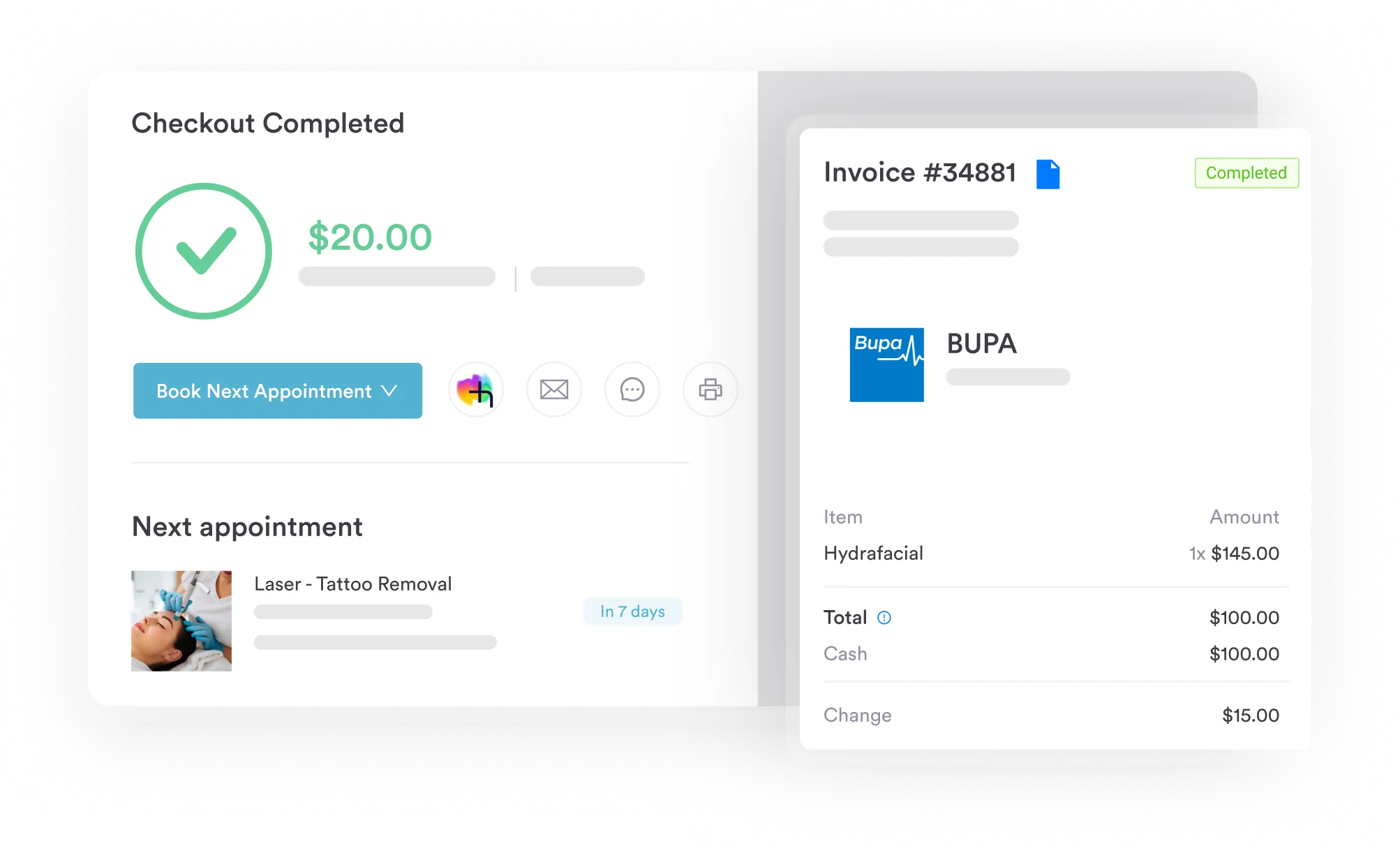

Pabau’s built-in CPT and ICD-10 catalogues, claim scrubbing, and Claim.MD clearinghouse connection reduce the manual steps between operative note and paid claim for high-complexity codes like 64718.

Cubital tunnel syndrome is common. The billing for it is not complicated, but it is specific. CPT code 64718 requires laterality on every claim, a documented surgical indication in the operative note, and careful attention to the 90-day global period when scheduling and coding post-operative visits.
The practices that get 64718 right consistently are those where the billing team has direct access to the clinical documentation and where denial trends are tracked at the procedure-code level. Pabau’s medical billing compliance tools and clearinghouse integration give surgical practices that visibility from day one. Book a demo to see how it works for nerve decompression billing.

Need guidance on clean claim submission for surgical codes? Clean claim submission best practices covers the elements every surgical claim needs before it leaves your billing system.
Want to understand how clearinghouse connections reduce denial rates? How Claim.MD clearinghouse works with Pabau explains the end-to-end electronic claims workflow.
Managing denials across multiple surgical codes? Denial management in healthcare outlines the systematic approach to tracking and appealing denied claims.
CPT code 64718 covers neuroplasty and/or transposition of the ulnar nerve at the elbow, including open surgical decompression (neurolysis) and formal nerve transposition. It is the standard code for cubital tunnel syndrome surgery performed via an open approach at the medial elbow.
Medicare reimbursement for CPT 64718 varies by geographic locality and place of service. Verify current-year national rates directly from the CMS Physician Fee Schedule lookup tool, as the conversion factor changes annually and GPCI adjustments affect locality-specific payment.
The primary ICD-10-CM codes for cubital tunnel syndrome are G56.21 (lesion of ulnar nerve, right upper limb) and G56.22 (left upper limb). Avoid G54.2 (cervical root disorders), which describes a different anatomical level and creates a medical necessity mismatch with 64718.
CPT 64718 covers the ulnar nerve at the elbow; CPT 64719 covers the ulnar nerve at the wrist (Guyon’s canal). Both are neuroplasty codes but describe different anatomical sites. The operative report must clearly state the location of the nerve procedure to support the code selected.
CPT 64718 carries a 90-day global surgery period. Post-operative visits related to the surgery are bundled into the surgical fee for 90 days and cannot be billed separately. Unrelated visits require modifier 24; return to the OR for a complication requires modifier 78.
There is no dedicated CPT code for endoscopic cubital tunnel release as of the current AMA CPT manual. Some practices bill 64718 with strong operative note documentation; others use unlisted code 64999. Consult your MAC’s LCD and a certified coding advisor before selecting a code for endoscopic cases.