



HCPCS code E0198: Water pressure pad billing guide
HCPCS code E0198 is a water pad for a standard mattress HCPCS code E0198 is the ...

Last Updated: Oct 13, 2026

CPT code 45378 describes a colonoscopy, flexible; diagnostic, including collection of specimen(s) by brushing or washing, when performed.
45378 is for diagnostic intent only: for Medicare screening colonoscopies, use G0105 (high-risk) or G0121 (average-risk) instead.
The 2026 Medicare facility rate is approximately $165; the non-facility rate is approximately $378, both subject to geographic adjustment and confirmation via the CMS PFS Look-Up Tool.
Missing modifier PT when a screening colonoscopy becomes therapeutic is one of the most common and costly billing errors for this code.
Practice management software like Pabau supports accurate colonoscopy coding by keeping procedure documentation, intake forms, and charting tied to the same patient record.
CPT code 45378 is the base code for a diagnostic flexible colonoscopy — a colonoscopy performed because of symptoms, an abnormal test result, or follow-up, rather than as a preventive screening. Getting the code right means understanding the descriptor and the billing context around it: the 2026 fee schedule, RVU breakdown, G-code alternatives for Medicare screening, modifiers, ICD-10 pairings, and the documentation standards that keep claims clean. A clean claim carries the code, the modifiers and the diagnosis in agreement, and needs no rework before payment. Australian MBS billing changes descriptors and fees periodically, so last year printout is not a safe reference.
This reference is written for gastroenterology coders, billers, and practice management teams working with colonoscopy procedures in US outpatient and ambulatory surgery settings . It covers CPT 45378 alongside its Medicare HCPCS alternatives and the most commonly paired therapeutic add-on codes.
According to the American Medical Association (AMA), CPT code 45378 is defined as: Colonoscopy, flexible; diagnostic, including collection of specimen(s) by brushing or washing, when performed. This is the foundational code for a diagnostic colonoscopy of the large intestine, from the rectum to the cecum or a colon-to-small-intestine anastomosis.
Three elements define whether 45378 applies. The procedure must be flexible (not rigid), it must be diagnostic in intent, and the endoscope must reach the cecum or anastomosis site. Specimen collection by brushing or washing is included in the descriptor and does not warrant a separate code.
A diagnostic colonoscopy differs from a screening colonoscopy in one critical way: the presenting indication. If a patient schedules the procedure because of symptoms (rectal bleeding, altered bowel habits, anemia) or because a prior abnormal test warrants follow-up, that procedure is diagnostic. The intent at the time of scheduling drives code selection, not the findings during the procedure.
Medicare reimbursement for CPT code 45378 varies by place of service. The Medicare Physician Fee Schedule, known as the MPFS, sets the physician fee, while facility fees are governed separately under the Hospital Outpatient Prospective Payment System (HOPPS) or the ASC payment system. Geographic Practice Cost Indices (GPCI) adjust all rates by locality.
Rates are approximate national averages calculated from the corrected 2026 RVUs and the 2026 conversion factor, and are subject to geographic adjustment. Confirm the exact locality-adjusted figure for your MAC jurisdiction using the CMS PFS Look-Up Tool before submitting claims.
RVUs determine Medicare reimbursement under the Resource-Based Relative Value Scale (RBRVS). Three components make up the total RVU for any CPT code.
RVU values are approximate and updated annually. Confirm the exact locality-adjusted figure for your MAC jurisdiction before productivity reporting or contract negotiations.
The most consequential coding decision for colonoscopy billing is determining which code applies based on intent. Medicare has separate HCPCS codes for screening colonoscopies that come with distinct cost-sharing rules for patients. Using 45378 for a screening procedure can trigger a denial or cause a patient to owe more than they should.
The governing rule: the intent at the time of scheduling determines the code, not the findings discovered during the procedure.
Medicare allows G0121 (average-risk screening) once every 10 years and G0105 (high-risk screening) once every 2 years, per the CMS Medicare Benefit Policy Manual. State-level Medicaid programs may have different frequency and eligibility rules .
When screening becomes therapeutic: if a G0105 or G0121 screening colonoscopy results in a polypectomy or biopsy, the code changes to the appropriate therapeutic CPT code (e.g., 45385 for snare polypectomy). Modifier PT is then appended to signal that the procedure began as a screening and cost-sharing waiver rules apply.
Submitting digestive system claims through a claims management tool keeps denials and resubmissions from piling up unnoticed.
Modifier selection for CPT code 45378 directly affects both reimbursement and patient cost-sharing. The wrong modifier, or a missing one, is one of the fastest routes to a claim denial or a compliance audit flag, particularly when a screening conversion shifts the claim to 45385 mid-procedure.
Modifier PT is frequently misapplied. It goes on the therapeutic code that replaces the screening code — not on 45378 itself. If a screening G0121 turns into a polypectomy, bill 45385-PT, not 45378-PT.
Modifier 52 has a limit of its own. If the scope never passes the splenic flexure, the exam belongs in the sigmoidoscopy series. With a biopsy taken, report 45331 rather than 45378 with a reduced-services modifier.
Medical necessity for CPT code 45378 must be supported by an appropriate ICD-10-CM diagnosis code. CMS Local Coverage Determination (LCD) A57342 governs Medicare coverage for diagnostic and therapeutic colonoscopy. The diagnosis code.
Note that Z12.11 pairs with the Medicare screening HCPCS codes, not with CPT 45378. Pairing Z12.11 with 45378 signals a mismatch between intent and code — a common audit trigger, and the same logic applies if a biopsy is taken and the code shifts to 45380. The ICD-10 code must directly reflect the documented clinical indication, not a secondary or assumed diagnosis.
CPT 45378 is the diagnostic base code. When findings during the procedure require therapeutic intervention, a higher-level code in the 45378-45398 family replaces or supplements it. Understanding these codes prevents unbundling errors and ensures the billed code matches the highest level of service performed.
The code family does not stop at ablation. When a flat lesion is lifted by submucosal injection and then resected, the session codes to 45390 instead.
When multiple therapeutic interventions occur during the same colonoscopy session, bill the highest-level therapeutic code only — do not stack 45378 on top of a therapeutic code. The same base-code-only principle applies across related surveillance coding.
When two therapeutic procedures occur during the same colonoscopy (e.g., biopsy in one segment and snare polypectomy in another), bill the higher-level code (45385) with modifier 59 for the second distinct lesion site only if payer policy supports separate billing. Do not bill 45378 alongside a therapeutic code — 45378 is always replaced, never added.
Incomplete documentation is the most defensible reason for a claim denial. For CPT 45378, the operative or endoscopy note must contain specific elements to satisfy both Medicare LCD A57342 and commercial payer medical necessity requirements. Using digital medical forms that capture these elements at the point of care reduces rework significantly.
The same principle applies to related codes like Z12.11: the note must tie the procedure to a documented clinical need, and any mismatch between the ICD-10 diagnosis code and the documented indication is an audit risk.
The Office of Inspector General (OIG) has flagged colonoscopy billing as an area of heightened audit risk, particularly for screening-to-diagnostic conversion errors and unbundling. Most errors are preventable with clear coding protocols and pre-submission EHR integration with billing systems that flag mismatches before claims go out.
OIG and AAPC guidance points to internal coding audits at least annually for the 45378 code family, with quarterly audits as the stronger practice, especially once a review turns up errors. A minimum sample of around 10 encounters per provider against the operative notes is enough to catch a recurring pattern before it becomes a systemic problem.
Manual colonoscopy coding is high-risk. The screening-vs-diagnostic distinction, modifier PT rules, and ICD-10 pairings all require consistent application across every claim, and a workflow slip on a high-volume procedure creates audit exposure fast.
Practice management software like Pabau helps by keeping the clinical documentation behind each code in one structured, retrievable record, so the details a coder needs are captured at the point of care instead of reconstructed afterward.
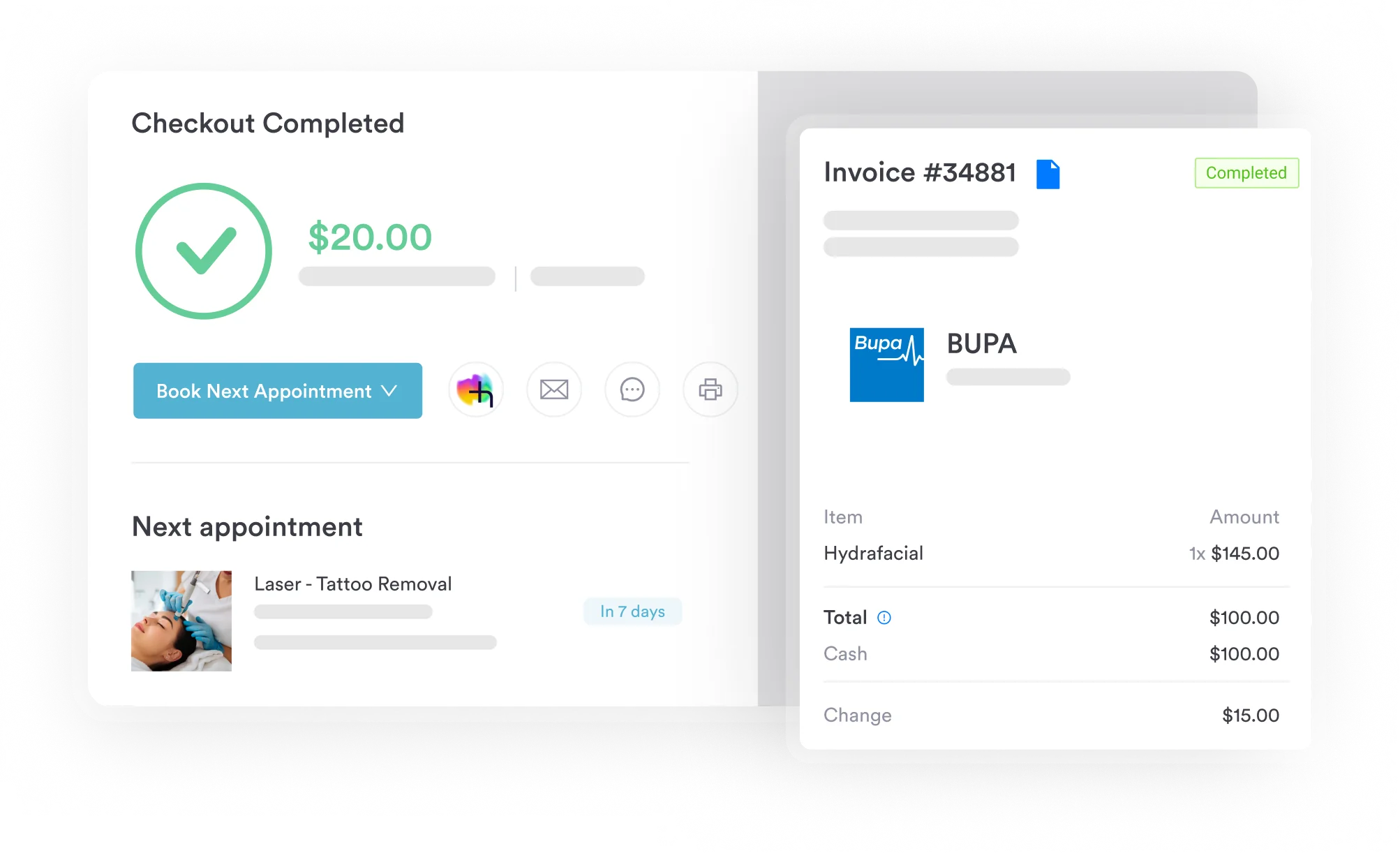
Rather than reconstructing an operative note in a separate billing system after the fact, Pabau keeps procedure documentation, chart notes, and the patient record together in one system. A biller coding the encounter works from the same structured note the clinician created, including cecal intubation, findings, and any interventions performed.
Teams using digital intake forms for pre-procedure patient history can also document the clinical indication for the visit at the scheduling stage, so the reason for the procedure is on record before the patient arrives.
For practices running high volumes of endoscopy procedures, having documentation and charting on one platform means a coder isn’t chasing details across separate systems.
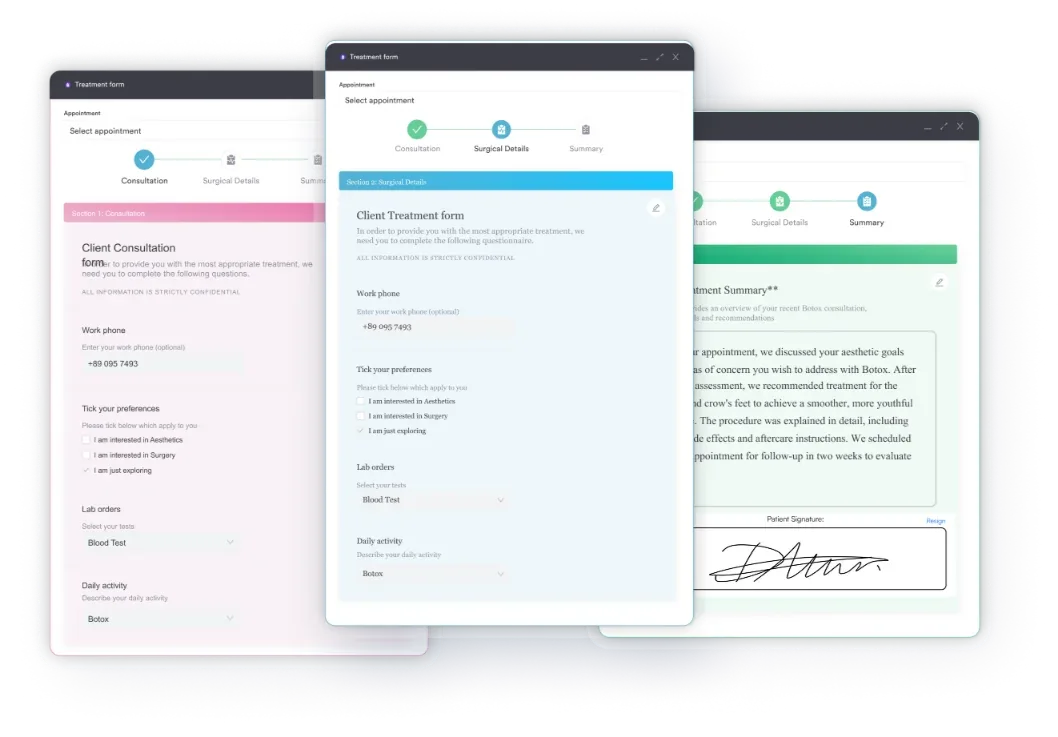

Pabau keeps structured procedure notes, patient intake, and chart history together — so whoever codes a colonoscopy claim is working from a complete clinical record, not chasing details after the fact.

CPT code 45378 is the correct code for a diagnostic flexible colonoscopy — but only when the intent at scheduling is diagnostic, the cecum is reached, and no higher-level therapeutic procedure is performed.
Using it for a Medicare screening, missing modifier PT on a converted procedure, or pairing it with a mismatched ICD-10 code are the three errors that drive the most denials in this code family.
Clean billing for colonoscopy procedures starts with documented clinical intent and a complete operative note. If your team wants to see how Pabau keeps that documentation organized and tied to the patient record, book a demo and we can walk through it.

Need the anesthesia side of this same procedure? 00812 covers the anesthesia billing for a screening colonoscopy.
Billing a nail procedure the same week? 11732 breaks down nail avulsion add-on billing rules.
Coding an obstetric complication? O03.1 covers delayed or excessive hemorrhage following an incomplete spontaneous abortion.
Need a DME code reference? A4614 covers billing for a hand-held peak expiratory flow rate meter.
Looking up an ophthalmology diagnosis code? H46.8 covers other optic neuritis diagnoses.
CPT code 45378 is used for a flexible diagnostic colonoscopy of the large intestine, from the rectum to the cecum or colon-small intestine anastomosis. It applies when the procedure is performed for a diagnostic reason (symptoms, abnormal test, follow-up) rather than as a preventive screening, and includes specimen collection by brushing or washing when performed.
CPT 45378 covers diagnostic colonoscopy billed to any payer when the procedure is medically indicated by symptoms or clinical findings. G0105 is a Medicare HCPCS code for a screening colonoscopy in a high-risk Medicare beneficiary (personal or family history of colorectal cancer, polyps, or inflammatory bowel disease). The key distinction is intent: G0105 is used when the procedure was scheduled as a preventive screening for a high-risk patient, not in response to symptoms.
Use G0121 when a Medicare beneficiary at average colorectal cancer risk (typically age 45 and older with no elevated risk factors) is scheduled for a preventive screening colonoscopy. G0121 waives both the Part B deductible and coinsurance for the patient. If the same patient had symptoms or a clinical indication driving the procedure, 45378 applies instead, and standard cost-sharing rules apply.
When a screening colonoscopy (G0105 or G0121) becomes therapeutic because a polyp is removed, the code changes to the appropriate therapeutic CPT code (e.g., 45385 for snare polypectomy). Modifier PT is appended to signal that the procedure originated as a screening and the cost-sharing waiver rules still apply to the patient. Do not bill 45378 in this scenario.
The 2026 national average Medicare reimbursement for CPT 45378 is approximately $165 in a facility setting and approximately $378 in a non-facility setting, subject to geographic adjustment by locality. Confirm exact rates for your MAC jurisdiction using the CMS PFS Look-Up Tool.
CPT 45378 is the base diagnostic code for a colonoscopy with no therapeutic intervention beyond brushing or washing. CPT 45380 adds a biopsy and replaces 45378 when tissue is collected by forceps. CPT 45385 applies when a polyp is removed by snare technique. Both 45380 and 45385 replace 45378 entirely — they are never billed together with 45378 for the same colonoscopy session.



