



HCPCS code E0198: Water pressure pad billing guide
HCPCS code E0198 is a water pad for a standard mattress HCPCS code E0198 is the ...

Last Updated: Oct 13, 2026

CPT Code 00812 covers anesthesia for screening colonoscopy, reported when the endoscope is introduced distal to the duodenum, and carries 4 base units under the ASA Relative Value Guide (3 under CMS).
Medicare reimbursement follows the formula: (base units + time units) x anesthesia conversion factor, updated each calendar year by CMS.
Modifier selection (AA, QZ, QK, QX, QY, QS, PT) identifies provider type, anesthesia method, and screening-to-diagnostic conversions; wrong modifiers are a leading OIG audit trigger.
Practice management software like Pabau captures pre-anesthesia evaluations, time-stamped anesthesia records, and provider credentials at the point of care, giving billing teams accurate documentation to work from.
CPT Code 00812 is the anesthesia code for screening colonoscopy, reported when the endoscope is introduced distal to the duodenum. The CPT manual instructs coders to report 00812 for any screening colonoscopy regardless of ultimate findings.
Medicare, Medicaid, and commercial payers apply different rules for MAC coverage, screening-to-diagnostic conversion, and prior authorization, and getting those payer-specific details right is what separates a clean claim from a denial.
This reference covers the official code descriptor, base unit value, modifier requirements, Medicare reimbursement calculation, payer-specific rules, documentation standards, and related codes in the 00810-00813 family.
According to the American Medical Association (AMA), which owns and maintains the CPT code set, the official descriptor for CPT Code 00812 is: “Anesthesia for lower intestinal endoscopic procedures, endoscope introduced distal to duodenum; screening colonoscopy.”
The CPT manual adds a parenthetical instruction: report 00812 to describe anesthesia for any screening colonoscopy regardless of ultimate findings. In practice, 00812 is most commonly used for screening colonoscopy procedures performed under monitored anesthesia care (MAC) or propofol sedation.
The code belongs to the Anesthesia section of the CPT manual and applies when a qualified anesthesia provider administers anesthesia during a lower GI procedure. It does not cover the colonoscopy procedure itself; the proceduralist bills separately using the appropriate colonoscopy CPT or HCPCS code.
CPT Code 00812 carries 4 base units under the American Society of Anesthesiologists (ASA) Relative Value Guide. CMS assigns a lower value of 3 base units for Medicare claims, so Medicare reimbursement should be calculated using 3, not the ASA figure.
Base units reflect the inherent complexity of providing anesthesia for a given procedure type. Time units are added on top: one time unit equals 15 minutes of anesthesia service, calculated from when the anesthesia provider begins preparation through the end of the patient’s anesthesia care.
The Medicare reimbursement formula is straightforward in structure:
A standard 30-minute screening colonoscopy generates 2 time units (2 x 15 minutes). Under ASA valuation that’s 6 units (4 base + 2 time); under CMS valuation for Medicare it’s 5 units (3 base + 2 time), before qualifying circumstances.
At the CMS anesthesia conversion factor for 2026, the CMS-valued total produces a reimbursement figure that varies by Medicare Administrative Contractor (MAC) locality. Always verify the current conversion factor before estimating payment – CMS updates it each January via the Medicare Physician Fee Schedule final rule and publishes the anesthesia conversion factor addenda alongside it.
Track anesthesia start and stop times precisely in your documentation. A 31-minute procedure generates 3 time units (rounding up to the next 15-minute increment under most payer rules), not 2. One missed time unit per case adds up quickly across a high-volume colonoscopy day.
Modifier selection is the most common source of CPT Code 00812 claim denials and the most frequent OIG audit target in anesthesia billing. The modifier tells the payer who performed the anesthesia and in what capacity, which determines both the allowable payment rate and compliance with medical direction rules.
The QS modifier is frequently overlooked. Many commercial payers require it whenever MAC is the anesthesia method to process the claim correctly, even though CMS does not require it for Medicare claims.
Omitting QS on a commercial payer claim for a propofol-based colonoscopy is a common denial trigger. Review each payer’s current policy before submitting.
A claims management tool flags underpaid anesthesia claims quickly, so base-unit and time-unit errors don’t quietly cost you revenue.
Payer rules for CPT Code 00812 diverge significantly across Medicare, Medicaid, and commercial plans. The most consequential difference involves MAC coverage for routine screening colonoscopy.
Medicare generally covers anesthesia, including propofol/MAC, for screening colonoscopies under specific conditions. Some commercial payers do not cover MAC for patients without documented medical necessity, and submitting a MAC claim to one of those payers without that documentation guarantees a denial.
A second major variable is the screening-to-diagnostic conversion rule. When a colonoscopy begins as a screening procedure but the physician removes a polyp or takes a biopsy intraoperatively, the proceduralist’s claim converts from G0105/G0121 to a diagnostic colonoscopy code.
For Medicare, the anesthesia claim converts too: a converted screening-to-diagnostic colonoscopy must be rebilled as CPT 00811 with modifier PT, which waives the patient’s deductible only. A true screening colonoscopy stays on 00812, which waives both the deductible and coinsurance. Some commercial payers use modifier 33 for the same scenario instead of PT.
Anesthesia billers need a real-time link to the proceduralist’s findings to catch the conversion before the claim goes out, since it changes both the code and the modifier, not just the patient’s cost-sharing.
Prior authorization requirements for anesthesia during screening colonoscopy are payer-specific and plan-specific. Never assume anesthesia for colonoscopy doesn’t require authorization – check the individual payer portal or contract before scheduling.
Practices managing high colonoscopy volumes benefit from a tracking system for authorization status by patient and payer. Integrated EHR integration for billing workflows can reduce manual tracking errors here.
Accurate documentation is the foundation of a defensible CPT Code 00812 claim. Missing or incomplete records are the second most common denial cause after incorrect modifiers. Each of the following elements must appear in the anesthesia record for a compliant claim.
Standardized digital documentation forms for pre-anesthesia evaluation can reduce the risk of missing fields at the point of care. For broader guidance on maintaining compliant records.
The same principles covered in patient data security tools apply directly to protecting anesthesia records.
Most CPT Code 00812 denials are preventable. The errors below account for the majority of rejected claims across anesthesia practices billing for colonoscopy procedures.
Tracking denial patterns by procedure code helps identify which of these errors is affecting your practice most. Consistent pre-anesthesia documentation, captured through digital intake forms, gives billing teams the modifier and time-stamp detail they need before a claim goes out, rather than after a denial comes back. For a broader view of practice management software features that support billing accuracy, that resource covers the key workflow integrations to look for. A payer reviewing this code looks for the reasoning in the note, not only the conclusion, so the documentation level matters.
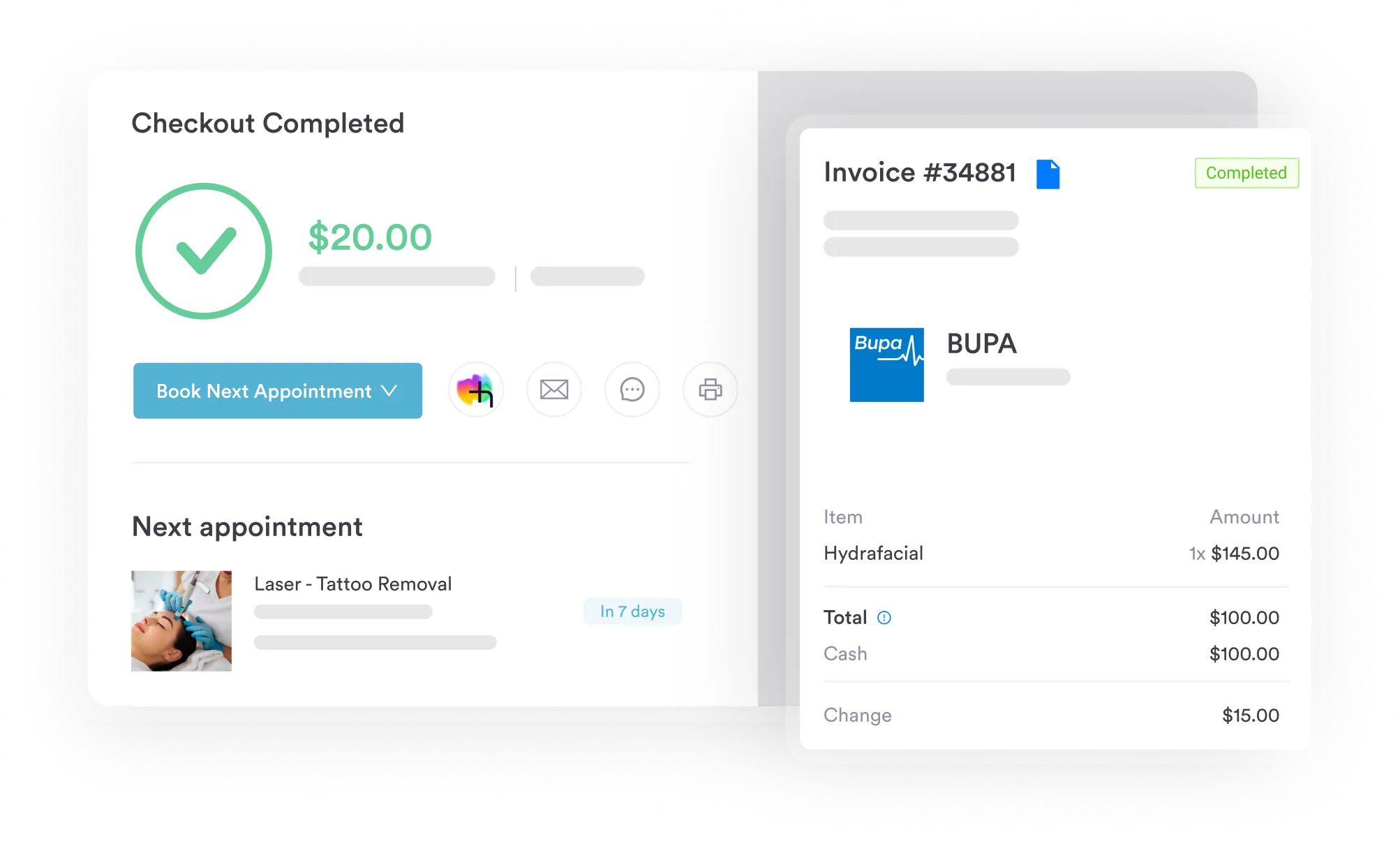

Pabau’s digital forms capture pre-anesthesia evaluations, time-stamped records, and provider credentials at the point of care – so your billing team has accurate documentation to work from before a claim goes out.

CPT Code 00812 sits within a broader family of anesthesia codes that spans far beyond GI procedures. Knowing the full code set is essential for correct claim submission and for choosing the right anesthesia code when the clinical picture changes.
The distinction between 00811 and 00812 is one of the most common coding questions in GI anesthesia billing. CPT 00811 covers anesthesia for lower intestinal endoscopic procedures, endoscope introduced distal to duodenum, not otherwise specified. CPT 00812 covers the same anesthesia setting specifically for screening colonoscopy, and the CPT manual instructs coders to report it for any screening colonoscopy regardless of ultimate findings.
Using 00811 for a screening colonoscopy risks denial if the payer’s system recognizes the mismatch with the paired G0105 or G0121 procedure code. The two codes also diverge when a screening colonoscopy converts to diagnostic: Medicare requires rebilling the anesthesia claim as 00811 with modifier PT, rather than keeping it on 00812. When in doubt, verify against the AAPC Codify CPT lookup for current code guidance.
G0105 and G0121 are the Medicare HCPCS procedure codes for screening colonoscopy. G0105 applies to high-risk patients (personal history of colorectal cancer or polyps, inflammatory bowel disease, or family history of hereditary colorectal cancer syndrome). G0121 applies to all other Medicare beneficiaries undergoing routine screening.
On a Medicare claim, the proceduralist bills G0105 or G0121 while the anesthesia provider bills CPT Code 00812 on a separate claim. Both claims reference the same date of service and the same facility, and Medicare processes them as related but separate claims.
If the procedure converts intraoperatively to 45380 or 45385, the proceduralist’s claim updates to the diagnostic code, and the anesthesia claim converts from 00812 to 00811 with modifier PT. A true screening encounter, with no conversion, keeps 00812 on both claims. Practices managing this interaction benefit from secure patient data tools that link encounter records across providers at the same facility, reducing cross-claim discrepancies.
Anesthesia billing errors typically originate in the clinical documentation phase, not in the billing office. When pre-anesthesia evaluations are missing fields, time stamps are inconsistent, or provider role is unclear in the record, the billing team is forced to submit incomplete claims or spend time chasing documentation retrospectively.
Pabau supports the documentation side of that workflow. Pre-anesthesia evaluation templates capture ASA status, anesthesia start and stop times, and provider credentials at the point of care, giving the billing team the detail it needs to select the correct modifier before the claim leaves the practice.
That documentation discipline matters regardless of where the referral originates.
The digital forms feature supports custom anesthesia record formats that prompt for the specific documentation fields commercial payers commonly audit. A structured approach to medical forms at your practice is where accurate billing starts.

Billing anesthesia for a neurosurgical case? 00211 covers the anesthesia side of that procedure family.
Managing DME billing alongside procedure codes? A4635 walks through the same reimbursement mechanics for a supply code.
Need a coding guide for a less common diagnosis? M31.7 breaks down the documentation requirements the same way.
CPT Code 00812 is straightforward in principle – 4 base units under the ASA Relative Value Guide (3 under CMS), a time-based formula, and a clear descriptor – but the payer-specific modifier rules and the screening-to-diagnostic conversion trap make it one of the more denial-prone codes in GI anesthesia billing.
Getting the modifier right, documenting MAC medical necessity for commercial payers, and rebilling screening-to-diagnostic conversions as 00811 with modifier PT for Medicare are the three operational habits that separate practices with clean claim rates from those with recurring 00812 denials.
Accurate anesthesia documentation, captured at the point of care, is what makes every one of those habits possible downstream. To see how Pabau’s digital forms capture that documentation, book a demo.
CPT 00812 is the anesthesia code for screening colonoscopy, reported when an anesthesia provider administers monitored anesthesia care (MAC) or general anesthesia. It covers the anesthesia service only; the colonoscopy itself is billed separately by the proceduralist (45378, G0105, G0121).
Under the ASA Relative Value Guide, 00812 carries 4 base units, but CMS assigns 3 for Medicare, so calculate Medicare reimbursement using 3. Time units add one per 15 minutes, and qualifying circumstances (99100, 99140) may add more.
CPT 00811 covers anesthesia for lower intestinal endoscopy not otherwise specified; 00812 covers the same setting for screening colonoscopy. For Medicare screening claims with G0105 or G0121, use 00812, unless the screening converts to diagnostic intraoperatively, when Medicare requires 00811 with modifier PT.
Medicare covers anesthesia for screening colonoscopy when medically necessary, though coverage depends on the beneficiary’s risk category (high-risk uses G0105; others use G0121). Commercial coverage for MAC varies by plan and often requires documented medical necessity for propofol over moderate sedation.
The modifier depends on who performed the anesthesia: AA (anesthesiologist personally), QZ (CRNA without medical direction), or QK/QX/QY for medical direction. Many payers require QS for MAC (informational to Medicare). The wrong modifier is the leading cause of 00812 denials.
CPT 00813 covers anesthesia for combined upper and lower GI endoscopy at the same encounter, such as an EGD and colonoscopy in one session. It replaces 00812 when both occur together and should not be used for a colonoscopy-only encounter.



