



HCPCS code E0198: Water pressure pad billing guide
HCPCS code E0198 is a water pad for a standard mattress HCPCS code E0198 is the ...

Last Updated: Oct 13, 2026

CPT Code 11732 describes avulsion of nail plate, partial or complete, simple, each additional nail plate, and is a true add-on code that cannot be billed without primary code 11730
Digit-specific modifiers (TA through T9) are required by most payers to identify which nails were treated. Modifier 59 may apply when avulsion is performed on separate digits during the same encounter
Medicare covers 11732 under Part B when medical necessity is documented. A KX modifier is required for a medically necessary repeat avulsion within CGS’s 16-week (finger) or 32-week (toe) window, and frequency limits vary by Medicare Administrative Contractor
Pabau’s claims management software helps dermatology and podiatry practices attach correct codes, modifiers, and ICD-10 pairings before claims leave the practice
CPT Code 11732 is the add-on code for avulsion of nail plate, partial or complete, simple, each additional nail plate beyond the first. It’s always billed alongside primary code 11730 and never reported on its own. The American Medical Association (AMA) confirms that add-on codes like 11732 are always listed in conjunction with their primary code and cannot be reported independently.
The two errors that cause most nail avulsion claim denials are billing 11732 without 11730 on the claim, and leaving off the digit-specific modifier the payer needs to process payment. Both are easy to prevent once you understand how the 11730/11732 pair works together. An itemized superbill keeps the required fields in one place: dates, codes, charges and provider identifiers.
This reference guide covers the code description, the primary/add-on pairing rules, applicable modifiers, 2025 Medicare reimbursement rates, ICD-10-CM pairings, documentation requirements, and the billing errors that trigger the most denials. It targets podiatrists, dermatologists, emergency medicine providers.
CPT Code 11732 describes “avulsion of nail plate, partial or complete, simple; each additional nail plate (List separately in addition to code for primary procedure).” It captures the surgical separation and removal of one nail plate from the underlying nail bed when a provider treats more than one nail during the same session.
The code sits within the Integumentary System section of the CPT code set, alongside related nail surgery codes 11730 through 11765.
The procedure itself involves lifting the nail plate away from the matrix and nail bed, typically under local anesthesia, to treat conditions including ingrown nails, onychomycosis, or severe nail trauma. The technique is the same whether the provider treats one nail or five. The code pair (11730 + 11732) simply captures the count.
Accurate use of CPT Code 11732 depends on understanding why it exists as an add-on rather than a standalone code, which is covered in the next section.
Practices that routinely bill nail procedures benefit from claims management software that stores the 11730/11732 pairing as a bundled service, reducing the chance of submitting 11732 in isolation.
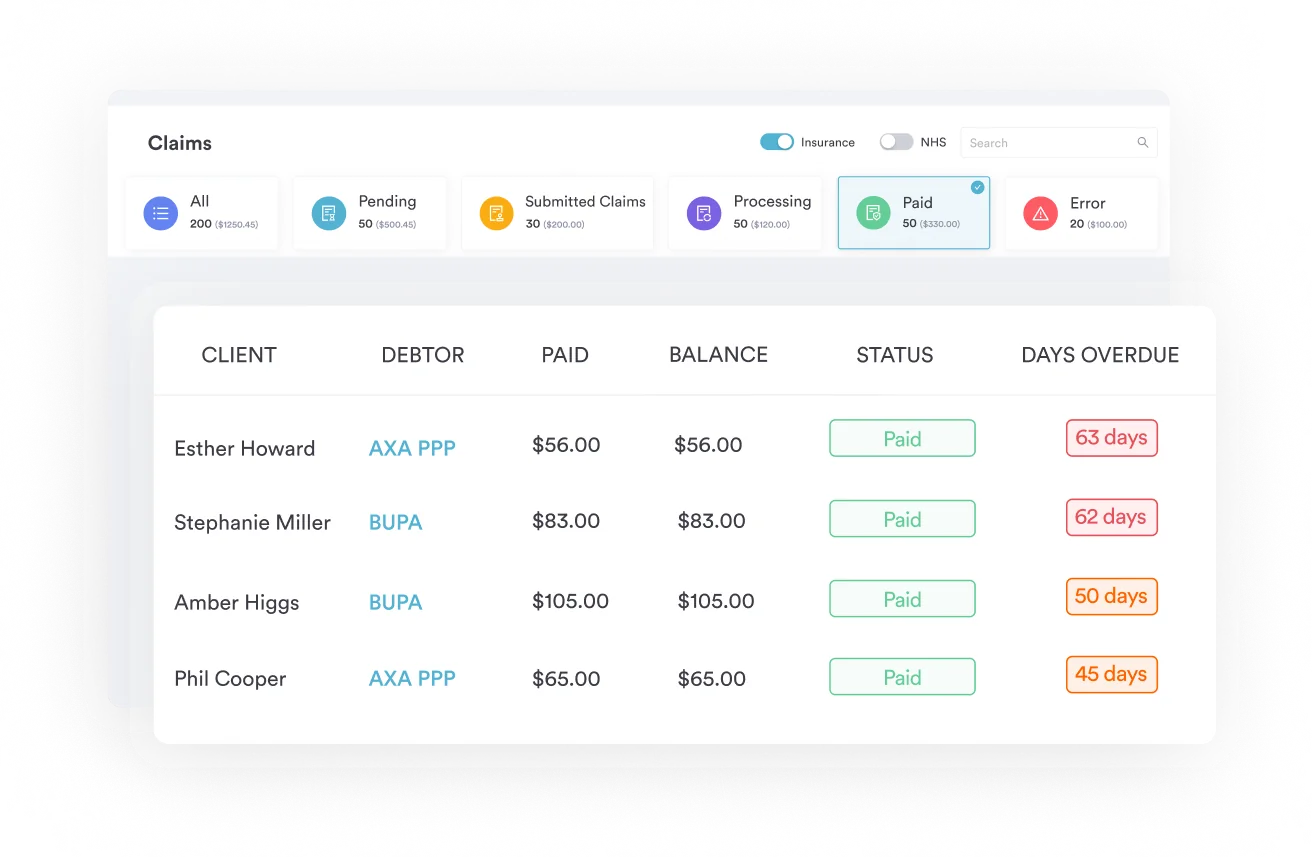
CPT Code 11730 is the primary code for nail avulsion. It covers removal of the first nail plate during an encounter. CPT Code 11732 is reported once for each additional nail plate removed in that same session. A patient presenting with ingrown nails on three toes would generate one unit of 11730 and two units of 11732 on the same claim.
The distinction matters because payers process 11732 as an add-on. Without 11730 on the same claim, most clearinghouses reject 11732 outright before it even reaches adjudication. The AAPC CPT code reference confirms that add-on codes are “exempt from the multiple procedure concept” but still require the parent procedure code.
Multiple nails requiring avulsion in a single encounter is more common than many billers expect. Onychocryptosis (ingrown nail) frequently affects more than one digit simultaneously, particularly in patients with diabetes, peripheral vascular disease, or fungal nail disease. Podiatrists and dermatologists encounter this multi-nail presentation regularly. The most common clinical scenarios that support billing CPT Code 11732 alongside 11730 include:
Specialty context matters for payer scrutiny. Podiatrists in dermatology and podiatry practices bill 11730/11732 far more frequently than primary care providers, and payers apply frequency edits accordingly. Emergency medicine providers may bill these codes for acute nail trauma, though documentation of medical necessity must be particularly thorough in that setting. Dermatologists sometimes confirm an ambiguous nail bed finding with a 11102 biopsy before proceeding with avulsion.
Document the medical necessity for each additional nail separately in the procedure note. A single statement that ‘multiple nails were treated’ is not sufficient. Name each digit treated (e.g., right great toe, right second toe) and provide the clinical indication for each one. This is the single most effective way to survive a post-payment audit.
Surgeons comparing EMR options for plastic surgery practices should check how each handles operative notes and staged procedures.
Modifier selection for nail avulsion billing is where most coding errors occur. Digit-specific modifiers identify exactly which nail was treated, and most payers require them. Without the correct digit modifier, the claim may pay but will fail post-payment audit review.
Digit-specific modifiers (TA-T9, FA-F9) are required by most payers but are not universally mandated by CMS as a condition of payment. Verify modifier requirements in your MAC’s LCD and each commercial payer’s policy before assuming a single modifier rule applies universally.
Maintaining accurate standardized medical forms for healthcare practices that capture digit-level detail at the point of care makes modifier selection straightforward for billers.
CPT Code 11732 reimbursement is lower than the primary code 11730 because it represents an incremental service rather than the full procedure setup. Both non-facility and facility rates apply, depending on where the procedure is performed.
As of the 2025 Medicare Physician Fee Schedule, the national average non-facility rate for 11730 is approximately $107-$115, while 11732 pays approximately $31-$33 per additional nail at the national unadjusted rate. These figures vary by geographic location through the Geographic Practice Cost Indices (GPCI) adjustment.
Use the CMS Physician Fee Schedule lookup tool to find the exact rate for your locality. The 2026 final rule rates were not confirmed at the time of writing. Always verify current year rates directly from CMS before billing.
Commercial payer rates vary considerably from Medicare. Some payers apply a percentage of Medicare (e.g., 120% of MPFS), while others negotiate flat rates. Always confirm contracted rates in your payer agreement before estimating patient cost share.

Pabau’s claims management tools help podiatry and dermatology practices attach the right codes, modifiers, and diagnosis codes before claims leave the practice. See how it works for your practice.

Medicare Part B covers nail avulsion under CPT codes 11730 and 11732 when the procedure is medically necessary, per CMS coverage articles A52998 and A59028. “Medically necessary” in this context means the condition cannot be safely treated by routine nail care alone and requires a provider with the training to perform surgical avulsion.
Medicare coverage criteria that apply to most MAC jurisdictions include:
Repeat avulsions: When the same nail requires re-avulsion, CGS repeat avulsion guidance (COPE163423, September 2024) specifies that documentation must establish recurrence and continued medical necessity. A repeat avulsion on the same finger within 16 weeks, or the same toe within 32 weeks, of a prior avulsion also requires the KX modifier in addition to that documentation.
Frequency limits apply in CGS jurisdictions and may differ under other MACs. Thorough patient compliance documentation helps demonstrate that conservative measures were attempted before resorting to surgical avulsion again.
Every claim for CPT Code 11732 requires an ICD-10-CM diagnosis code that establishes medical necessity. The most commonly accepted codes are listed below. Note that acceptable diagnosis codes are specified in payer LCDs and may differ by MAC. Treat this list as a starting framework verified against CMS coverage articles A52998 and A59028.
For patients with complicating conditions such as diabetes mellitus with peripheral angiopathy, add the relevant comorbidity code (e.g., E11.51 for type 2 diabetes with diabetic peripheral angiopathy) to strengthen the medical necessity argument. The HIPAA-compliant documentation practices your practice maintains for medical records should capture all relevant comorbidities at the time of the procedure note. In oncology coding the companion code is sometimes mandated, not a judgment call. ICD-10 code C04.9 inherits a use-additional-code instruction, so tobacco or alcohol dependence must be reported alongside it.
The procedure note is the single document that stands between a paid claim and a post-payment recovery demand. For CPT Code 11732, the note must establish both what was done and why it was medically necessary for each additional nail beyond the first.
Required documentation elements for nail avulsion procedures, per CMS coverage article A52998:
Practices that use digital intake forms can capture pre-procedure findings and patient history in a structured format that flows directly into the procedure note. Using medical dictation tools for clinical notes also speeds up note completion immediately after the procedure, while procedural details are freshest.
Nail avulsion billing generates a predictable set of denial reasons. Knowing the patterns prevents the same errors from repeating across hundreds of claims.
Reviewing features that save time in private-practice management includes built-in claim scrubbing that catches missing primary codes and missing modifiers before submission. This kind of pre-submission check is particularly valuable for high-volume nail procedure practices.
Run a quarterly audit on all claims where 11732 was the only nail code submitted. These claims indicate a systemic billing error: the primary code 11730 is being dropped somewhere in the workflow. Identify whether the issue is in the superbill design, the charge capture step, or the biller’s code entry, then correct at the source rather than chasing individual denials.
Podiatry and dermatology practices performing nail avulsions face a documentation challenge that general practice management tools often underserve: the need to capture per-digit clinical findings quickly during or immediately after a procedure. Pabau addresses this through structured treatment note templates and integrated billing workflows.
With Pabau, practices can build nail procedure templates that prompt clinicians to document each digit treated, the clinical indication, and the technique used. Those structured notes flow into medical records management, where 11730 and 11732 are pre-bundled with the correct digit modifiers.
The result: billers receive a complete claim package rather than chasing the provider for missing procedure details after the fact.
Supporting workflows like EHR integration for billing and paperless practice workflows reduce the transcription step between clinical documentation and claim submission, which is where digit-level data is most often lost. Practices looking to reduce denial rates on nail procedure codes typically see improvement within the first billing cycle after standardizing their procedure note templates.
Billing CPT Code 11732 correctly comes down to three things:
The code itself is straightforward. The errors happen in the documentation and charge capture steps.
Pabau’s procedure note templates and integrated claims management tools help podiatry and dermatology practices capture the per-digit detail that supports accurate 11732 billing before the patient leaves the room. To see how it works in a nail procedure workflow, book a demo with the Pabau team.

Coding sudden blood loss anemia? ICD-10 code D62 covers acute blood loss anemia, also called acute posthemorrhagic anemia.
Coding anemia tied to another disease? ICD-10 code D64.1 covers secondary sideroblastic anemia due to disease, sequenced after the underlying condition.
Coding disseminated intravascular coagulation? ICD-10 code D65 covers disseminated intravascular coagulation, always sequenced after its underlying trigger.
CPT Code 11732 is an add-on code used to report avulsion of nail plate for each additional nail plate removed beyond the first in a single encounter. It must always be billed alongside primary code 11730, which captures the first nail avulsion.
CPT 11730 is the primary nail avulsion code, reported once per encounter for the first nail treated. CPT Code 11732 is the add-on code, reported once for each additional nail avulsed in that same session. If three nails are treated, the claim includes one unit of 11730 and two units of 11732.
No. CPT Code 11732 is a true add-on code and cannot be billed independently. Submitting 11732 without 11730 on the same claim will result in automatic rejection by the clearinghouse or payer.
Digit-specific modifiers are required by most payers: TA through T9 for toes and FA through F9 for fingers. Modifier 59 may apply when avulsion is performed as a distinct service from another procedure on the same date. Modifier 76 applies for a repeat avulsion on the same nail within the global period, and a KX modifier is required for a medically necessary repeat avulsion on the same finger within 16 weeks, or the same toe within 32 weeks, of a prior avulsion. Verify requirements with each payer, as CMS does not universally mandate digit modifiers as a payment condition.
Yes, Medicare Part B covers CPT Code 11732 for ingrown toenails (ICD-10 L60.0) when medical necessity is documented. The procedure note must establish that the condition cannot be safely managed with routine nail care and that conservative measures were attempted or are contraindicated. Frequency limitations for repeat procedures vary by Medicare Administrative Contractor.
The most commonly accepted ICD-10-CM codes are L60.0 (ingrown nail), L60.1 (onycholysis), L60.2 (onychogryphosis), L60.3 (nail dystrophy), and B35.1 (tinea unguium/onychomycosis). Acceptable pairings are defined in each MAC’s LCD. Confirm your MAC’s coverage article before submitting.
The 2026 national average rate for CPT Code 11732 was not confirmed at the time of publication. The 2025 non-facility national average is approximately $31-$33 per additional nail unit. Use the CMS Physician Fee Schedule search tool to look up the current year’s locality-specific rates, as geographic GPCI adjustments apply.



